
Two of Opryland’s roller coasters carried passengers again after the Nashville park closed in 1997. One reopened in New York. Another found a second home in California.
Several others went into storage at a former Indiana amusement park. They waited for a rebuilding project that never happened.
Opryland remains one of the places from 1990s Nashville that locals still miss. But its five full-size coasters and separate children’s ride did not all disappear with the park. Their paths led to new names, dismantled track and one undocumented destination.
The Indiana Stop That Became a Dead End
For several Opryland coasters, the first stop after Nashville was Old Indiana Fun-n-Water Park near Thorntown, Indiana.
Premier Parks purchased the rides and intended to develop the property. The proposed park never materialized, leaving the dismantled coasters in storage.
They never opened for Indiana visitors.
One eventually left storage and carried passengers again. Others remained there for years before their track was scrapped or disappeared from the site.
Other pieces of Opryland’s entertainment complex lasted closer to home. The General Jackson Showboat continued sailing after the theme park closed, carrying its own part of that history into another generation.
For the coasters, survival depended on finding somewhere to rebuild.
Rock ’n Roller Coaster Got a Second Life in New York
Opryland’s oldest full-size coaster outlasted the park that introduced it.
It opened in 1972 as Timber Topper, then became Rock ’n Roller Coaster. The steel mine train climbed two lift hills, reached about 45 mph and kept riders right-side up.
After Nashville, it joined the rides stored at Old Indiana. Its return took several years.
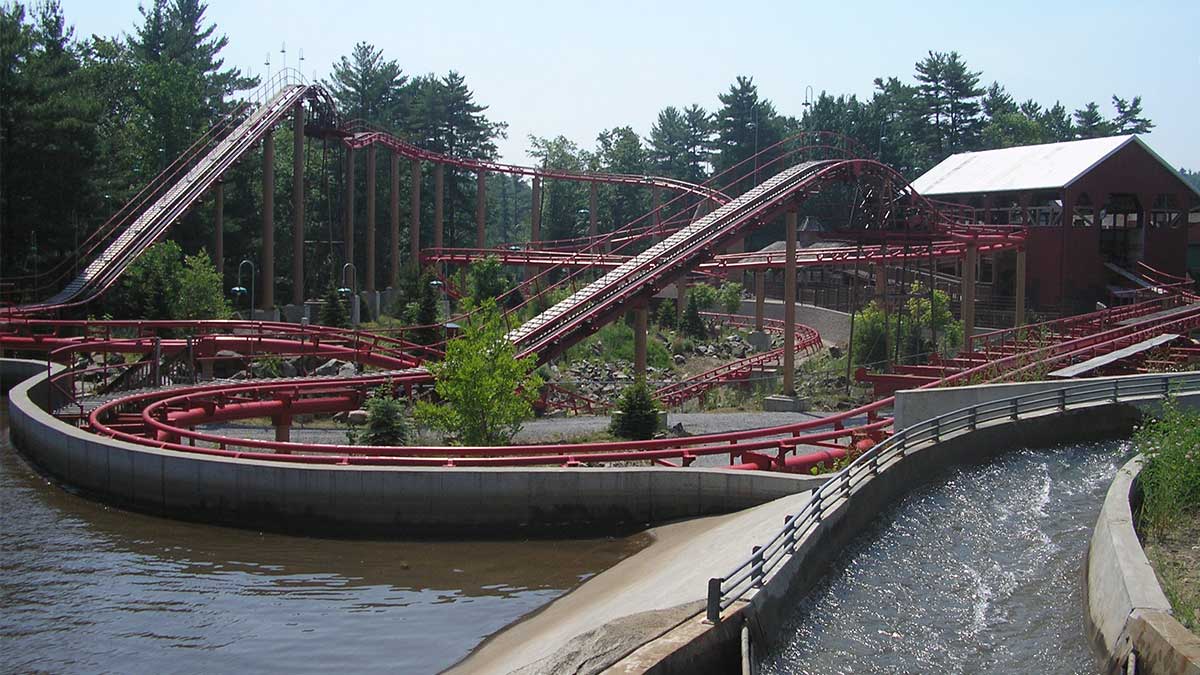
In 2003, the coaster reopened as Canyon Blaster at Great Escape in Queensbury, New York.
The new name belonged to a relocated Opryland ride. Visitors who remembered the Nashville mine train could board it again, hundreds of miles from its original home.
Great Escape’s official Canyon Blaster page places it in the park’s Ghost Town area and lists its height at 56 feet and speed at 45 mph.
Its name can cause confusion: Canyon Blaster in Las Vegas is a different coaster.
Hangman Became Kong in California
Hangman had just three seasons at Opryland before the park closed.
Opened in 1995, the coaster suspended riders beneath the track with their feet hanging free. It stood roughly 109 feet tall and reached about 50 mph through five upside-down elements.
Its move happened much faster than the mine train’s.
In 1998, Hangman reopened as Kong at the Vallejo, California, park now known as Six Flags Discovery Kingdom.
The ride’s California history has lasted far longer than its Nashville run. But a successful relocation does not guarantee that visitors can board it on a particular day.
On October 26, 2026, Kong appeared on Discovery Kingdom’s scheduled-closures list. The notice gave no reason or reopening date.
That listing confirmed a closure at the time of the check. It did not establish that Kong had permanently closed.
Wabash Cannonball Never Got Its Comeback
Wabash Cannonball brought a double corkscrew to Opryland’s State Fair area in 1975.
The steel coaster stood about 70 feet tall and reached roughly 50 mph. Its twisting signature element turned riders upside down twice.
After Opryland closed, Wabash followed the route to Old Indiana. It never carried passengers again.
Coasterpedia’s historical account dates its scrapping to 2003, ending the possibility of rebuilding the original coaster elsewhere.
Its trains reportedly took a separate journey.
The same account says they were sent to Six Flags Belgium for possible use on Tornado, but were never used on that ride.
Some equipment traveled beyond the storage site. Wabash Cannonball itself never returned to service.
Chaos Lost More Than Its Building
Chaos relied on an enclosed setting, sound and visual effects to create its ride experience.
Opened in 1989, the indoor coaster had no inversions. Its most unusual physical feature was its enormous train: 40 cars carrying up to 80 riders, seated one behind another within each car.
Moving the track would preserve only part of the attraction. Recreating Chaos would also require the setting and effects that surrounded its passengers.
That rebuilding never happened.
Chaos went to Old Indiana and remained out of service. According to Coasterpedia’s detailed history, its track was scrapped around April 2005.
The train was offered for sale in early 2006.
That advertisement leaves part of the story unresolved. It does not confirm a buyer, a destination or whether any portion of the train survives today.
There is no verified operating version of Opryland’s original Chaos elsewhere.
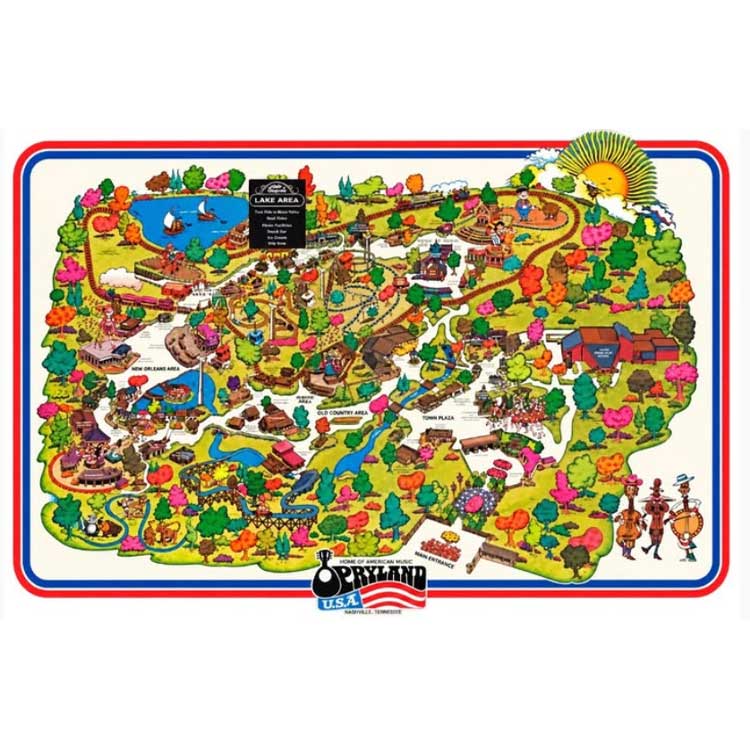
Screamin’ Delta Demon Disappeared After Storage
Screamin’ Delta Demon traded loops and corkscrews for a bobsled-style course.
The steel bobsled coaster opened in Opryland’s New Orleans area in 1984. Specialist history lists it at about 60 feet tall, with a top speed around 32 mph and no inversions.
It also went to Old Indiana, where it remained in storage without reopening.
Its eventual disposal is less firmly documented than Wabash Cannonball’s.
Coasterpedia reports that the ride had been removed from the storage site by June 2006 and describes its scrapping as presumed.
The removal date does not establish when—or exactly how—the coaster was destroyed.
What is documented is that Screamin’ Delta Demon never reopened after Opryland. Its scrapping remains presumed, without a confirmed destruction date.
For anyone planning to revisit the two relocated coasters, check Great Escape’s calendar and hours and Discovery Kingdom’s closure notices. An attraction page or scheduled park event alone does not confirm that a particular ride will operate.
The Children’s Coaster Still Has an Unanswered Ending
Opryland’s smallest coaster had a history separate from the full-size mine train.
Mini Rock ’n Roller Coaster operated at the park from 1977 through 1997. Its small oval layout had no inversions, and its three-car train seated 12 riders.
Coasterpedia reports that it was included among the 13 rides sold to Premier Parks after Opryland closed.
That documents a sale, but it does not establish where the children’s coaster went afterward.
The Roller Coaster Database record lists the ride as removed without documenting a relocation. Neither that record nor Coasterpedia identifies a subsequent operating location.
There is no confirmed destination or destruction date.
The little coaster was sold. Where it went next remains undocumented.