
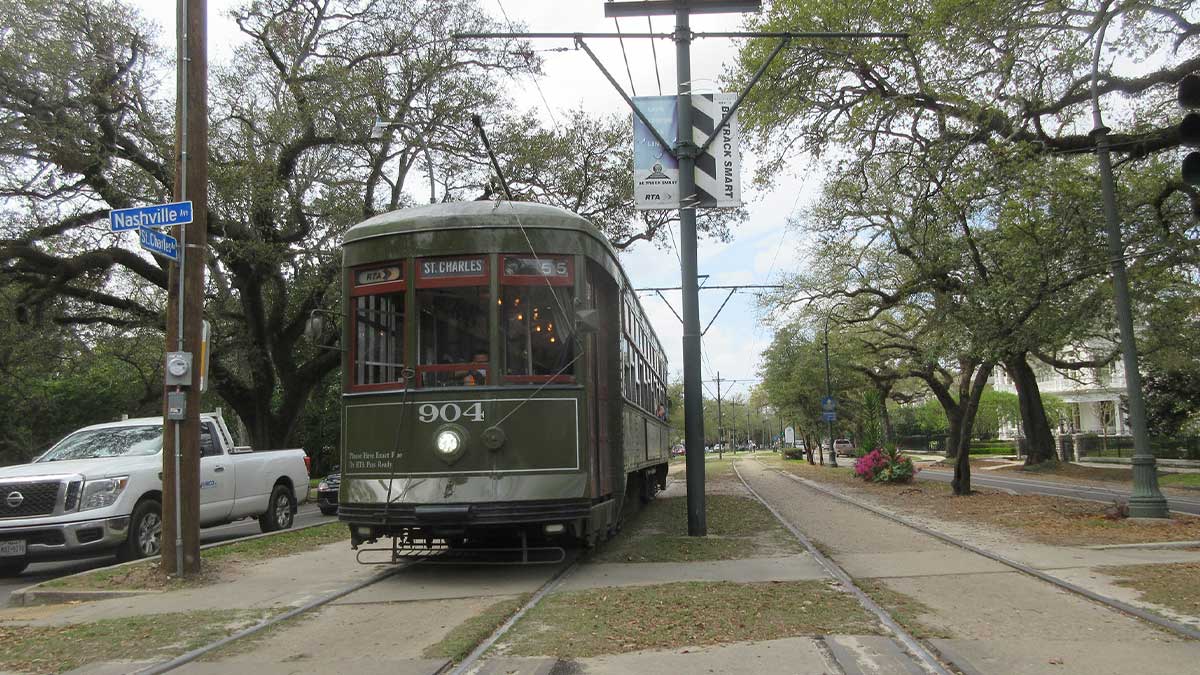
Nashville’s last electric streetcar ran before the city began planning its postwar highway network.
That final trip took place on February 2, 1941, along the Radnor line. Automobiles had drawn passengers away, ridership had fallen, and buses were taking over the routes.
For decades, though, Nashville had grown around the rails. One line carried passengers toward Glendale Park, a 64-acre amusement destination that eventually offered mechanical rides, a zoo, and a sulphur spring.
The network connected downtown jobs with homes farther out—and gave Nashvillians somewhere to go on their days off.
Before Electricity, Nashville Had Mule Power
Nashville’s mule-drawn streetcars began operating in 1866.
As routes grew longer, animal power had its limits. Steam-powered lines appeared during the 1880s, adding another stage between the mule era and electric service.
According to Metro’s historical marker, electric streetcar service formally began on April 30, 1889.
These urban streetcars connected downtown with surrounding neighborhoods. Separate electric railways, called interurbans, served communities beyond the city, including Franklin and Gallatin. Those lines had their own closing dates.
The urban network gave Nashville a way to spread outward while keeping residents connected to downtown. Elsewhere in Tennessee, some abandoned railroad corridors have found a different purpose as walking and biking trails, including routes through old tunnels.
The Rails Helped Decide Where Nashville Grew
A streetcar stop could make a neighborhood practical for someone who worked farther away.
Metro’s transportation plan describes homes and businesses developing within walking distance of the stops. Residents could live beyond downtown and still reach it along an established transit corridor.
Build near a line, and future residents had a way to get around.
But commuting supplied only part of the business. Amusement parks gave passengers a reason to ride on their days off, too.
Around 1887, a line developed along present-day 10th Avenue South, then called Pomeroy Avenue. Glendale Park opened in 1888 near its terminus, around today’s Lealand Avenue and Tower Place.
The railway became electric in 1893. The zoo arrived later, in 1912.
Metro’s neighborhood history describes roughly 64 acres whose attractions included mechanical rides, a sulphur spring, a restaurant, and tennis, as well as the later zoo.
The park brought riders out on weekends and potential buyers past land along the route. A day at Glendale could double as an introduction to a future neighborhood.
The streetcar ride was doing a little real estate work along the way.
The Convenience Came With Unequal Treatment
Streetcars made travel easier for many Nashvillians, but Black passengers faced legally enforced segregation.
A segregation law took effect on July 5, 1905. Black Nashvillians organized a boycott, documented by historian Linda T. Wynn of Tennessee State University.
An alternative business, Union Transportation Company, was chartered that August and began operating in October. It closed in 1907.
Getting to work or moving around the city meant confronting rules that denied passengers equal treatment. The boycott challenged those rules through the everyday decision of whether to board.
Cars Took Passengers Away. Buses Took Over the Routes.
Automobile competition and declining ridership weakened the streetcar business. Operators gradually converted service to buses.
In Nashville’s Streetcars and Interurban Railways, historian Ralcon Wagner connects improved roads and increasingly affordable cars with a sharp decline in public transportation use.
For private transit operators, fewer riders meant fewer fares while the railway still needed maintenance. Buses could run beyond the existing rail corridors.
The change took years. Nashville Public Library’s transit collection history dates the introduction of buses to 1926, well before the last streetcar ran.
The railway received new equipment that year, too. Library records document the inauguration of ten new street railway coaches on October 29, 1926.
Buses and streetcars shared Nashville’s transit system for years before the final conversion.
The Last Run Came in February 1941
Metro’s historical marker dates bus service on the Hillsboro-Sunset line to August 4, 1940. Nashville Public Library’s collection history documents buses operating in the city as early as 1926.
On February 2, 1941, the last electric streetcar ran on the Radnor line. Nashville Public Television’s historical timeline also places the replacement of electric streetcars in 1941.
The city’s comprehensive highway planning followed in 1945–1946. By the time Nashville planned that next transportation chapter, its urban streetcar service had already ended.
Where to Find Nashville’s Streetcar History Today
Start downtown at the site of the former electric street railway transfer station. The station operated from 1902 to 1940, and Metro lists its historical marker at 300 Deaderick Street, on Third Avenue North.
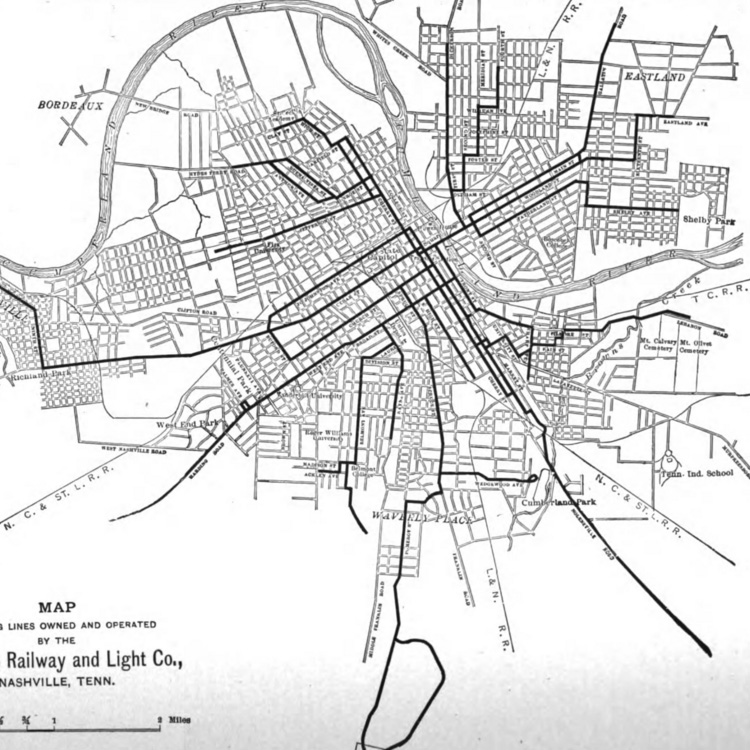
To explore from home, open a sheet from the 1908 Nashville Atlas in Nashville Public Library’s digital collections. The atlas shows streetcar routes alongside buildings, property boundaries, schools, churches, and industries.
The Library of Congress also catalogs a 1916 Nashville map containing a street railway directory. For deeper digging, Nashville Public Library’s Metro Transit Authority Collection identifies additional historical material. Contact the library before visiting to request original records.
Pick a familiar neighborhood and open a modern map beside the historical one. Find a street you use today, trace the nearest former streetcar route, and compare where homes and businesses clustered along it.
For a look at how some Nashville neighborhoods appeal to visitors today, explore three Nashville neighborhoods worth visiting beyond Broadway.