
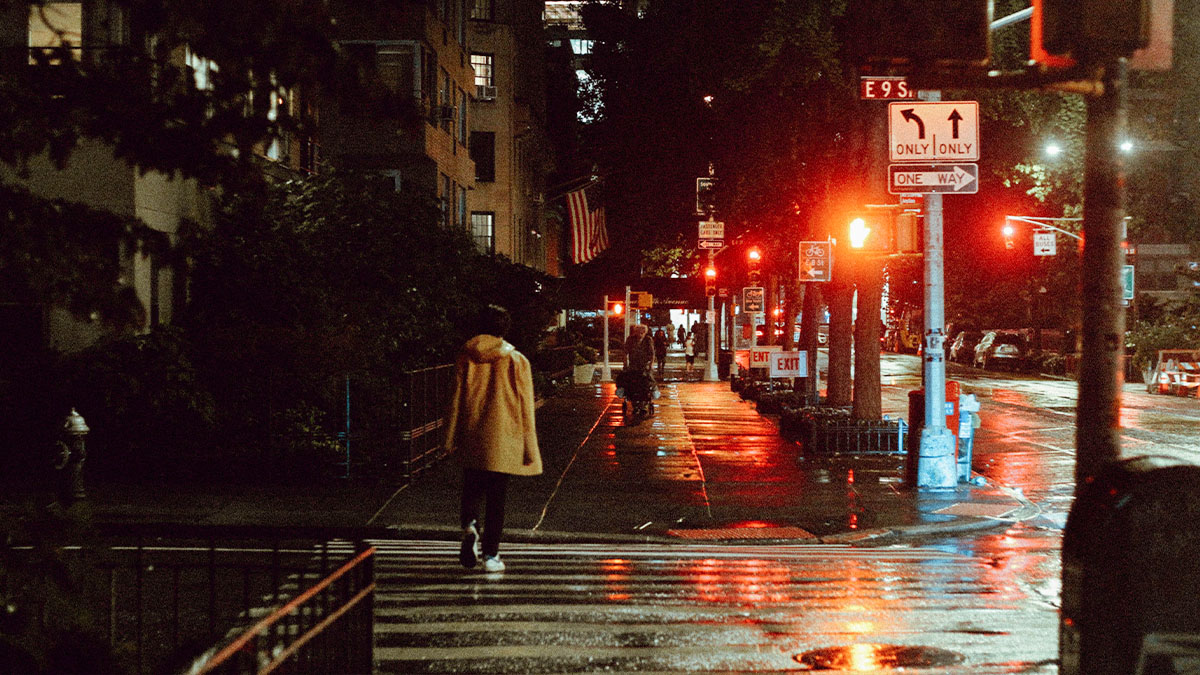
Nashville’s newest crosswalk light has no button to push and no red light for drivers. It waits for someone to step off the curb, then follows them across the street with a beam of white light.
The test is running now at Lafayette Street and Claiborne Street, about a mile southeast of Bridgestone Arena by our map measurement.
It’s a corridor where people walk to bus stops, nonprofits and a neighborhood bar after dark.
And it’s a street where, by WKRN’s count from Metro police data, 3 of the 11 people hit by drivers in 2026 have died.
Broadway regulars know downtown crossings take care (here’s why to look both ways on Broadway even with the signal). Lafayette is a different kind of street, and Nashville is trying a different kind of fix.
What happens the moment someone steps into the Claiborne crosswalk
The system is SecurOS Soffit, made by Intelligent Security Systems (ISS) of Woodbridge, New Jersey. A pole-mounted camera watches the crosswalk and both sidewalks. When the software spots a person, LED lights over the crossing brighten the section that person is in and keep pace as they walk.
The company’s Soffit datasheet says a standard unit uses eight LED modules covering up to about 49 feet, roughly four lanes. Between crossings it dims to a static glow.
WSMV reported the test on Nov. 25, a day after ISS announced the pilot with the Nashville Department of Transportation and Multimodal Infrastructure (NDOT). ISS says the camera does no facial recognition or license plate reading, and that no video is recorded or stored during Nashville’s pilot.
Neighbor King Shabazz told WSMV: “When I come through at night it illuminates the area… it makes me feel safe in my neighborhood.”
Why a street with streetlights still needs a spotlight
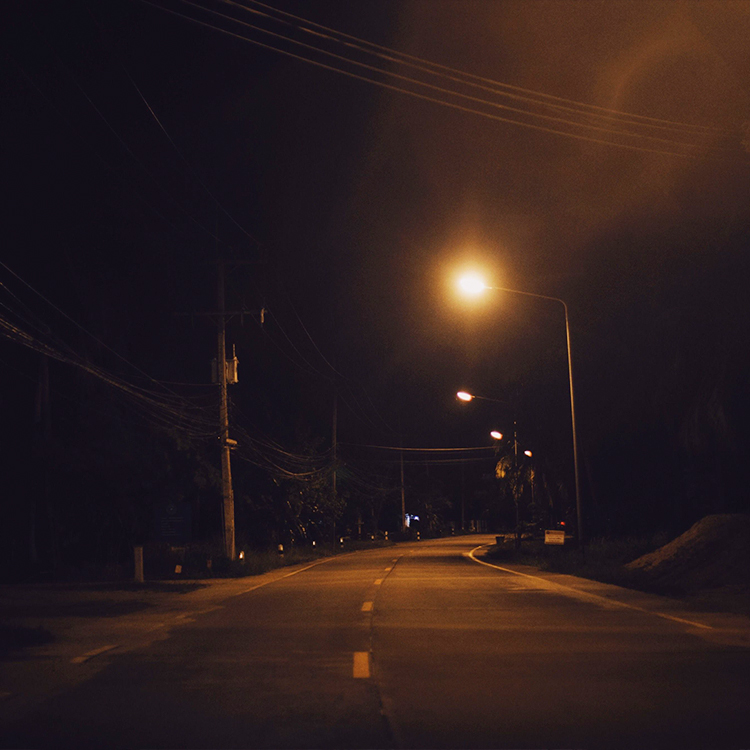
Lots of Nashville roads have streetlights. The city’s own crash data says that isn’t enough.
Nashville’s Vision Zero crash analysis, covering January 2014 through August 2021, found 67% of crashes that killed or seriously injured a pedestrian happened after dark. Fifty-one percent happened in “dark-lighted” conditions, meaning at night with lighting nearby. The authors wrote that the existing lighting “is not sufficient for safe pedestrian use.”
The same analysis ranked Lafayette Street eighth in Nashville for pedestrian-involved collisions, with 60. The seven roads ahead of it include much longer corridors like Gallatin Pike (107) and Murfreesboro Pike (106).
Brian Baker, a former NDOT employee who designed a different crosswalk light, told WSMV in March that “street lights are too tall and too far apart. They’re not really designed for pedestrians.”
NHTSA’s 2024 pedestrian fact sheet found 76% of U.S. pedestrian deaths happened in the dark. The Federal Highway Administration lists lighting as a proven safety countermeasure and says it can cut nighttime injury pedestrian crashes at intersections by up to 42%.
The Nashville math nobody puts on a postcard
WKRN reported, citing the Metro Nashville Police Department’s data dashboard, that 446 pedestrians have been hit across Nashville so far in 2026, and 32 of them died. WSMV, citing NDOT, counted 31 deaths as of Nov. 16. The gap likely comes down to dates and which agency is counting.
Our math on those figures:
- Nashville is losing about one person on foot every 10 days this year (32 deaths over the 328 days from Jan. 1 to Nov. 24).
- Drivers are hitting about 1.4 pedestrians a day citywide.
- Citywide, about 7% of pedestrians hit in 2026 died. On Lafayette, it’s 3 of 11, or 27%. Small numbers, but a real warning sign.
- 2026 has already passed all of 2025. The Bicycle and Pedestrian Advisory Commission’s annual report counted 25 pedestrians killed in Davidson County last year, the Nashville Scene reported.
The national comparison stings too. In NHTSA’s 2024 city table, Nashville had 28 pedestrian deaths, a rate of 3.97 per 100,000 residents. Chicago’s rate was 2.13 and New York City’s was 1.20. Our math: Nashville’s per-person rate was nearly double Chicago’s and more than three times New York’s.
Minutes from the March 2025 Vision Zero Advisory Committee meeting list 49 crashes in 2022, 51 in 2023 and 47 in 2024 on Lafayette between University Court and Fairfield Avenue.
The Easter crash that had neighbors asking for light
On Easter Sunday 2026, Yulonda Parham, 31, and Kanon Oldham, 27, were hit and killed on Lafayette as they left LinQ Social Kitchen, WSMV reported in April. Police were still hunting the hit-and-run driver when that story ran.
LinQ owner Chad White described the stretch this way: “It’s dark, and you’re coming down the hill, it’s a long stretch between one light and the next.” He also said parts of the block in front of his business have no sidewalk.
At an April community meeting called by Metro Council member Terry Vo, TDOT representatives said Lafayette safety upgrades were coming but, being mostly federally funded, were likely at least a year out. This week Vo told WKRN her constituents keep asking, “When are we going to get safer streets? When are we going to get more lighting?”
Larry Craig, who has worked at Project Return on Lafayette for five years, told WSMV his workplace put up its own lights. “I’ve witnessed people get hit and die,” he said.
Is this a new kind of traffic signal? Not quite
“Crosswalk light” sounds like a signal. This one isn’t.
A pedestrian hybrid beacon, sometimes called a HAWK, stays dark until someone presses a button, then runs a yellow-to-red sequence that stops traffic. The FHWA credits these beacons with a 55% drop in pedestrian crashes.
Soffit doesn’t change who has the right of way. It only makes the person crossing easier to see. ISS describes the goal as better driver compliance “with the yield condition at the crosswalk.” Our read: that wording suggests there’s no walk signal at this crossing, so drivers are expected to yield under state law.
It isn’t Lafayette’s first lighting experiment, either. Baker’s “Light Up My Crosswalk” floodlights, wired into existing signals, switch on with the walk signal at Lafayette and Wharf Avenue and at Abbott Martin and Cross Creek roads, WSMV reported. Lafayette and Wharf is also a stop on some WeGo Route 18 trips, the $2 airport bus.
What it costs, and what happens after 60 days
Liam Davis of ISS told WKRN each unit costs about $20,000 and can be up and running in a day after permits clear. The pilot runs 60 days. No end date has been posted. If the clock started around the Nov. 24 announcement, it would wrap up in late January 2027 (our math).
Metro leaders will get the results and weigh whether more High Injury Network crossings should get one. Vo told WKRN she’ll look at results, cost and what residents say before backing more units. NDOT did not respond to WKRN’s request for comment.
Our read: at $20,000 a unit, ten crossings would run about $200,000 before permits, power and upkeep. The real test is simple: do more drivers yield when the light comes on?
How to cross Lafayette and other dark Nashville streets
- Use the marked crosswalk at Claiborne after dark. Give the light a second to pick you up before stepping into a travel lane.
- Know the rule. Tennessee law requires drivers to yield to people in crosswalks, marked or unmarked. If you cross anywhere else, you have to yield to cars.
- Watch every lane. One driver stopping doesn’t mean the next lane will. Passing a car stopped at a crosswalk is illegal in Tennessee, but it happens.
- Be seen. Wear something light at night, or hold up a phone flashlight while you cross.
- Skip the long dark walk. If a hotel or rental sits off a corridor like Lafayette, a short rideshare beats a block with no sidewalk. See whether it’s safe to walk around Nashville and how Broadway visitors end up in the ER.
- Report a dark crossing. NDOT’s Vision Zero program takes email at [email protected].
Time-sensitive: the 60-day pilot window, 2026 crash counts and the $20,000 unit price can change.
Original reporting by WSMV’s Amber Jayanth and WKRN’s Liz DeSantis. Facts checked on Nov 26, 2026.