

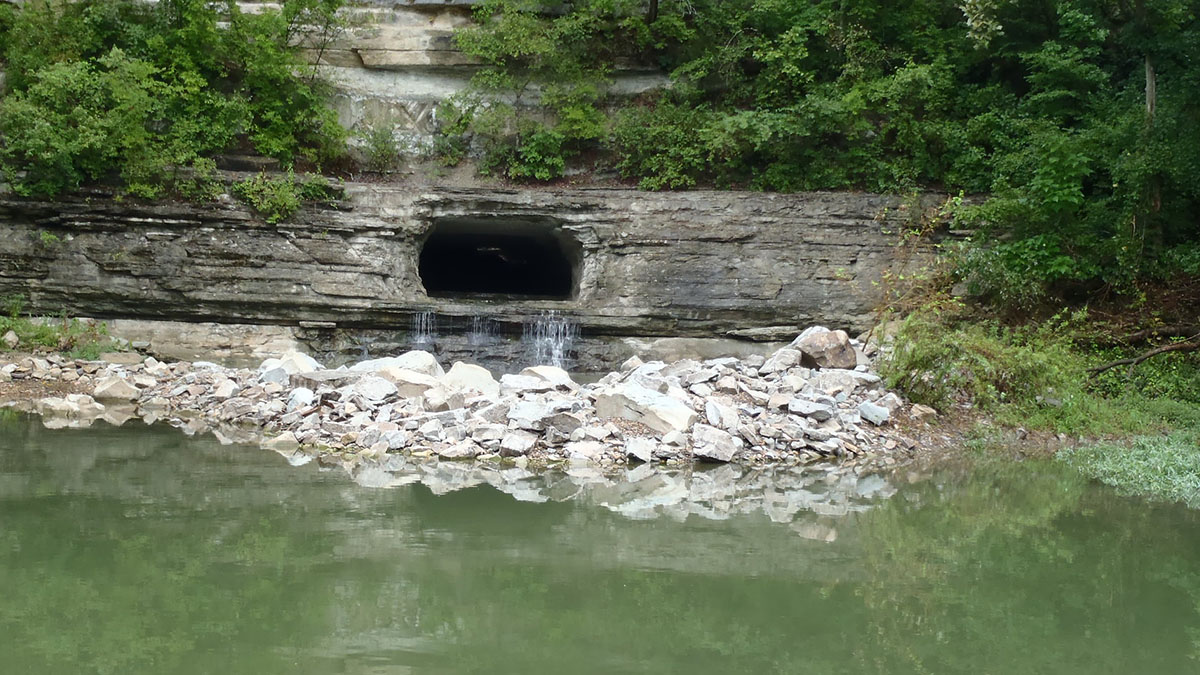
Enslaved African Americans cut a roughly 290-foot passage through solid limestone near Kingston Springs more than 200 years ago. River water still flows through it today, spilling from the rock as a waterfall.
That waterfall is the most visible reminder of Montgomery Bell Tunnel’s original purpose. It wasn’t built for trains, wagons, or people passing through. It was built to put the Harpeth River to work.
The ironmaking operation it served is gone. But the tunnel survives at the Narrows of the Harpeth, where a short trail leads visitors to a piece of Tennessee history whose familiar name tells only part of the story.
A Five-and-a-Half-Mile River Bend, Bypassed Through Rock
The Harpeth River takes a long route around a limestone ridge here. It travels roughly 5½ miles before returning close to an earlier stretch of its own course.
Along the way, the water drops about 17 feet.
Montgomery Bell recognized the opportunity in that unusual bend. A passage through the ridge could divert some of the river along a much shorter route, concentrating that gradual descent into falling water strong enough to power machinery.
The tunnel became that shortcut.
Its purpose was practical: supply waterpower for Bell’s ironworks. What might look today like a curious waterfall was part of an industrial system, shaped around the river’s course and the height difference between two nearby points.
If you’ve explored Tennessee’s old rail lines that are now walking trails, you may associate historic tunnels with transportation. This one had a different job: moving water through the ridge.
The Forced Labor Behind the Tunnel
Bell directed the project. Enslaved African Americans excavated the rock.
Their forced labor belongs at the center of the tunnel’s history, even though the surviving landmark carries Bell’s name.
Construction took place around 1818–1820. Historical sources disagree on the precise completion year, but the passage has stood for more than two centuries.
According to the American Society of Civil Engineers, workers likely used hand drills and black powder. Drilling and blasting were likely part of the process, alongside the physical work of excavating the passage. ASCE
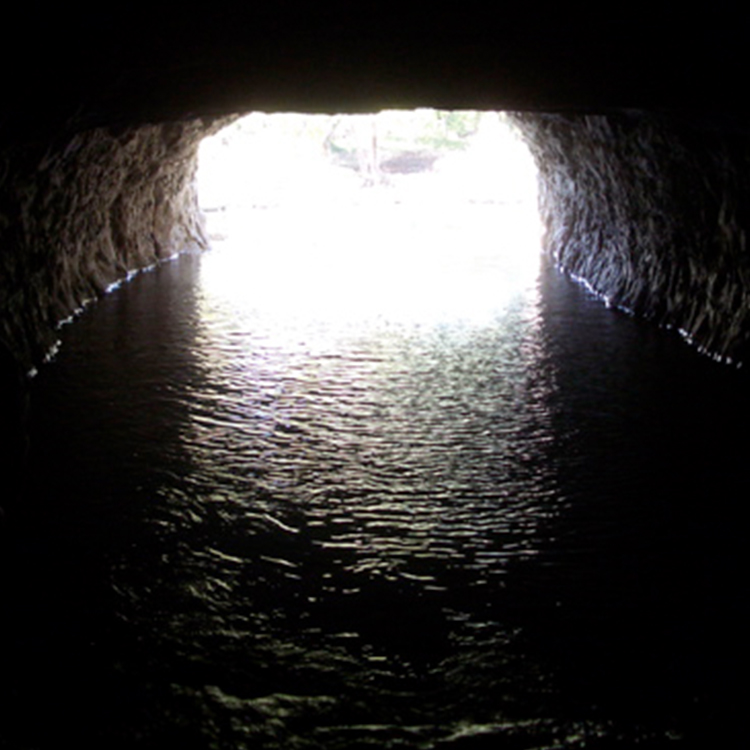
The finished passage was substantial. National Park Service documentation describes its original interior as generally eight feet high and 15 feet wide, extending approximately 290 feet through the ridge. The openings differ in size.
Those measurements give the work a clearer scale. This was a long passage through solid limestone, excavated by people who were enslaved.
The Forge Disappeared. The Tunnel Survived.
The tunnel supplied power for Patterson Forge, which turned pig iron from regional blast furnaces into wrought iron.
Workers were not smelting iron inside the passage. The tunnel carried water; the forge used that water’s power.
That distinction makes the surviving site easier to understand. The opening was one part of a larger operation, and the waterfall marks the downstream end of its water route.
Patterson Forge is gone. Water continues to pass through the ridge.
The site’s usefulness also extended beyond ironmaking. A gristmill used it in the 1880s, giving the diverted water another job.
Today, the outlet offers the clearest connection between the engineering idea and what remains. Watch the water emerge from the limestone, and the purpose becomes easier to grasp: the river’s long, gradual descent was gathered into a short, useful drop.
Why This Tunnel Earned National Recognition
Montgomery Bell Tunnel is a National Historic Landmark.
In its history of Montgomery Bell’s Tunnel, the American Society of Civil Engineers describes it as the earliest known American rock tunnel of significant size. Those qualifications matter. Its distinction is more specific than simply calling it America’s first tunnel. ASCE
Visitors can still see the unlined passage and the rough limestone around its outlet. Its irregular appearance is far removed from the smooth walls of a modern transportation tunnel.
The recognition reflects a significant engineering achievement. Understanding the place also means recognizing whose labor made that achievement possible.
The tunnel preserves both histories in the same stretch of rock.
How to Visit Montgomery Bell Tunnel
Head to the Narrows of the Harpeth section of Harpeth River State Park, just north of Kingston Springs and west of Nashville. Despite its name, the tunnel is not in Montgomery Bell State Park.
Use this access address:
1254 Narrows of the Harpeth Road
Kingston Springs, TN 37082
There is no state park access fee, and you don’t need a boat to see the tunnel.
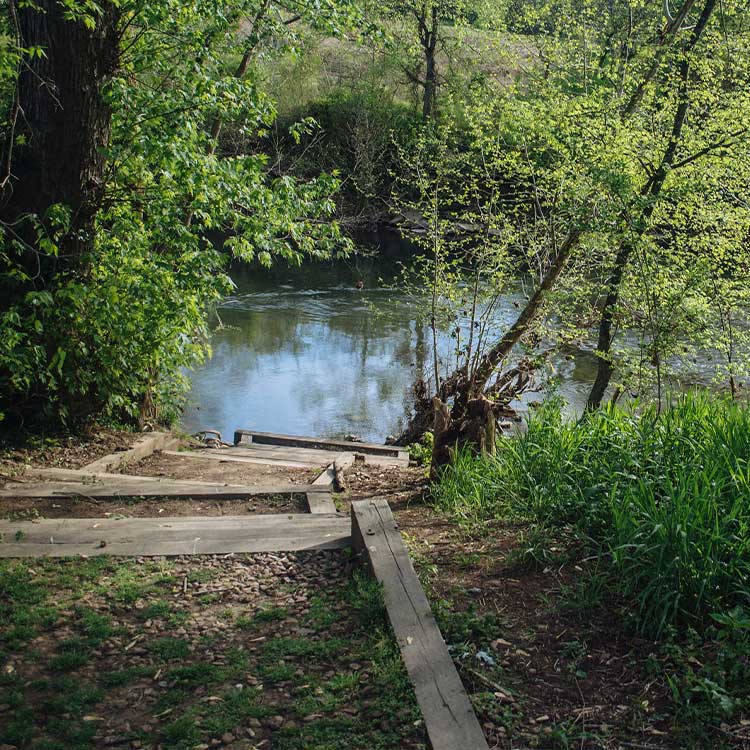
Start with the short Tunnel Trail, officially rated easy. The park’s hiking guide provides trail descriptions and accessibility details. Expect a natural surface with roots, steps, narrow sections, and some steep grades. Tennessee State Parks
Allow roughly 45–60 minutes to walk, read the signs, and view the outlet. That is a suggested planning allowance.
The easy rating does not guarantee wheelchair, stroller, or step-free access. Call the park at 615-952-2099 before leaving if you need specific access information.
The optional Bluff Trail offers an overlook and another view of the landscape. It is rated moderate, with a steep ascent and exposed edges. Wet conditions can make footing slippery.
At the tunnel pool, swimming and rock climbing are prohibited. View the waterfall from established visitor areas, and plan your outing around seeing the outlet rather than entering the tunnel.
For a separate, longer outing built around waterfalls, our guide to Tennessee’s “Waterfall Loop” road trip offers more places to explore.
The Narrows is for day use; camping and overnight parking are not allowed. Confirm current access and gate hours before leaving, especially for a late-afternoon visit. Bring drinking water, plan a restroom stop beforehand, and wear shoes suited to uneven ground.