

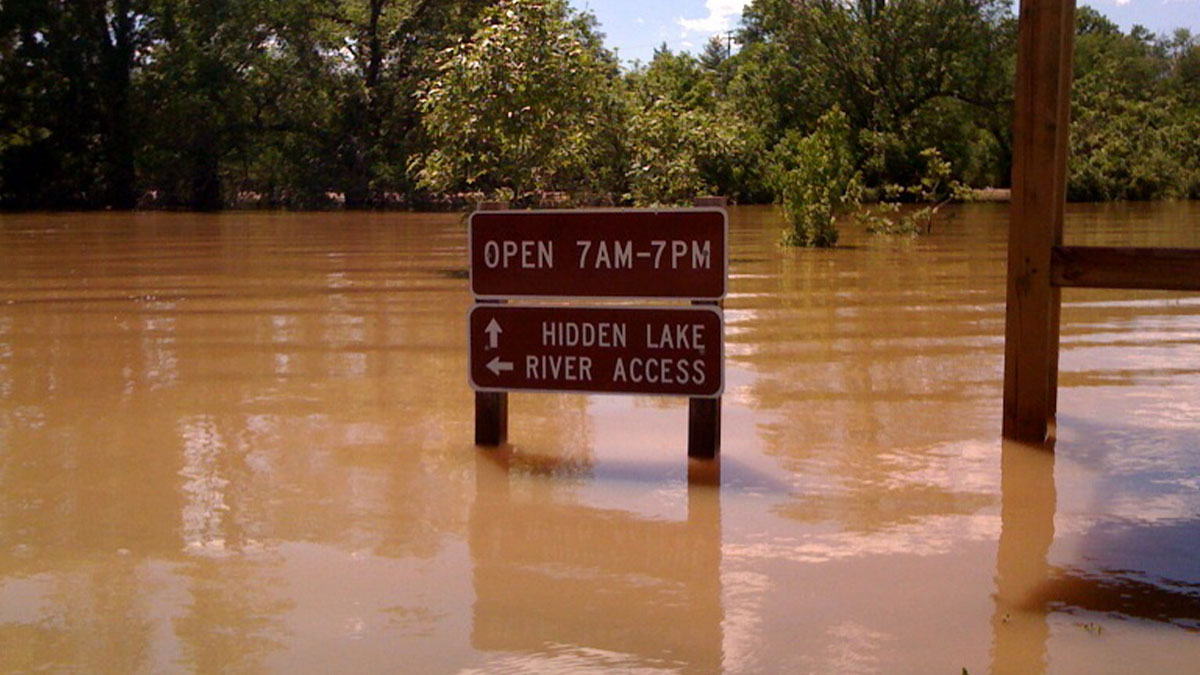
Hidden among the trees west of Nashville is something you might never expect to find in a state park: an old dance floor from a lakeside resort where people once swam, dined, and danced to live orchestra music.
The resort is long gone, but its dance floor still survives at Hidden Lake in Harpeth River State Park. The property was once popular enough to attract hundreds of visitors, and its orchestra even appeared in WSM radio listings.
Today, you can walk through the woods and see what remains of this unusual chapter of Tennessee history.
From Limestone Quarry to Lakeside Resort
Before Hidden Lake became a summer getaway, it was a working limestone quarry.
After quarrying ended, the flooded excavation became the centerpiece of a resort. Instead of hauling stone from the property, people were coming here for swimming, entertainment, and afternoons by the water.
According to StyleBlueprint’s historical reporting, Ben and Lillian Cunliff opened Hidden Lake resort on June 24, 1931. Newspaper coverage cited by the publication described several hundred guests attending the opening celebration.
There’s one detail worth noting. A historical marker at Hidden Lake states that a resort existed here by 1928. That earlier date hasn’t been reconciled with the 1931 opening reported by StyleBlueprint.
Regardless of when it began, Hidden Lake offered much more than a place to swim.
Visitors could swim beside a sandy beach, try a water slide, and enjoy a water wheel. There were also picnic areas, dining facilities, and entertainment overlooking the lake.
StyleBlueprint’s account of the 1931 celebration describes an orchestra performing near the beach. Later, guests moved uphill to the clubhouse veranda for more music and dancing.
Hidden Lake wasn’t simply a place to cool off. It was somewhere people could spend much of their day.
The Orchestra That Reached WSM Listeners
The resort’s musical history becomes particularly interesting in 1934.
Research published by Hillbilly-Music identifies May 31, 1934, as the grand opening of Hidden Lake Lodge. Advertisements for the event promoted a new dance floor and music by Jimmy Gallagher and his orchestra.
The advertisements presented the lodge as a place for dancing under the stars.
Then came the radio connection.
On June 9, 1934, WSM’s published schedule included the Hidden Lake Orchestra from 11 to 11:30 p.m. The group continued appearing in Saturday-night radio listings through September 1.
That meant Hidden Lake’s musical identity extended beyond the people visiting the resort. Radio listeners could encounter its name alongside other entertainment on Nashville’s airwaves.
The records also help clarify an important distinction. Although the resort was described as opening in 1931, the lodge’s grand opening and promotion of a new dance floor came in 1934.
That doesn’t conclusively establish when the floor surviving today was constructed. It does, however, document the role dancing played in Hidden Lake’s entertainment.
And nearly a century later, there’s still something visitors can see.
The Dance Floor Is Still There
Most of Hidden Lake’s resort buildings have disappeared, but the dance floor remains among the trees.
Tennessee State Parks identifies the old terrazzo floor as one of the surviving features of the property.
It’s an unusual sight. Instead of a restored ballroom or an elaborate historical exhibit, visitors find a weathered outdoor surface surrounded by woodland.
The musicians, crowds, and resort buildings that once surrounded it are gone.
The floor remains.
The park’s historical features aren’t confined to one location. Its trail descriptions also mention exposed bricks from former structures and a partly buried railcar.
These remnants reflect different periods of the property’s history, from industrial quarry operations to its years as a recreational destination.
The resort’s precise closing date and circumstances remain uncertain. What visitors can see today is only a small part of what once occupied the property.
For more local-history surprises, Nashville also has historic buildings with stories many locals have never heard.
The Lake That Made It All Possible
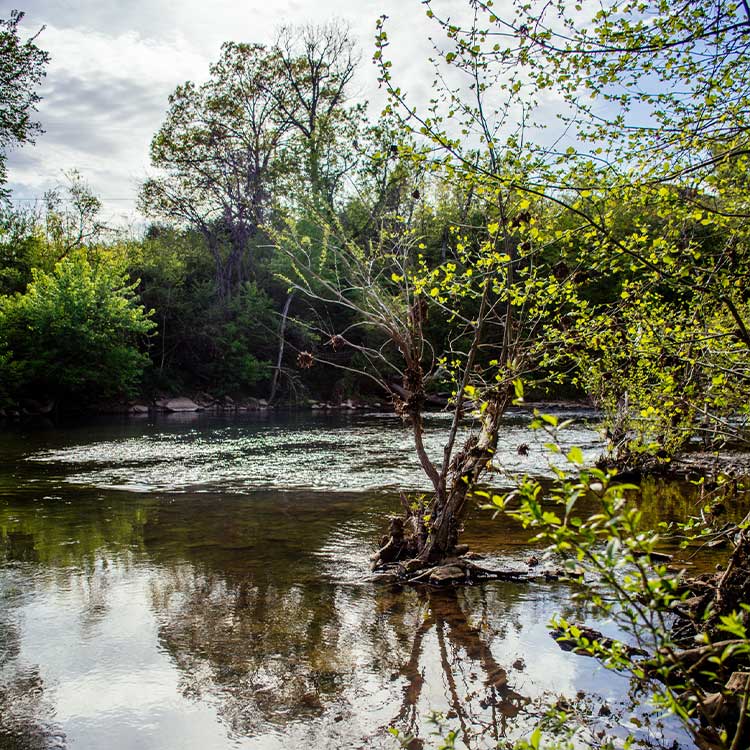
Hidden Lake itself remains one of the property’s most distinctive features.
The water occupies the former quarry, bordered by limestone bluffs and wooded hillsides. Its setting helped make the area attractive for recreation after the industrial operations ended.
Decades ago, the lake was the center of a resort with a beach and swimming attractions.
Today, it’s part of a protected natural landscape where visitors come to hike, enjoy the scenery, and explore the site’s history.
For more outdoor destinations across the state, see our guide to 10 Tennessee parks locals love.
One thing to remember is that the lake and dance floor are separate stops.
Following the trail toward the water doesn’t automatically take you to the surviving floor. If you’re interested in seeing both, it’s worth planning your route before leaving the parking area.
How to Visit Hidden Lake
You can explore Hidden Lake without paying a general park admission fee.
The address is 7851 McCrory Lane, Nashville, TN 37221.
Be sure to navigate specifically to the Hidden Lake access point. Harpeth River State Park includes several separate locations, and choosing the wrong entrance could take you miles from the historical site.
For more affordable outings around the city, see our guide to free things to do in Nashville.
Finding the Dance Floor
The park’s official hiking information identifies several connected trails at Hidden Lake.
The Ridge Loop Trail is 1.15 miles long and rated moderate. It passes through the wooded landscape and connects with smaller trails leading to historical features.
To reach the dance-floor remains, look for the Railroad Spur Trail, a 0.15-mile route rated difficult.
That 0.15-mile distance is only the spur itself. You’ll need to walk other connecting trails from the parking area, so don’t mistake it for the length of your entire outing.
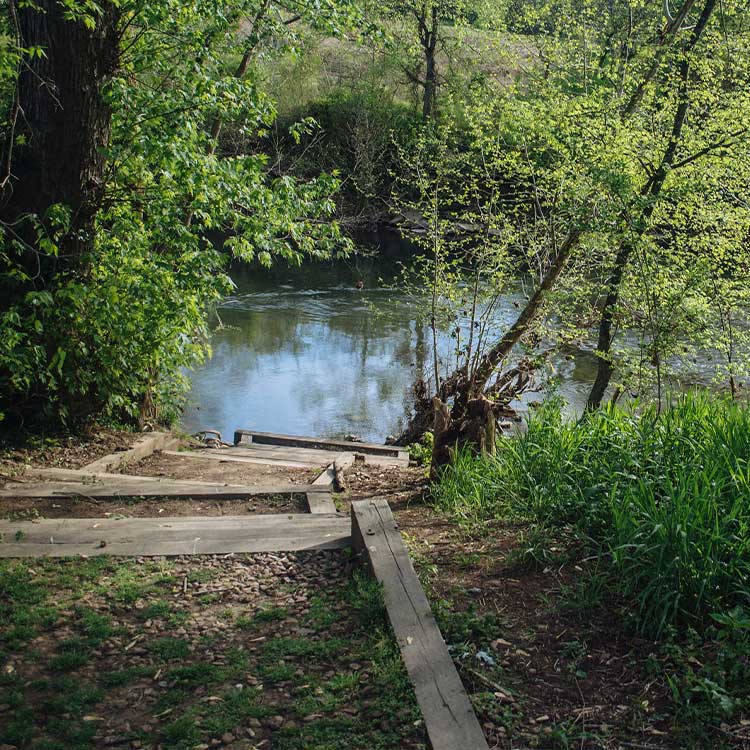
The separate Hidden Lake Trail leads toward the water.
Check the trailhead map before setting out, especially if you want to visit both locations.
How Much Time Should You Allow?
Plan on approximately 1½ to 2 hours if you want to walk the trails, stop at the historical remains, and take photographs.
That’s a suggested allowance rather than an official hiking time. Your route, pace, and trail conditions will make a difference.
Some portions of the trail network have roots, rocks, uneven footing, and steep drop-offs. Surfaces can become slippery after rain, particularly near the bluffs.
Wear shoes with good traction, bring water, and take care along exposed edges.
Don’t assume the route to the dance floor is wheelchair-accessible or suitable for anyone who needs a smooth walking surface. Contact park staff about accessibility before visiting.
Restroom facilities may not be available at the access point, so plan ahead and confirm current arrangements.
Check the Gate Hours Before Visiting
Hidden Lake is a gated park access area, and closing times can change with the season.
Check the posted closing time when you arrive and leave enough time to return to your vehicle before the gate is locked.
You can find updates on the official Harpeth River State Park website or call 615-952-2099 for visitor information.
And while the lake was once used for swimming, that history doesn’t mean swimming is permitted there today. Plan on hiking and sightseeing unless park staff confirms otherwise.
Hidden Lake doesn’t look much like the resort that once attracted summer crowds. The beach and orchestras are gone, and the woods have taken over much of the property.
But the dance floor is still there—a surviving piece of the days when people traveled west of Nashville not just to enjoy the lake, but to dance beside it.