
You can spend two hours walking through downtown Nashville, paying for attractions and chasing the perfect photo, without noticing some of the city’s strangest history sitting right in front of you.
From a hotel that once kept live alligators to a mansion with its own zoo and a government building with a man buried inside its walls, these 11 places have stories worth knowing. Some are hiding behind ordinary doors. Others are famous landmarks with secrets even longtime Nashvillians might have missed.

1. The Nashville Hotel That Once Had Live Alligators in Its Lobby
Union Station, at 1001 Broadway, opened in 1900 as Nashville’s grand railroad terminal. Today, it’s a historic hotel, but more than a century ago, travelers passing through the station could encounter something considerably stranger than a delayed train.
Live alligators.
And not just one.
According to the National Trust for Historic Preservation, the original station lobby once featured two pools that housed alligators.
Imagine stepping off a train in your traveling clothes, carrying your luggage into a magnificent building with soaring ceilings and colorful stained glass. You’re expecting to find a ticket counter, perhaps a restaurant, and plenty of other travelers.
Instead, there are alligators.
That’s a pretty memorable welcome to Music City.
The building itself is worth a good, long look. Its enormous barrel-vaulted ceiling rises above the lobby, filling the space with soft light that passes through stained glass. Stone, decorative details, and the impressive clock give the place an old-world elegance that’s hard to find in newer hotels.
Then there’s a detail most people miss.
Look toward the mezzanine-level clock. The two female figures decorating it are known as Miss Louisville and Miss Nashville. According to the National Trust, they were modeled after two daughters of the station’s builder.
Here’s what makes this place even more remarkable.
Some of today’s hotel guest rooms were originally railroad offices, complete with unusual layouts and windows overlooking the old station lobby.
When passenger rail service declined, Union Station faced an uncertain future. Preservation efforts eventually saved the building, and it became a hotel in the 1980s.
The transformation preserved a remarkable piece of Nashville’s railroad history.
The insider trick is to pay attention to the architectural details rather than treating the building as just another hotel. The lobby clock, mezzanine, and stained glass tell a story that doesn’t require an overnight reservation to appreciate.
Union Station is an operating hotel, not a public museum. Visitors interested in seeing the lobby should respect guest areas and any access restrictions. Hotel parking, dining, and overnight accommodations are separate expenses.
Don’t go looking for the alligator pools, either. Those belong to the station’s past.
And forget trying to access old railroad offices now used as private guest rooms.
But if live alligators in a train station sound extravagant, wait until you hear what one Nashville woman built around her house.
2. The Mansion That Had Its Own Zoo, Bowling Alley, and Running Water
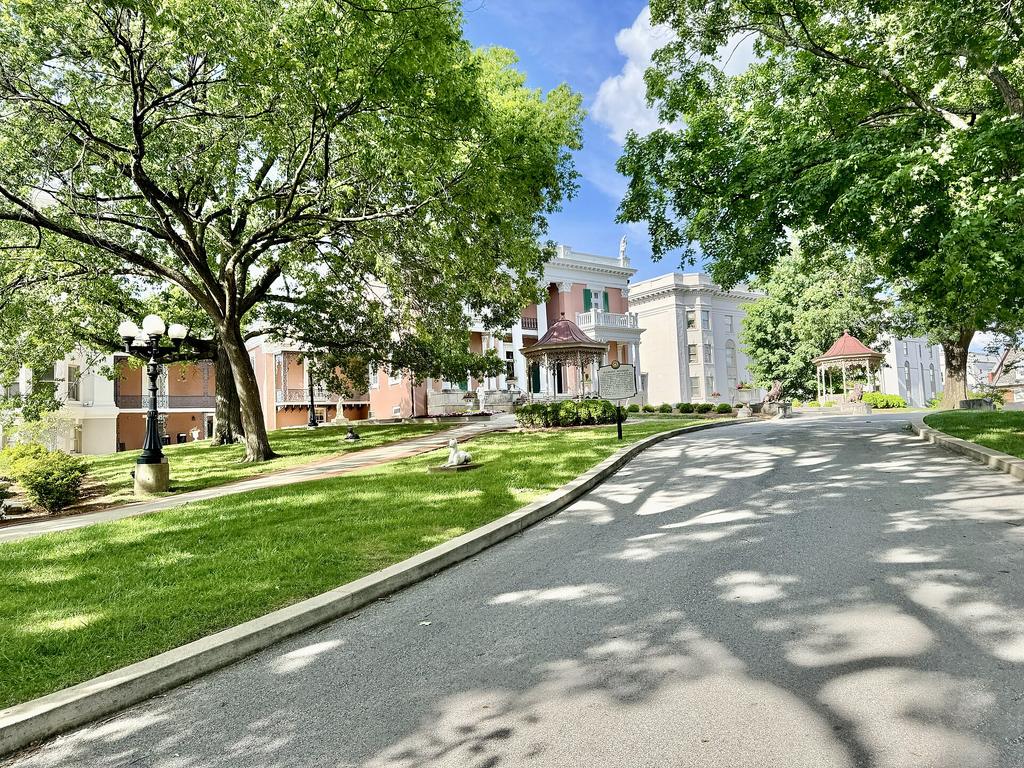
Belmont Mansion, at 1900 Belmont Boulevard, began taking shape in 1850 and expanded through 1860. The Italian-style villa eventually contained 36 rooms and stood on an estate covering approximately 175 acres.
The mansion was the largest home built in Tennessee before the Civil War, according to the organization that preserves it.
And the house was only part of the attraction.
Its owner, Adelicia Acklen, had a private zoo, bowling alley, bathhouse, art gallery, and elaborate gardens.
There was even a greenhouse and conservatory stretching approximately 200 feet.
Think about that for a minute.
Today, visitors see Belmont University buildings surrounding the historic mansion. It’s a busy college campus where students head to classes, but the property once looked like an entirely different world.
Imagine the carefully arranged gardens, decorative gazebos, and a grand house filled with beautiful furnishings.
The estate had its own water tower, which still stands. That system helped supply water to the grounds and supported plumbing conveniences that were extraordinary for a home of that era.
This wasn’t just a big Southern house.
It was practically a private resort.
Here’s the part that gets overlooked in all the talk about luxury.
Belmont Mansion’s enormous estate was built and operated in part through the labor of enslaved Black people, whose lives are now an important part of the museum’s historical interpretation.
That history matters just as much as the beautiful rooms.
The mansion’s preservation organization documents the lives of the Acklen and Cheatham families, enslaved African Americans, and immigrants whose work helped maintain the property.
It gives visitors a fuller picture of what life inside such an elaborate estate actually required.
The best way to experience Belmont Mansion is through its guided historical interpretation, rather than simply taking photographs of the exterior.
Ask about the original estate layout and water system. Those stories help make sense of how a property with a zoo and bowling alley operated long before modern conveniences became ordinary.
Belmont Mansion is a ticketed historic house museum. Check its current tour schedule and admission prices before planning a visit.
Because the mansion stands on an active university campus, follow designated visitor routes and parking instructions. Don’t assume that university buildings or other surrounding spaces are part of the museum tour.
And remember that not every original feature of the sprawling estate survives.
The zoo and bowling alley are historical features, not attractions you can tour today.
Still, the surviving mansion is remarkable enough.
But Nashville has another historic luxury property where one of the most talked-about attractions isn’t a ballroom or bedroom.
It’s a restroom.

3. The Luxury Hotel Where People Come to See the Bathroom
The Hermitage Hotel, at 231 Sixth Avenue North, opened in 1910 as Nashville’s first million-dollar hotel. Its grand lobby, elegant architectural details, and historic public spaces helped establish it as one of Tennessee’s most famous hotels.
But there’s something downstairs that surprises people.
A men’s restroom.
Not just any restroom, mind you.
The historic Art Deco facility near the Oak Bar features green-and-black tile, decorative details, terrazzo flooring, and an old-fashioned shoeshine station.
It became famous enough to win America’s Best Restroom competition in 2008.
Only in Nashville could a century-old bathroom become a sightseeing attraction.
The colors and materials make the space feel unlike the ordinary restroom found in a modern hotel. It’s a piece of decorative design from another time.
And the story gets more interesting when you learn how the hotel originally operated.
According to the National Trust for Historic Preservation, certain areas of the Hermitage were once separated by gender.
Women weren’t allowed into some spaces used by men, including the Oak Bar.
A small window once allowed drinks to be passed to women without requiring them to enter the bar itself.
That sounds unbelievable today, but it says plenty about how social rules have changed.
Here’s the part that gives this hotel a much bigger place in American history.
In 1920, the Hermitage Hotel became a center of political activity during Tennessee’s deciding role in ratifying the 19th Amendment, which secured women’s constitutional right to vote.
Supporters and opponents of women’s suffrage gathered in Nashville as the state legislature considered ratification.
The hotel was such an important gathering place for political maneuvering that it became known as the third house.
Suffrage leader Carrie Chapman Catt stayed at the hotel. Yellow roses became associated with ratification supporters, while red roses signaled the opposition.
Imagine those competing groups moving through the same elegant building, knowing that a major moment in American history was being decided nearby.
The insider move here is to look beyond the famous restroom.
The hotel’s historic architectural details, photographs, and exhibits tell stories that are easy to miss when you’re focused on getting a picture.
Access to the historic restroom depends on hotel policy, occupancy, and staff permission. Never enter an occupied restroom for sightseeing or photography.
The Hermitage is a working luxury hotel. Respect private guest areas, events, and any restrictions on public access. Overnight stays and dining are not necessary to appreciate the building’s history, but those services have their own costs.
And while the Hermitage hides its surprises downstairs, the next building puts its strangest secret right inside the sanctuary.
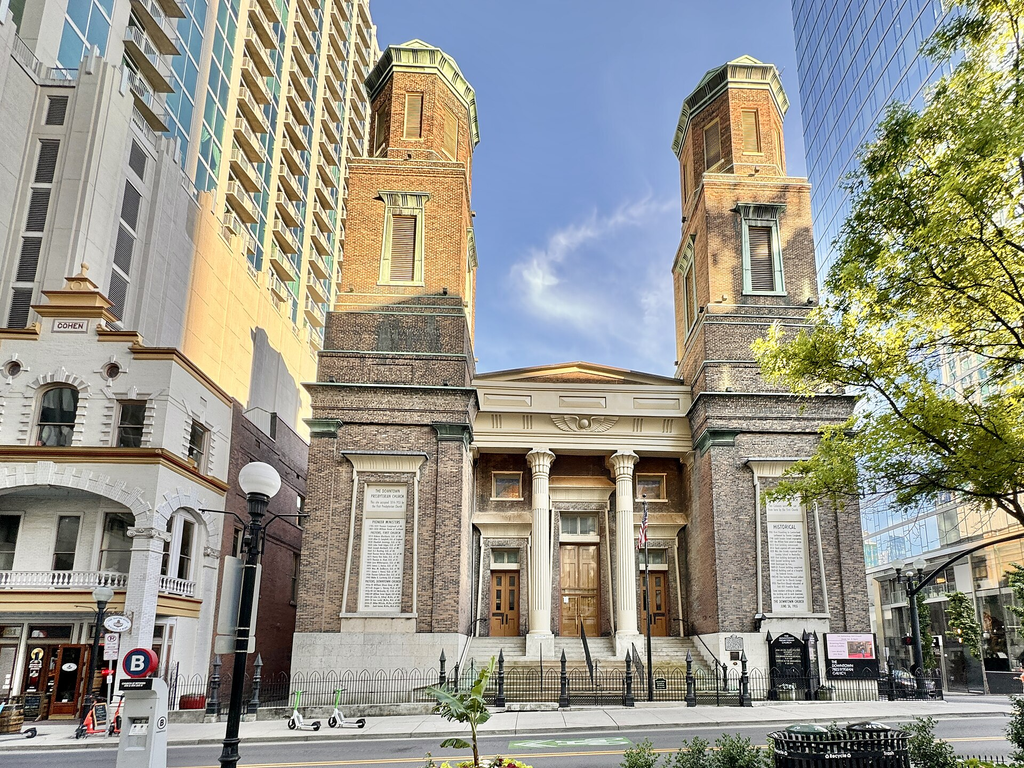
4. The Downtown Church That Looks Like Someone Moved Ancient Egypt to Tennessee
Downtown Presbyterian Church stands at 154 Rep. John Lewis Way North. Its current building dates to 1849, with a design by William Strickland, the same architect responsible for the Tennessee State Capitol.
But this is no ordinary-looking church.
Its architecture was inspired by ancient Egypt.
Step inside the sanctuary and the usual expectations of Southern church design disappear.
Columns draw inspiration from Egyptian architecture. Painted decorations and architectural illusions create an atmosphere that feels closer to an ancient temple than a traditional Presbyterian church.
The walls and ceiling contain elaborate ornamentation that rewards a slow look.
According to the Presbyterian Historical Society, major renovations in the 1880s introduced the decorative scheme that remains a defining feature of the sanctuary.
Parts of the painted interior were designed to create the illusion of additional architectural space.
Even the ceiling was decorated to suggest an open sky.
It is one of those buildings where looking upward makes all the difference.
But the beautiful interior holds a far more serious story.
During the Civil War, federal troops occupied Nashville, and the church was converted into a military hospital on two occasions.
Think about that change.
A place built for prayer became a place where wounded soldiers received medical care.
The same walls witnessed two very different chapters of Tennessee history.
Here’s the surprising twist.
The Egyptian Revival church came close to being demolished for a parking garage in the 1950s.
The Presbyterian Historical Society explains that the original congregation relocated, leaving the downtown building vulnerable.
Preservation efforts helped save it, and Downtown Presbyterian Church was organized in 1955.
Without those efforts, one of Nashville’s most unusual architectural landmarks might have disappeared.
The insider trick is to research the building’s sanctuary access before visiting. Exterior photographs don’t come close to showing what makes this place special.
It remains an active church, not a walk-in attraction with guaranteed daily sightseeing hours.
Visitors should check worship schedules, special events, and any available public tours. Respect services, private gatherings, and restricted rooms.
Parking downtown can be an expense, so combining this stop with other nearby historic sites can make the trip more practical.
And don’t confuse the church’s Egyptian decoration with an actual ancient structure. Its design reflects a nineteenth-century American fascination with Egyptian architecture.
Now, if you think Nashville’s architectural surprises stop with ancient-looking temples, the next place tells a story many people have forgotten.
Music City once built its own cars.
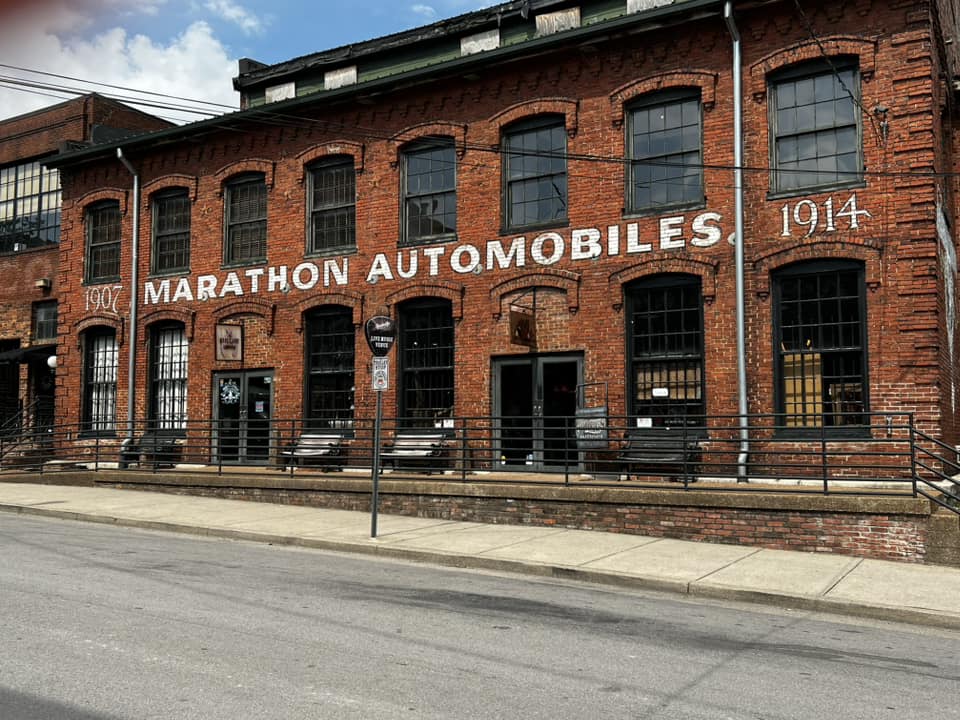
5. The Old Factory Where Nashville Made Automobiles Before It Became Music City
Marathon Village sits along Clinton Street in a preserved industrial complex connected to Nashville’s early manufacturing history. Marathon automobiles were produced here during the early 1910s, with Nashville automobile production ending in 1914.
Today, the old factory buildings house a collection of businesses, shops, and creative spaces.
But look closely at the brick walls.
They tell you this place wasn’t built for souvenir shopping.
The tall factory windows, industrial materials, and heavy construction belong to an era when manufacturing helped drive Nashville’s economy.
Before the city became internationally famous for recording studios and country music tourism, workers here were helping build automobiles.
The story began well before the Marathon name appeared.
According to Metro Nashville’s historical records, the complex served industrial operations including cotton manufacturing before Southern Motor Works moved into the site in 1910.
The business became Marathon Motor Works in 1911.
Additional factory and showroom buildings followed.
The company produced automobiles in several body styles, including touring cars, roadsters, coupes, and even limousines.
Picture the factory when automobiles were still a relatively new technology.
Metalworking machinery, assembly operations, and workers moving between industrial spaces would have defined the place.
It was a very different Nashville.
Here’s the fact that surprises plenty of people.
Metro Nashville identifies the Marathon as the first automobile manufactured entirely in the South.
That’s a considerable piece of automotive history for a city now known for guitars and songwriting.
The automobile business did not last long, but its surviving factory buildings became the foundation for something new.
In 1986, Barry L. Walker began transforming the property into the mixed-use destination known as Marathon Village.
The insider move is to look for the old industrial features before heading into the shops.
Old brickwork, factory windows, painted signs, and historic machinery make the buildings interesting even if you aren’t planning to buy anything.
Marathon Village is a working commercial complex, so hours vary by individual business. Some spaces may open for shopping, while others operate according to appointments or events.
There is no reason to assume every building or historic industrial area is open for public exploration.
Check the specific businesses you want to visit, especially if a tour, tasting, or event is involved.
Parking arrangements can depend on the event and location. Follow posted signs rather than treating every open-looking lot as visitor parking.
And don’t go searching for supposedly secret underground manufacturing tunnels. The real, documented automobile history is interesting enough without adding unsupported legends.
But if an old car factory seems like an unlikely piece of Nashville history, the next building has something equally unexpected behind its Gothic walls.
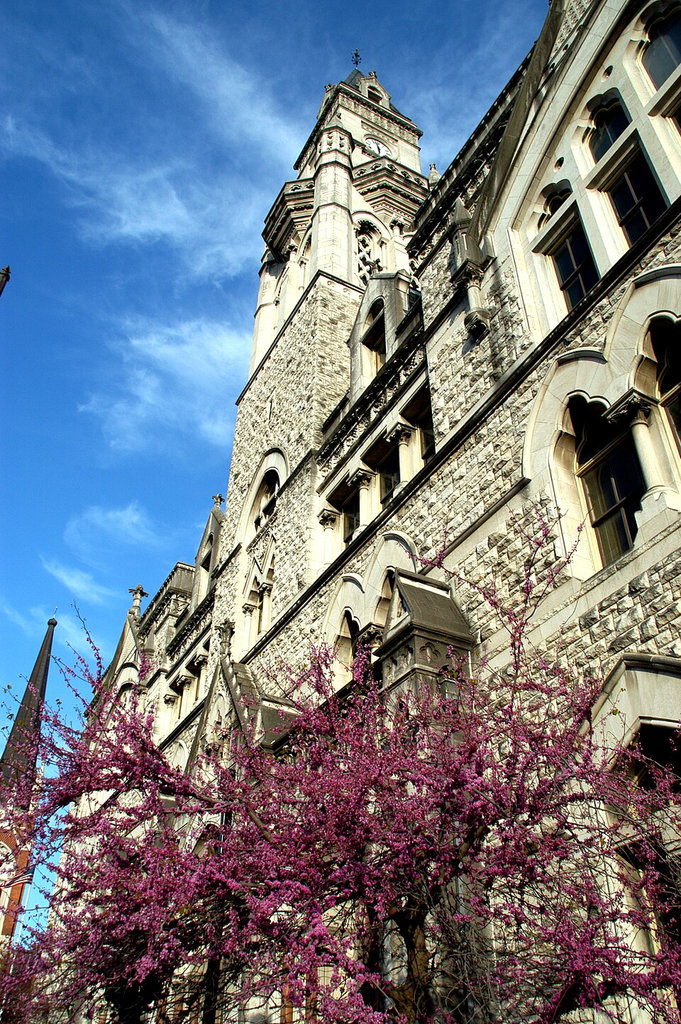
6. The Castle-Like Building on Broadway With a Courtroom Most Tourists Never See
The U.S. Customs House stands at 701 Broadway and opened in 1882. President Rutherford B. Hayes laid its cornerstone in 1877, marking a significant federal construction project in Nashville after the Civil War.
From the street, it looks almost like a small Gothic castle.
Its pointed architectural features, ornate stonework, and dramatic roofline stand apart from Broadway’s familiar entertainment buildings.
And that’s exactly why it’s worth noticing.
This part of downtown is known for music venues, hotels, and tourists looking for a good time.
Meanwhile, the Customs House carries the history of federal government operations stretching back more than a century.
The building originally housed federal offices, including postal operations, Treasury Department functions, and Justice Department activities.
Courtrooms were located on its upper floors.
As Nashville grew, the building expanded.
An addition was completed in 1905, followed by more construction by 1919.
Those later improvements produced something especially impressive.
A grand courtroom with elaborate oak paneling, heavy structural beams, and historic architectural details.
It looks nothing like an ordinary modern office.
Here’s what makes the building particularly unusual.
The historic oak-paneled courtroom remains in use as Courtroom One for the United States Bankruptcy Court.
According to the court’s official history, the space was once used by U.S. District Judge Edward Terry Sanford, who later served on the United States Supreme Court.
That’s a remarkable connection hiding behind a building that many visitors simply pass on their way to somewhere else.
The building also survived a period of decline.
After federal offices moved elsewhere, it deteriorated before restoration work in the 1980s helped preserve its architectural character.
The insider trick is to examine the exterior closely.
The carved stone, roofline, and historic design reward the kind of attention people often reserve for much more famous landmarks.
And because the building sits along Broadway, it’s easy to appreciate the outside while exploring other downtown attractions.
But here’s the practical warning.
This is a functioning federal courthouse and office building, not an unrestricted historic house museum.
Security rules apply. Do not assume that visitors can enter courtrooms, government offices, or other interior spaces merely to look around.
If you want to learn about the courtroom, consult official court information concerning public access.
Exterior viewing doesn’t require a sightseeing ticket, although nearby parking may involve a fee.
Sometimes the most interesting part of a landmark is something you’re not permitted to wander into.
The next building, though, was actually designed for people to wander through.
And Nashville had it long before modern shopping malls became familiar.
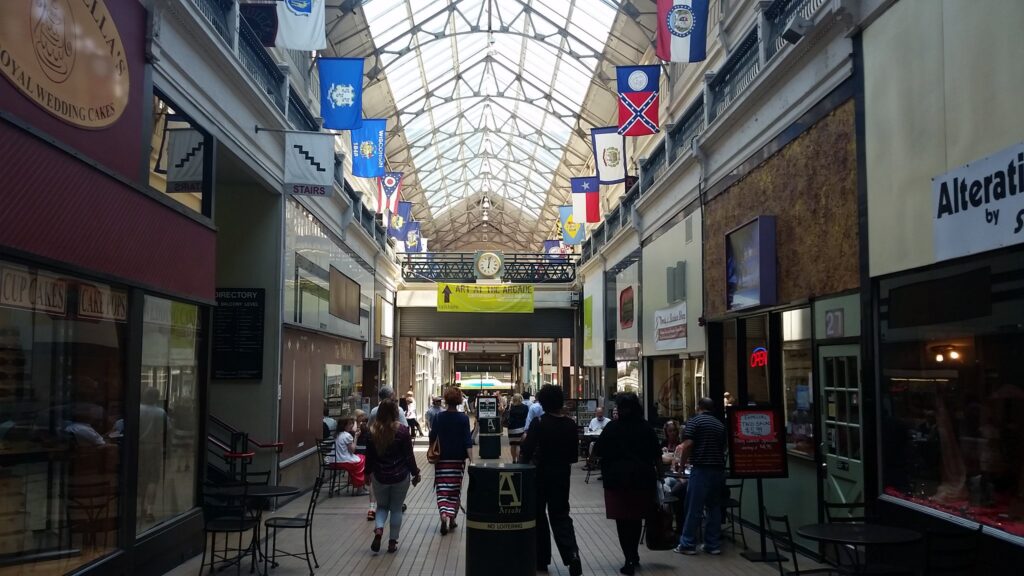
7. The Shopping Center That Brought a Little Bit of Italy to Downtown Nashville
The Nashville Arcade sits between Fourth and Fifth Avenues North and opened in the early 1900s. Inspired by the Galleria Vittorio Emanuele II in Milan, Italy, it was Nashville’s first enclosed shopping area.
This wasn’t a modern shopping mall with a giant parking lot and department-store anchors.
It was something far more charming.
Imagine stepping through a downtown entrance and finding a covered passage with shops lining the walkway.
Light filters through the glass overhead.
A second-level mezzanine overlooks the space below.
The architecture creates the feeling of a little shopping street protected from the weather.
For shoppers in the early twentieth century, that was a considerable convenience.
Instead of dealing with muddy streets and rain, they could visit several businesses along a sheltered passage.
The Arcade originally accommodated about 40 businesses, including bakeries, jewelers, fruit sellers, and novelty shops.
It’s easy to picture a downtown shopper stopping to pick up a few things, taking a moment to look through a shop window, and exchanging greetings along the walkway.
The setting feels far removed from the larger shopping centers that would come later.
But here’s the detail that makes the Arcade more than an old-fashioned retail space.
The Arcade became an important location in Nashville’s civil rights history, including student sit-in protests at a former Walgreens lunch counter in February 1960.
That gives this building two very different historical identities.
It was an early shopping destination, but it was also connected to the fight against racial segregation.
Students from Nashville’s historically Black colleges participated in nonviolent protests challenging discriminatory lunch-counter practices.
Those events helped change the city.
And they deserve to be remembered alongside the building’s attractive architecture.
The insider move is to look for the historical markers and take time to understand what happened in the surrounding Fifth Avenue district.
The Arcade has also been associated with downtown galleries and independent businesses.
If you enter during public operating hours, look up toward the historic upper level and glass roof rather than rushing directly through.
There’s no need to buy anything just to appreciate the architecture when the passage is open.
But here’s the catch.
Business hours vary, and access to the passage may be limited outside operating periods. Shops and galleries also have their own schedules.
Don’t count on finding every storefront open during an evening visit.
If the passage is closed, the exterior entrances and surrounding historic district still offer plenty to examine.
And the Arcade has one more advantage: it fits naturally into a downtown history walk.
The next stop proves that another familiar Nashville building was designed to make people feel hopeful during one of the country’s hardest times.

8. The Art Museum That Was Built to Give Nashville Hope During the Great Depression
The Frist Art Museum stands at 919 Broadway in a building constructed between 1933 and 1934. Before it became one of Nashville’s best-known art museums, it was the city’s main post office.
And this wasn’t an ordinary post office.
It was built during the Great Depression, when architecture could send a message about stability, confidence, and the future.
From the outside, the building looks dignified and restrained.
White Georgia marble and gray-pink Minnesota granite give it a solid, permanent appearance.
The lines are clean, with fewer decorative details than you might expect from an elaborate public building.
But walk inside and the mood changes.
The historic interior features rich materials, geometric patterns, cast-aluminum details, and decorative stonework.
The style is Art Deco, and it makes even a former postal lobby feel special.
Now imagine the same space when it was handling letters and packages.
Instead of visitors arriving to see paintings, people came to conduct postal business.
Nearby Union Station helped connect Nashville’s mail service with passenger and freight rail operations.
The building’s large sorting areas had high ceilings and open floor plans.
Those practical features later made them especially suitable for art galleries.
Here’s the surprising part.
The Frist’s original architecture was designed to communicate permanence and confidence during an economic crisis, not simply to look beautiful.
According to the museum’s official building history, the restrained classical design reflected federal architectural goals of the Depression era.
The government wanted buildings that suggested stability while using streamlined forms that controlled construction costs.
There’s something moving about that.
A building intended to reassure people during difficult times eventually became a place devoted to creativity and discovery.
The transformation also preserved important architectural features.
During the museum conversion, designers introduced new clerestory windows that brought natural light into areas where an earlier skylight had been covered.
The insider tip is to take advantage of the museum’s architecture tours.
The Frist lists architecture tours on Saturdays and Sundays at 3:30 p.m. Check that the tour is operating before your visit.
You can learn about the building itself rather than focusing only on the temporary exhibitions.
For regular museum visits, published hours include Monday and Thursday through Sunday, with Tuesday and Wednesday closures. Thursday evening hours extend later than the museum’s typical daytime schedule.
Exhibition admission and any special programs may involve fees, so check current ticket information.
And don’t assume the same artwork will be there on your next visit. The Frist presents changing exhibitions.
But while this old post office celebrates art, another Nashville landmark preserves something even more personal.
An entrance used by generations of legendary performers.

9. The Unassuming Alley Where Music Legends Entered the Mother Church
Ryman Auditorium stands at 116 Rep. John Lewis Way North and opened in 1892 as the Union Gospel Tabernacle. It was built after riverboat captain Thomas G. Ryman was inspired by the preaching of evangelist Sam Jones.
Long before it became one of the world’s best-known music venues, it was a place for religious gatherings.
But behind its familiar exterior is a much less glamorous piece of music history.
An alley.
For generations, performers entered the building through a backstage entrance reached from the alley beside the Ryman.
It’s an ordinary-looking place with an extraordinary collection of memories attached to it.
Think about the musicians who have appeared at the Ryman.
The building hosted the Grand Ole Opry during some of the most influential decades in country music.
Artists came through its doors carrying instruments, nerves, ambitions, and hopes that their performances would go well.
Visitors usually focus on the famous stage, wooden pews, and historic auditorium.
But the outside entrance connects the building to the working lives of the people who performed there.
According to the Ryman’s own historical materials, the black iron gates in the alley remain connected to the artist entrance used by performers across generations.
The setting is so recognizable that it appeared in the 1980 Loretta Lynn biographical film Coal Miner’s Daughter, starring Sissy Spacek.
Here’s what many visitors don’t realize.
Artists performing at the Ryman today still use the historic entrance associated with entertainers who took the stage more than a century ago.
And that isn’t the only overlooked detail.
Inside, the Ryman displays signed Hatch Show Print posters commemorating performances.
The print shop itself once operated directly behind the auditorium.
From 1924 until 1992, Hatch Show Print occupied a location connected to the Ryman’s immediate neighborhood.
That makes the posters more than decorations.
They’re part of the area’s musical and commercial history.
The insider move is to pay attention to those details during an official auditorium tour.
Look for the signed posters and learn how the building’s original religious purpose shaped its later use as an entertainment venue.
The historic alley can also be appreciated from permitted public areas, but the artist entrance is not an invitation to enter backstage.
Don’t try to slip through gates or follow performers into restricted spaces.
The Ryman offers ticketed tours and live performances, with schedules and pricing varying by date and event.
And while its stage has hosted generations of famous names, the building’s story began with a riverboat captain who wanted to create a house of worship.
That’s quite a transformation.
But another Nashville landmark began with a different kind of ambition.
It was built to celebrate Tennessee, and it wasn’t supposed to last.

10. The Nashville Landmark That Was Supposed to Be Torn Down More Than a Century Ago
The Parthenon stands in Centennial Park at 2500 West End Avenue. Its original structure was built for the Tennessee Centennial Exposition in 1897, and the permanent version visitors recognize today was completed in 1931.
It was originally supposed to be temporary.
That’s right.
One of Nashville’s most recognizable landmarks was designed for an event, not for centuries of use.
In 1897, Tennessee celebrated its centennial with an elaborate exposition.
Nashville already carried the nickname Athens of the South, so organizers decided to construct a full-scale version of the famous Greek Parthenon.
The original was built with materials suitable for temporary exposition buildings, including plaster, wood, and brick.
It looked impressive.
But the materials weren’t intended to withstand generations of Tennessee weather.
As the plaster deteriorated, Nashville faced a problem.
Should the city tear down its increasingly damaged landmark or find a way to preserve it?
The decision eventually favored rebuilding.
Architects and builders used stronger materials, including reinforced concrete, while preserving certain parts of the original structure.
Here’s the part that surprises people who assume the entire building is a modern replica.
Portions of the original 1897 brick walls and non-load-bearing columns remain incorporated into the permanent Parthenon.
According to the Parthenon’s official history, the exterior reconstruction was completed by 1925.
Work continued inside until 1931.
But the biggest attraction was still missing.
The enormous statue of Athena that visitors see today didn’t arrive until much later.
Nashville sculptor Alan LeQuire was commissioned to create the statue in 1982.
The 42-foot figure was unveiled on May 20, 1990.
Its gilding and painted details were completed in 2002.
Stand beneath that statue and look upward.
The scale is difficult to understand until you’re actually in the room.
The soaring columns, ornate details, and enormous figure create an atmosphere completely unlike the honky-tonks just a short trip across town.
And the lower level contains art galleries, giving the building another purpose beyond being a replica of an ancient temple.
Here’s the insider trick.
Don’t confuse visiting Centennial Park with entering the museum.
You can appreciate the impressive exterior while spending time in the park, but admission is required to explore the museum galleries and the Athena statue inside.
Check current museum hours, ticket prices, and park conditions before visiting.
The park and the museum are separate experiences, and they may have different operating schedules.
If you’re mainly interested in photography, the exterior offers plenty of angles without requiring an indoor ticket.
But don’t make the mistake of assuming the building is simply a decorative shell.
There is a remarkable amount of history and artwork inside.
And as impressive as the Parthenon’s survival is, Nashville has one last building with a detail that’s even harder to believe.
Its architect never left.
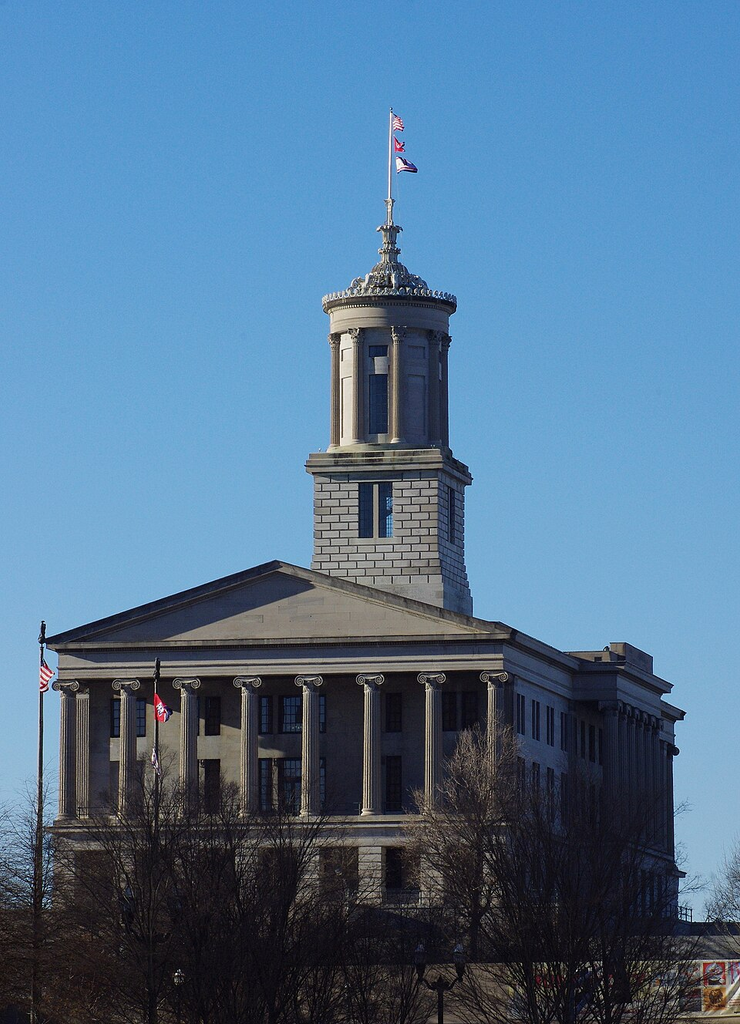
11. The Government Building Where the Architect Is Buried Inside the Walls
The Tennessee State Capitol stands at 600 Dr. Martin Luther King Jr. Boulevard. Construction began in 1845 and ended in 1859, creating one of the state’s most important government landmarks.
Its architect was William Strickland.
And he’s still there.
Literally.
Strickland was an accomplished architect whose work helped shape Nashville during the nineteenth century.
He designed the Capitol in the Greek Revival style, creating a building inspired by classical architecture.
Unlike many state capitol buildings, Tennessee’s has no traditional dome.
Its long, imposing shape and prominent position on Capitol Hill give it a distinctive appearance.
Inside, the building continues to serve as the home of the Tennessee General Assembly and the governor’s office.
But the story of its construction contains an unusually personal chapter.
Strickland began overseeing the project in the 1840s.
Years passed as the building gradually took shape.
Then, in 1854, he died before the Capitol was finished.
Rather than burying him in a traditional cemetery, officials arranged for his burial within the building he had designed.
According to the Tennessee State Museum, his tomb is located in the Capitol’s north façade.
Think about what that means.
The man who spent years designing and overseeing one of Tennessee’s most significant structures became a permanent part of it.
The building was completed five years after his death.
Here’s the detail that makes the Capitol especially unusual.
William Strickland is not the only person buried within the Capitol structure. Samuel Morgan, who led the Capitol Commission, was also buried there.
And the unusual burial history doesn’t stop at the walls.
President James K. Polk and his wife, Sarah, are buried on the Capitol grounds.
That makes the surrounding property an important historic site as well as a center of state government.
The insider move is to learn about these burials before taking a Capitol tour.
Otherwise, it’s possible to admire the architecture without understanding that the building is also connected to the final resting places of people who helped shape Tennessee.
The Capitol’s grounds also contain statues honoring significant figures from the state’s history.
But there is an important practical consideration.
This is an active government building with security requirements and official business taking place inside.
Tours and public access are subject to government schedules. Renovation work on the Capitol grounds has also affected certain pedestrian routes during 2026.
Check current state visitor information before traveling to the building.
Don’t assume that all exterior paths, entrances, or interior rooms are open.
And don’t try to find a way inside the walls to see Strickland’s resting place.
The significance of his burial is historical, not an invitation to explore restricted structural spaces.
For a building so closely associated with everyday Tennessee politics, the Capitol contains one of Nashville’s most remarkable human stories.
The man who helped create it never lived to see it finished.
Yet his work, and his final resting place, remain part of Tennessee’s history more than 170 years later.
The Unexpected Fact About Nashville’s Most Famous Historic Buildings
There’s one connection between several of these Nashville landmarks that’s easy to miss.
William Strickland, the architect buried in the State Capitol, also designed Downtown Presbyterian Church. That means two of Nashville’s most unusual historic buildings, one inspired by ancient Greece and the other by ancient Egypt, came from the same architect.
Even more remarkable, Strickland’s Egyptian-style church nearly disappeared in the 1950s, while Union Station also faced an uncertain future before preservation efforts helped save it.
Nashville’s history isn’t just a collection of old buildings. It’s a collection of choices people made about what was worth keeping.
The next time you’re downtown, look past the neon lights and the newest attractions. Look up at the stonework, look into the old passageways, and remember the stories behind those doors.
Sometimes the best part of Nashville is the history hiding in plain sight.