
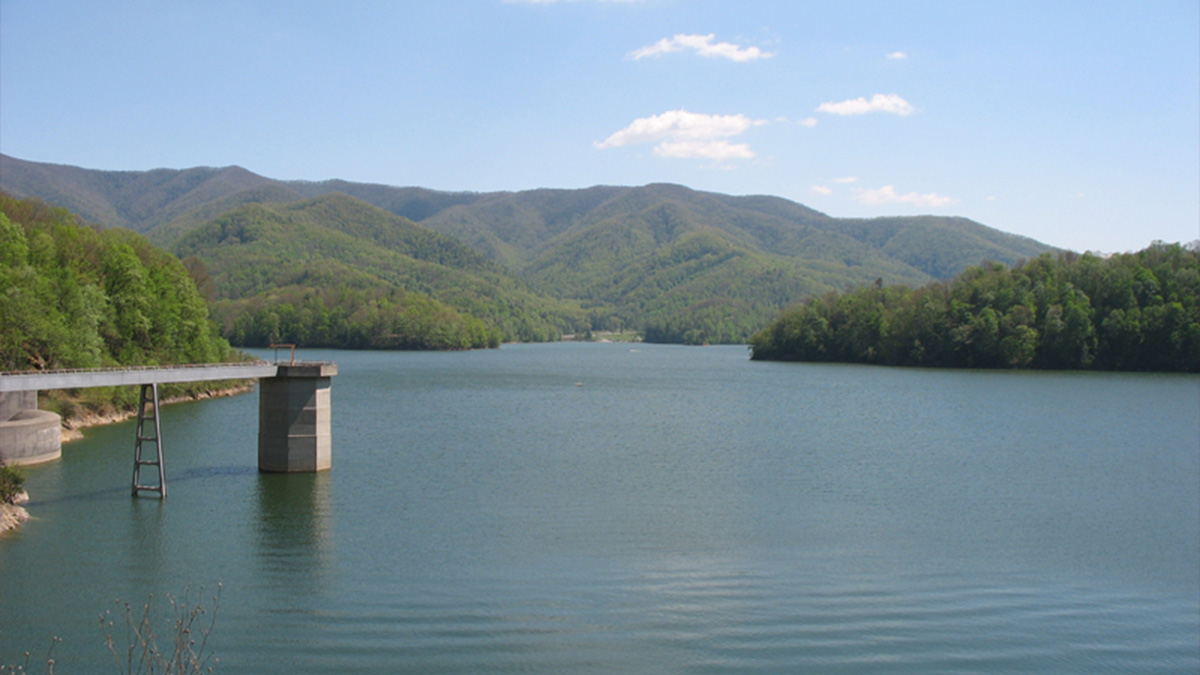
Before Watauga Lake covered Old Butler, contractors moved its houses toward higher ground.
Five contractors relocated 125 residences and 50 other structures before the reservoir filled. Families had to leave the valley, but some took their homes with them.
Today, Butler’s story survives in relocation photographs, a general store, and a museum modeled after the town’s former railroad depot.
The move involved more than finding another place to live. A community with a school, businesses, and a railroad connection had to leave the location around which it had grown.
Some buildings survived that change. The old townsite did not.
Before the Water, a Railroad Town
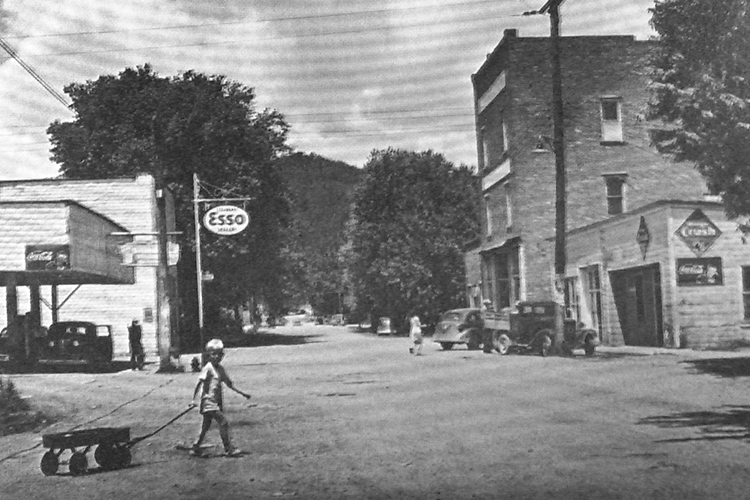
Old Butler stood where Roan Creek met the Watauga River in Johnson County, in northeastern Tennessee.
The settlement was first called Smith’s Mill, after Ezekiel Smith’s gristmill. After the Civil War, it became Butler, honoring Colonel Roderick R. Butler.
Farming, lumber, and trade supported the community. When the railroad arrived in 1902, timber and farm goods gained a route to outside markets.
That connection mattered in a mountain valley. The depot gave passengers a place to board and local products a way to reach buyers beyond the community.
The town also had Watauga Academy, whose origins reached back to Aenon Seminary in 1871. Students could take part in music, drama, and literary societies.
Those details help explain what the reservoir would replace. Butler was an established community where people attended school, ran businesses, and traveled by rail.
The museum’s local history preserves that earlier community, including the institutions that shaped life before the dam.
For more places to explore the state’s railroad past, our guide to old Tennessee rail lines that are now trails includes routes through former train tunnels.
The Flood That Changed the Valley’s Future
A destructive regional flood in 1940 helped convince TVA engineers that more flood control was needed.
Construction of Watauga Dam began in 1942. Work paused during World War II, then resumed in 1946.
The dam would help control flooding and generate electricity. Its reservoir would also cover Old Butler.
For residents, the project meant leaving the valley even if their houses could be saved. Moving a building preserved the structure, but it could not preserve its original setting beside the same streets and neighboring businesses.
In 1947 and 1948, an effort led by the Rev. M. H. Carder helped secure a new site, with assistance from TVA and state planners.
Then came the work of moving buildings out of the water’s path.
TVA’s historical account documents the contractors’ work relocating buildings before the reservoir filled.
Other replacement homes were built. Some buildings did not make the journey.
The result combined relocation and new construction. Saving individual houses was one part of the work; establishing a community in another location was another.
TVA describes Butler as the only incorporated town inundated by a TVA project.
Present-day Butler remains an unincorporated community on Watauga Lake’s northern shore. The name stayed with the people and the community they rebuilt.
December 1, 1948: The Gates Closed
On December 1, 1948, Watauga Dam’s gates closed and reservoir filling began.
Water gradually transformed the old townsite into part of the lake visitors know today. The date marks the beginning of that filling process, rather than a single moment when the entire valley disappeared.
Completed in 1948, the dam stands 318 feet high and 900 feet long. Watauga Reservoir covers about 6,430 acres, with much of its surroundings adjoining Cherokee National Forest.
TVA’s Watauga overview identifies it as the highest reservoir in the Tennessee River system, at more than 1,900 feet above sea level.
The lake’s mountain setting is now part of its appeal. Understanding Butler’s history adds another layer to that view: the water occupies a valley where a community once stood.
The dam and the relocation belong to the same story. The project created a reservoir for flood control and power generation while requiring residents to begin again on higher ground.
When Old Butler Appeared Again
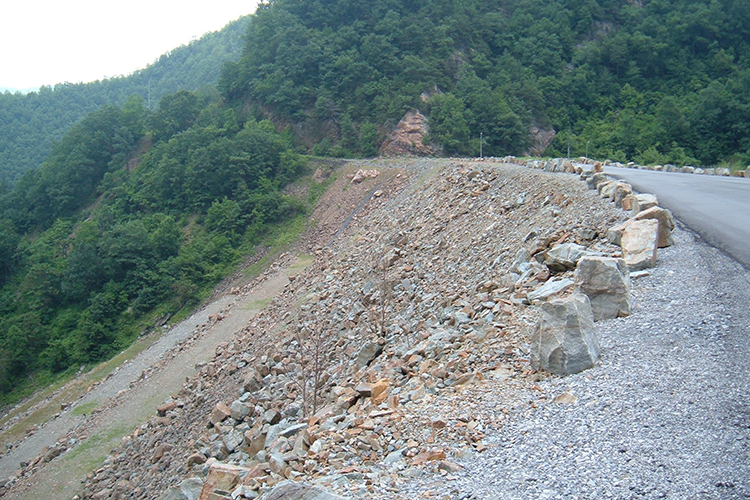
Low-water conditions exposed remains of the settlement in 1954 and 1983.
Those documented events do not mean visitors can expect to walk through Old Butler each year—or see recognizable streets and buildings from a boat.
Buildings had been moved or removed before flooding. What remained was not an intact underwater town.
That distinction matters when planning a visit. Butler’s history is easier to understand through the museum’s photographs and displays than by searching the lake for something recognizable beneath the surface.
The photographs record buildings and places before the reservoir changed the valley. Exposed remains, when they appear, show only what was left behind.
Check TVA’s Watauga lake information before an outing, and leave any exposed historical material in place. TVA prohibits artifact removal, unauthorized excavation, and metal detectors on its property.
A Depot-Shaped Museum and a Store That Moved
The Butler and Watauga Valley Heritage Museum, also branded as the Museum of Butler, TN, opened in 2000.
Its building was modeled after Butler’s former train depot. It is not the original depot relocated to a new address.
The design gives the museum a connection to the railroad that once served the town. Inside, photographs and displays trace Old Butler, Watauga Academy, dam construction, and the move to higher ground.
The relocation photographs deserve time. They document the practical work behind the story’s most striking detail: houses could be moved even though the townsite would be covered.
A short walk away, the W.S. Stout General Store tells another part of that story.
Stout opened his store near Old Butler in 1930. As reservoir construction approached, he relocated the business to Pine Orchard, along the new Highway 67.
The museum says the store was donated in 2008. The business moved and continued serving people after the valley changed.
The museum and store offer two ways to follow Butler’s history. One brings together photographs and exhibits. The other preserves a business whose story continued beyond its original location.
Together, they give visitors a reason to spend time in present-day Butler before heading to the lake.
Visiting Butler in 2026
The museum stands at 123 Selma Curtis Road in Butler. Its announced 2026 season runs May 23 through October 31, with regular hours of Saturday, 11 a.m.–4 p.m., and Sunday, 1–4 p.m., Eastern Time.
Admission is $5 per person; children under 12 enter free. Parking is free.
Because the season ends October 31, do not assume regular Sunday hours apply November 1. Check the official museum website or call 423-281-1113 before traveling.
Contact the museum about off-season visits. Special group tours depend on volunteer availability. Ask about step-free access to both buildings and the route between them.
The visitor page also highlights the American Veterans Memorial Walk. The museum’s homepage features the America 250 Digital Exhibit.
Start with the exhibits if the relocation story is your main reason for coming. Seeing the earlier town and its buildings in photographs gives the lake stop afterward more context.
For that stop, confirm current access. The Recreation.gov listing for Watauga Point Recreation Area listed winterized bathrooms and drive-through-only access to the general area; check the latest notice before making plans.
If you’re planning more time on the water elsewhere in the state, our guide to eight Tennessee lakes known for clear water offers more places to consider.
At the museum, Butler still has faces, storefronts, and houses in transit. At the lake, the old address is beneath the water.