

Nashville is famous for country music, honky-tonks and neon-lit Broadway.
But drive a few miles west of downtown and the scenery suddenly looks a lot more like ancient Greece.
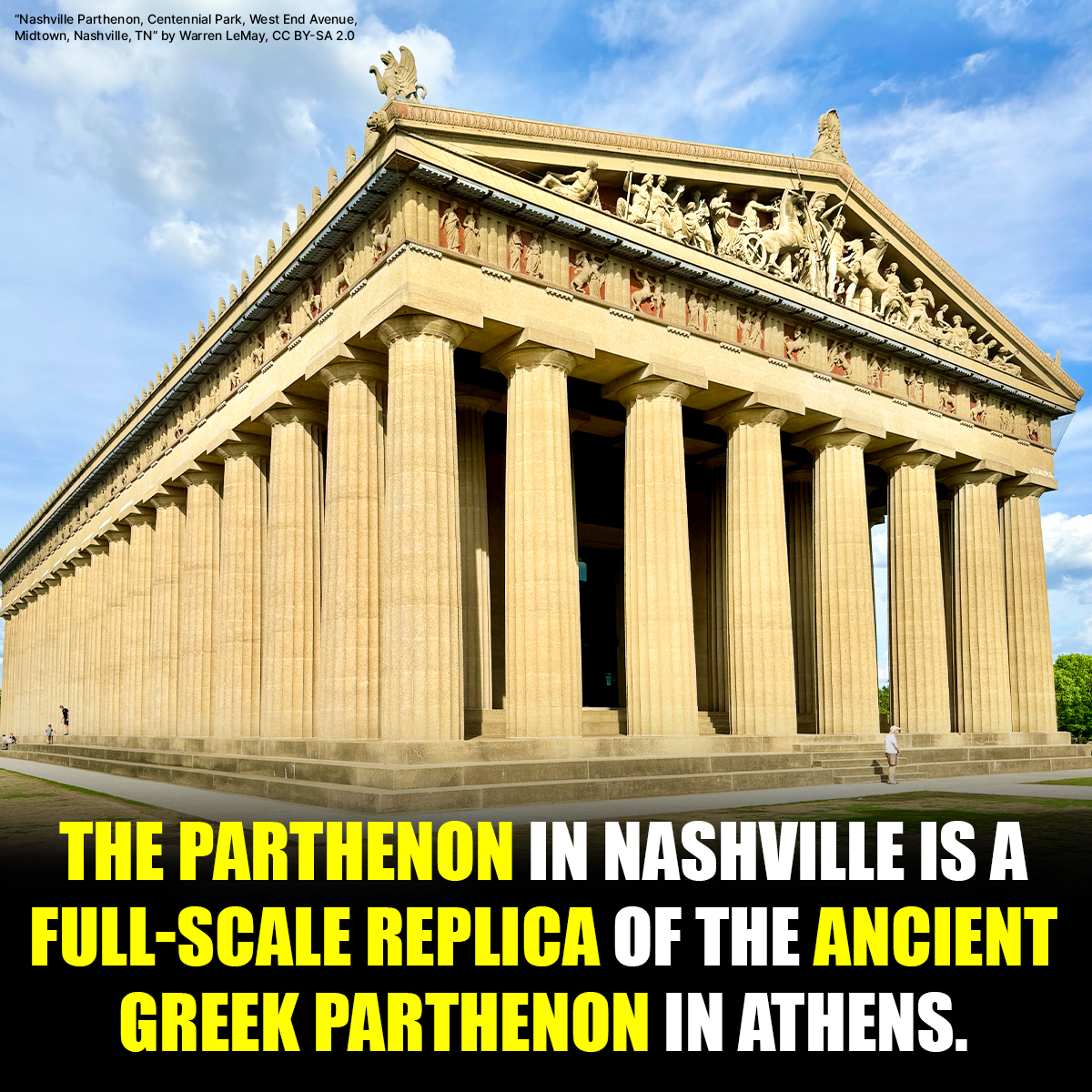
Standing in Centennial Park is a full-scale replica of the Parthenon in Athens, complete with massive columns and a towering statue of the Greek goddess Athena inside.
It is one of Nashville’s strangest — and most recognizable — landmarks.
It started as part of a huge Tennessee celebration
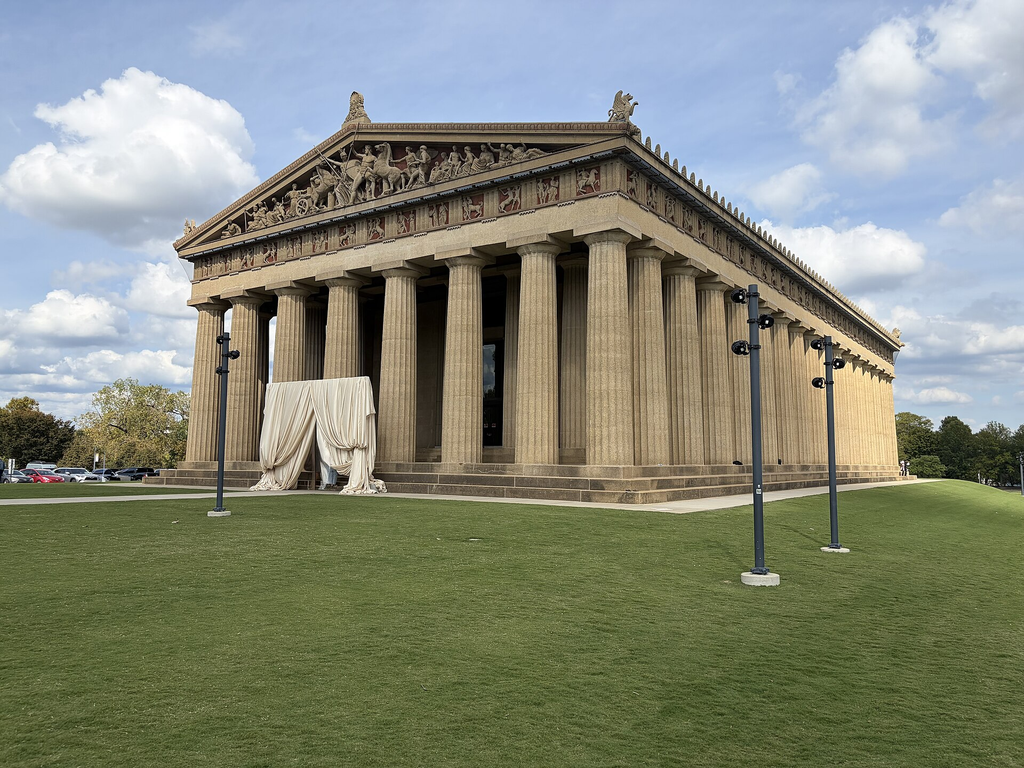
Nashville’s Parthenon was originally built in 1897 for Tennessee’s Centennial Exposition.
The event celebrated 100 years of Tennessee statehood, and the Parthenon was created as one of the exposition’s showpieces.
Unlike a small model or loosely inspired building, Nashville’s version was designed as a full-scale replica of the famous ancient Greek temple.
That makes it an unusual sight even in a city filled with distinctive attractions.
The original structure was not intended to last forever. It was later rebuilt as a permanent landmark.
The Parthenon visitors see today was completed in 1931.
Why Nashville built a Greek temple
The building makes a little more sense when you know one of Nashville’s old nicknames.
The city has long been called the “Athens of the South.”
That connection to Athens helped make the Parthenon an especially fitting centerpiece for Tennessee’s Centennial celebration.
More than a century later, the building has become part of Nashville’s identity in its own right.
A visitor who knows Nashville only for guitars and cowboy boots can be forgiven for doing a double take when a giant Greek temple suddenly appears in the middle of a city park.
Athena is hard to miss
The outside of the building may get most of the photographs, but one of its biggest attractions is indoors.
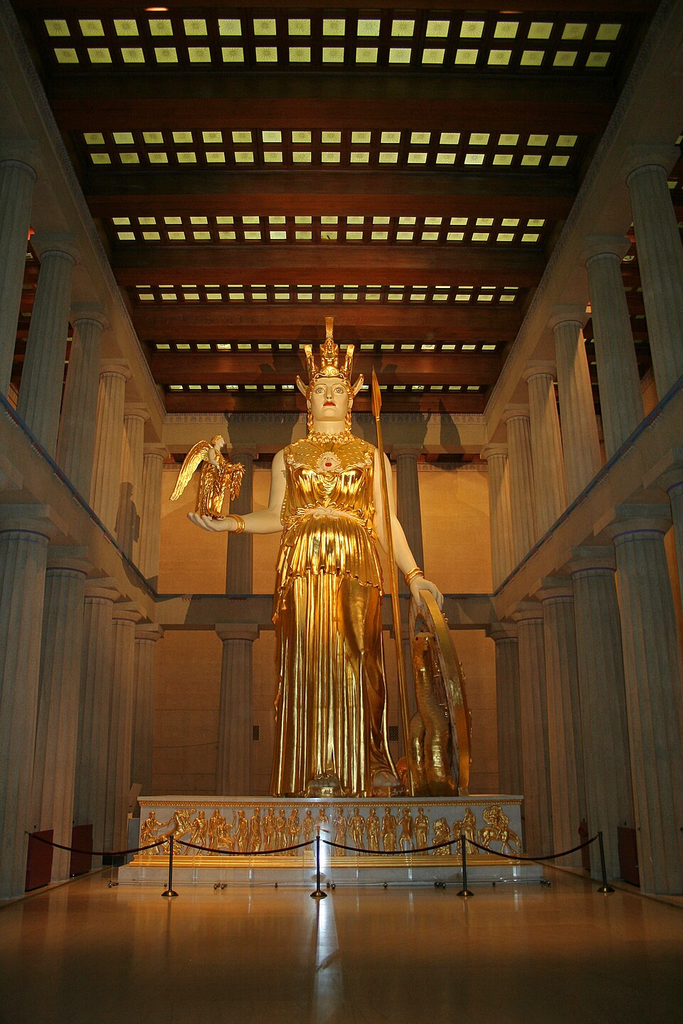
The Parthenon contains a 42-foot-tall statue of Athena.
The enormous figure serves as the centerpiece of the building and adds another connection to the ancient structure that inspired Nashville’s replica.
Today, the Parthenon also operates as an art museum and historic attraction.
That means visitors are not simply stopping by to take pictures of the columns. The building itself has an active role in Nashville’s cultural life.
You’ll find it inside Centennial Park
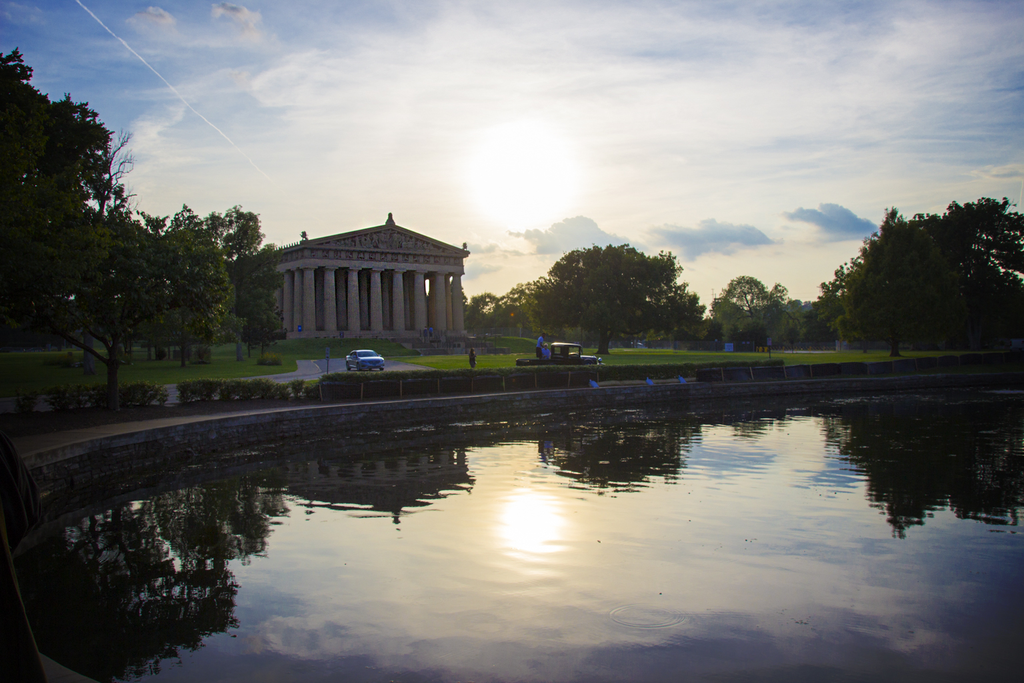
The Parthenon sits in Centennial Park at 2500 West End Ave.
The park is just west of downtown Nashville, making the landmark easy to combine with other stops around the city.
And its setting is part of the appeal.
Instead of being surrounded by dense downtown buildings, the Parthenon rises from one of Nashville’s best-known public parks. That gives visitors room to walk around the structure and see just how large it really is.
Photos can make the building look impressive.
Standing beside those columns gives you a much better idea of its scale.
A different side of Nashville
Plenty of Nashville landmarks are connected to music.
The Parthenon tells a different part of the city’s story.
It reaches back to Tennessee’s Centennial celebration, Nashville’s “Athens of the South” identity and a period when the city decided that the best way to mark a major anniversary was apparently to build an ancient Greek temple in Middle Tennessee.
More than 100 years later, that decision still gives Nashville something few American cities can claim.
You can spend the morning looking at a full-size Parthenon, then head toward downtown Nashville afterward.
That combination of ancient Greece and modern Music City is exactly what makes the place memorable.
Quick facts about Nashville’s Parthenon
- Location: Centennial Park, 2500 West End Ave., Nashville
- Original construction: 1897
- Purpose: Built for Tennessee’s Centennial Exposition
- Permanent structure completed: 1931
- Main interior attraction: 42-foot statue of Athena
- Current use: Art museum and historic attraction
- Nashville connection: The city has been nicknamed the “Athens of the South”
For anyone exploring Nashville beyond its music venues, the Parthenon offers one of the city’s most unexpected sights.
After all, there are plenty of places where you can hear country music.
There are considerably fewer where you can walk through a full-size Greek temple in the middle of Tennessee.