
Downtown Nashville can get expensive fast once you add parking, drinks, food, and a whole night of chasing famous bars. The good news is that most Broadway honky-tonks still offer live music without a regular cover charge, and the main strip is only a few blocks long.
The trick is knowing how to use those blocks. Locals go earlier, follow the music, eat before everybody gets cranky, see the view, and leave before Broadway swallows the entire night.
The Broadway Most Visitors Never See Because They Arrive Too Late
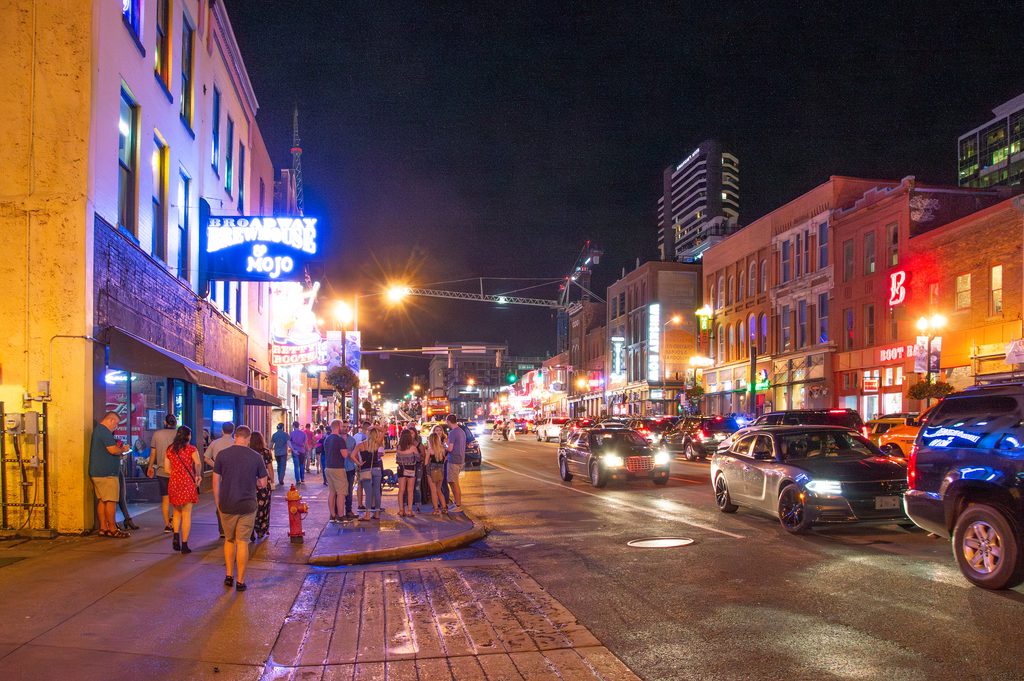
Lower Broadway’s Honky Tonk Highway runs through the heart of downtown Nashville, with live music beginning around 10 or 11 in the morning at some venues and continuing until roughly 3 a.m.
That means Broadway does not have one personality.
It has several.
Walk it in the early afternoon and you hear guitars spilling through open doors while sunlight hits the old brick facades. You can stop long enough to listen instead of being pushed along by a Saturday-night crowd.
There is still neon. There are still boots, cold drinks, rooftop bars, tourists taking pictures, and bands working through country standards.
But you can breathe.
You can actually look inside a room before deciding whether you want to enter. You may find a barstool. You can hear what the singer is doing instead of hearing three neighboring bands competing through the walls.
Come back around midnight on a Saturday and the same few blocks can feel like another city.
Here’s what catches people off guard.
Broadway’s live-music day starts hours before most first-time visitors think a Nashville nightlife district should start.
The insider move is to bring visiting friends downtown during the afternoon, particularly if the group cares more about music and Nashville character than having the biggest possible party.
Daytime also makes Broadway considerably easier for mixed-generation groups. Families should still check individual venue age policies, because those rules can change as evening arrives.
The trap is assuming you need to save Broadway until after dinner.
By then, you may be arriving just as the version locals were enjoying disappears beneath the nighttime crowds.
Start early instead.
Then do something even harder for a first-time visitor: walk past a famous name.
The Bar Locals Pick With Their Ears Instead of Instagram
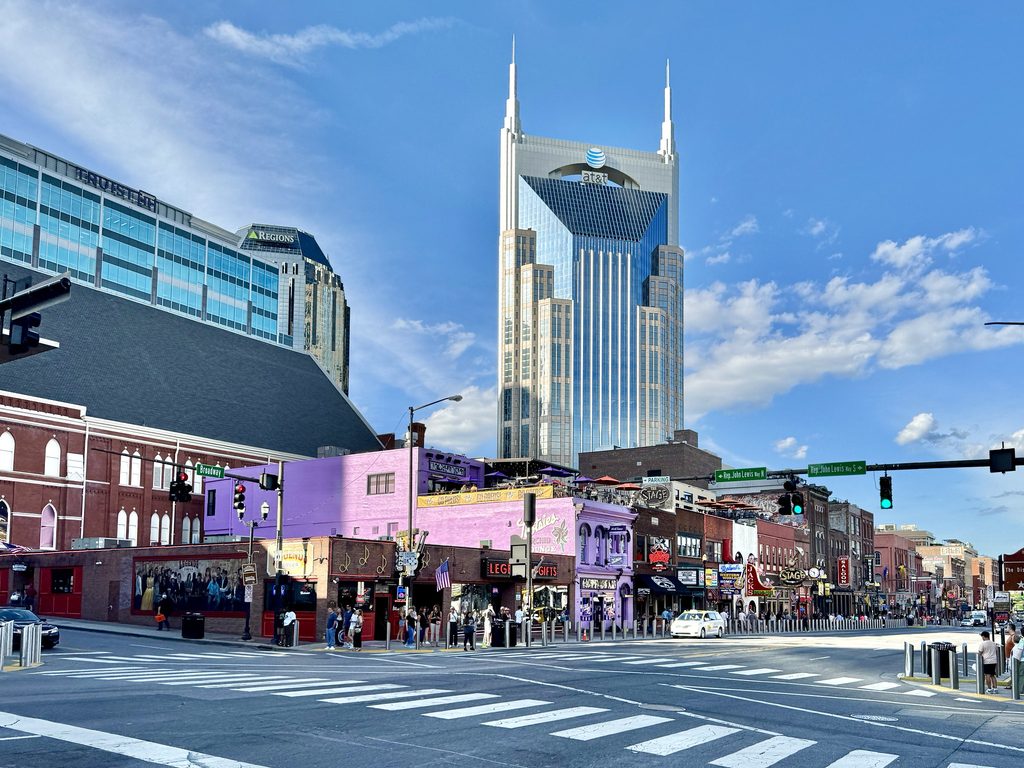
Honky Tonk Highway stretches only a few walkable blocks, yet those blocks contain enough bars and stages to turn a simple afternoon into an exhausting checklist.
Many of the venues do not charge a regular cover for ordinary live music, which means there is little reason to decide your entire route before you arrive.
Walk.
Listen.
One doorway might be sending traditional country onto the sidewalk. Another room may lean toward rockabilly. Somewhere farther down, another band is hammering through songs everybody in the room knows.
This is where visitors sometimes make Broadway harder than it needs to be.
They arrive with a list.
One celebrity bar at 4:00. Another at 5:00. A rooftop at 6:00. Another famous name at 7:00.
Suddenly the evening becomes an appointment book.
Here’s what catches people off guard.
One of Broadway’s greatest advantages is that you can hear a band from outside, decide whether you like it, and keep walking if you don’t.
The insider tip is simple: pick music, not branding.
That does not mean Nashville residents universally dislike celebrity-branded bars. Some are huge entertainment complexes with multiple stages, restaurants, rooftops, and plenty of talented musicians.
Locals just do not have to collect them.
Give each room a listen before committing. If a guitar riff coming through an old doorway makes the whole group stop walking, you have probably found your next bar.
Remember that no regular cover does not mean a free evening. Drinks, food, parking or rideshare costs, merchandise, and musician tips still add up. Special events can also have different admission rules.
The mistake is paying for things you never particularly wanted because somebody else’s Nashville itinerary said you had to.
And if your friends want the old Broadway they imagined before the giant entertainment complexes arrived, there is one little room that makes the decision much easier.
The Honky Tonk That Still Feels Like Old Broadway
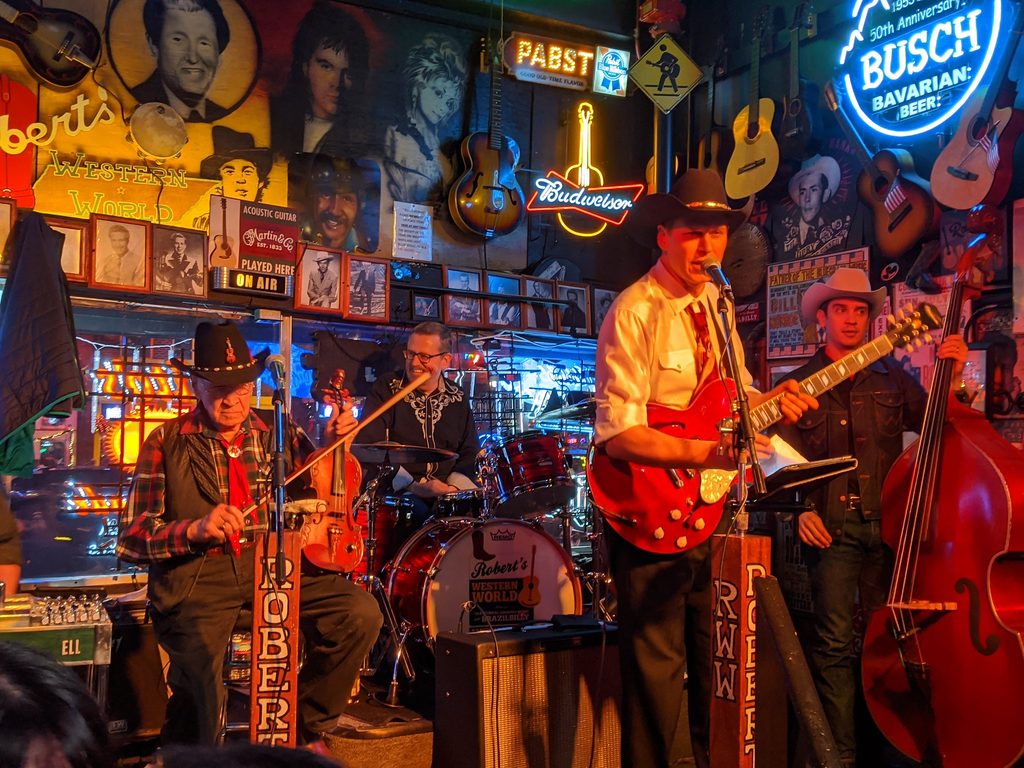
Robert’s Western World sits at 416 Broadway, right in the middle of the Lower Broadway action. The venue is closely associated with traditional country and Western swing, and current visitor information lists it operating daily from late morning into the early hours.
It is not the kind of place you need a map to understand.
You walk through the door and the room does the explaining.
The stage is close. The music feels close. Boots and Nashville memorabilia crowd the surroundings instead of enormous video walls dominating every sightline.
Then there is the food.
Robert’s is famous for its Recession Special, built around the gloriously unfancy combination of a fried bologna sandwich, chips, a MoonPie, and a PBR.
Nothing about that meal is trying to win a plating competition.
That is precisely the point.
You get the salty edge of the bologna, the crunch of the chips, a cold beer, and country music happening only a few feet away.
Here’s what catches people off guard.
Robert’s offers something that cannot be installed during a multimillion-dollar renovation: continuity with the Lower Broadway that existed before Lower Broadway itself became Nashville’s biggest tourist attraction.
The insider move is to make Robert’s an actual stop rather than sticking your head through the doorway for thirty seconds.
Listen to the band.
Give the room enough time to settle around you.
And tip the musicians.
The practical advantage is location. Robert’s sits directly on Broadway, so you do not need to sacrifice convenience to get a more traditional honky-tonk experience.
Do not build your budget around an old online price for the Recession Special, though. Prices can change, and a famous “cheap Nashville meal” stops being useful advice the second an outdated price gets repeated as fact.
The bigger trap is rushing through Robert’s because another famous bar is waiting on your checklist.
Your next worthwhile stop is practically next door anyway.
The Two Doors That Can Turn Into an Entire Afternoon
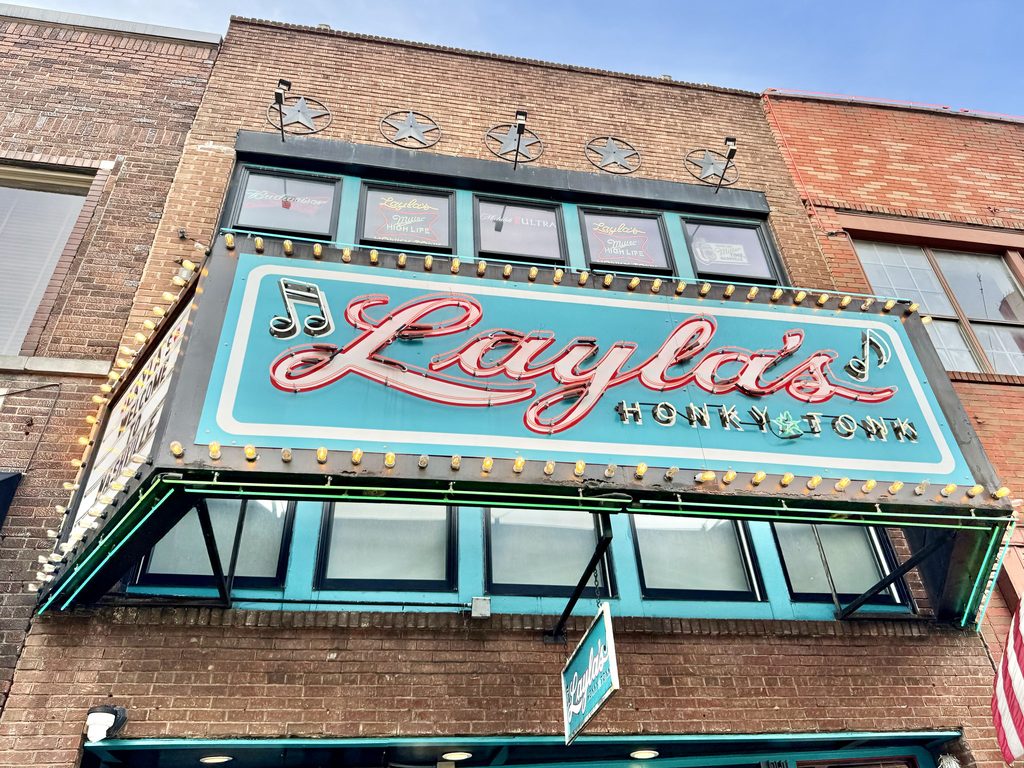
Layla’s Honky Tonk is at 418 Broadway, almost beside Robert’s Western World. Its live-music identity stretches across country, bluegrass, newgrass, rockabilly, Western, Americana, and hillbilly music.
That makes the Robert’s-to-Layla’s shuffle one of the easiest ways to show somebody that Broadway is not one enormous cover band spread across multiple buildings.
Walk out of traditional country.
Move a few steps.
Listen again.
The room at Layla’s has its own personality, and the musical mix can push the afternoon in a completely different direction. A visitor who thought “Broadway music” meant nothing but the same modern country hits may suddenly hear bluegrass picking or rockabilly coming off the stage.
That difference matters.
Broadway is at its best when you stop treating the buildings like interchangeable drinking establishments and start treating them like little live-music rooms.
Here’s what catches people off guard.
Layla’s currently allows guests under 21 with an accompanying adult before 6 p.m., then becomes 21 and older after 6 p.m.
That makes timing particularly important for families traveling with teenagers.
The insider move is to pair Robert’s and Layla’s during the afternoon rather than treating them as two separate nighttime destinations.
You can walk between them in moments.
No complicated transportation plan. No cross-town drive. No elaborate itinerary.
Just listen to what is happening in each room.
Families need to pay attention to that 6 p.m. cutoff at Layla’s. Do not assume daytime access rules continue into the night.
And remember that individual venue policies can matter even when Broadway itself looks wide open and casual.
The trap is dragging everybody through six or seven places just because there are six or seven places available.
Two good rooms can beat six rushed ones.
Especially if everybody eats before the next part of the night begins.
The Four-Story Stop That Solves Half Your Broadway Problems
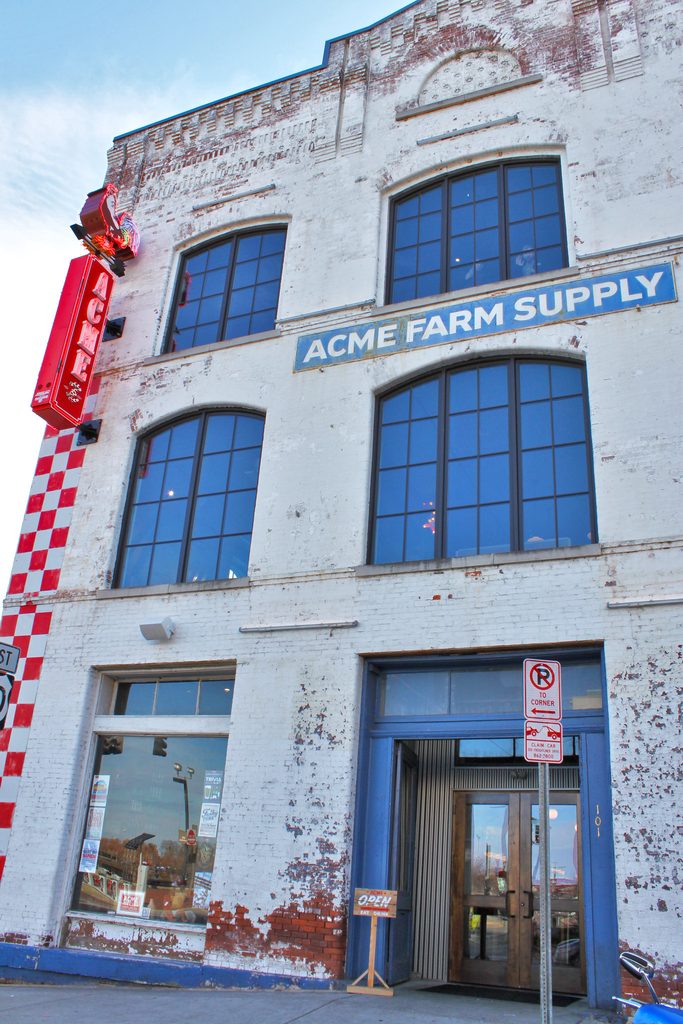
Acme Feed & Seed occupies the historic building at 101 Broadway, down at the Cumberland River end of the strip. The venue spreads across four floors and more than 25,000 square feet, combining food, live music, different gathering spaces, and a rooftop overlooking the riverfront.
That makes Acme useful for one very unglamorous reason.
Groups need things.
Somebody is hungry.
Somebody wants to sit down.
Somebody wants music.
Somebody wants the Nashville skyline photo.
Somebody is already asking where the bathroom is.
Instead of turning those needs into four separate stops, Acme can handle several of them in one building.
Its first-floor “Funky Tonk” format mixes live music with a broad range of genres, and the building’s upper spaces change the experience as you move away from street level.
Then you reach the roof.
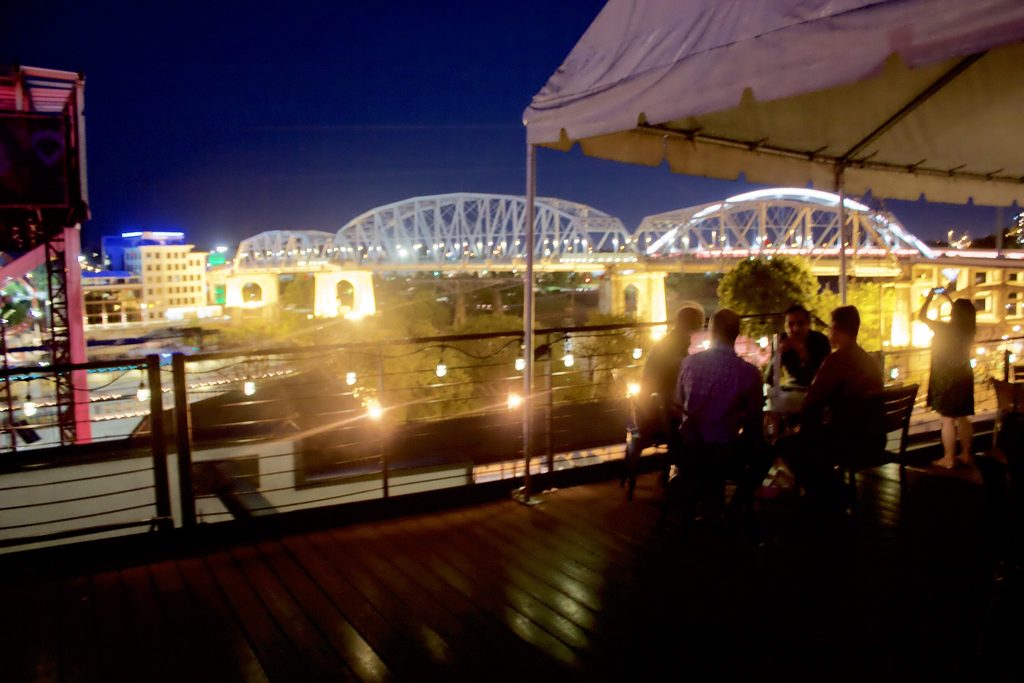
The Cumberland spreads out below. Nissan Stadium sits across the water. Riverfront Park and downtown fall into the same view, while Broadway runs back uphill behind you.
For a moment, the street feels much larger than a row of bars.
Here’s what catches people off guard.
Acme packs more than 25,000 square feet, four floors, food, music, and a river-facing rooftop into the building at the very end of Broadway.
The insider move is to use Acme as a reset button.
Eat.
Sit.
Let everybody figure out what they actually want to do next.
Then go upstairs for the view.
The practical mistake is waiting until the whole group is starving before discussing food. Broadway gets considerably less charming when six hungry people are standing on a sidewalk trying to choose a restaurant.
Eat before that happens.
And once you are upstairs, resist another classic visitor mistake.
You do not need to spend the rest of the night collecting rooftops.
The Nashville View You Only Need to See Once
Broadway has gone vertical. Rooftop bars have become such a major part of the downtown experience that Nashville’s tourism organization now highlights them as a category of their own.
They are fun.
They are also easy to overdo.
Climb one set of stairs or ride one elevator and suddenly the neon signs sit below you. Music rises from multiple directions. Downtown buildings glow around the street while the Cumberland cuts through the city farther east.
It is a terrific Nashville moment.
So enjoy it.
Take the picture.
Watch the light change.
Then ask yourself whether climbing onto five more rooftops is really going to make the night five times better.
Probably not.
Here’s what catches people off guard.
Acme’s rooftop gives you something many Broadway rooftop views cannot: a direct look toward the Cumberland River, Riverfront Park, and Nissan Stadium.
That is why it works so well when you are showing Nashville to somebody for the first time.
The insider move is to pick one rooftop based on the view you actually want. If the Cumberland and skyline matter, Acme is a logical choice.
Weekdays and earlier evening hours generally give you a better shot at enjoying the experience without turning the rooftop itself into another exercise in waiting.
The trap is spending half your Broadway visit inside elevators, on staircases, and in lines because social media convinced the group that every rooftop is fundamentally different.
They are not.
Save that time for the reason Nashville became Music City in the first place.
There is probably a frighteningly good musician playing downstairs.
The Free Music Rule Visitors Get Completely Wrong
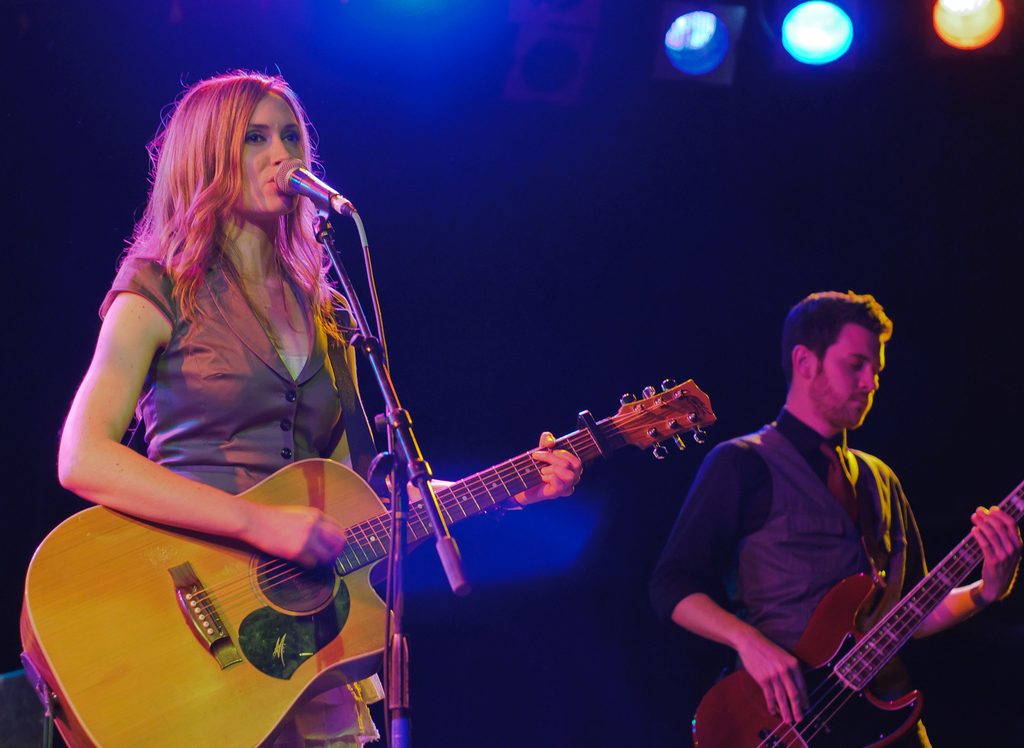
Most Broadway honky-tonks offering ordinary live music do not charge a regular cover. Nashville’s official tourism guidance specifically promotes the Honky Tonk Highway as a place where visitors can hear live music without buying a traditional concert ticket.
That is a remarkable thing when you think about it.
Walk a few blocks in another entertainment district and you might need three tickets to hear three bands.
On Broadway, you can hear music pouring out of one doorway after another.
But watch what happens inside.
Some visitors walk through the door, order a drink, film thirty seconds of the singer, take a selfie, and head upstairs.
The musicians become part of the wallpaper.
That misses the whole point.
Stand near the stage for a song.
Watch the guitar player’s hands.
Listen when the singer changes the phrasing on something you have heard a hundred times.
Broadway gets much better the second you stop treating live music as background noise.
Here’s what catches people off guard.
The music may not require a regular admission ticket, but the people playing it are working musicians, and tipping them is part of the culture.
The insider rule is easy.
If the band gave you a good time, tip.
Think of “no cover” as “no concert ticket,” not “the musicians are performing for free.”
That small shift changes how you experience the whole street.
You also do not have to keep moving just because another bar exists next door. If the band is great, stay.
The trap is spending an entire evening searching for the perfect Broadway experience while walking away from a terrific one happening fifteen feet in front of you.
Eventually, though, everybody needs a break from amplifiers and neon.
The best one is barely off the strip.
The 130-Year Detour That Changes How Broadway Feels
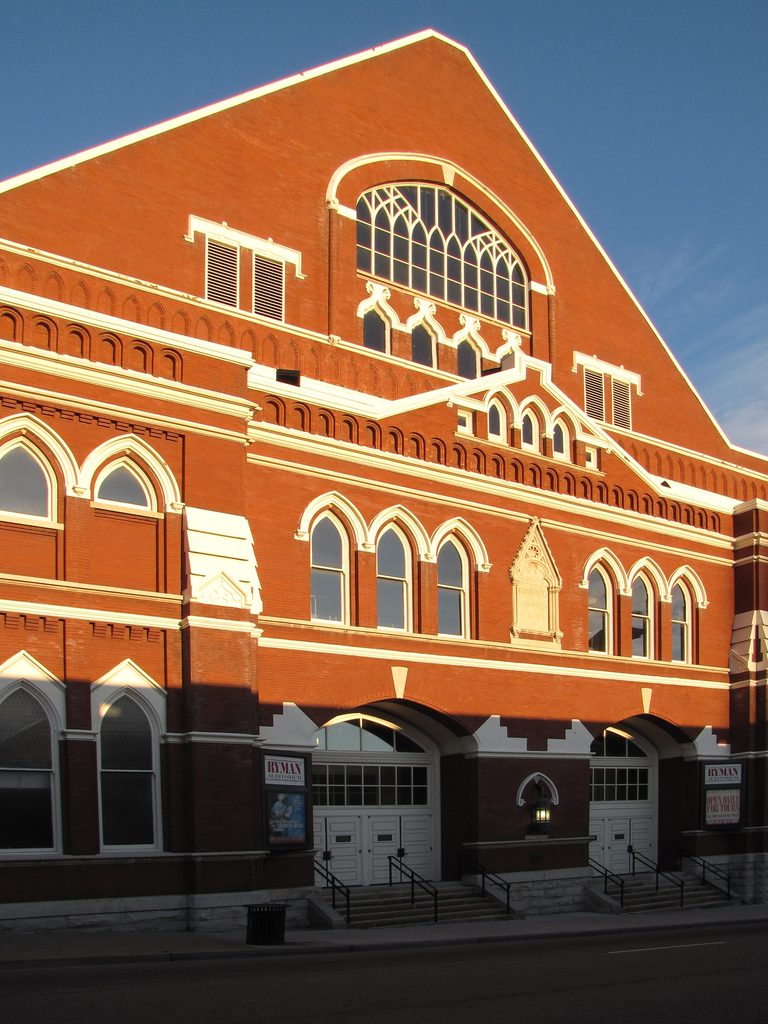
Ryman Auditorium stands at 116 Rep. John Lewis Way North, just off the Lower Broadway action. The building began as the Union Gospel Tabernacle more than 130 years ago and later became the historic home of the Grand Ole Opry.
That is worth remembering when Broadway starts feeling like one enormous modern entertainment complex.
Step away from the neon.
Walk toward the Ryman.
The visual change happens quickly.
The red brick, arched windows, and church-like form of the building pull you backward through Nashville’s music history. Suddenly the bars around the corner feel less like the whole story and more like the newest chapter.
This is where the emotional rhythm of a Broadway afternoon changes.
You have just heard amplified guitars, watched people dancing, smelled bar food drifting through an open door, and passed enough neon to light a small town.
Then there is the Ryman.
Quiet by comparison.
Solid.
Still standing.
Here’s what catches people off guard.
One of America’s most famous music rooms sits only a short walk from the loudest blocks of Nashville’s modern entertainment district.
The insider move is not necessarily to squeeze a full Ryman tour into the middle of a bar crawl.
If music history matters to your group, give the tour its own proper daytime window. Tour availability can vary around performances.
During your Broadway outing, even walking past the building provides context.
Robert’s.
Layla’s.
The Ryman.
Then back toward Broadway.
That small detour reminds visitors that Nashville’s relationship with live music did not begin with rooftop bars.
The trap is standing on Broadway for five straight hours without looking at anything around it.
Because if the Ryman changes how you understand downtown, the next detour changes how you see it.
The Best Broadway Photograph Is Taken Away From Broadway
Broadway runs east toward the Cumberland River, with Acme Feed & Seed occupying the river end at 101 Broadway. Nearby riverfront spaces and the John Seigenthaler Pedestrian Bridge give visitors a chance to turn around and look back at downtown instead of staring into another bar.
Keep walking downhill.
The sound changes as you move.
The wall of music begins to loosen. The river opens the space in front of you. Across the water sits Nissan Stadium, while downtown Nashville rises behind and around the Broadway corridor.
Around sunset, the shift can be dramatic.
Glass catches the last light.
The river darkens.
Signs begin glowing brighter as the sky fades.
You finally see the city instead of merely standing inside its busiest few blocks.
Here’s what catches people off guard.
Broadway often looks better after you have stepped away from Broadway.
The insider move is to build a riverfront walk into the evening rather than treating it as something you do only if the bars get boring.
It works as a natural reset.
Walk.
Take the skyline photos.
Talk without shouting.
Then decide whether you actually want another honky-tonk.
Wear shoes you are willing to walk in. Downtown Nashville may look compact on a map, but stairs, hills, standing inside venues, and repeated trips up and down Broadway add up.
The trap is spending the entire visit between roughly Fourth and Fifth Avenue because that is where the crowd appears thickest.
Crowds are not proof that you have found the best part.
And speaking of expensive crowds, the next mistake can happen before your feet ever touch Broadway.
The Broadway Mistake That Starts in the Parking Lot
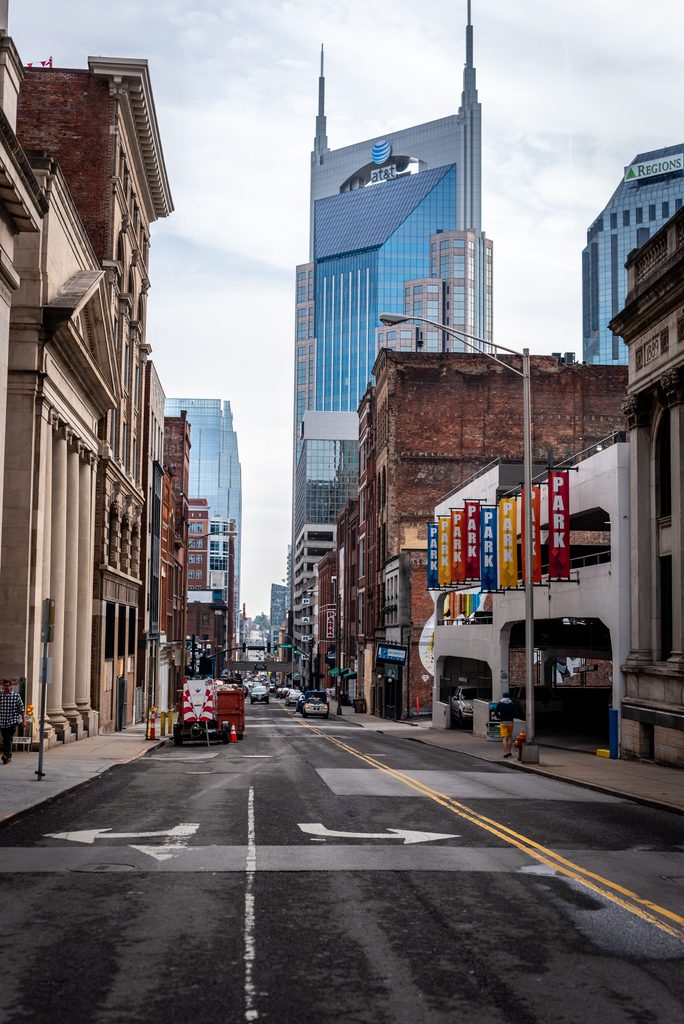
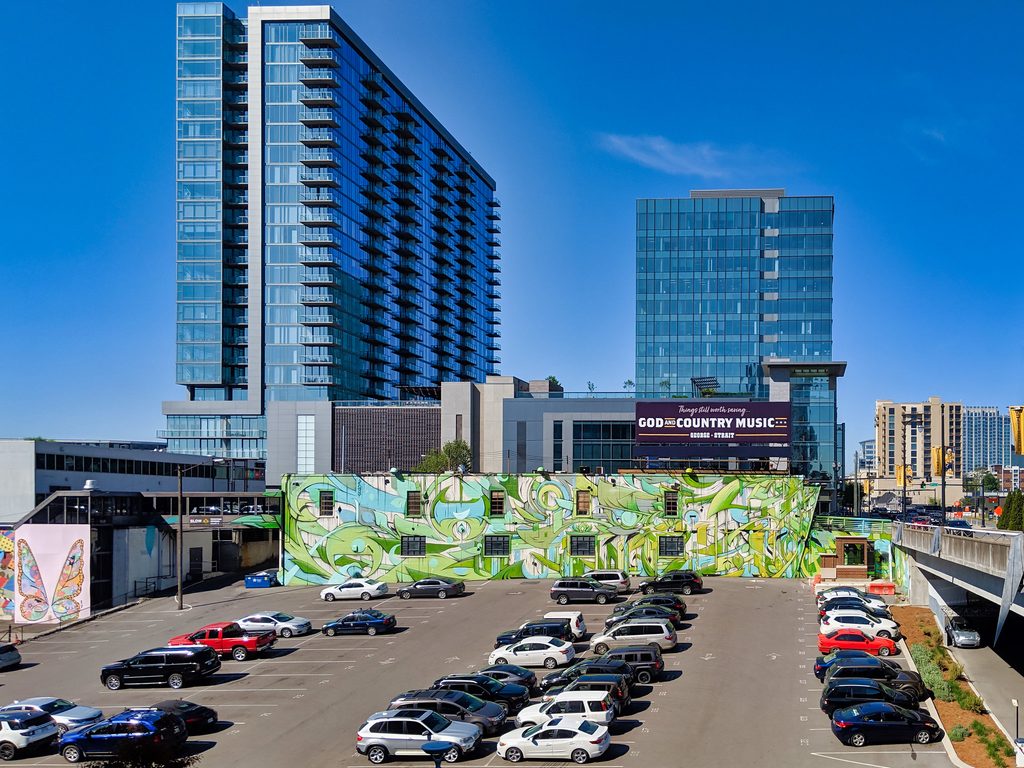
Downtown Nashville uses a mixture of Metro-managed street spaces and garages along with privately operated lots, hotel garages, and event parking. Metro Nashville specifically tells drivers to read posted parking signs because rates, restrictions, and time limits can vary.
That last part matters.
A lot.
You come downtown excited, see an illuminated PARK sign near Broadway, turn in, and solve the immediate problem.
Except convenience can come with a price.
Downtown parking demand also changes when Bridgestone Arena, Nissan Stadium, and other nearby venues have major events.
A perfectly reasonable plan on one afternoon can become a headache on another.
Here’s what catches people off guard.
The private lot beside Broadway and a Metro-managed parking facility are not necessarily operating under the same rates or rules.
The insider move is to decide transportation before anybody orders the first drink.
Who is driving home?
Is the group planning to drink?
Is there a major downtown event?
Would rideshare eliminate the parking problem?
Could you park farther from the busiest blocks and walk?
Those questions are more useful than any supposed “secret parking garage,” because prices, availability, event traffic, and street conditions can change.
If you do park, read the actual sign where you leave the car.
Do not rely on what somebody paid there last year.
And do not assume every downtown parking operation is managed by the city.
The trap is making the transportation decision after everybody has already started drinking. At that point, your choices become narrower and potentially much more expensive.
Sort it out first.
Then forget about the car and enjoy downtown.
Because eventually you are going to reach the most important Broadway decision of the entire night.
When do you leave?
The Most Nashville Move Is Knowing When You’ve Had Enough Nashville
A good Broadway visit does not have to end at 2 a.m.
It can begin in the afternoon at Robert’s.
Move next door to Layla’s.
Stop by the Ryman.
Eat.
See the river.
Go to one rooftop.
Follow a band that catches your ear.
Tip the musicians.
Then look around.
The sidewalks are filling.
The volume is rising.
The version of Broadway you started with is changing right in front of you.
For some groups, this is exactly what they came to Nashville to experience.
Stay.
Sing.
Watch Broadway go full Broadway.
But your friends may have already gotten everything they wanted.
Here’s what catches people off guard.
Locals can use Broadway as one part of a Nashville night instead of making Broadway the entire Nashville night.
That is the insider move.
Leave while everybody is still having fun.
Not because Broadway is terrible.
Not because locals are somehow above it.
Because Nashville keeps going after Broadway ends.
Current visitor discussions regularly point travelers who want something different toward other Nashville neighborhoods and nightlife districts, including Midtown, East Nashville, and Germantown.
You do not even need an elaborate second itinerary.
The important thing is knowing you have permission to move on.
The trap is staying another three hours simply because leaving feels like admitting you did not “finish” Broadway.
There is nothing to finish.
Broadway is not a checklist.
It is a few loud, strange, musical, neon-soaked blocks of Nashville, and it works best when you let it be exactly that.
The Unexpected Fact About Broadway
The surprising thing about Lower Broadway is not how late Nashville keeps the music going.
It is how early it starts.
Live music can begin around 10 or 11 in the morning at Honky Tonk Highway venues and continue until roughly 3 a.m. That means the famous nighttime party district spends a huge portion of every day operating as something else entirely: a collection of live-music rooms where you can wander in before dinner, hear several bands, and often do it without a regular cover charge.
That is the Broadway longtime residents understand when somebody comes to town.
You do not have to hate the neon. You do not have to avoid the rooftops, roll your eyes at every tourist, or pretend Broadway is not fun.
You simply use it differently.
Go early. Follow your ears. Tip the band. Eat something. See the Cumberland. Climb to one rooftop. Take the picture everybody came for.
Then leave while your friends are still saying how much fun they’re having.
The best way to show somebody Broadway is to know when Broadway has already given them enough.