

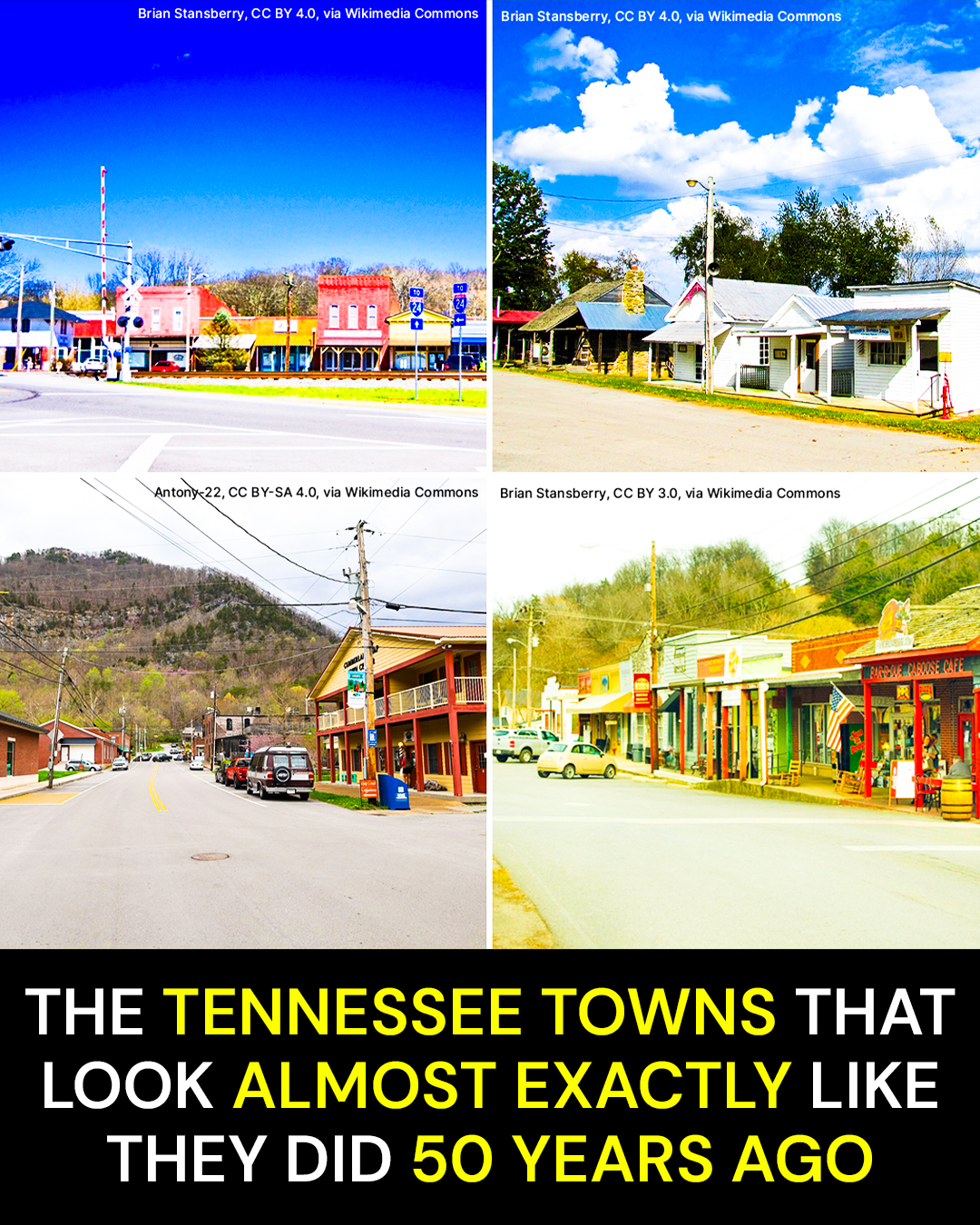
A weekend in a fast-growing Tennessee town can disappear into parking fees, new developments, and restaurants that did not exist five years ago. But drive a little farther down the right two-lane road and you can still find places where the basic view has barely budged.
I dug through preservation records, historic-district documents, local histories, and visitor information for 12 Tennessee towns where enough old storefronts, houses, street grids, and landmarks survived that somebody returning after decades could still recognize the place.
A few survived because people fought for them. Others survived because progress simply drove around them.
The Main Street Tennessee Started Saving Before Everybody Else
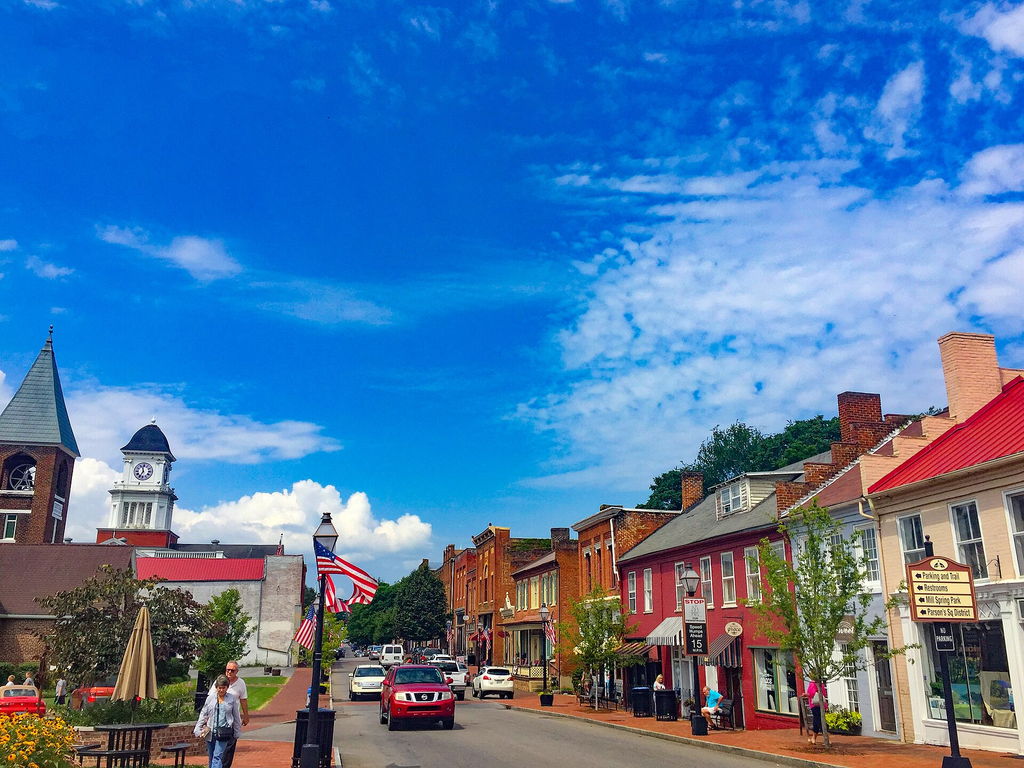
Jonesborough was founded in 1779, making it Tennessee’s oldest town, but the important date for this story is 1969. On December 23 of that year, its historic district entered the National Register of Historic Places, and preservation work was already gathering momentum as the 1970s arrived.
Walk Main Street and the age shows in layers.
Federal buildings sit beside Greek Revival, Italianate, Victorian, and Craftsman architecture. Brick, clapboard, old porches, narrow storefronts, and buildings pressed close to the sidewalk make the street feel fundamentally different from the wide commercial roads that swallowed so many Tennessee towns.
Then there is the Chester Inn.
Dr. William Chester built it in 1797 along the old stage road. Its elaborate front porch came later, in the 1880s, but the building remains one of the unmistakable pieces of Jonesborough’s streetscape.
Here’s what catches people off guard.
Jonesborough’s preservation effort was already underway around the very period we are comparing it with, so someone who knew Main Street in the 1970s could still recognize a remarkable amount of its physical framework today.
The trick is to walk instead of treating downtown like a collection of individual attractions. Main Street makes more sense when you notice how the buildings fit together.
The Chester Inn Museum is free, although donations are welcomed. During May through October, its published hours are 11 a.m. to 6 p.m. Monday and Wednesday through Saturday, plus 1 to 5 p.m. Sunday. Hours become more limited during other parts of the year.
The trap is assuming every old-looking detail has been sitting untouched for two centuries. Jonesborough has restored buildings, changed businesses, buried utilities, and carefully managed exterior alterations.
That is precisely why it still looks this way.
But the next town followed the opposite path. Instead of being saved before decline arrived, it nearly disappeared first.
The River Town the 1970s Nearly Finished Off
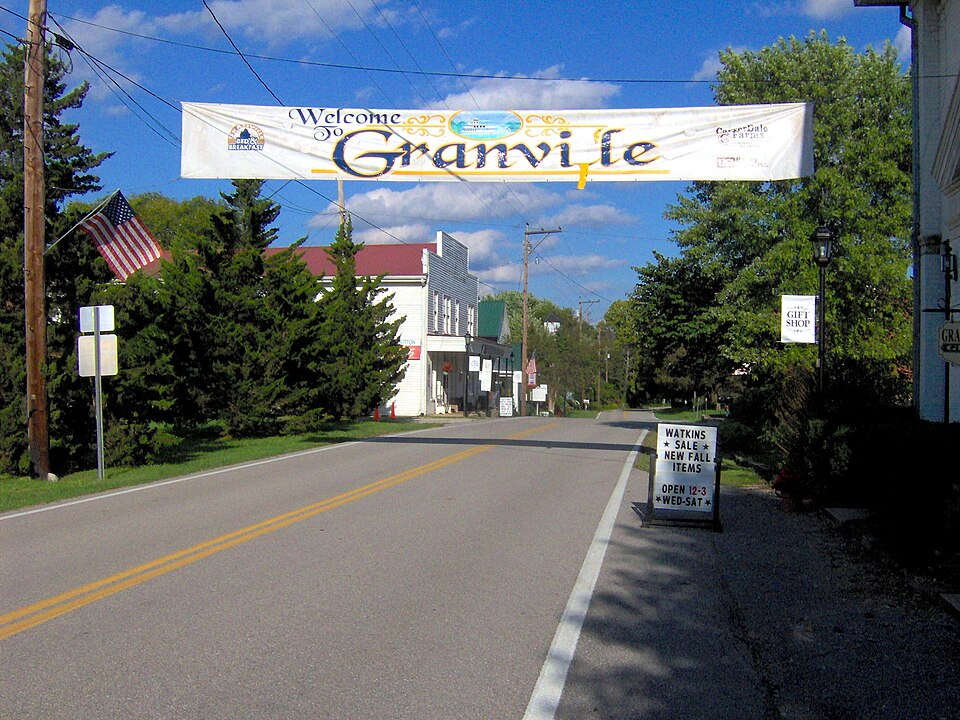
Granville was once supported by Cumberland River traffic and agriculture. Then the Cordell Hull project changed the surrounding landscape, farmland was inundated, families relocated, and the community declined so sharply that Historic Granville describes it as effectively becoming a ghost town.
That history explains the strange feeling you get here today.
Granville does not look like a modern development decorated to resemble an old Tennessee village. Its centerpiece, T.B. Sutton General Store, has roots reaching into the 1800s and retains numerous early-20th-century interior fixtures.
Step inside and the sensory cues do half the work.
There are old-fashioned candies, handmade goods, country cooking, wooden surfaces, ice cream, and the kind of general-store interior where your eyes keep wandering toward shelves and fixtures instead of your phone.
On Saturday nights, bluegrass returns to the building during the Sutton Ole Time Music Hour.
Here’s what catches people off guard.
Granville looks old partly because the modern economy nearly passed it by, and preservationists later restored what remained instead of replacing it with a new commercial district.
Start at Sutton Store rather than wandering around wondering what is open. It functions as the practical starting point for exploring Historic Granville.
As of 2026, Sutton Store is open Wednesday through Friday from 8:30 a.m. to 4 p.m. and Saturday until 8 p.m. Other historic attractions generally operate more limited hours. The town tour ticket is $7 for adults, $5 for children ages 6 through 12, and free for children under 6.
That ticket covers a surprisingly large collection of museums and historic attractions.
The trap is showing up Sunday through Tuesday expecting the full experience. Sutton Store and the main attractions are closed those days.
Granville shows what happens when a town declines and gets pulled back from the edge. The next place never needed that kind of resurrection.
The Railroad Village Where the Old Downtown Became the Attraction
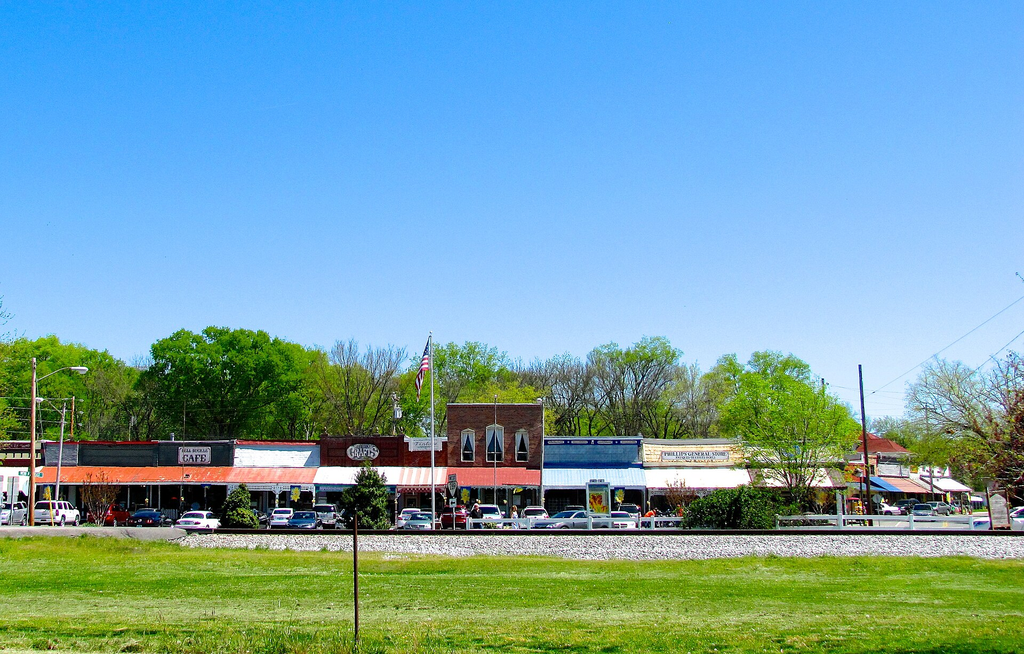
Bell Buckle grew with the railroad during the 19th century, and in 1976 an area encompassing downtown and extending toward The Webb School was placed on the National Register of Historic Places.
That 1976 date is almost too perfect for this story.
Stand near Railroad Square and the town’s original proportions are still easy to understand.
The storefronts are narrow. Buildings sit close together. Older houses spread outward from the commercial center. The railroad still explains why downtown is shaped the way it is.
You can browse antiques and locally owned shops inside buildings that would have been easier to demolish than preserve in a larger city.
Here’s what catches people off guard.
Bell Buckle’s historic district was officially recognized 50 years ago in 1976, and the old village itself eventually became the thing drawing people back.
Do not rush straight through the stores. Walk far enough to look back at the entire downtown row. Bell Buckle works visually because of its scale, not one blockbuster landmark.
That scale also means festivals change the experience dramatically. Bell Buckle is known for events that draw crowds far larger than the everyday population of the town.
If you want the sleepy, old-Tennessee version, check the local event calendar before leaving home.
The trap is expecting every detail to be unchanged. Shops have changed occupants, homes have been renovated, and the town has consciously reinvented itself around arts, antiques, food, and tourism.
But the bones are still there.
A few miles down the road, another railroad town gives you an even quieter version of the same phenomenon.
The Tiny Railroad Town With Whole Blocks From Its Boom Years
Wartrace is small enough that its history still feels physically close. The Wartrace Historic District covers portions of Spring, Vine, and Main streets and Knob Creek Road, and it was added to the National Register in 1991.
The surviving architecture reflects more than a century of development.
There are Victorian-era homes, historic storefronts, railroad associations, churches, and the Walking Horse Hotel, itself listed on the National Register.
Downtown is compact and walkable. Brick-lined streets and older buildings create a place where you can still read the original town without having to mentally erase six lanes of traffic and a shopping center.
Wartrace also carries a separate piece of Tennessee identity.
The town is closely tied to the development of the Tennessee Walking Horse. A formally organized horse show was held on the town square in 1906, and the first Walking Horse celebration followed in 1939. The judges’ stand from that celebration remains downtown.
Here’s what catches people off guard.
Wartrace is not merely a collection of historic buildings. Its old commercial center, railroad history, and residential streets still exist at a scale small enough to understand on foot.
Give yourself permission to wander here. The Chamber of Commerce specifically promotes self-guided exploration of historic buildings and markers rather than treating downtown as a single ticketed attraction.
There is no need to manufacture an itinerary packed by the minute.
The trap is arriving expecting Franklin-sized shopping and entertainment. That misses the entire point. Wartrace works because it still feels small.
And if being small helped Wartrace, the geography surrounding the next town practically put up a wall around it.
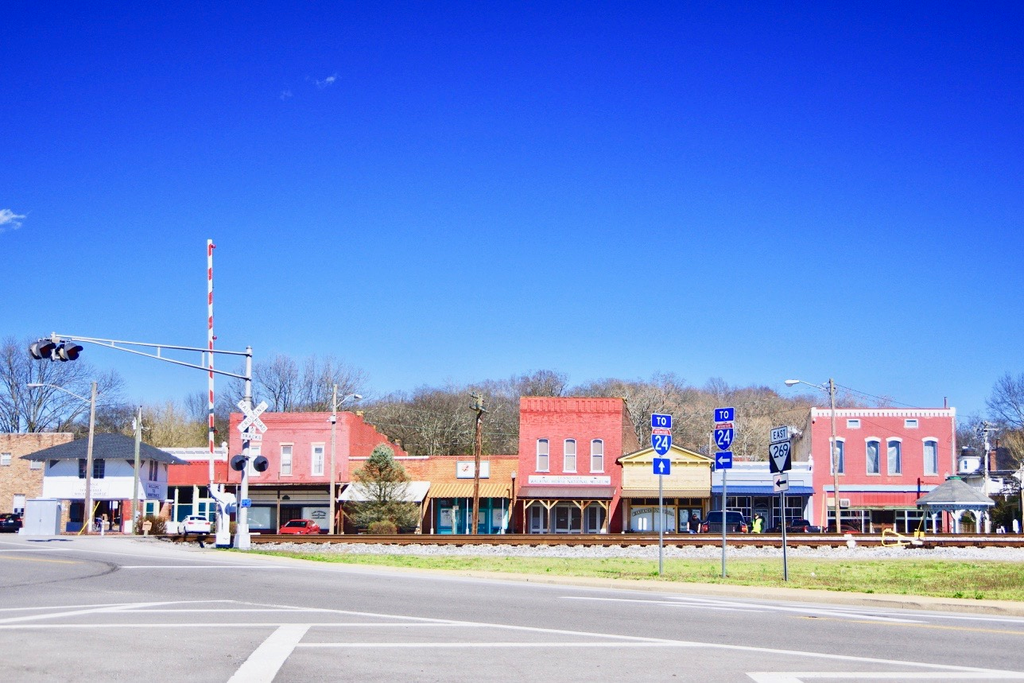
The Mountain Town a Highway Accidentally Helped Save
Cumberland Gap sits in Claiborne County beneath the famous mountain passage that helped funnel westward migration through the Appalachians. The neighboring national historical park now protects roughly 14,000 acres and about 85 miles of trails across Tennessee, Kentucky, and Virginia.
But look away from the park for a minute.
The town itself is the story.
Historic buildings sit beneath steep Appalachian slopes. Streets occupy the limited space the terrain gives them. Gap Creek passes through town, and mountains rise so abruptly around the community that large-scale outward development was never simple.
Then transportation changed.
The Cumberland Gap Tunnel opened in the 1990s as a four-lane, twin-bore tunnel roughly 4,600 feet long, replacing the old road over the Gap.
Here’s what catches people off guard.
Historic-preservation documentation specifically credits Cumberland Gap’s relative isolation from the major highway with helping its historic resources survive.
Most surviving resources in the historic district date from roughly the 1890s through the 1930s, including homes, commercial structures, public buildings, and a church.
Walk town before driving to every scenic overlook. The temptation is to treat Cumberland Gap solely as a gateway to the national park, but the compact street plan is part of the experience.
The national historical park itself is open to pedestrians and cyclists around the clock when conditions allow, while the visitor center and services have separate operating hours. The park currently lists general facility hours of 9 a.m. to 4 p.m.
The trap is assuming mountain weather and road conditions are irrelevant because the town looks close on a map. Check park conditions before adding trails, caves, or overlooks to the day.
Sometimes getting bypassed is the worst thing that can happen to a town.
Sometimes it is what saves it.
The next stop proves you do not need dramatic mountains to keep the old bones intact.
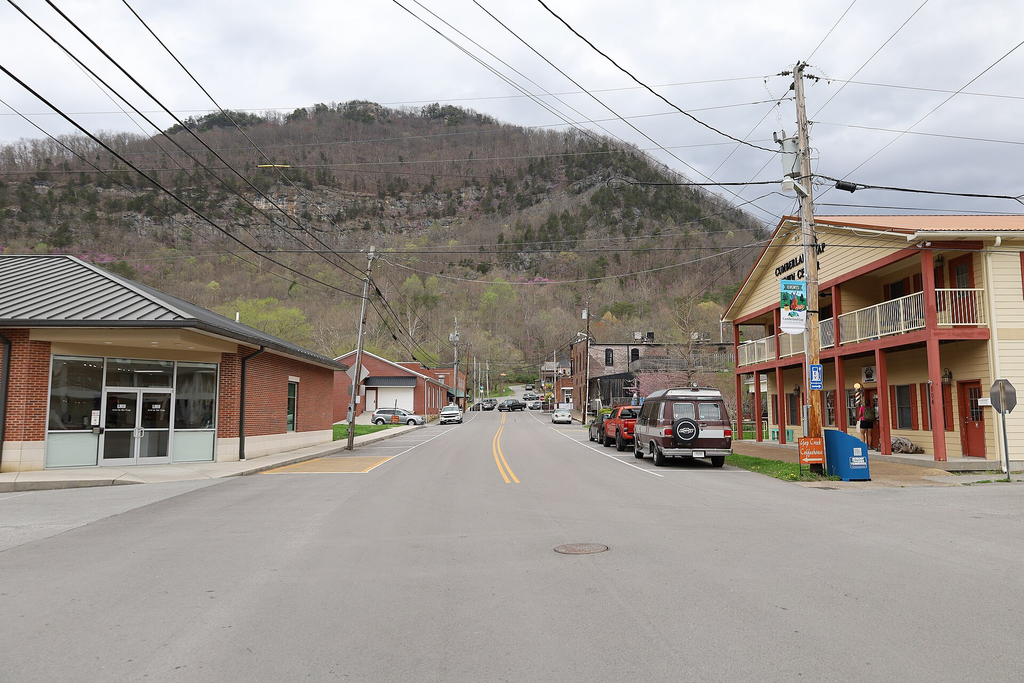
The East Tennessee Main Street That Never Lost Its Shape
Rogersville traces its founding to the 18th century and remains one of Tennessee’s oldest towns. Its historic downtown sits on the National Register, with Federal-style buildings and old brick sidewalks still shaping the center.
This is the quieter cousin of Jonesborough.
Main Street does not feel like somebody collected antique buildings and arranged them for tourists. It feels like a town that simply accumulated generations.
Old storefronts sit at traditional street proportions. Historic civic buildings anchor the center. Brick sidewalks and period architecture pull your eye toward details that disappear in newer places.
One of the best anchors is Hale Springs Inn.
The building dates to 1824 and has connections to Andrew Jackson, Andrew Johnson, and James K. Polk. It underwent a major restoration before reopening in 2009.
Here’s what catches people off guard.
Rogersville’s Main Street retains enough of its historic physical framework that the town’s age is visible without requiring a museum reconstruction.
Walk the courthouse and Main Street area before driving between individual historic sites. Rogersville rewards noticing the spaces between the landmarks.
The Rogersville Heritage Association also operates historic properties and a recreated 19th-century printing museum. Its published museum hours can vary seasonally, and weekend tours may require advance arrangements.
That is the trap here. Do not assume every museum door in a small historic town will be open whenever you arrive.
Even when interiors are closed, downtown itself tells most of the story.
The next town faces a completely different problem. The whole world knows its name.
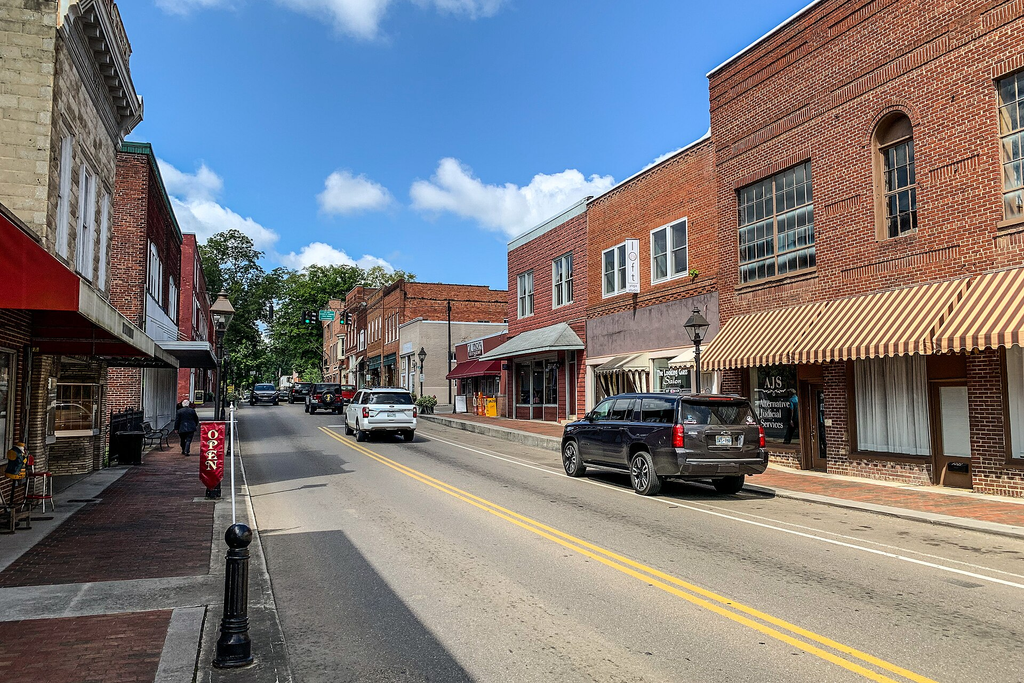
The Famous Tennessee Town That Somehow Kept Its Courthouse Square
Lynchburg receives visitors from around the world, yet its center still revolves around an old-fashioned county-seat arrangement.
The Moore County Courthouse stands in the middle of the square. The courthouse dates to 1885, and restored commercial buildings surround it.
That contrast is what makes Lynchburg so interesting.
Tour buses arrive. Visitors wander through stores. One of the most internationally recognizable names associated with Tennessee sits nearby.
Yet the square does not look like the commercial district you would expect beside a globally known attraction.
Brick storefronts remain close to the road. Small shops occupy traditional buildings. The courthouse still gives the center a visual focal point.
Here’s what catches people off guard.
One of Tennessee’s most internationally visited small towns still has a downtown built around an 1885 courthouse rather than a modern entertainment complex.
Spend time on the square separately from any distillery itinerary. They are connected parts of Lynchburg’s identity, but downtown deserves more than a drive-through.
The historic square is accessible year-round, although individual businesses keep their own schedules.
The trap is confusing preservation with stasis.
Tourism has changed Lynchburg. Store occupants have changed. The number and origin of visitors certainly changed.
What survived is the visual structure: courthouse, square, commercial blocks, and the surrounding rural landscape.
Now leave the international crowds behind. The next town is almost the opposite.
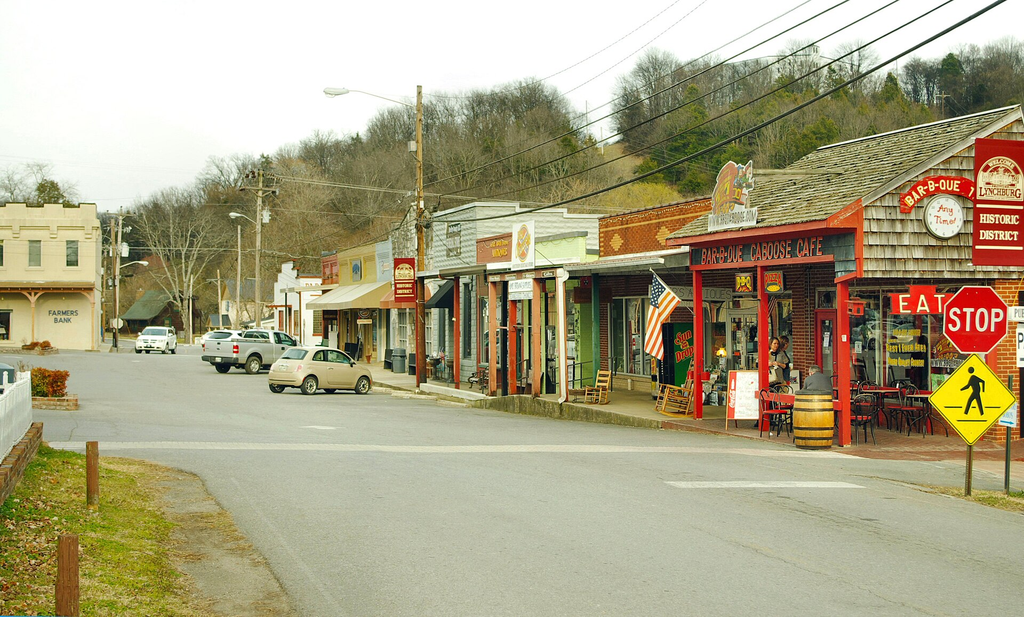
The Courthouse Town That Stayed Too Small to Erase Itself
Gainesboro was laid out in 1819 as the seat of Jackson County. Its historic district, centered around the courthouse square, entered the National Register in 1990, while a separate residential historic district followed in 2001.
That second district matters.
The old character does not stop at one photogenic corner.
The commercial square contains the courthouse and surrounding one-to-two-story buildings, while historic residential streets extend beyond the center. The town’s valley location and surrounding slopes also discouraged easy outward growth.
Stand near the square and the old county-seat formula becomes obvious.
Courthouse in the middle.
Businesses around it.
Homes just beyond them.
This was once a familiar pattern across Tennessee.
Here’s what catches people off guard.
Gainesboro remains geographically compact partly because the surrounding valley and steep terrain gave the town little room for the kind of outward growth that transformed many other county seats.
Look beyond the square. The residential district contains Folk Victorian forms along with Queen Anne, Italianate, and later Craftsman influences.
Local tourism information also points visitors toward independently owned shops and old-fashioned drugstore soda fountains in town.
The trap is expecting a polished heritage attraction.
Gainesboro is still a working small town. That means ordinary life sits right beside the history, which is exactly why it belongs here.
After several courthouse squares and railroad towns, the next place feels like Tennessee took a wrong turn and landed in Victorian England.
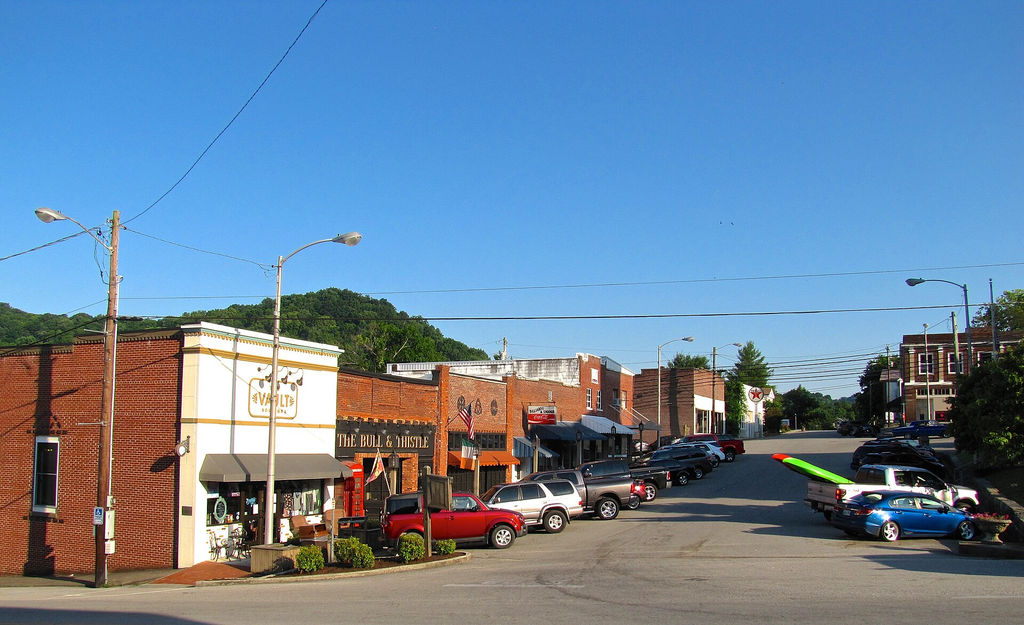
The Tennessee Village That Looks Older Than the Headline
Historic Rugby was founded in 1880 by British author and social reformer Thomas Hughes as an experimental colony on the Cumberland Plateau. Historic Rugby, Inc. has been working to protect and interpret the community since 1966.
Rugby does not merely look 50 years old.
In the right corner, it looks a century older than that.
Wooden Victorian buildings rise among trees. Porches, steep roofs, church architecture, and quiet lanes replace the courthouse-square pattern seen elsewhere.
The landmarks are extraordinary.
The Thomas Hughes Free Public Library dates to 1882. Kingstone Lisle, Hughes’s home, dates to 1884. Christ Church Episcopal followed in 1887.
You hear birds and wind in the trees instead of six lanes of traffic.
Here’s what catches people off guard.
Historic Rugby is preserved so thoroughly that its official tour takes visitors through buildings dating directly to the original Victorian settlement of the 1880s.
Start at the Visitor Centre and watch the free historical film before walking the village. The context makes the buildings much more meaningful.
During its regular season, interpretive tours are offered Thursday through Sunday. Current admission is $10 for adults, $8 for seniors 60 and older, $5 for K-12 students, and free for preschoolers.
The trap is forgetting Rugby operates on Eastern Time and follows seasonal schedules.
This is also not a movie set. It is a preserved community with historic resources that deserve the same respect you would give a museum.
Rugby survived because a grand experiment failed to become the city its founders imagined.
The next town has a similar boom-and-bust story, only its soundtrack was locomotive whistles and sawmills.
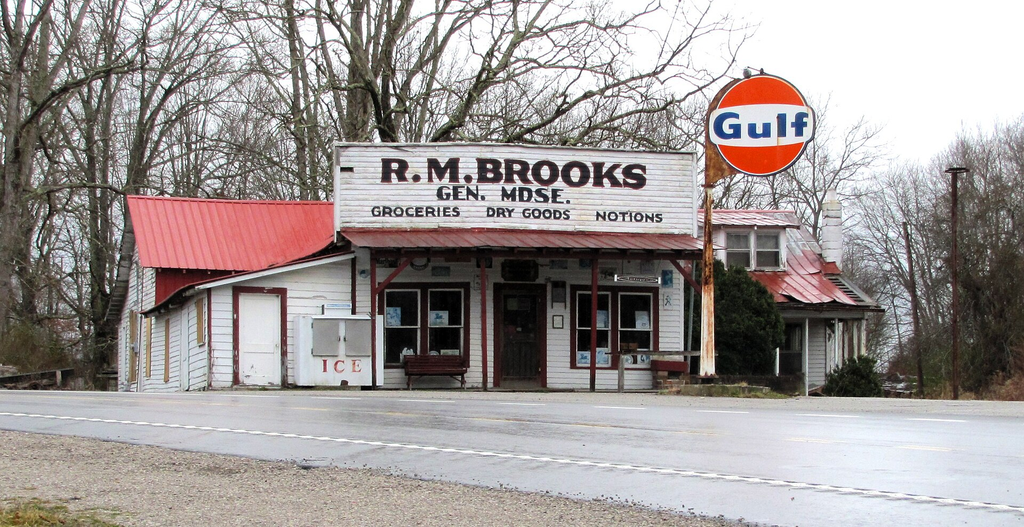
The Boomtown Where the Railroad Vanished but Its Depot Stayed
Collinwood grew around timber and rail transportation in Wayne County. The first train reached the settlement in December 1913, and the surviving depot was completed in 1916.
For a while, this place moved.
Lumber operations roared. Trains arrived. New residents poured in. Businesses opened around the growing settlement.
Then the boom collapsed.
Rail operations ended, tracks were eventually removed, and the depot went through a string of second lives. It served as a residence, warehouse, grist mill, city hall, and senior center before becoming the Collinwood Depot Branch Library.
Here’s what catches people off guard.
The 1916 railroad depot survived even after the railroad itself disappeared, and today the same building functions as a public library.
That depot is where the story clicks.
Look at the surrounding streets and imagine the tracks, lumber shipments, workers, and whistles that once explained why the town grew here at all.
The building was added to the National Register in 1988 and opened as the library in 2001.
The trap is expecting a complete railroad attraction with tracks, locomotives, and a tourist excursion. Collinwood’s railroad is largely a story written into the town’s shape and surviving depot.
That absence makes the building more interesting, not less.
But if you want a Tennessee railroad town where freight trains still rumble past the old depot, keep going.
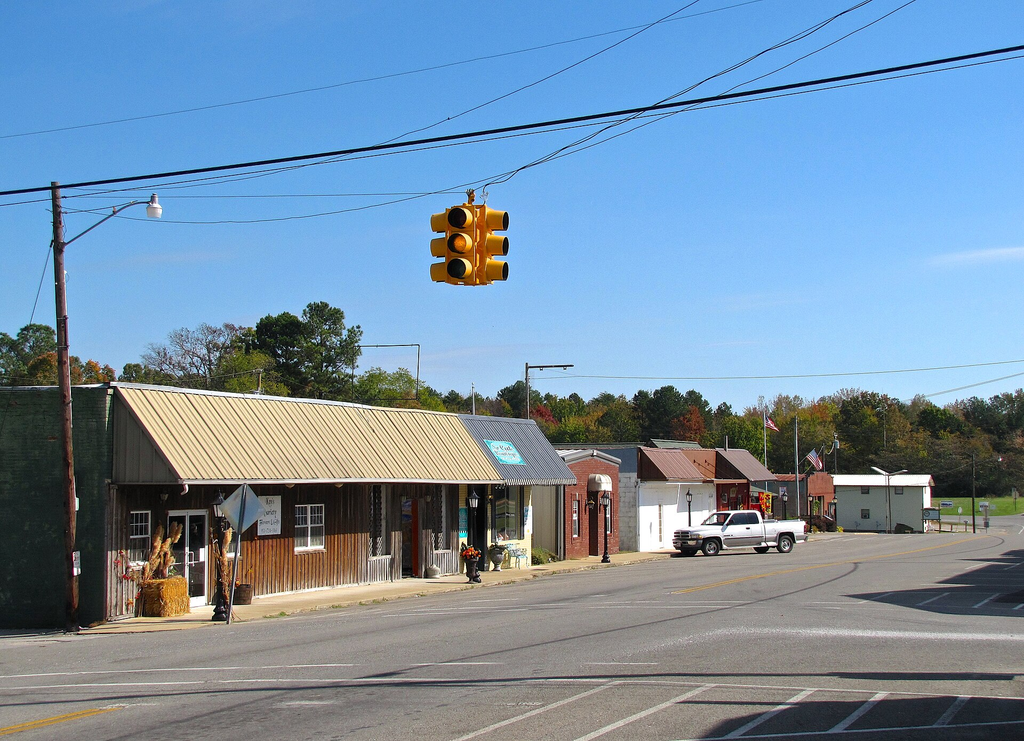
The Depot That Literally Moved in 1976
Cowan sits at the foot of the Cumberland Plateau in Franklin County, where railroad history still explains the town’s layout. Its historic depot now houses the Cowan Railroad Museum and is listed on the National Register of Historic Places.
Stand outside and you do not have to imagine trains.
The rail corridor remains active.
Freight equipment, railroad artifacts, and the mountain backdrop reinforce the reason Cowan grew here in the first place.
Then comes the date that makes Cowan almost irresistible for this article.
September 21, 1976.
That was the day a hired company picked up the historic Cowan Depot and moved it across the tracks. Local residents then turned the building into a museum.
Here’s what catches people off guard.
Exactly 50 years ago, Cowan was already saving the depot that visitors still see today.
The museum is the obvious starting point. Current 2026 hours are May through October, Thursday through Saturday from 10 a.m. to 4 p.m. and Sunday from 1 to 4 p.m. The museum currently lists admission at $4 per individual, $2 per child, or $10 per family.
There is one rule here worth taking seriously.
The tracks remain an active freight mainline. The museum explicitly warns visitors not to stage photographs on the tracks and directs pedestrians to use the signaled Cumberland Street crossing.
That is the trap. Old railroad scenery can make people forget they are looking at working infrastructure.
Cowan preserved a building while the trains kept moving.
The next place preserved something even harder to hold onto: the basic rhythm of rural Tennessee while Nashville kept spreading outward.
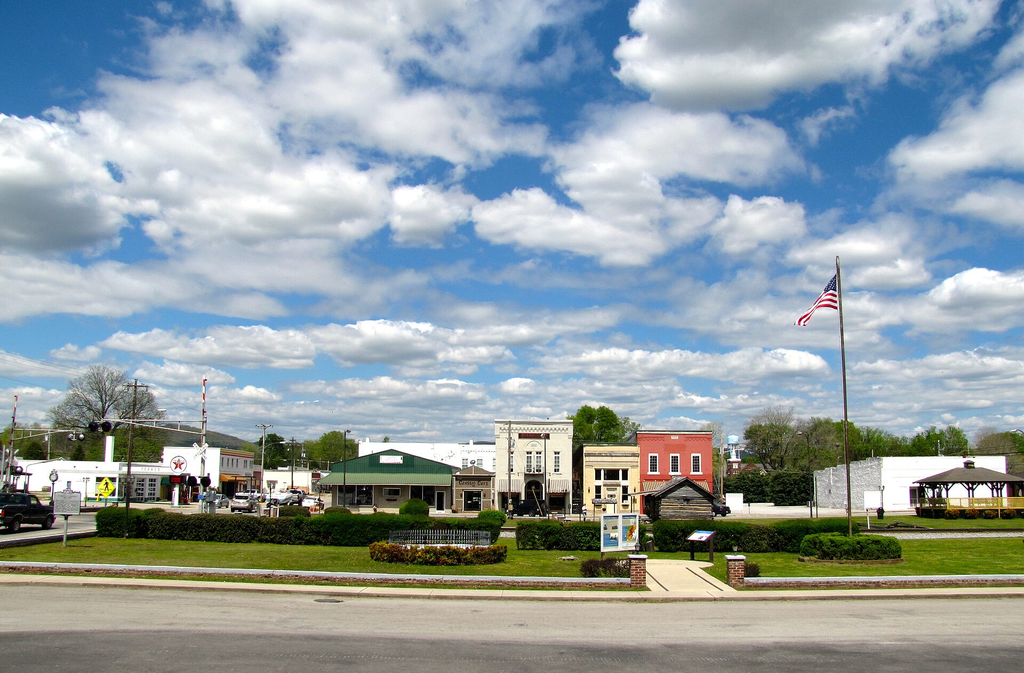
The Rural Community Nashville’s Growth Hasn’t Swallowed Yet
Adams sits in Robertson County north of Nashville, surrounded by the farmland and rolling countryside associated with one of Tennessee’s most enduring pieces of folklore.
The Bell Witch story has made the Adams name familiar far beyond Robertson County. Accounts of the Bell family’s strange experiences date to 1817, and the Bell Witch Cave property remains an operating attraction today.
But the town itself is quieter than the legend.
This is not a giant heritage district of matching Victorian storefronts.
That is why Adams works.
Roads cut through farmland. Old community buildings remain important. The commercial footprint stays small. The landscape still feels rural in a part of Middle Tennessee increasingly affected by metropolitan growth.
Here’s what catches people off guard.
What Adams has preserved is not simply a collection of old buildings. It is the small scale and surrounding rural landscape that used to define countless Tennessee communities.
For local history beyond the Bell Witch story, the city maintains the Bell-Willette Museum at the old Bell School. The collection includes relocated historic structures, including an old barber shop, two doctors’ buildings, and a log cabin made using wood from the original Bell home.
If the cave is part of your trip, check conditions before driving out. Heavy rain can flood the cave, and the attraction warns that it can remain closed even after the weather clears. The cave stays about 58 degrees year-round, so sturdy closed-toe shoes and a light layer are sensible.
The trap is coming only for the ghost story.
Look at the countryside on the way in.
That landscape is part of what survived.
And there is one more town where the past did not survive merely by accident. People started fighting for it while bell-bottoms were still in fashion.
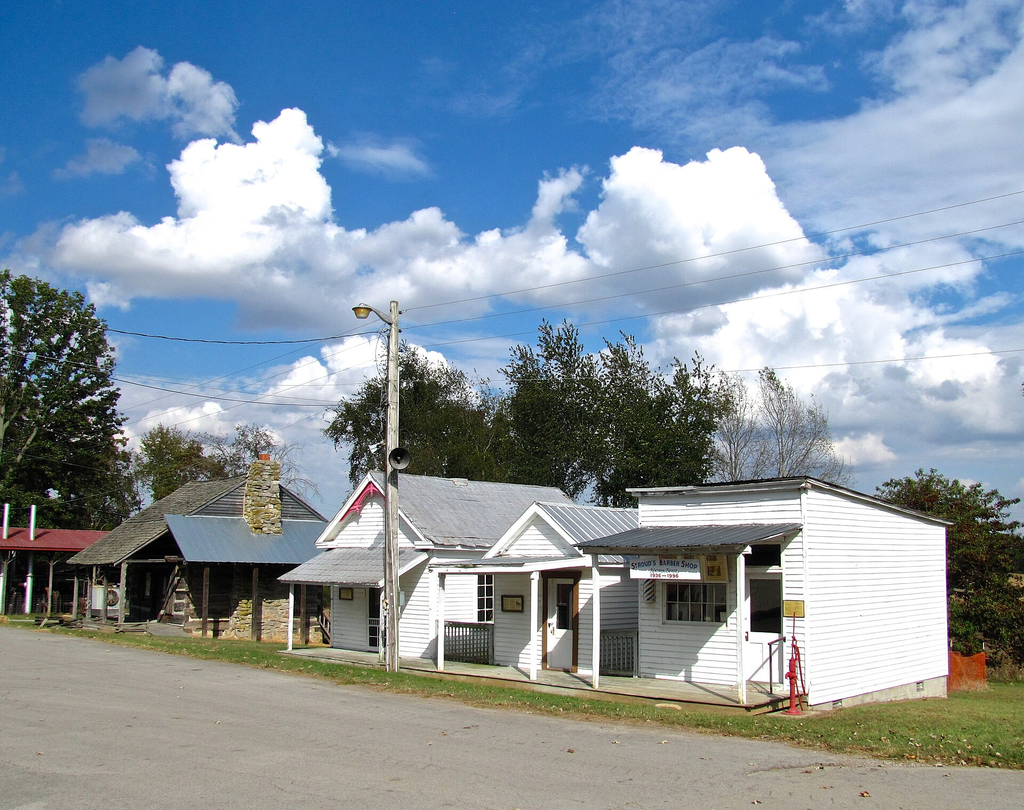
The Unexpected Fact About Tennessee’s Time-Capsule Towns
The most surprising thing about these places is that there is no single reason they survived.
Jonesborough’s historic district entered the National Register in 1969, and preservation work accelerated around the period we now look back on as “50 years ago.” Bell Buckle’s historic district was recognized in 1976. Cowan physically moved its depot that same year.
Granville followed another path. Economic decline nearly emptied it before preservationists revived what remained. Cumberland Gap benefited from isolation and transportation changes. Gainesboro stayed compact against difficult terrain. Rugby never became the large settlement its founders imagined.
That is the part old photographs cannot quite explain.
Preservation sometimes looks like restoration crews, zoning rules, museum boards, and people raising money to save an old building. Sometimes it looks like a highway curving somewhere else, a railroad disappearing, a mountain blocking development, or an economy that never produced enough pressure to tear everything down.
Fifty years did change these towns. Businesses opened and closed. Signs changed. Buildings were repaired. Cars got bigger. Roads were improved. Tourism arrived in places that once saw very little of it.
But enough remained.
And in a state changing as quickly as Tennessee, sometimes the most remarkable thing you can find on a backroad is a place that still remembers exactly what it was.