

There are places in Tennessee that feel so familiar we stop wondering about them.
Newfound Gap is one of those places.
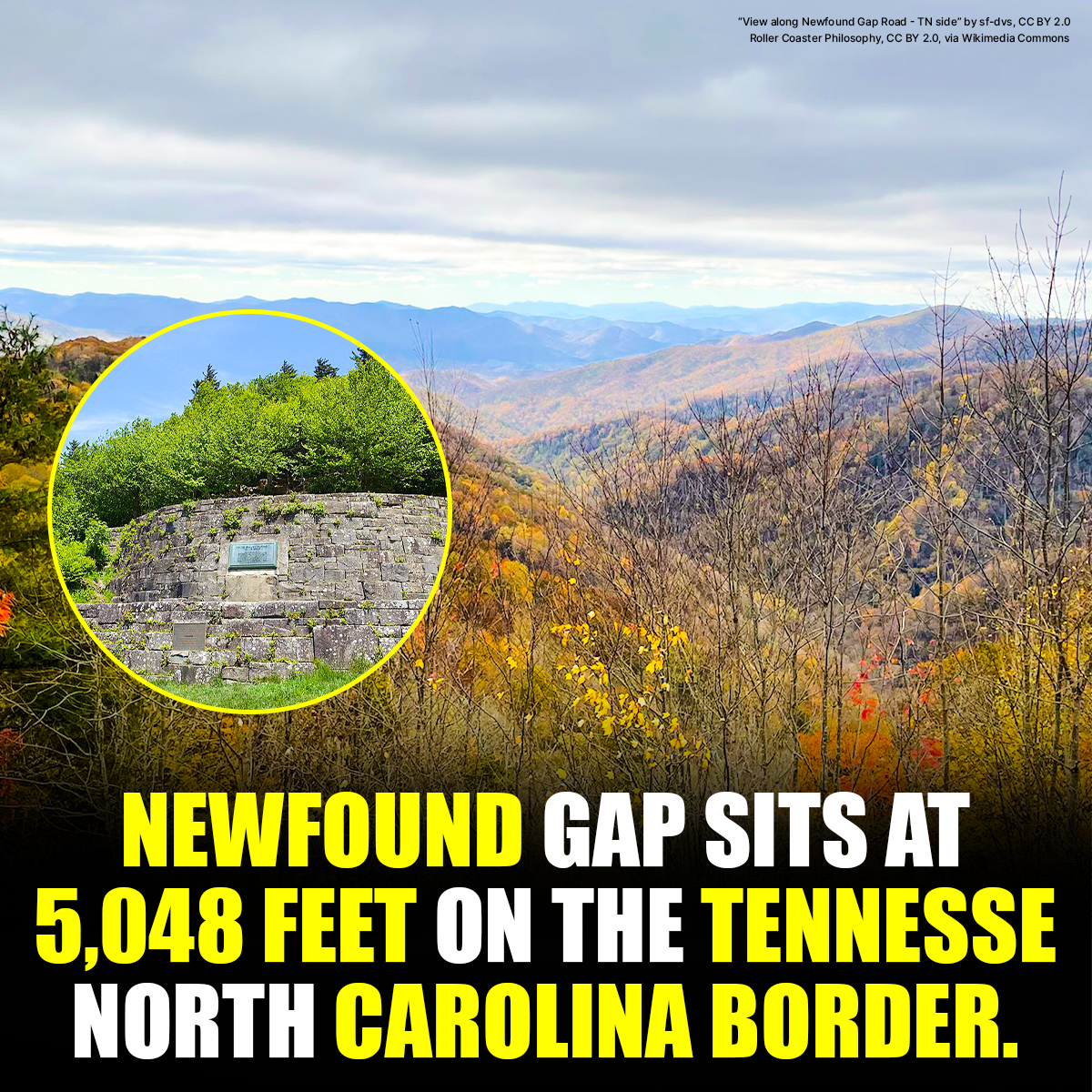
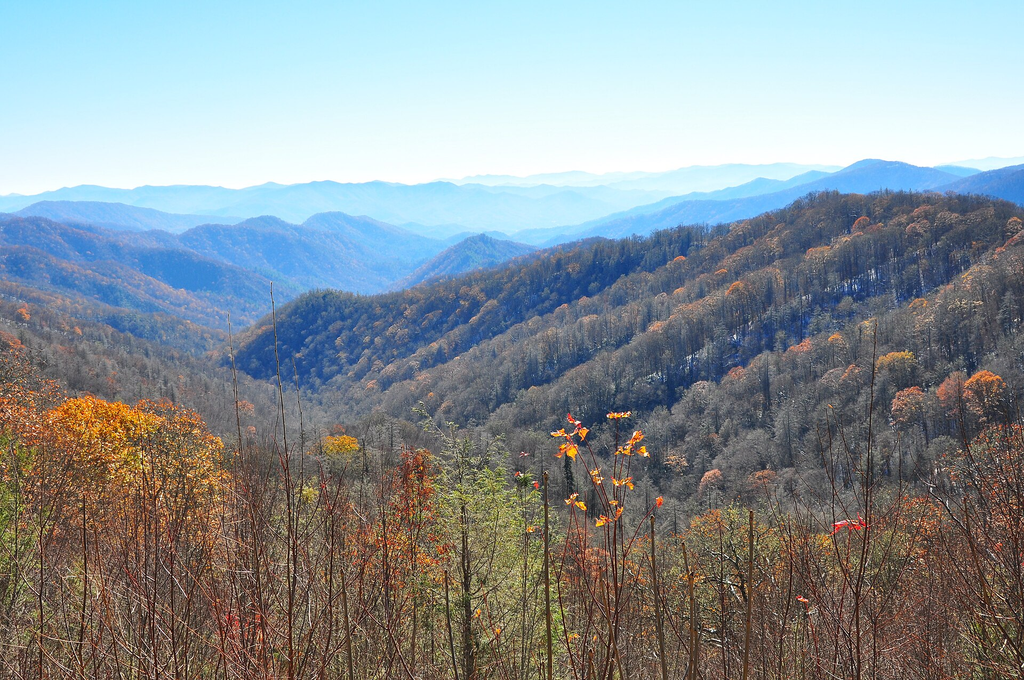
At 5,048 feet, the mountain pass sits on the Tennessee–North Carolina state line in Great Smoky Mountains National Park. Drivers pull over for the sweeping views, pose beside the state-line sign and watch blue ridges fade into the distance.
But Newfound Gap is more than a scenic stop on the road through the Smokies. It is also where one of the most important moments in the park’s history took place.
On September 2, 1940, President Franklin D. Roosevelt came to Newfound Gap and formally dedicated Great Smoky Mountains National Park. He spoke from the stone Rockefeller Memorial, right along the line dividing Tennessee and North Carolina. The National Park Service says Roosevelt dedicated the park “for the permanent enjoyment of the people.”
A Tennessee view with a national story
For Tennesseans, it can be easy to think of the Smokies as something that has simply always been there.
The mountains, of course, have.
The national park has not.
Creating Great Smoky Mountains National Park required something very different from establishing many of the famous parks in the American West. Much of the land in the Smokies was privately owned by families and timber companies. According to the National Park Service, hundreds of small landowners and several large companies held property in the area that eventually became the park.
That meant somebody had to buy the land.
Tennessee and North Carolina worked to acquire property, and private donations helped make the park possible. One of the biggest came through the Laura Spelman Rockefeller Memorial, which provided $5 million toward land purchases.
By 1934, Tennessee and North Carolina had transferred about 300,000 acres to the federal government, allowing development of the park to move forward.
So when Roosevelt arrived six years later, the ceremony at Newfound Gap was the public celebration of a project that had already taken years of money, negotiation and work.
Why the Rockefeller Memorial is there
The stone structure at Newfound Gap can be easy to mistake for just another mountain overlook.
It has a much bigger purpose.
The Laura Spelman Rockefeller Memorial honors the wife of John D. Rockefeller Jr. The National Park Service says the Olmsted Brothers landscape architecture firm was hired in 1938 to design it, with construction carried out by the Civilian Conservation Corps.
That connection is especially fitting because Rockefeller money had played such a major role in making the national park possible.
The location also could hardly have been more symbolic.
Roosevelt delivered his dedication with Tennessee on one side and North Carolina on the other. The National Park Service describes him as speaking from the memorial while astride the state line.
A park created through cooperation between two states was officially dedicated at the exact place where those states meet.
The stonework tells another Tennessee story
Roosevelt was not the only piece of New Deal history connected to the Smokies.
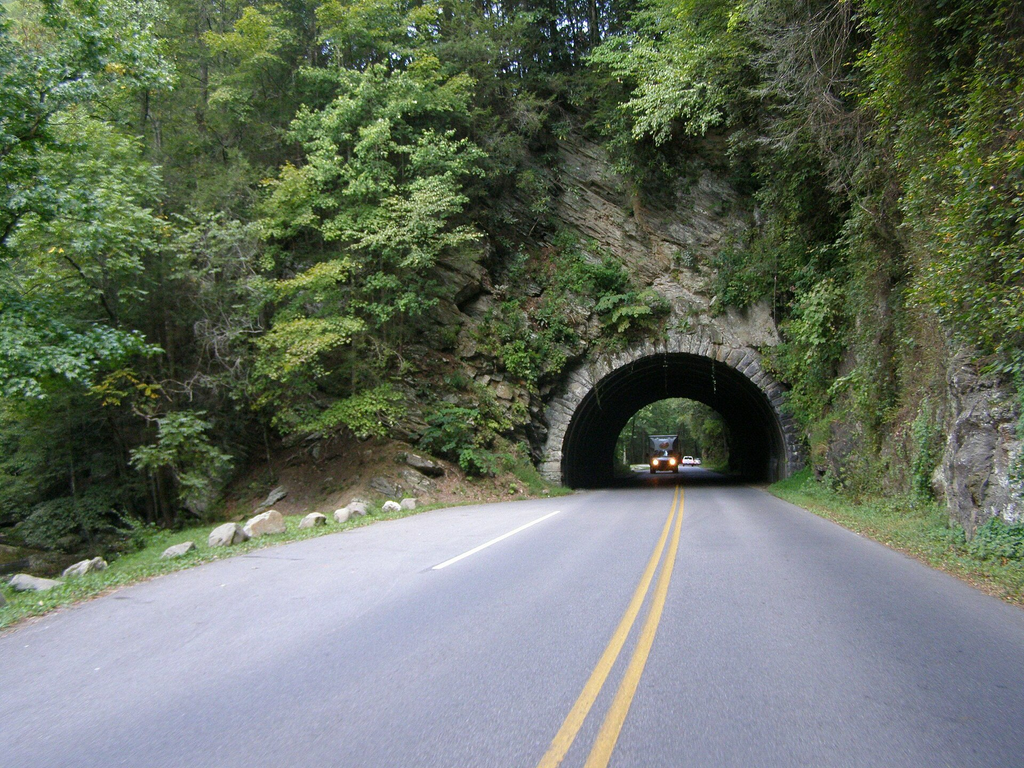
During the 1930s, workers with the Civilian Conservation Corps, or CCC, helped build many of the roads, trails, bridges and stone structures that visitors still encounter throughout Great Smoky Mountains National Park.
The CCC operated in the park from 1933 until 1942. Its crews helped create much of the early infrastructure needed to turn newly protected mountain land into a national park people could actually visit.
That includes work at the Rockefeller Memorial itself.
The result is that a trip through the Smokies is also, in places, a drive through Depression-era American history. Rock walls and bridges that can look like ordinary parts of the mountain landscape were often built by young workers nearly a century ago.
Newfound Gap brings several pieces of that history together in one spot: the old state boundary, the creation of the park, the Rockefeller contribution and the work of the CCC.
A road many Tennesseans know by heart
That history can be surprisingly easy to miss.
For people from East Tennessee in particular, Newfound Gap can feel less like a historic site and more like part of the normal scenery of home.
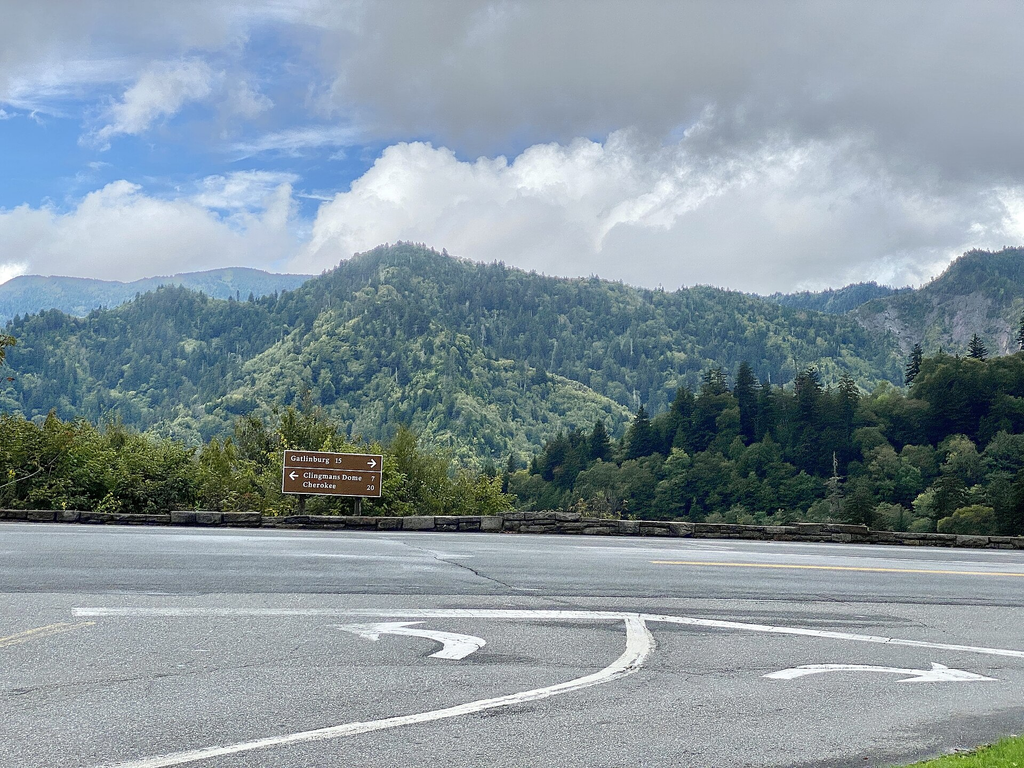
You drive up from the Tennessee side, the air gets cooler, trees change as the elevation rises, and eventually the road reaches that familiar mountain pass.
Then you keep going.
Maybe you stop for a photo. Maybe clouds have swallowed the view. Maybe the parking lot is packed and you decide to come back another day.
None of that necessarily tells you that a sitting president once stood there to dedicate what would become one of America’s best-known national parks.
That is one of the pleasures of learning local history. Sometimes the most interesting story isn’t hidden in a museum. It is sitting beside a road you’ve traveled dozens of times.
Newfound Gap is more than a lookout
The natural setting is impressive enough on its own.
The National Park Service notes that Newfound Gap is also a high-elevation environment with spruce-fir forest and plants and animals associated with much colder climates. The site has cultural importance too: survey work establishing the state boundary reaches back to the 1800s, long before the national park existed.
That gives Newfound Gap several identities at once.
It is a mountain pass.
It is a state line.
It is a scenic overlook.
It is a piece of New Deal history.
And it is the place where, on a September day in 1940, Roosevelt officially dedicated Great Smoky Mountains National Park to the public.
For Tennesseans, that may be the most interesting part of the story. One of the biggest moments in the history of America’s most famous mountain parks happened right here, at a place many of us know simply as somewhere to pull over and admire the view.
Sometimes you have to look at home again to realize what has been there all along.
Sources
U.S. National Park Service, Great Smoky Mountains National Park — Stories, including the history of the park’s creation and Franklin D. Roosevelt’s 1940 dedication.
U.S. National Park Service, Cultural Resources at Newfound Gap, including the Sept. 2, 1940 dedication and historic significance of the landscape.
U.S. National Park Service, Laura Spelman Rockefeller Memorial, including its design and Civilian Conservation Corps construction history.
U.S. National Park Service, background on the Rockefeller contribution that helped establish Great Smoky Mountains National Park.