
A Tennessee weekend can get expensive fast once you start stacking attraction tickets, overnight stays, and downtown prices. But some of the strangest places worth planning a trip around are stone towers, secret passages, century-old fortresses, and one seven-story castle that is still somebody’s actual home.
These are not medieval royal castles shipped over from Europe. They are historic homes, architectural oddities, fantasy rentals, and Tennessee originals, and the stories behind them are better than the word “castle” suggests.
The Seven-Story Castle Somebody Actually Calls Home
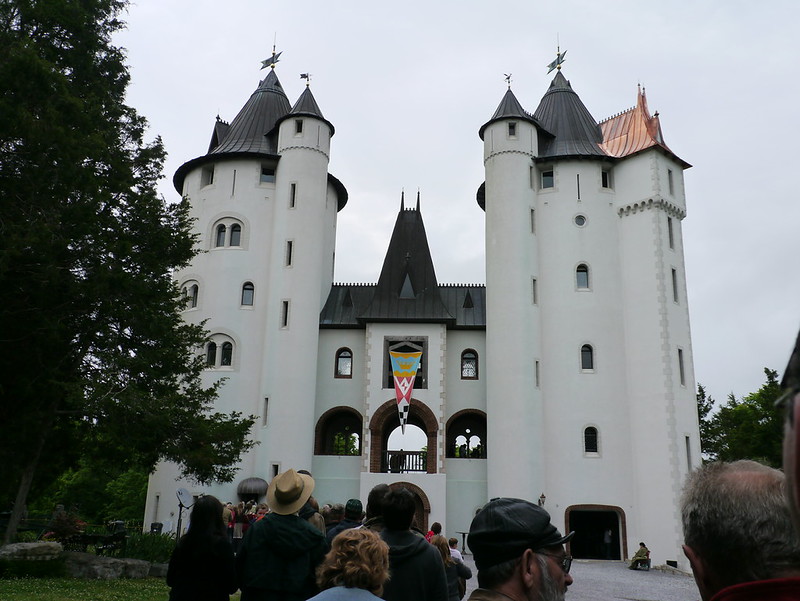
Castle Gwynn near Arrington is the one that makes people do a double take. Its main towers rise seven stories above the Middle Tennessee countryside, and the idea behind the place dates all the way back to 1970, when Nashville native Mike Freeman designed a castle for a high-school architecture assignment.
Drive through this part of Williamson County and the setting makes the building even stranger.
You are surrounded by rolling land and familiar Middle Tennessee scenery. Then white towers and dark roofs start appearing above the trees, looking more like something from the Welsh countryside than something sitting south of Nashville.
Freeman did not design a movie set. He designed his dream house.
Construction turned that teenage idea into a decades-long project for Freeman and his wife, Jackie. And unlike plenty of extravagant homes that eventually become museums, Castle Gwynn is still their residence.
Here’s what catches people off guard.
The Freemans actually live at Castle Gwynn, which is why ordinary indoor tours are not offered.
There is another reason the place may look strangely familiar. Castle Gwynn became a filming location for Taylor Swift’s 2008 “Love Story” music video, tying this improbable Tennessee fortress to one of the most recognizable country-pop videos of its era.
The insider trick is timing.
Castle Gwynn is not a place where you simply pull up on a random October Tuesday and ask to see the living room. Public access is tied to the Tennessee Renaissance Festival. During the festival’s open dates in May, admission includes access to the castle grounds and gardens from 11 a.m. to 3 p.m., weather permitting. Displays can include armor, tapestries, period pieces, and video showing portions of the interior.
The 2026 festival ran on selected weekends in May plus Memorial Day-period dates at 2135 New Castle Road in Arrington. The festival itself operated from 10 a.m. to 6 p.m. on open days.
The trap is assuming “castle visit” means an indoor castle tour.
It does not.
Think of this as the rare chance to walk the grounds surrounding somebody’s extraordinary private home. That distinction actually makes the experience more interesting.
A teenager drew a castle because a teacher asked him to design his dream house. More than half a century later, visitors still come to see the towers he eventually built.
And somehow, that is not even Tennessee’s strangest castle origin story.
The Fortress Built to Outlast Almost Everything
Millennium Manor in Alcoa was constructed between 1937 and roughly 1946 by William Andrew Nicholson and his wife, Emma. Nicholson was already in his 60s when the project began, and the stone residence was intended to endure for an extraordinary length of time.
This is not the romantic, princess-storybook version of a castle.
Millennium Manor feels heavier.
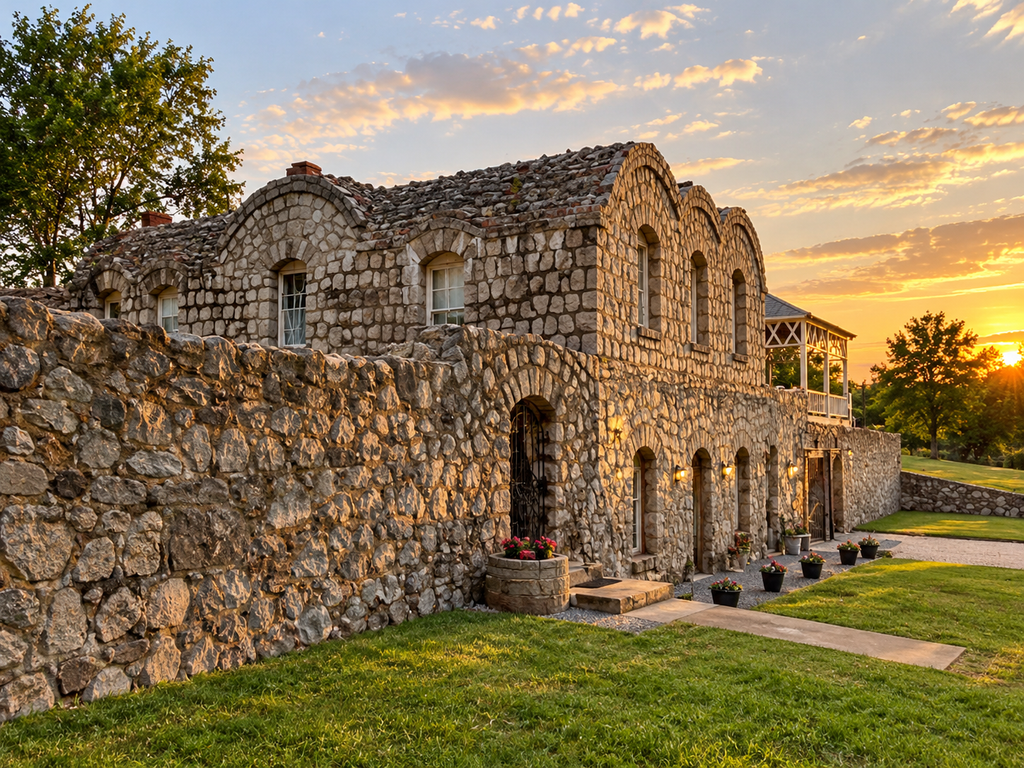
Stone dominates the place. The masonry, battlements, courtyard, fortress-like walls, and dungeon-like spaces make it look as if the builder was preparing for something much more serious than afternoon tea.
That was pretty much the point.
Nicholson reportedly held unusual religious beliefs involving a coming apocalyptic event and wanted his structure to survive for approximately 1,000 years. He worked at the nearby Alcoa plant while building the house largely during his spare time.
Here’s what catches people off guard.
Millennium Manor was conceived as a residence sturdy enough to survive for centuries, not as a roadside tourist attraction.
The construction is what deserves your attention here.
Rather than building an ordinary house and decorating it with a few medieval-looking pieces, Nicholson relied on massive stonework and Roman-inspired masonry methods. The result feels stubbornly permanent, which makes his original goal seem a little less far-fetched once you are standing beside it.
The property eventually deteriorated, but later owners undertook restoration work. In 2020, Millennium Manor was added to the National Register of Historic Places.
The insider tip is simple: call before making a special trip.
Visitor information has listed seasonal guided tours, generally on weekends from noon to 5 p.m., and Blount County tourism has advised visitors that private tours may also be arranged. Because this is a privately managed historic property rather than a conventional state museum, schedules deserve a fresh check before you drive across Tennessee.
That is the trap here. Do not treat the posted weekend pattern like a guarantee.
Millennium Manor is best approached for what it is: one man’s enormous, eccentric argument with time.
The stones are impressive. The reason he stacked them is what stays with you.
The next castle came from a completely different problem. Somebody dug deep into a Tennessee mountain, then figured out what to do with some of the rock.
The Castle Built From the Mountain Beneath It
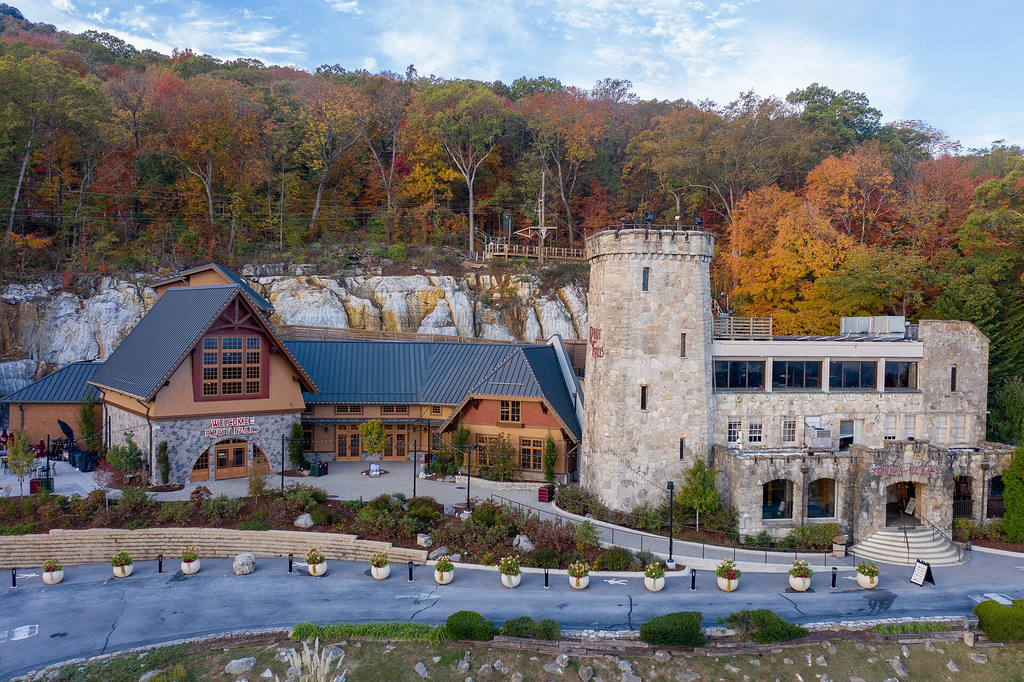
Ruby Falls Castle sits on Lookout Mountain in Chattanooga and dates to 1929. Architect R.H. Hunt designed the building to resemble a 15th-century castle, and limestone associated with the excavation into Lookout Mountain was used in its construction.
That last part changes the way you look at the building.
The castle is not merely sitting on the mountain.
In a very literal sense, part of the mountain became the castle.
Walk around Ruby Falls today and there is a lot competing for your attention. There is the underground cave system, the waterfall, Lookout Mountain scenery, families arriving for timed tours, and the steady shuffle of visitors heading toward their next reservation.
The stone castle can almost become background scenery.
Don’t let it.
Here’s what catches people off guard.
Ruby Falls Castle was built in 1929 using limestone connected to excavation into the same mountain visitors descend into today.
There is another piece of history most people walking through the building would never guess.
In its early days, the castle was a social destination. Ruby Falls records describe a tearoom operating during the day, upscale dining at night, dinner dances accompanied by an orchestra, private dining, and gatherings around the fireplace and rooftop terrace.
Picture Chattanooga in the 1930s.
Instead of hurrying through with a phone and a timed cave reservation, people dressed for dinner and came up Lookout Mountain to dance inside a stone castle.
That is the part worth remembering.
For today’s visitor, the practical side is easier than some castles on this list. Ruby Falls operates as a major attraction, and Cave Walk tickets are currently $29.95 for adults, $19.95 for children ages 4 through 12, and $28.95 for seniors 65 and older. Children three and younger are free.
The insider tip is to book online before you arrive.
Ruby Falls warns that timed cave tours can sell out and recommends buying tickets several days in advance for better availability. The standard Cave Walk can involve walking, standing, and keeping pace with a group for up to 90 minutes.
That is the trap. Showing up at Lookout Mountain and assuming the next cave tour will have room can wreck an otherwise easy Chattanooga day.
Come for the waterfall if that is what gets you up the mountain.
Just don’t walk through a 1929 castle without noticing the story sitting above ground.
The next place takes the fantasy even further. Instead of buying a tour ticket, you can spend the night.
Where the Bookcase Isn’t Necessarily Just a Bookcase
Williamswood Castle in South Knoxville is a Scottish hunting lodge-inspired castle with more than 4,500 square feet of space. Unlike Castle Gwynn, it is not primarily a sightseeing stop. Williamswood operates as an overnight rental, with the current accommodation set up for six guests in three bedrooms and 2½ bathrooms.
The outside gets your attention first.
Stonework, tower-like shapes, woods, and the nearby Tennessee River create the sort of setting that makes an ordinary suburban hotel feel awfully dull afterward.
Then you get inside.
Williamswood contains roughly 42 leaded stained-glass windows, antique furnishings, armor, swords, river-view balconies, and its own private pub called the Black Dog Pub.
One bedroom even has a ceiling painted in imitation of the Sistine Chapel.
And then there is the bookcase.
Here’s what catches people off guard.
A bookcase conceals a secret staircase and passage inside Williamswood Castle.
That is exactly the sort of detail a castle rental ought to have.
The property sits in a wooded South Knoxville setting associated with the Ijams Nature Center area, and its listing advertises about 500 feet of river frontage. Local history adds another layer because land in this area was once associated with Camp Mary Ijams, established by the Girl Scouts in the early 20th century.
The insider tip is to treat Williamswood as lodging first and attraction second.
This is not the place to arrive expecting a front desk selling museum tickets every 30 minutes. The appeal is having time to notice the stained glass, wander the rooms, sit near the river, find the pub, and enjoy all those details after day-trippers elsewhere have gone home.
The practical catch is price and availability.
Vacation-rental rates change with dates, demand, fees, and booking conditions, so there is no sense pretending one fixed nightly price tells the whole story. Check the current listing for your exact dates before building a Knoxville weekend around it.
The same goes for occupancy rules and booking policies.
At some Tennessee castles, somebody unlocks the door and gives you a tour.
At Williamswood, the whole point is that they hand you the keys.
But over near Franklin, another stone castle traded an alleged Prohibition-era past for microphones, musicians, and wedding guests.
The Prohibition-Era Castle That Became a Music Studio
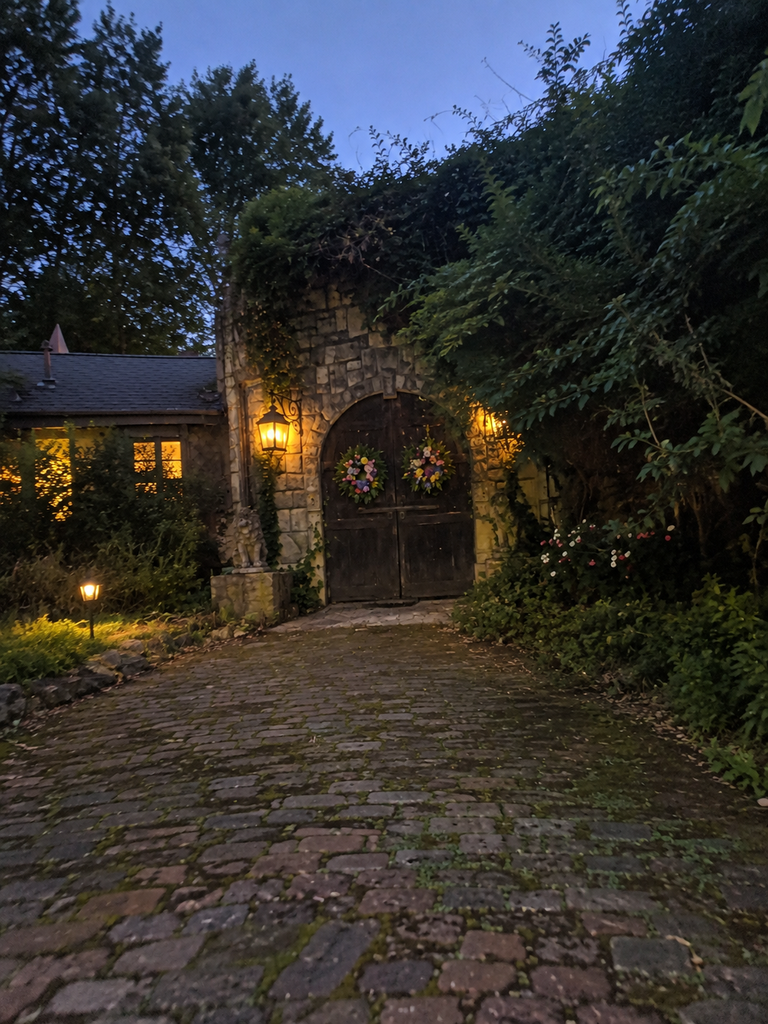
The Castle at 1393 Old Hillsboro Road near Franklin dates to roughly 1929 to 1932. Today it functions as a recording studio and event property, but its early history has been tied to John P. Welch, described by Visit Franklin as a Chicago underworld figure, and to a Prohibition-era gambling hideout.
Even by Williamson County standards, that is a strange résumé for a building.
The setting covers roughly 32 acres, far enough removed from downtown Franklin’s storefronts and sidewalks to feel secluded.
Stone towers give the place its castle character. Accounts of the property also describe concealed spaces, false-wall areas, and cellars.
It is easy to see why stories stuck to it.
Then Tennessee did what Tennessee tends to do with an interesting old building.
It added music.
Here’s what catches people off guard.
The property went from a Prohibition-era gambling hideout story to a recording studio associated with major artists.
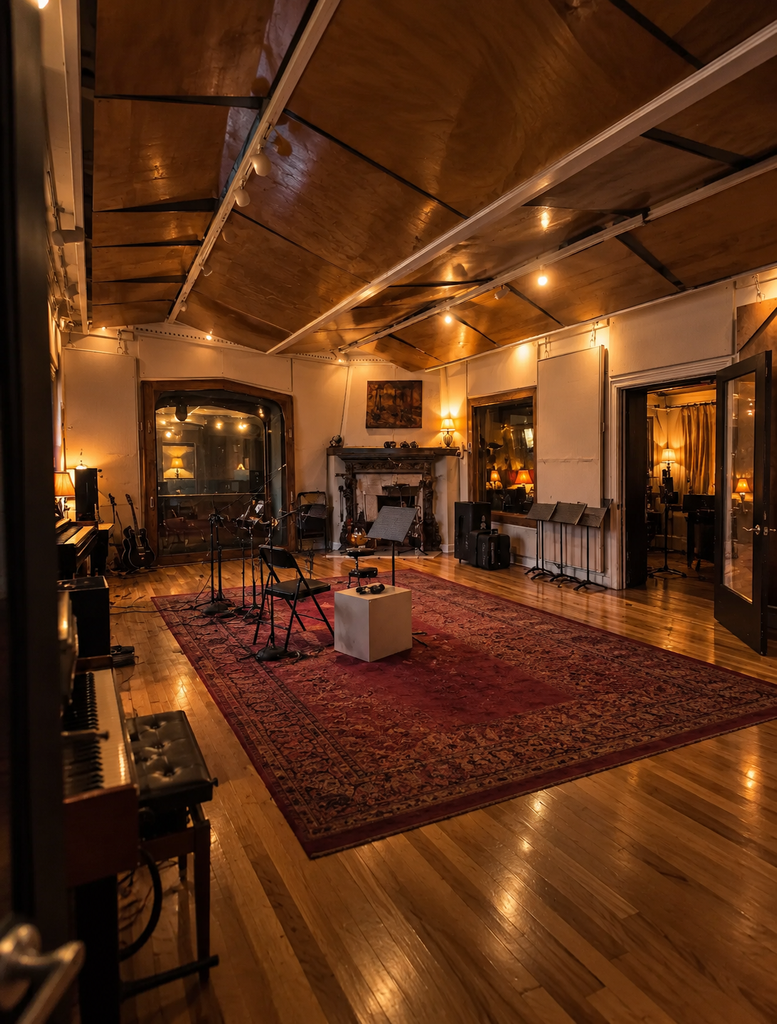
Over the years, the building has had several lives, including use as a restaurant, horseback-riding operation, recording studio, and event venue.
Visit Franklin has connected the studio with artists including Chris Stapleton, Alan Jackson, Snoop Dogg, and Shawn Mendes.
That combination is almost aggressively Middle Tennessee.
Old stone walls. Questionable Prohibition-era history. Country music. Weddings.
The insider tip is to understand what “visit” means before pointing the car toward Franklin.
The Castle is not a conventional tourist attraction offering daily public tours. It is a working recording and event property. Access is tied to events, bookings, weddings, or other venue use rather than an ordinary museum schedule.
That is also the trap.
Do not show up expecting to wander around because you read that the building has a fascinating history. This remains a working private venue, and access needs to be connected to an appropriate booking or event.
For architecture lovers, the building is interesting.
For music fans, the studio history adds another layer.
For anybody fascinated by the strange second and third lives of old Tennessee properties, this one is hard to beat.
But the next “castle” is much older, and its story is heavier than turrets, fantasy bedrooms, or music stars.
The Castle That Doesn’t Look Like a Castle at All
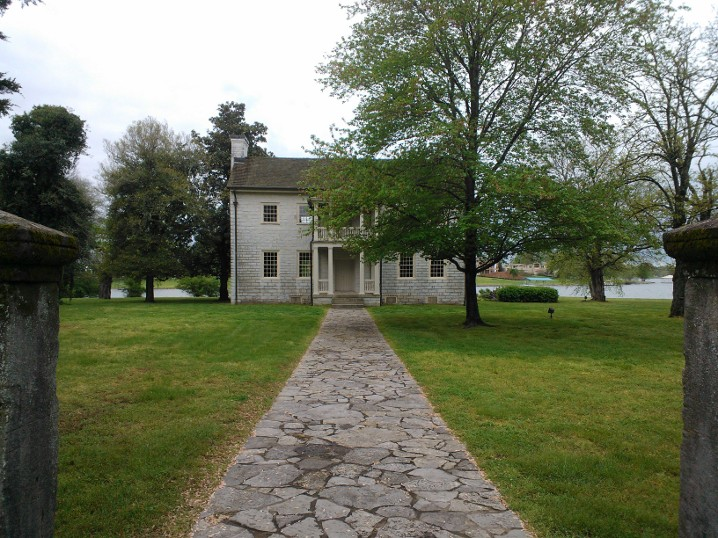
Historic Rock Castle in Hendersonville began construction around 1784 for Daniel Smith and Sarah Michie Smith. The preserved site today covers roughly 18 acres overlooking Old Hickory Lake, and it sits about 25 minutes from downtown Nashville according to its tourism materials.
Here is the first thing you need to know.
If you arrive expecting towers, drawbridges, and battlements, you are going to think somebody gave you the wrong address.
Rock Castle is a castle in name, not medieval appearance.
The cream-colored limestone residence reflects Federal and Georgian architecture, and that difference is exactly what makes it worth putting on this list. It reaches back to Tennessee’s frontier era rather than trying to recreate medieval Europe.
The setting has a quiet weight to it.
Old Hickory Lake stretches beyond the grounds. Historic outbuildings and the family cemetery remain part of the property. The stone house has watched Middle Tennessee change around it for more than two centuries.
Here’s what catches people off guard.
Construction on Rock Castle began around 1784, making its story older than the state of Tennessee itself.
Daniel Smith was a Revolutionary War officer, surveyor, territorial official, U.S. senator, participant in Tennessee’s constitutional history, and creator of an early map associated with Tennessee.
But this history should not be softened into a pretty story about limestone and lake views.
The property once stood at the center of an approximately 3,140-acre plantation. Modern interpretation recognizes the enslaved men, women, and children whose labor contributed to the Smith family’s estate and plantation economy.
That context matters.
The insider tip is to reserve your tour rather than assuming you can wander inside whenever the grounds are open.
Rock Castle is currently open April through mid-December. Hours are Tuesday through Friday from 10 a.m. to 4 p.m. and Saturday from 10 a.m. to 2 p.m., with the site closed Sunday and Monday. Guided interior tours run at scheduled times.
Adult tour admission is currently $10. Seniors 60 and older and active military pay $9, while children ages 5 through 12 are $8. Interior access is by guided tour.
The trap is private events.
Rock Castle warns that weddings and other events can close the site or alter tour availability, so calling ahead is strongly recommended. Animals and video recording devices are not permitted inside the historic home, although photography is allowed.
After the darker, complicated history here, Tennessee has one more castle that swings the mood back toward pure vacation fantasy.
And this one belongs in the Smokies.
The Smoky Mountain Castle Built for a Whole Crew
Braxdon’s Castle in the Sevierville and Smokies area is a modern medieval-inspired vacation property created for large-group stays. Unlike Rock Castle, nobody is going to mistake it for an 18th-century historic site. This one leans deliberately into the fantasy of spending a mountain vacation inside a castle.
That distinction matters.
Tennessee’s castle collection gets interesting precisely because these places are not all trying to be the same thing.
Some preserve history.
Some started as private obsessions.
Some became tourist landmarks.
Braxdon’s is about the fun of walking into a Smoky Mountain getaway and finding medieval styling instead of the familiar log-cabin formula.
Stonework, castle-inspired architecture, and dramatic interior spaces turn the stay itself into part of the entertainment.
Outside, you still have the East Tennessee mountain setting.
Inside, the mood shifts toward fantasy.
Here’s what catches people off guard.
Braxdon’s Castle is a modern vacation rental, meaning the castle itself is part of the Smoky Mountain overnight experience rather than a museum you tour for an hour.
The insider tip here is not to get too attached to an old article’s nightly rate, booking site, or availability calendar.
Vacation rentals can change management, booking platforms, rules, and pricing much faster than historic museums do. Verify the current listing before planning a group trip around it.
That is also the trap.
A beautiful photo from two years ago tells you almost nothing about what a particular weekend will cost today. Cleaning charges, minimum stays, occupancy rules, and seasonal demand can change the actual total considerably.
Think of Braxdon’s as the fantasy counterpart to Williamswood.
Williamswood gives a smaller group stained glass, a pub, river scenery, and a secret passage in Knoxville.
Braxdon’s turns the castle idea into a Smoky Mountain group getaway.
Neither is pretending to be a medieval ruin.
They are simply proof that somewhere along the way, Tennessee decided ordinary vacation houses were not always interesting enough.
And that brings us back to the strangest fact behind the whole list.
The Unexpected Fact About Tennessee’s Castles
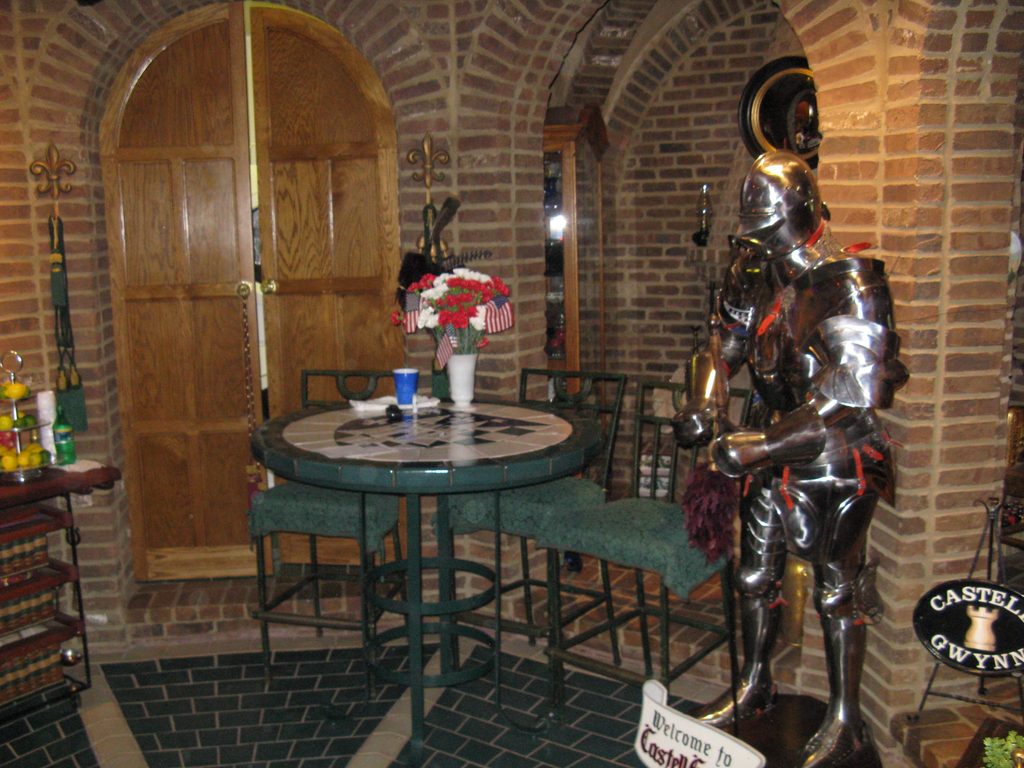
Tennessee’s castles were never one architectural movement.
Historic Rock Castle reaches back to the 1780s. Ruby Falls Castle came out of the early automobile-tourism era in 1929. Millennium Manor grew from one man’s determination to construct a fortress that could endure for centuries. Williamswood and Braxdon’s turned castle architecture into places where travelers can actually spend the night.
Then there is Castle Gwynn.
Its story started in 1970 with a teenager sitting in architecture class and drawing the house he wished existed. The towers eventually rose seven stories. Taylor Swift filmed there. Renaissance Festival crowds now come through the grounds during a few precious weekends each May.
And when those visitors leave, the gates close again.
The castle goes back to being somebody’s home.
That may be the most Tennessee part of the whole story. These places were built for completely different reasons, in completely different eras, by people who apparently looked at an ordinary building and decided ordinary would not do.
Sometimes the best Tennessee stories are the ones hiding behind walls nobody had any practical reason to build.