


A Tennessee cave tour can cost as little as $15, while the bigger-name attractions can run well over $25 per adult. The bigger difference, though, is what you get for that money.
Tennessee has nearly 10,000 caves, and after comparing current tours, prices, routes, seasonal schedules and difficulty levels, these are the ones worth knowing. Some are comfortable walks. Others involve waterfalls, underground rivers, boats, flashlights and enough mud to ruin a perfectly good pair of pants.
The Cave Where Your Walking Tour Ends on a Boat
The Lost Sea Adventure sits inside Craighead Caverns near Sweetwater, between Knoxville and Chattanooga. The standard tour covers about three-quarters of a mile, lasts roughly 1 hour and 15 minutes, and costs $29.95 for adults, $28.95 for seniors and $18.95 for children ages 4 through 12.
At first, it feels like a classic Tennessee cavern tour.
You leave the daylight behind and move deeper into cool limestone. The temperature settles around 58 degrees year-round, so that summer heat outside starts feeling a long way away.
Then the cave changes character.
Instead of another formation or another chamber, you reach water. Electric boats carry visitors across the underground lake, where roughly 4.5 acres of water are visible.
The surface you see is only part of the story. Divers have mapped more than 13 acres underwater, and the attraction says the full extent still has not been determined. Large rainbow trout live in the lake too.
Here’s what catches people off guard.
The Lost Sea is not simply a cave with a pond at the bottom. More than 13 acres of its underground water have already been mapped.
There is history down here too. Cherokee artifacts have been found inside Craighead Caverns, Confederate forces mined saltpeter here during the Civil War, and remains and tracks from a Pleistocene jaguar were discovered in the cave.
The lake’s discovery story may be the strangest part. According to the attraction, 13-year-old Ben Sands crawled through a small muddy passage in 1905 and emerged into a chamber containing the enormous body of water.
Advance tickets are recommended. Bring a light layer even in July or August because that 58-degree cave temperature can feel downright chilly after a Tennessee afternoon.
There is one current wrinkle to know. As of October 1, 2026, drought conditions have lowered the lake below normal levels, although cave and boat tours are still operating.
And if underground water sounds impressive, Tennessee has another cavern where the water does something considerably more dramatic.
The Smokies Cave With a 210-Foot Waterfall
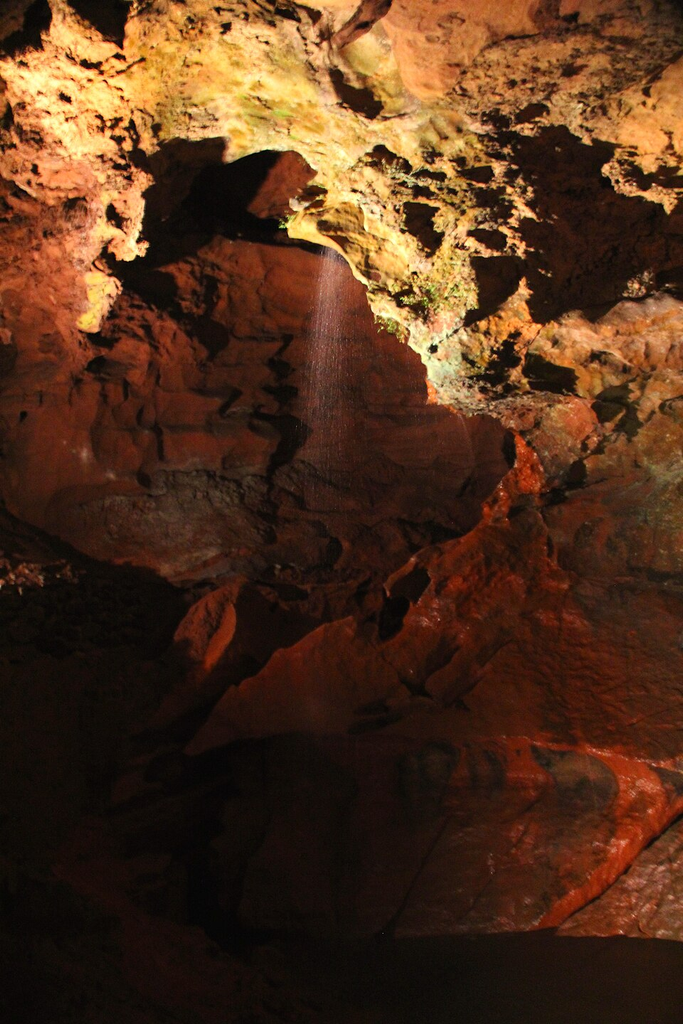
Tuckaleechee Caverns is in Townsend, the quieter western gateway to Great Smoky Mountains National Park. Its underground route runs about 1.25 miles round trip and reaches both the enormous Big Room and Silver Falls, which drops approximately 210 feet.
This is the sort of cave that reminds you why Tennessee’s geology is such a big deal.
The passages open into chambers filled with stalactites, stalagmites and flowstone. Water runs through portions of the cavern, and the Big Room is described by the attraction as large enough to nearly hold a football stadium.
Then there is Silver Falls.
After walking through chambers where every sound seems amplified by rock, you reach an underground waterfall with a total drop of about 210 feet.
Here’s what catches people off guard.
The biggest spectacle at Tuckaleechee is not a mountain view above the Smokies. It is a 210-foot waterfall underneath them.
This is a particularly handy choice if Townsend is already part of your Smokies trip. You do not have to drive back toward the heavier Pigeon Forge traffic to add a substantial cave experience to the day.
The practical details matter because Tuckaleechee is seasonal. In 2026, it operates daily from March through November. Hours are 10 a.m. to 5 p.m. in March and November, and 10 a.m. to 6 p.m. from April through October.
Admission is currently $28 plus tax for adults and $15 for children ages 5 through 11. Children four and younger enter free.
Wear shoes you trust on damp surfaces and bring a layer. A cave trip sounds like an easy indoor backup for a hot Smokies afternoon until that cool underground air hits your arms.
The trap is assuming all Smokies-area caves are basically the same.
The next one trades a giant waterfall for something awfully Tennessee: underground water, limestone chambers and a moonshine story.
The Cave Moonshiners Used Until the 1940s
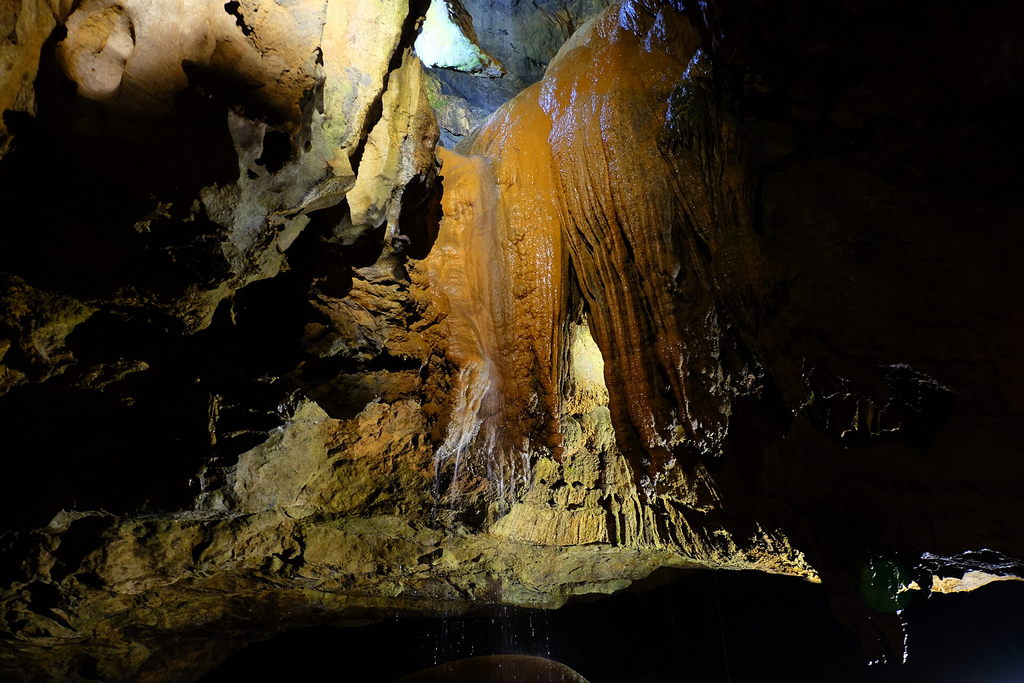
Forbidden Caverns sits outside Sevierville, away from the busiest stretch of Pigeon Forge. Guided tours average about 55 minutes, the cave remains near 58 degrees year-round, and admission is currently $25 for ages 13 and older and $15 for children ages 5 through 12.
The underground scenery is classic East Tennessee cave country.
You move through natural chimneys, grottos and calcite formations while an underground stream runs through the cavern. The rock can glisten with moisture, and the steady sound of moving water follows parts of the route.
But geology is only half the fun here.
Forbidden Caverns says illicit whiskey was produced inside from the early 1920s until 1943. An isolated location and a reliable supply of underground water made the cavern useful to moonshiners.
Here’s what catches people off guard.
The same cold underground water visitors see today helped make this cave useful for illegal whiskey production during the moonshine era.
Do not mistake the roughly 55-minute runtime for an effortless stroll.
One narrow portion has approximately 50 downward stairs, and parts of the path can become wet and slippery. The attraction specifically cautions that the tour may not suit visitors with mobility or respiratory problems.
That is the insider move here: judge the cave by the terrain, not the clock.
Forbidden Caverns currently operates April 1 through November 25 from 10 a.m. until 4 p.m., with the final tour departing at 4. It is closed Thursdays and Sundays and shuts down for winter beginning Thanksgiving Day.
There is another unusual detail for travelers who plan everything online. Forbidden Caverns does not currently sell advance tickets online. Admission is purchased when you arrive.
But if stairs and moonshine history are not enough drama, Chattanooga has a cave whose biggest attraction was discovered completely by accident.
The Waterfall Nobody Was Looking For
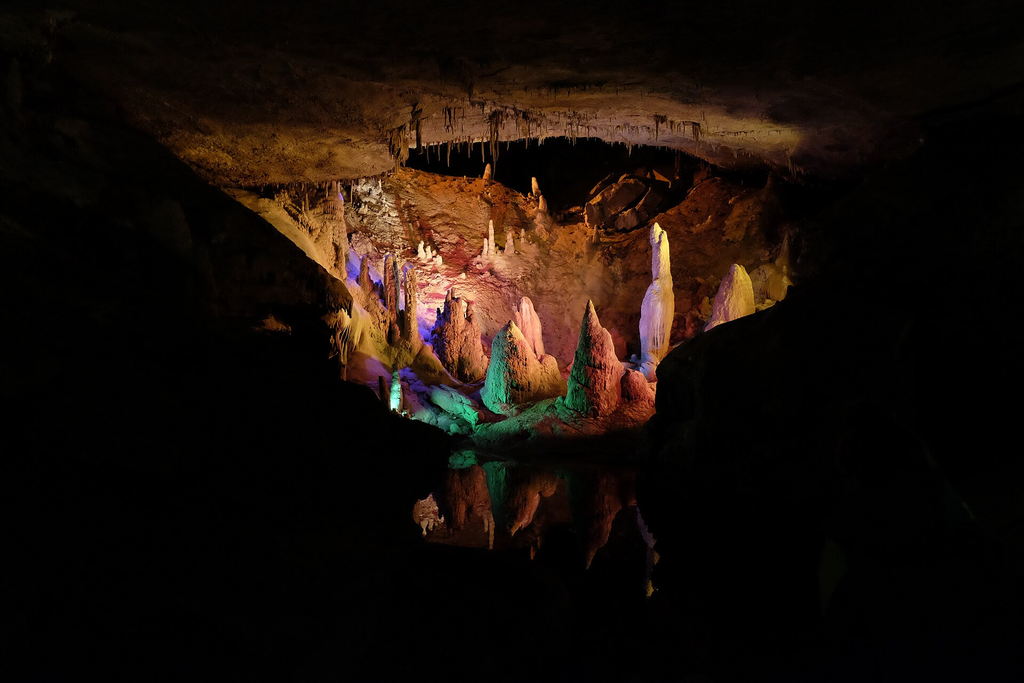
Ruby Falls is inside Lookout Mountain in Chattanooga, where visitors descend underground before walking through the cavern toward its famous waterfall. The cave stays around 60 degrees year-round, and current cave-tour tickets vary by date and experience, roughly from $19.95 to $42.95.
This is one of those Tennessee attractions where the discovery story makes the scenery better.
In 1928, cave enthusiast Leo Lambert was trying to reopen Lookout Mountain Cave. Workers were drilling a 420-foot elevator shaft when they struck an unexpected opening about 260 feet down.
Lambert and several companions squeezed into it.
They spent roughly 17 hours exploring the passage, eventually reaching underground streams, formations and a waterfall nobody had been searching for.
Lambert named it Ruby Falls for his wife, Ruby Losey Lambert. The cave opened to visitors in 1930.
Here’s what catches people off guard.
Ruby Falls was discovered while workers were trying to reach an entirely different cave.
The waterfall is described as lying 1,120 feet beneath the summit of Lookout Mountain. That number makes the elevator ride and underground walk feel different once you understand just how much mountain is above you.
Buy timed tickets ahead if you have a specific day in mind. Popular slots can sell out.
And do not see “elevator” and assume this is a no-walking attraction.
Ruby Falls offers a Gentle Walking Tour for visitors wanting a slower pace, but cave experiences still involve time on your feet. Its specialty History Tour, for example, covers roughly a mile, includes about 50 steps and can involve up to two hours of walking and standing.
The trap is showing up during a busy Chattanooga trip without a reservation and assuming the next tour will have room.
The next cave gives you a different choice entirely. You can keep things easy, or you can decide your vacation needs several hundred stone steps.
The Cave That Lets You Choose How Hard This Gets
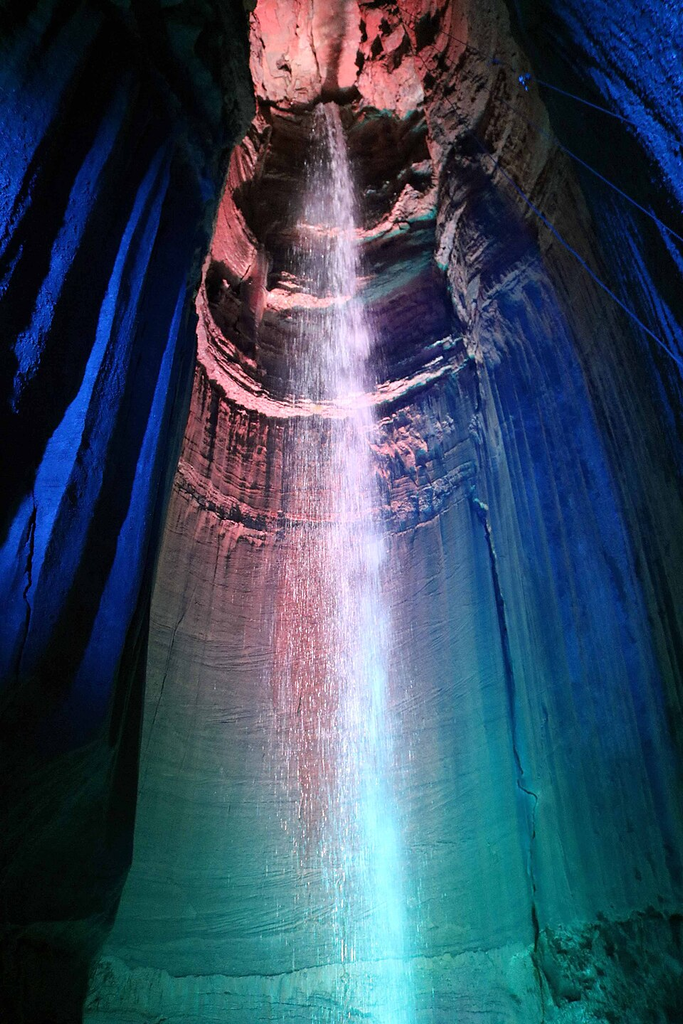
Cumberland Caverns near McMinnville contains more than 27 miles of mapped passages. Its easiest regular option, the Cardwell Mountain History Tour, lasts about 45 minutes and currently costs $25 for adults and $17 for children ages 5 through 12.
This is one of the best places to understand how misleading the phrase “cave tour” can be.
Take the Cardwell tour and you get the gentler version. There are steep and uneven sections, but no stairs.
Choose the Discovery Tour and things change.
That route lasts approximately 90 minutes, covers about 1.5 miles and includes around 350 natural-stone steps plus steep terrain. It reaches the cave’s largest room and currently costs $32 for ages 13 and older and $25 for children ages 5 through 12.
Here’s what catches people off guard.
One Tennessee cave can give you a 45-minute stair-free tour or send you across roughly 350 natural-stone steps.
The cave stays about 56 degrees with roughly 99 percent humidity. That combination feels cool and damp rather than simply cold.
There is another detail easy to miss when planning. Every tour begins with roughly a quarter-mile outdoor walk from the gift shop to the cave entrance.
So wear the good walking shoes before you even enter the mountain.
Reservations are recommended, although walk-ins can be possible for major walking tours. Natural cave conditions also mean wheelchairs, walkers and strollers are not permitted inside.
Then there are Cumberland’s adventure tours.
Those move beyond sightseeing into helmets, headlamps, crawling, climbing, tight passages, mud and rock breakdown piles.
In May 2026, Tennessee also dedicated the 534-acre Cardwell Mountain State Archaeological Park above Cumberland Caverns, adding another layer of protection and significance to the landscape.
And somehow, Chattanooga has a cave that can make even Cumberland’s dirtier side sound civilized.
The Chattanooga Cave Where the Handrails Eventually Disappear
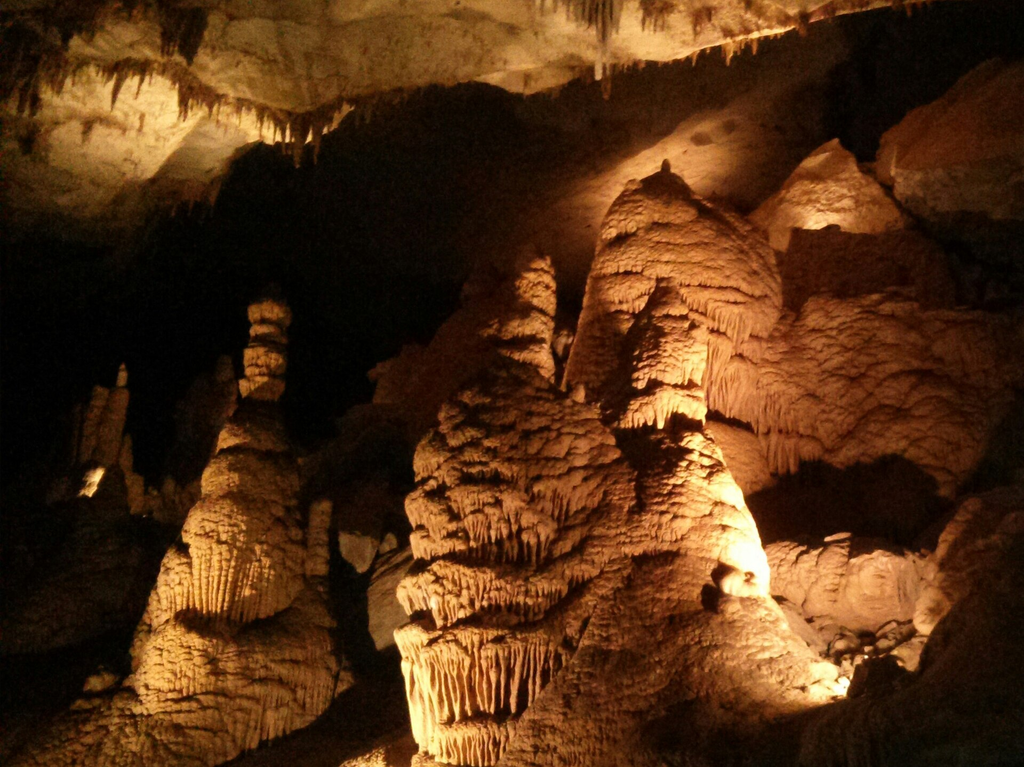
Raccoon Mountain Caverns offers a developed Crystal Palace Walking Tour lasting about 45 to 55 minutes. The standard route covers roughly the first quarter-mile of a cavern system with more than 5.5 miles of underground passages.
On the regular tour, you have lighting, developed paths, steps and handrails.
You pass stalactites and stalagmites, thin soda straws, flowstone, cave shields and twisting helictites. Water continues shaping portions of this living cave, so the scenery is not some finished stone museum frozen in time.
That is the comfortable version.
Raccoon Mountain also offers wild-cave expeditions where the developed path gives way to crawling, squeezing and mud. Depending on the expedition, visitors can spend anywhere from roughly an hour to several hours underground.
Here’s what catches people off guard.
At Raccoon Mountain, the difference between a normal cave tour and a wild-cave trip can be the difference between walking upright and crawling through Tennessee mud.
For most travelers, the Crystal Palace route is the sensible introduction. A 2026 Visit Chattanooga listing put standard admission around $28.99 for adults and $18.99 for children.
Closed-toe shoes are the smart choice even on the developed route. If you book a wild expedition, treat the clothing requirements seriously.
The trap is seeing photos of the developed cave and assuming an adventure tour is simply a longer version of the same thing.
It isn’t.
This is also the cave to consider if you are already visiting Chattanooga and want something different from Ruby Falls. Ruby Falls is built around the waterfall experience. Raccoon Mountain is more about the cave itself and the choice between developed and wild exploration.
But Tennessee has one cavern where the underground room is famous for something other than rocks.
People buy concert tickets to sit in it.
The Cave Where the Stage Is Underground
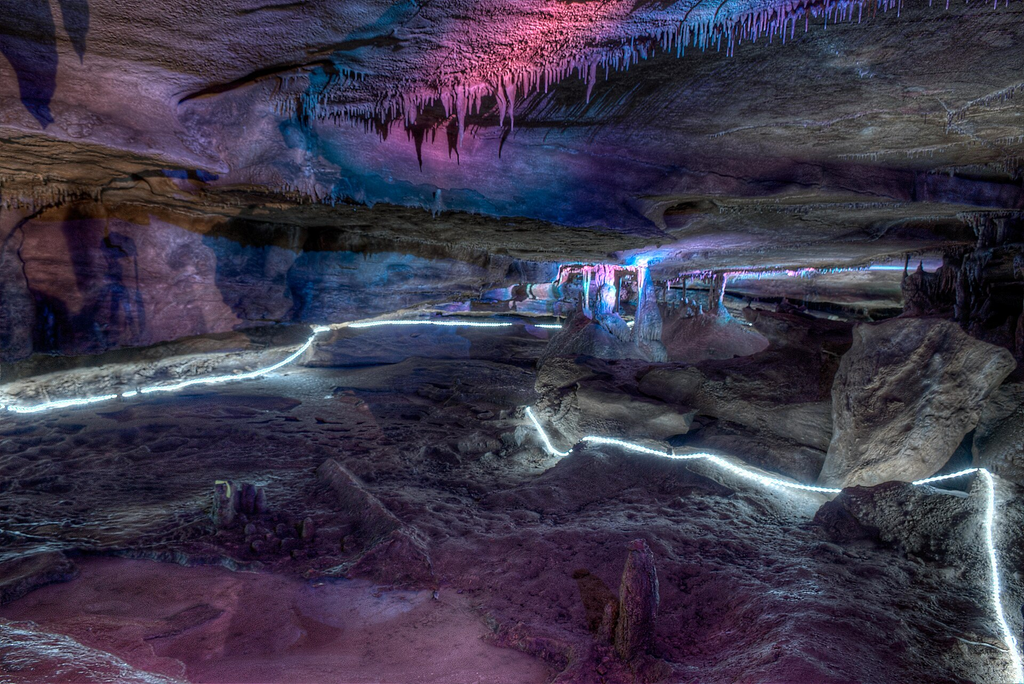
The Caverns in Pelham is both a cave attraction and a nationally known underground music venue. Its regular guided tour lasts roughly 45 minutes to one hour, passes through two caves, and currently costs $22.95 for adults and $12.95 for ages 3 through 12.
The scale hits first.
The Big Room stretches roughly three football fields in length.
Then the experience takes a turn most cave tours cannot copy.
You enter the underground music hall.
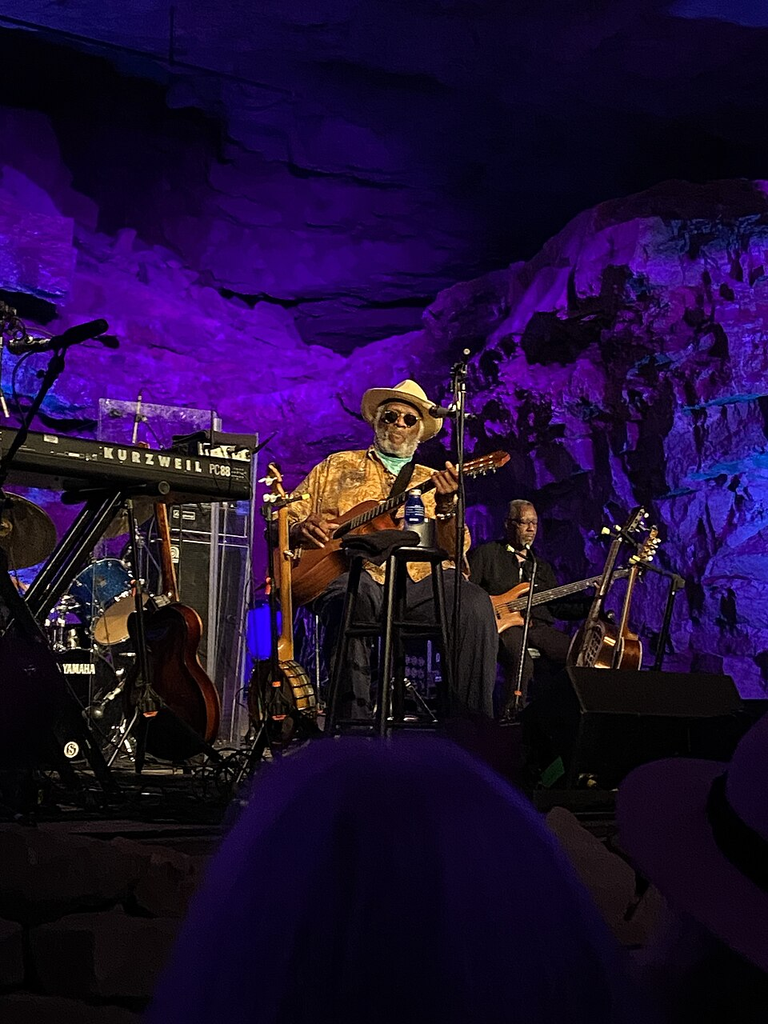
Instead of only studying formations and water-carved limestone, you are standing inside a performance space built into the cave itself. Concert crowds come here for amplified music underground, but you do not need to attend a show to see the cave.
Here’s what catches people off guard.
A regular cave tour can take you through the same underground space where audiences gather for live concerts.
The standard tour is considered moderate because of several steep hills. Regular tours currently depart Saturdays and Sundays, with additional availability on concert dates.
That limited schedule is the trap.
Do not assume this works like a seven-day-a-week roadside cave attraction. Check tour availability before building a drive through Pelham around it.
And once again, Tennessee gives you an option to make things much harder.
The Big Room Adventure Tour adds crawling and tighter passages. Tombstone Pass takes the idea considerably further.
That tour lasts approximately three to four hours, is restricted to visitors 16 and older, and reaches tighter cave terrain and an underground river. Current pricing is $130 plus tax and fees.
At some caves, upgrading your tour means a few more formations.
Here, it can mean spending four hours underground.
And farther northeast, another Tennessee cavern lets you descend through three separate levels before you reach the river.
The Cave Where You Keep Going Down Until You Find a River
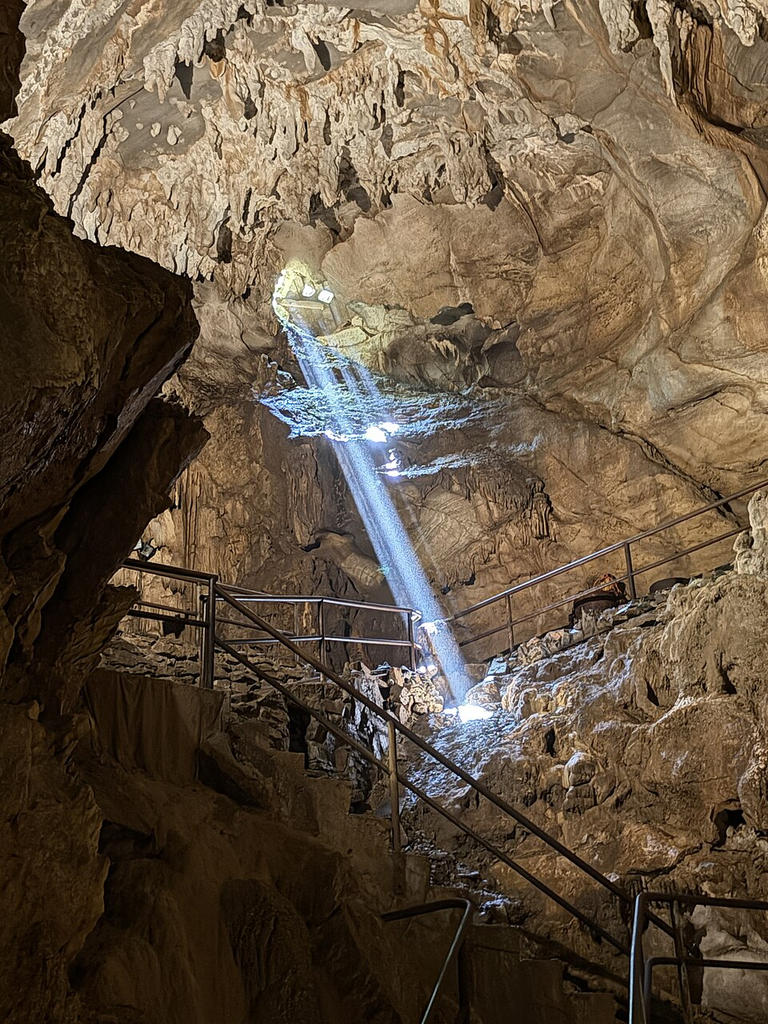
Bristol Caverns in Bristol takes visitors through three underground levels on its Classic Show Tour. The route reaches an underground river roughly 180 feet below, lasts about 45 to 60 minutes and currently costs $19.95 for adults ages 13 through 59.
The descent is what gives this one its personality.
You move downward through chambers rather than simply following one mostly level corridor. Formations appear along the route, including Bridal Veil, before the cave eventually leads toward reflective underground water.
There are stairs. There is uneven footing.
The attraction rates the Classic Show Tour around 3 out of 10 for difficulty, which makes it approachable for many travelers without pretending the cavern floor is a shopping-mall hallway.
Here’s what catches people off guard.
The standard tour drops through three cave levels before reaching water about 180 feet underground.
Seniors 60 and older currently pay $16.95, children ages 5 through 12 are $9.95, and children four and younger enter free.
But the more interesting trick for repeat visitors is the Lights Out Tour.
Currently offered at 6 p.m., it lets guests explore using their own flashlights rather than relying entirely on the cave’s usual illumination. It lasts about 45 to 60 minutes and costs $24.95 for adults.
Then Bristol goes from atmospheric to downright muddy.
Its Riverwalk Adventure Tour requires waders and enters undeveloped portions of the cavern. The group is limited to eight people and currently costs $39.95.
The Gigantis and River Challenge tours reach difficulty ratings of 8 to 9 out of 10, last roughly 2.5 to three hours and cost about $99.95 per person.
The trap is booking based on the word “tour” without checking which tour you actually selected.
The next cave asks for something simpler than waders, but what you see inside carries considerably more weight.
The Cave Where the Most Important Things on the Walls Were Put There Centuries Ago
Dunbar Cave State Park in Clarksville protects a cave containing Mississippian-period Indigenous art dating roughly to the 14th century. Guided cave tours returned in 2026 after being closed for a full season because of flooding, and tours generally operate between May and September.
This place needs to be approached differently from a commercial show cave.
You are not entering simply to count stalactites.
The cave contains sacred Indigenous imagery and held deep meaning within Mississippian cosmology, including associations with the Underworld. That makes Dunbar both a geological place and a protected cultural landscape.
The darkness matters here.
There is no need to turn every chamber into a spectacle. You move through an environment where the walls themselves preserve evidence of people who understood this place centuries before Tennessee existed as a state.
Here’s what catches people off guard.
Some of Dunbar Cave’s most significant features are 14th-century Indigenous artworks, not geological formations.
Tour options vary.
Enter the Underworld focuses strongly on the Indigenous relationship with the cave. Unknown Realms goes farther into named cave sections. Spray Hall is the rugged choice, involving the River Styx, slippery surfaces, narrow passages, crouching and low ceilings. A Spray Hall ticket listed in September 2026 cost $18 per person.
There are strict rules for good reason.
Every visitor on a physical cave tour must carry a hand-held flashlight. A phone light or headlamp does not count. Photography inside is prohibited to help protect the culturally sensitive cave environment.
Children four and younger are not permitted inside.
Reservations are strongly recommended because tour groups are small and can fill.
The trap is treating Dunbar like another roadside attraction. It deserves more care than that.
After something this history-heavy, the next cave brings the mood back toward old-fashioned Tennessee adventure, complete with cheap admission and passages with names like Rib-Crusher.
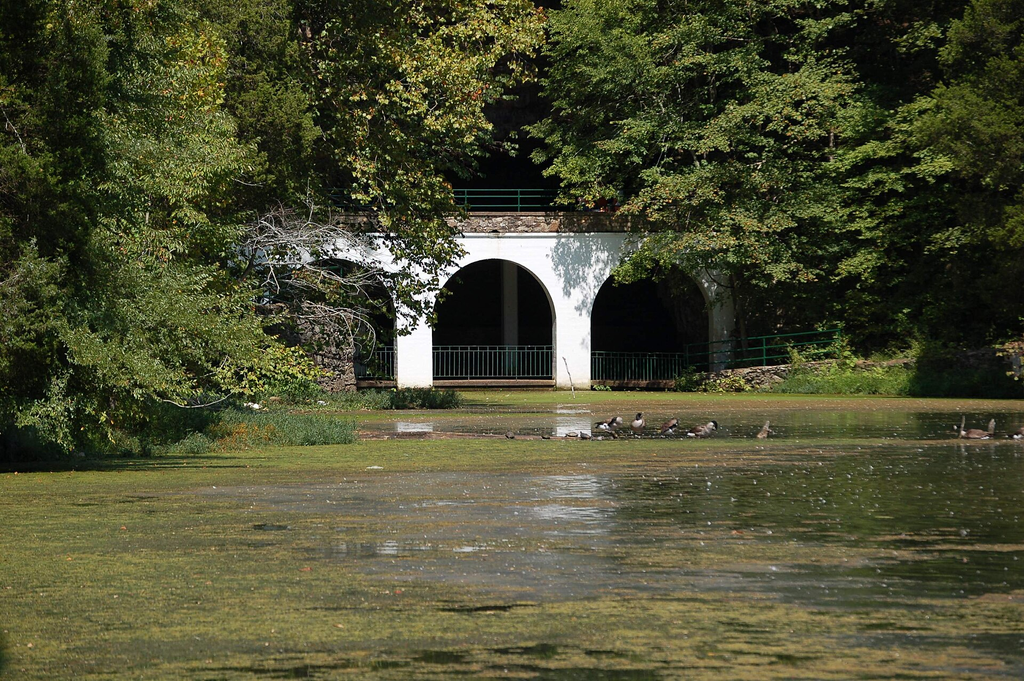
The $15 Cave Tour With a Much Wilder Side
Appalachian Caverns near Blountville in northeastern Tennessee offers one of the lower-priced commercial cave experiences in the state. Its standard walking tour currently costs $15 for adults and $9 for children ages 2 through 12, with children under two admitted free.
This is the one for travelers who do not need the biggest gift shop, the most famous waterfall or a giant roadside reputation.
You get a traditional cave experience without paying close to $30 per adult.
There is also real history underfoot.
Archaeological work at Appalachian Caverns found evidence of Indigenous use, and the attraction says charcoal from a cave fire pit was radiocarbon dated to approximately A.D. 675.
Here’s what catches people off guard.
A cave with a $15 standard adult tour can also send adventurous visitors through passages called Ear-Dip and Rib-Crusher.
That is where Appalachian Caverns gets fun.
Its advanced trips move through water and narrow passages with names including Paper Crawl, Basketball Crawl, Rocking Chair Crawl, Ear-Dip and Rib-Crusher.
Those are not cute names for paved hallways.
Participants need long sleeves, pants, closed shoes, a headlamp and a change of clothes. Helmets and gloves are provided, and some trips last two to three hours.
The change of clothes is the insider tip worth taking seriously. If your tour includes crawling, do not wear anything you were hoping to keep clean for dinner.
Appalachian Caverns also has a seasonal advantage. Unlike several Tennessee show caves that close for winter, it currently remains open during the colder months, although hours are reduced from November through February.
The trap is assuming lower admission means less cave. What you are really giving up is some of the big-name attraction polish.
And there is one last Tennessee cave fact that changes the way all of these places look once you know it.
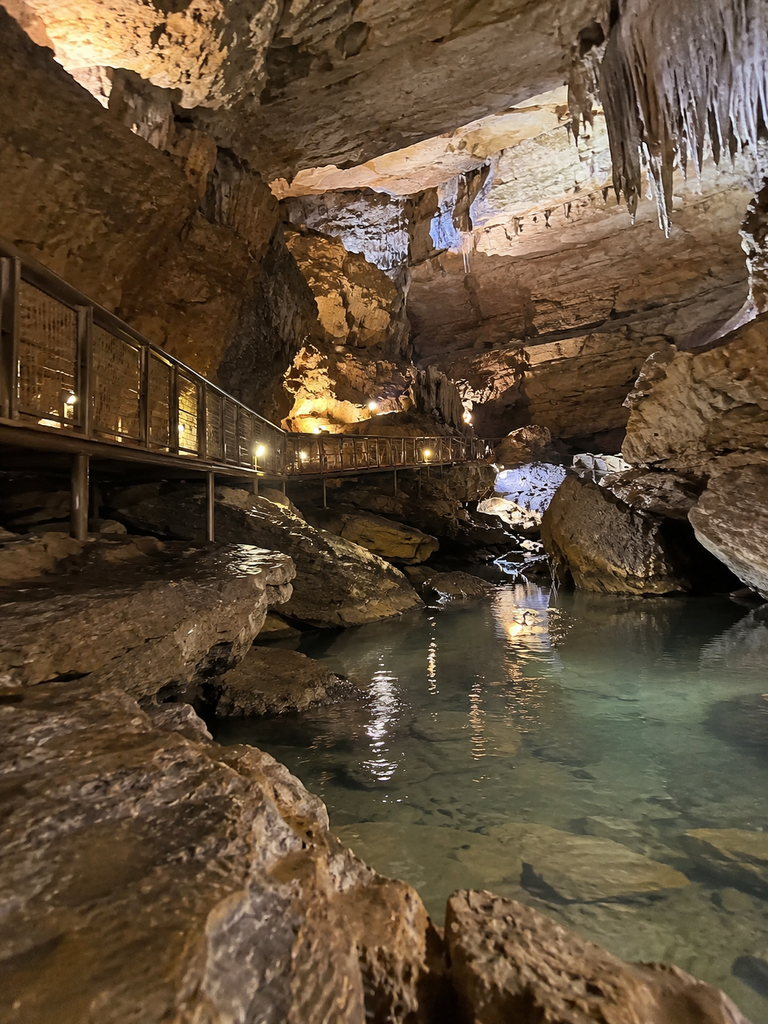
The Unexpected Fact About Tennessee’s Caves
Tennessee has nearly 10,000 documented caves, but that does not mean 10,000 caves are waiting for tourists to wander inside.
Many sit on private property. Others contain fragile formations, archaeological material or sensitive wildlife habitat. Tennessee’s caves are especially important for bats, and established cave operations may use cleaning procedures designed to reduce the spread of white-nose syndrome. Dunbar Cave, for example, applies clean-caving measures to guided tours.
There is a practical lesson in that.
Stick with established commercial caves, state-park programs and properly guided trips. Do not treat a random hole in Tennessee limestone like an invitation.
And pack for the underground world you are actually entering. Forbidden Caverns and the Lost Sea stay around 58 degrees, Ruby Falls around 60, Cumberland Caverns around 56 and Dunbar Cave around 56. Wet limestone, natural steps, steep slopes and uneven ground are normal even when the brochure calls something a walking tour.
That is what makes Tennessee cave country so much fun.
You can spend the morning on a comfortable developed walkway, stand beside an underground waterfall in the afternoon, ride a boat beneath Sweetwater, listen to music inside a mountain, or put on old clothes and crawl far enough underground that daylight feels like somebody else’s problem.
Tennessee has plenty worth seeing above ground, but some of its best stories start where the sunlight stops.