
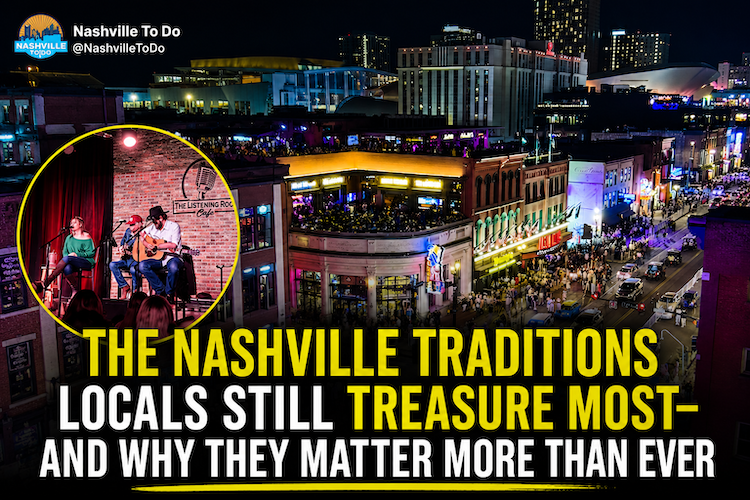
When people were asked what Nashville tradition every local should experience at least once, the answers weren’t nearly as predictable as you might expect.
Sure, some of the city’s most famous landmarks made the list.
The Grand Ole Opry.
The Ryman Auditorium.
Broadway.
The Parthenon.
The Station Inn.
But beneath those obvious answers was a deeper conversation about what Nashville actually is today—and what many people fear it has become.

The Ryman Still Reigns Supreme
If there was one place that united almost everyone, it was the Ryman.
Again and again, commenters described seeing a show at the historic venue as something every local should do at least once. Some called it the “Mother Church” of country music. Others simply pointed to the history, atmosphere, and emotional connection people feel when they walk through its doors.
In a city constantly changing around it, the Ryman remains one of the few places that still feels untouchable.

Nashville’s Old Traditions Still Matter
Beyond the Ryman, people repeatedly mentioned experiences that have defined Nashville for generations.
The Grand Ole Opry.
Sunday night jams at the Station Inn.
Christmas at the Opryland Hotel.
Steeplechase.
Tomato Art Fest.
Monell’s.
Loveless Cafe.
Robert’s Western World.
Listening rooms and songwriter rounds.
These weren’t recommendations from travel brochures.
They were reminders of the Nashville that locals feel ownership over.
The Nashville built around music, food, community, and tradition rather than tourism.
Then The Conversation Took A Turn
As often happens whenever Nashville residents start talking about their city, the jokes became increasingly revealing.
Several commenters sarcastically suggested local traditions like:
Getting stuck in airport construction.
Hitting potholes large enough to damage your car.
Experiencing road rage.
Losing power during winter storms.
Seeing bodies pulled from the Cumberland.
Complaining about Nashville online.
Watching tourists stumble through downtown.
The humor was dark.
But it reflected real frustrations.
The Tourism Backlash Is Growing
One of the strongest undercurrents in the discussion was resentment toward what many see as Nashville’s transformation into a tourist economy.
A few commenters openly mocked visitors recommending tourist attractions to locals. Others described downtown as little more than a collection of tourist traps designed to separate visitors from their money.
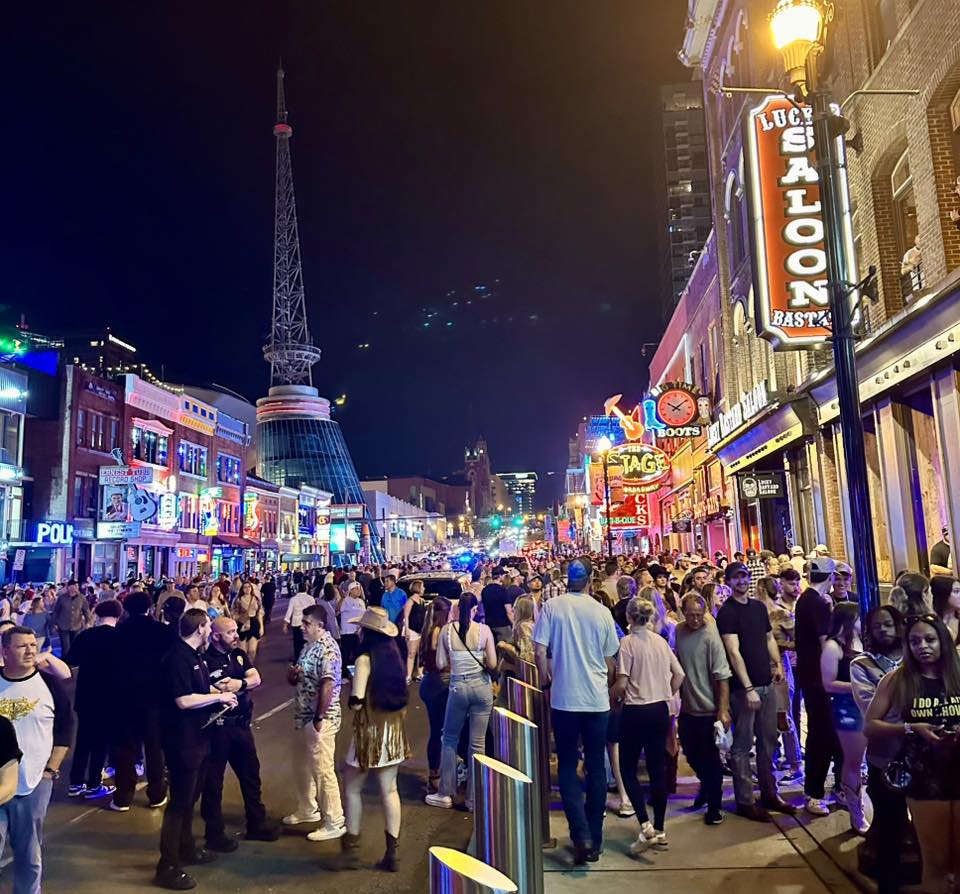
Broadway appeared repeatedly, but not always in a positive light.
To many residents, Broadway has become something you experience once and then avoid whenever possible.
It’s no longer viewed as the heart of Nashville.
It’s viewed as a business district built for outsiders.
Nature And Neighborhoods Still Matter
One surprising theme was how many people highlighted places away from downtown.
The Stones River Greenway.
Percy Warner Park.
Centennial Park.
Neighborhood restaurants.
Local bars.
Minor league baseball games.
Community events.
For many residents, Nashville’s most meaningful traditions aren’t found beneath neon lights.
They’re found in the quieter places that tourists often overlook.
What The Comments Really Revealed
The most interesting thing about this discussion wasn’t the answers themselves.
It was the divide.
Some people still see Nashville through the lens of its music, traditions, and community institutions.
Others increasingly see a city defined by traffic, development, overcrowding, tourism, and rising costs.
The traditional experiences people recommended weren’t just activities.
They were symbols.
Symbols of a Nashville many residents are trying to hold onto.
Because when people talk about local traditions, they’re really talking about identity.
And judging by the comments, that’s the tradition Nashville is struggling hardest to preserve.