
Ask ten people whether Nashville is still a Southern city, and you’ll probably get ten different answers.
That became crystal clear when locals and longtime visitors were asked a seemingly simple question:
Has Nashville lost its roots?
The responses revealed a city wrestling with its own identity.
The Debate Isn’t Really About Geography
One side of the conversation thought the question itself was ridiculous.
Nashville is in Tennessee.
Tennessee is in the South.
Case closed.
Many commenters pointed out that Southern culture is more than accents, cowboy boots, or stereotypes. They argued that Southern hospitality, family traditions, food, music, church communities, and everyday manners are still very much alive. Holding doors for strangers, saying “yes sir” and “yes ma’am,” gathering on porches, enjoying rivers and lakes, and maintaining strong community ties were all cited as evidence that Nashville remains deeply Southern.
To them, no amount of growth can erase that.
Others Say The Nashville They Knew Is Gone
But a large portion of the discussion painted a very different picture.
Many longtime residents argued that Nashville may still be geographically Southern, but culturally it has changed beyond recognition.
The words that appeared repeatedly were:
“Lost.”
“Gone.”
“Different.”
“Not the same.”
For these commenters, Southern identity wasn’t just about location. It was about character.
And they believe that character has been replaced by tourism, development, and rapid population growth.
Tourism Became The Symbol Of Change
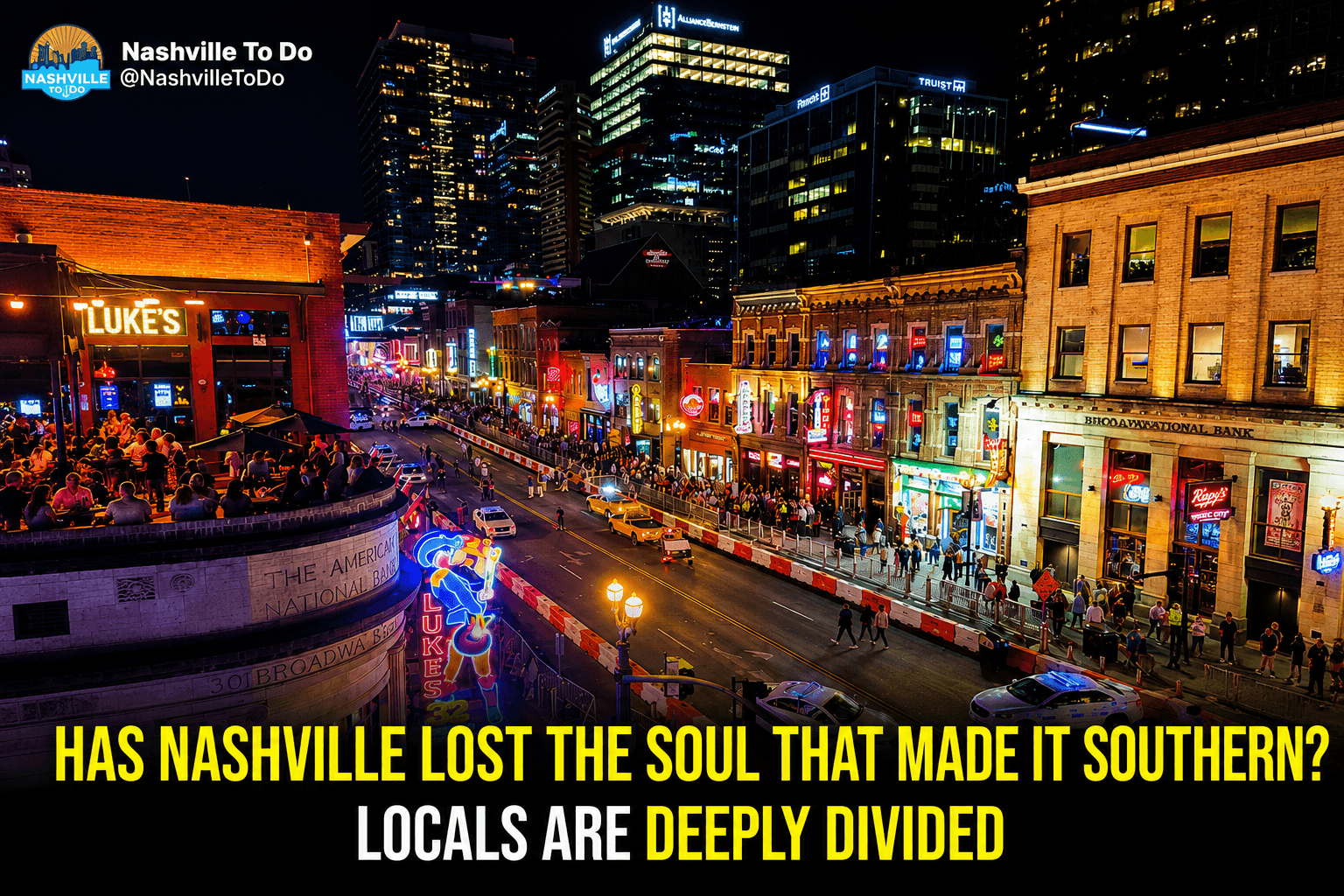
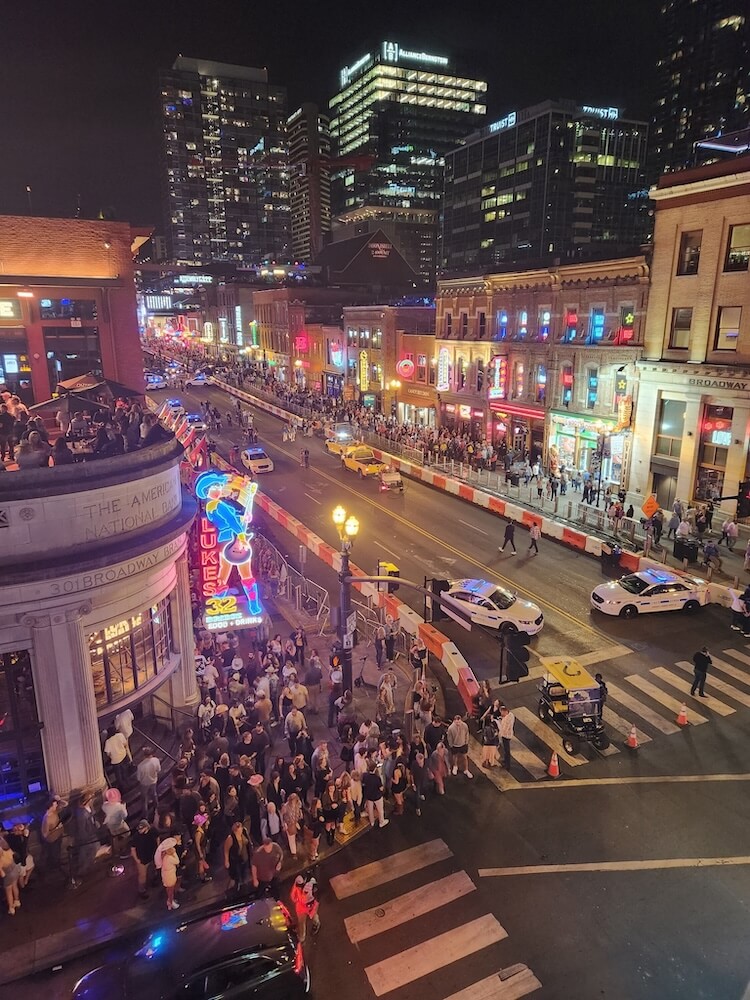
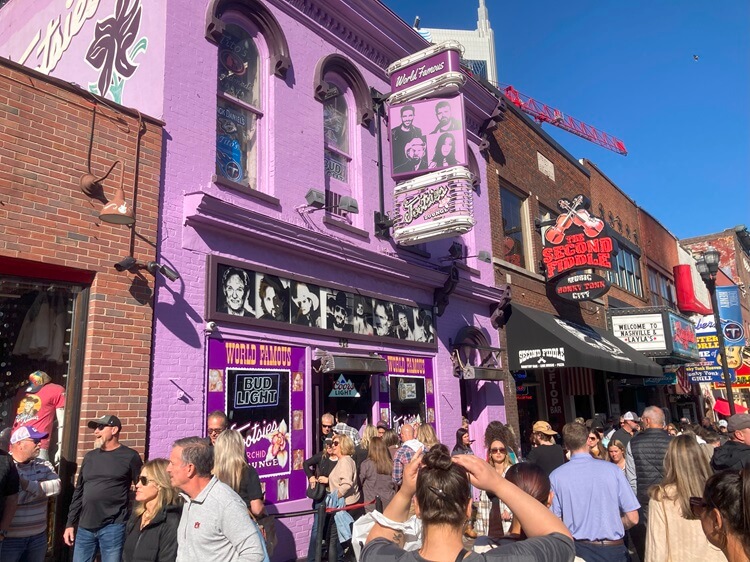
Broadway surfaced repeatedly, even when nobody specifically mentioned it by name.
Many commenters described a city increasingly defined by drinking, party tourism, celebrity bars, and commercial entertainment. Some argued Nashville has transformed from Music City into a tourism machine built around bachelor and bachelorette parties.
Several people suggested that what visitors now experience downtown bears little resemblance to the Nashville they remember.
The criticism wasn’t necessarily aimed at tourists themselves.
It was aimed at what many perceive as a city government and business community willing to sacrifice local culture in exchange for economic growth.
The Real Villain? Growth
More than politics.
More than tourism.
More than cultural changes.
The most discussed issue was growth.
Commenters repeatedly pointed to skyrocketing housing prices, traffic congestion, overcrowding, disappearing landmarks, and the feeling that longtime residents are being pushed aside.
Many blamed transplants from other states.
Others blamed developers.
Others blamed elected officials.
But regardless of who received the blame, the underlying concern was remarkably consistent:
Nashville grew so fast that many people no longer recognize it.
Nostalgia Was Everywhere
One thing united almost everyone in the discussion.
Nostalgia.
The 1970s.
The 1980s.
The 1990s.
The early 2000s.
Again and again, commenters described earlier versions of Nashville as friendlier, more affordable, less crowded, and more authentic.
Old music venues.
Local businesses.
Neighborhood gathering spots.
The small-city atmosphere.
Many people weren’t necessarily defending every aspect of old Nashville.
They simply missed feeling connected to it.

The Soul Of Music City
Perhaps the most emotional comments focused on music itself.
Several people worried that the musicians who built Nashville’s reputation are increasingly being priced out by rising housing costs and property taxes. Others argued that Music City is slowly becoming more focused on sports, development, and tourism than the working musicians who gave the city its identity.
That concern touches something deeper than politics.
It raises a question about what Nashville wants to be in the future.
So Has Nashville Lost Its Southern Roots?
After reading through hundreds of comments, the answer appears to be both yes and no.
Many still see Southern traditions everywhere they look.
Many others see a city that has traded its soul for growth.
What’s clear is that the strongest emotions weren’t directed at Nashville’s Southern identity itself.
They were directed at the fear of losing a place people once loved.
Because beneath all the arguments about transplants, politics, tourism, and development was one recurring message:
People aren’t debating whether Nashville is Southern.
They’re debating whether Nashville is still Nashville.