
For five nights in June 1970, Elvis Presley recorded at Nashville’s RCA Studio B, working into the early morning hours. By the end of the marathon, he and his musicians had produced 35 master recordings, according to Elvis Australia’s detailed session history.
Among them were “Bridge Over Troubled Water” and “Funny How Time Slips Away.”
Between 1958 and 1971, Elvis recorded more than 240 songs inside the Music Row building, according to the Country Music Hall of Fame and Museum. Among them were “It’s Now or Never” and “Are You Lonesome Tonight.”
Dolly Parton later recorded two of her most beloved songs in that same room.
Today, visitors can step inside the restored studio, see where the recordings happened, and discover the stories behind some of Nashville’s most famous music.
Elvis Kept Coming Back for More Than a Decade
Elvis first entered RCA Studio B on June 10, 1958, while on leave from the U.S. Army.
RCA wanted fresh material before he left for military service in Germany. The recording session continued into the following morning.
According to Graceland, that visit produced songs including “A Big Hunk O’ Love,” “A Fool Such as I,” and “I Got Stung.” The last of those was recorded between 2 a.m. and 5 a.m.
Chet Atkins had assembled a group of Nashville session musicians for the occasion. Among them were guitarist Hank Garland, pianist Floyd Cramer, bassist Bob Moore, and the Jordanaires.
Elvis returned in March and April 1960 to record material for Elvis Is Back!, his first album following his Army service.
He also had a particular preference when it came to the room itself.
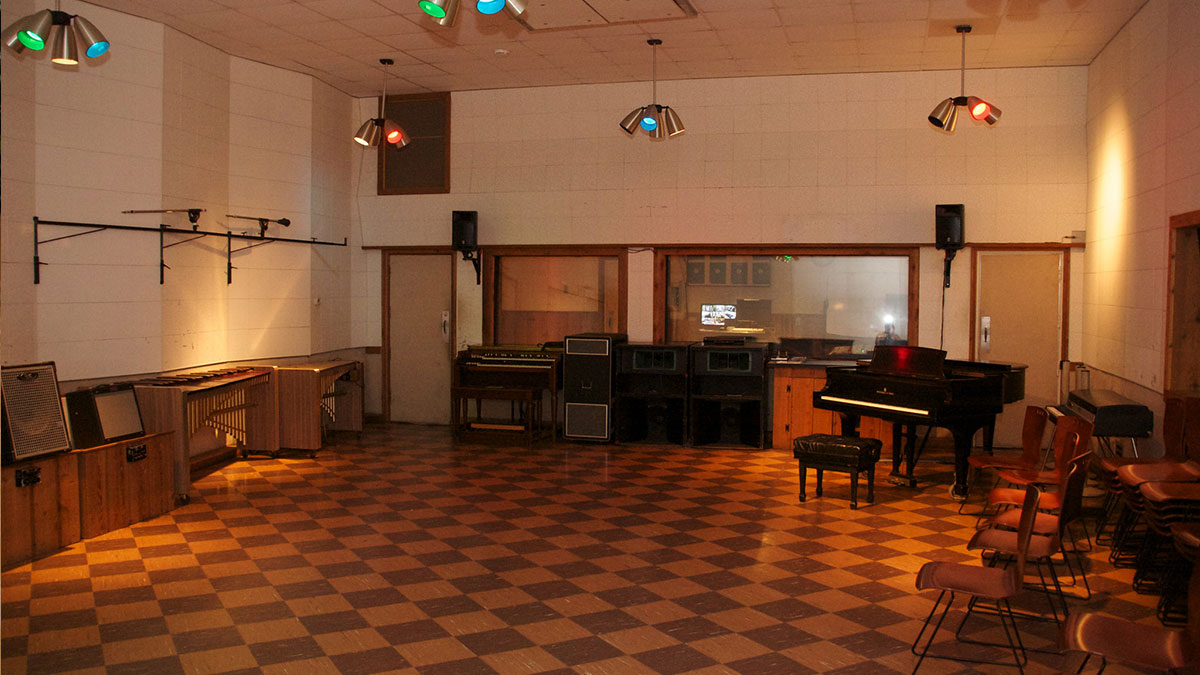
Elvis disliked the studio’s fluorescent lighting. At his suggestion, the original fixtures were replaced with lights featuring red, blue, green, and white bulbs.
The change is documented in the National Park Service’s Historic American Buildings Survey.
According to a NewsChannel 5 report, Elvis would adjust the colored lights to suit the mood of a song.
Then came his remarkable June 1970 sessions.
Working with producer Felton Jarvis and musicians including guitarist James Burton and harmonica player Charlie McCoy, Elvis spent five nights recording material that would appear across several albums.
Sessions began in the evening and continued until dawn.
According to RCA/Legacy Recordings, those performances helped form the foundation of Elvis: That’s the Way It Is, Elvis Country, and Love Letters from Elvis.
Elvis was still returning to Studio B in 1971.
Those later sessions included gospel music, Christmas recordings, and “My Way,” recorded there on June 10, 1971.
It had been exactly 13 years since his first visit.
The Studio Helped Create the Nashville Sound
Studio B’s history began before Elvis arrived.
In 1957, Nashville businessman Dan Maddox built the recording facility. RCA leased the building, installed its equipment, and established a major recording presence on Music Row.
That same year, Don Gibson recorded “Oh Lonesome Me” inside the new studio.
Under the leadership of Chet Atkins, Studio B became what the museum describes as a birthplace of the Nashville Sound.
The style helped reshape country music during the late 1950s and 1960s.
Rather than relying entirely on traditional country instrumentation, producers incorporated smoother arrangements, background vocals, and strings. The result was a polished sound that appealed to listeners beyond country music’s established audience.
Atkins was central to that transformation. His contributions to Nashville music are also celebrated through the Chet Atkins statue at the Musicians Hall of Fame.
But famous singers and producers were only part of what made Studio B successful.
The musicians developed practical ways to record songs efficiently, too.
At Studio B and other Nashville recording rooms, Jordanaires member Neil Matthews and musician Charlie McCoy helped refine what became known as the Nashville number system.
Instead of writing every chord by name, musicians used numbers and symbols to represent chord progressions.
That made it easier to change a song’s key without rewriting the entire arrangement.
For players working through multiple songs in a recording session, it was a valuable shortcut.
The system remains in use today, another part of Studio B’s influence that extends far beyond its famous recordings.
Dolly Parton Recorded Two of Her Defining Songs Here
Elvis wasn’t the only Tennessee music legend making history inside Studio B.
In 1971, Dolly Parton recorded “Coat of Many Colors” there.
The song, inspired by her childhood in East Tennessee, became one of the most recognizable recordings of her career.
Two years later, in 1973, Dolly returned to record “I Will Always Love You.”
Both songs are closely associated with Parton, yet they share a recording location with hundreds of Elvis tracks.
Visitors interested in exploring more of her story can also learn about Dolly Parton’s Nashville museum dedicated to her life and career.
And Studio B’s musical history didn’t stop when its original RCA operations ended.
Years later, Marty Stuart returned to the studio where he had first recorded as a teenager with Lester Flatt.
His 2010 album Ghost Train: The Studio B Sessions included “Hummingbyrd,” which won a Grammy Award.
The museum’s recording history traces these connections across generations of musicians.
Occasional recording projects have continued inside the building, even as its role as a historic attraction has grown.
How a $1 Annual Lease Helped Preserve the Studio
By 1977, RCA was closing its Nashville studio operations.
Studio B had already hosted thousands of recording sessions, but its next chapter would be about preserving what happened there.
That year, the Country Music Hall of Fame and Museum began welcoming visitors into the building.
Then came an arrangement that helped secure its future.
In 2002, the Mike Curb Family Foundation purchased Historic RCA Studio B and leased it to the Country Music Hall of Fame and Museum in perpetuity for just $1 per year.
The partnership allowed the museum to continue offering tours and educational programs while helping preserve the historic property.
The building’s exterior has since been renovated, while the interior has been restored to reflect its appearance during the studio’s 1960s prime.
Visitors are entering a preserved and restored recording space, rather than a room left completely untouched since Elvis recorded there.
Today, the building serves as a classroom for students, a historic attraction for visitors, and an occasional recording location.
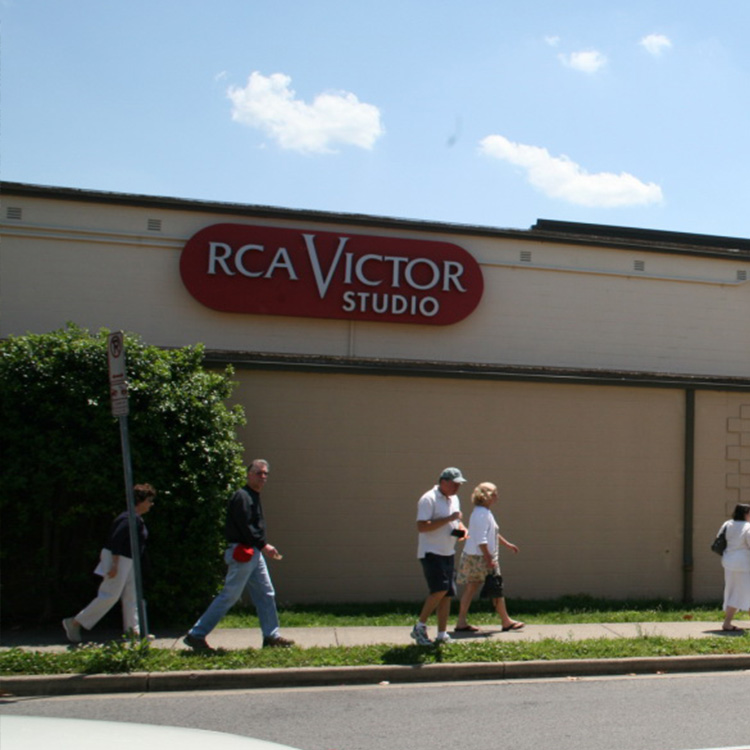
How to Visit Historic RCA Studio B
If you’d like to see the studio for yourself, the Country Music Hall of Fame and Museum offers guided tours.
The studio is also featured in our guide to Nashville tours worth considering, alongside other ways to explore Music City’s history.
Where Your Tour Begins
Public tours depart from the Country Music Hall of Fame and Museum at:
222 Rep. John Lewis Way S., Nashville, TN 37203
Studio B itself is located on Music Row, but don’t drive directly there expecting to join your booked public tour.
Visitors meet at the museum and travel to the studio by shuttle bus. Transportation is included with the tour.
Tickets and Tour Times
According to the official Studio B tour page:
- Museum admission is required. Studio B tours are available only in conjunction with a museum ticket.
- Tours are scheduled seven days a week between 10 a.m. and 3 p.m.
- Advance reservations are encouraged.
- Visitors must arrive at the designated waiting area 15 minutes before departure.
Check your preferred date for available departure times and possible closures.
Published visitor accounts suggest allowing roughly an hour for the Studio B tour, including transportation. Confirm the timing when booking.
Leave additional time if you’d also like to explore the museum galleries.
Parking
Paid parking is available at several downtown garages near the museum.
The museum lists validated parking discounts at the Walk of Fame Parking Garage and SoBro Tower Garage, with rates depending on how long you stay.
Review the museum’s official parking information before arriving, and make sure your parking window covers both your museum visit and the round-trip Studio B tour.
If you’re planning to enjoy live music afterward, our guide to Nashville’s most popular live music venues can help you choose another stop.
Accessibility and Special Arrangements
Historic RCA Studio B tours accommodate visitors with accessibility needs, although some transportation restrictions apply.
Powered wheelchairs and motorized scooters are not permitted on the Studio B tour because of the shuttle’s wheelchair-lift weight limitations.
The studio has an accessible entry ramp, and courtesy manual wheelchairs are available on a first-come, first-served basis.
Visitors who need special seating or mobility arrangements should contact the museum before purchasing tickets.
Contact information:
- Phone: 615-416-2001
- Email: [email protected]
- Accessibility details: Country Music Hall of Fame and Museum
ASL interpreter requests should be submitted at least two weeks in advance and are subject to availability. Confirm arrangements for the Studio B tour specifically.
For anyone interested in Nashville’s musical history, Studio B offers a chance to visit the room where Elvis Presley spent countless late nights recording, Dolly Parton captured two career-defining songs, and Nashville musicians helped shape a sound heard around the world.