

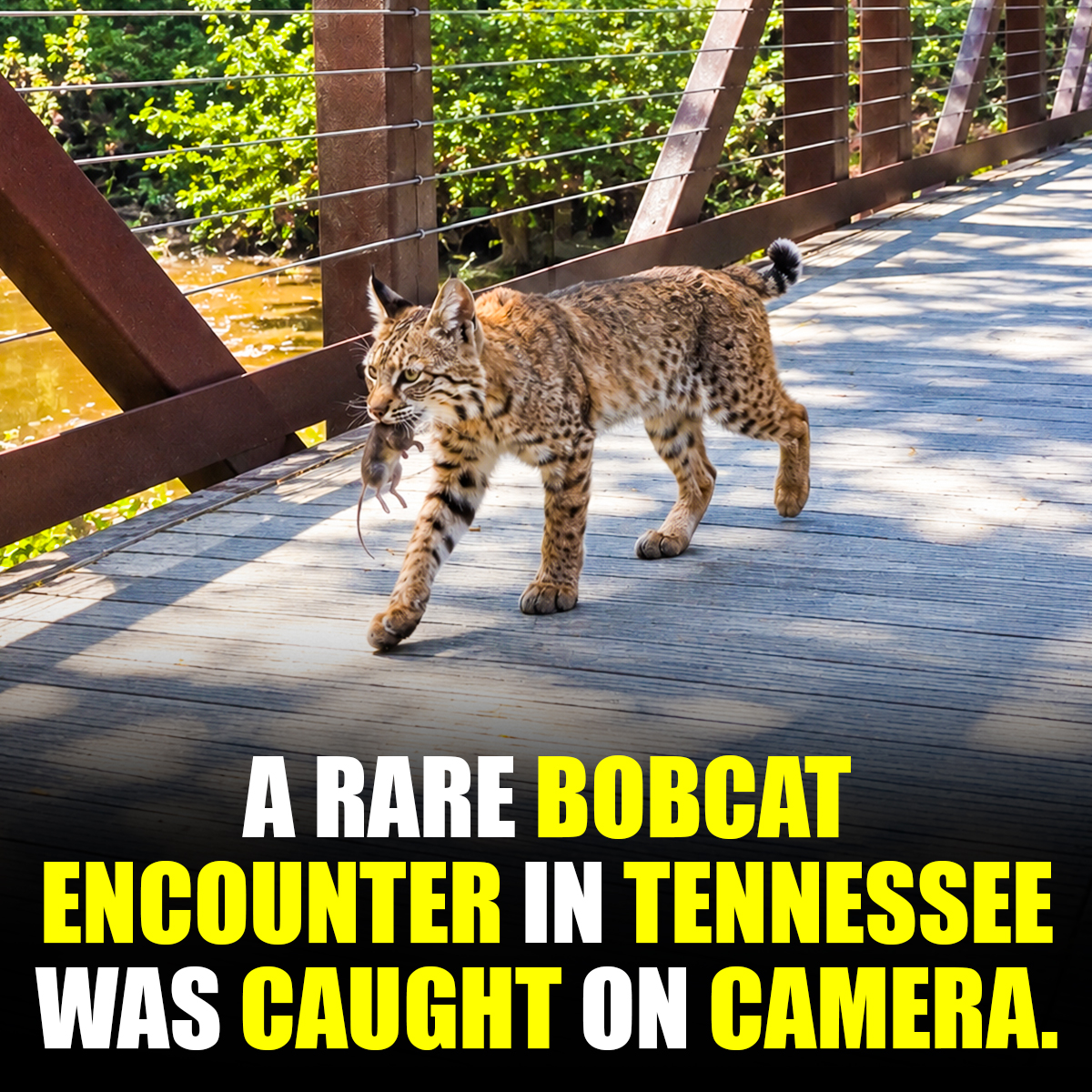
A bobcat walking through a neighborhood can look wildly out of place.
But for wildlife researchers in the Memphis area, the bigger surprise may be how often these secretive cats are showing up when nobody is watching.
A recent bobcat sighting just across the Tennessee state line in Southaven, Mississippi, drew attention after a resident spotted the animal near his home. At the same time, researchers with the Memphis Zoo have been getting bobcats on motion-activated cameras at several locations around Shelby County.
The sightings offer an interesting reminder for Tennesseans: wild animals do not disappear when neighborhoods, roads and businesses move in.
They often learn how to live around us.
One backyard sighting turned into a much bigger story
Southaven resident Dawson Pitts told Action News 5 that he first thought the animal moving near his home was an ordinary cat.
Then he noticed the short tail and spotted coat.
Pitts managed to take several photos before the animal moved along. He described it as relatively small and possibly young, and said it did not appear especially frightened by his presence.
The sighting was unusual for the family. Pitts said his wife had lived on the property for most of her life and had never seen a bobcat in the yard.
But just a few miles away in Tennessee, researchers have been finding evidence that bobcats are not nearly as absent as people may think.
Memphis Zoo has cameras scattered around Shelby County
The Memphis Zoo recently joined the Urban Wildlife Information Network, a research project that studies how wildlife lives in and around cities.
The zoo now operates more than 30 motion-activated cameras across Shelby County, according to reporting provided by WVLT and Action News 5. The cameras stretch from the zoo north toward Shelby Forest and east toward Shelby Farms and Wolf River conservation areas.
Researchers are not only watching forests.
Some cameras have been placed around schools, a cemetery, a golf course and even private backyards where homeowners volunteered to participate.
That is intentional.
The project is trying to understand how wildlife uses the entire urban landscape, including green spaces people may not normally think of as animal habitat.
Memphis Zoo also confirms that its research team is helping establish an urban ecology project in the city through the Urban Wildlife Information Network.
The cameras have already found more than bobcats
The project was only about six weeks into camera monitoring when researchers said they had already documented more than 20 animal species.
Among the finds were an otter, beaver activity and even an albino raccoon.
Then there were the bobcats.
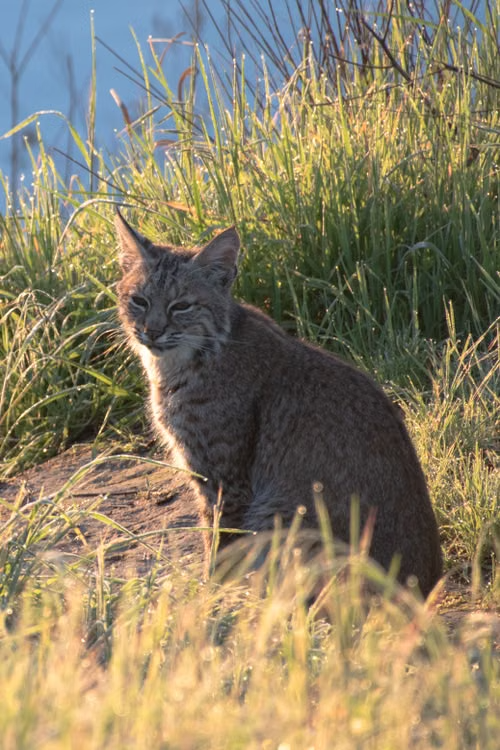
Memphis Zoo researcher Dr. Anne Sabol told Action News 5 that bobcats had already appeared at four different camera sites. Researchers expected the animals might eventually turn up, but seeing them at several locations so quickly was notable.
That does not necessarily mean Memphis suddenly has more bobcats.
It may mean the cameras are finally giving researchers a better look at animals that have been quietly moving through the area all along.
Bobcats are especially good at going unnoticed.
Bobcats actually live throughout Tennessee
For Tennessee residents, seeing one can feel exotic.
It really is not.
The Tennessee Wildlife Resources Agency says bobcats are found across the entire state and may be abundant where suitable habitat exists. They favor wooded areas with thick cover, but they can also live around farmland, scrubland, swamps and rocky terrain.
They are also much smaller than the mountain lion people sometimes mistake them for.
TWRA says adult bobcats generally weigh about 10 to 40 pounds and can measure roughly 22 to 50 inches long. Their most obvious feature is the short, “bobbed” tail that gives the species its name.
Their coats can include spots and dark streaks, which help them disappear surprisingly well into Tennessee woods.
That camouflage, combined with their solitary habits, is a big reason people can live near bobcats for years without seeing one.
What are they doing near neighborhoods?
Food and water matter.
Bobcats mainly eat small mammals such as rabbits, mice, rats, squirrels and shrews, according to TWRA.
Those animals are not limited to deep forests.
Suburban neighborhoods, parks, greenways and undeveloped patches of land can provide plenty of prey.
Heat may also affect where wildlife travels.
Sabol told Action News 5 that extreme summer temperatures can make water especially important for animals, potentially encouraging them to move into places where reliable water sources are available.
That point is particularly relevant after another brutally hot Tennessee summer.
It does not mean every bobcat sighting is caused by heat. But water, food, shelter and connected green space all help determine where an animal decides to travel.
Development is another part of the conversation
Pitts told the station that he believes growing residential and commercial development around DeSoto County may be affecting wildlife habitat.
That is his observation, rather than a conclusion established by the zoo’s research.
Still, it points to one of the questions projects like Memphis Zoo’s camera network are designed to explore: What happens when wildlife and expanding cities occupy the same landscape?
The answer is not always that animals simply leave.
Some species adapt remarkably well.
A wooded creek behind a subdivision, a strip of trees beside a highway or an overgrown corner of a park may look small to people. To an animal moving at night, those places can form part of a much larger travel route.
That makes urban wildlife research useful far beyond the excitement of getting a cool bobcat picture.
It can help researchers understand which green spaces animals use and how development changes those patterns.
Should you be afraid if you see a bobcat?
A bobcat sighting is certainly worth paying attention to.
It is not a reason to assume something is wrong.
Bobcats are native Tennessee wildlife, and simply seeing one does not mean the animal is aggressive or lost.
The sensible approach is also the simple one: give wildlife space.
Do not try to approach, corner or feed a bobcat. Keep pets under control, particularly when wildlife has been spotted nearby.
If an animal appears sick or injured, TWRA maintains a list of licensed wildlife rehabilitators around Tennessee that can handle bobcats and other wildlife.
The cameras may change how Memphis sees its wild neighbors
Perhaps the most interesting part of the Memphis Zoo project is not any single species it photographs.
It is the picture that emerges when thousands of those photographs are put together.
A cemetery can be wildlife habitat.
So can a golf course.
So can a patch of woods behind a school or the green corridor running beside a neighborhood.
And somewhere in that network, a bobcat may walk past at night without anybody knowing it was there.
That may be why sightings feel so rare even though TWRA says bobcats live throughout Tennessee.
The cats were never necessarily far away.
For once, we simply caught them on camera.
Sources
WVLT/Action News 5 reporting on the Southaven sighting and Memphis Zoo urban wildlife research, Sept. 2026.
Tennessee Wildlife Resources Agency, Bobcat (Lynx rufus) species information.
Memphis Zoo, research staff information describing its Urban Wildlife Information Network initiative.
Tennessee Wildlife Resources Agency, licensed wildlife rehabilitators.