

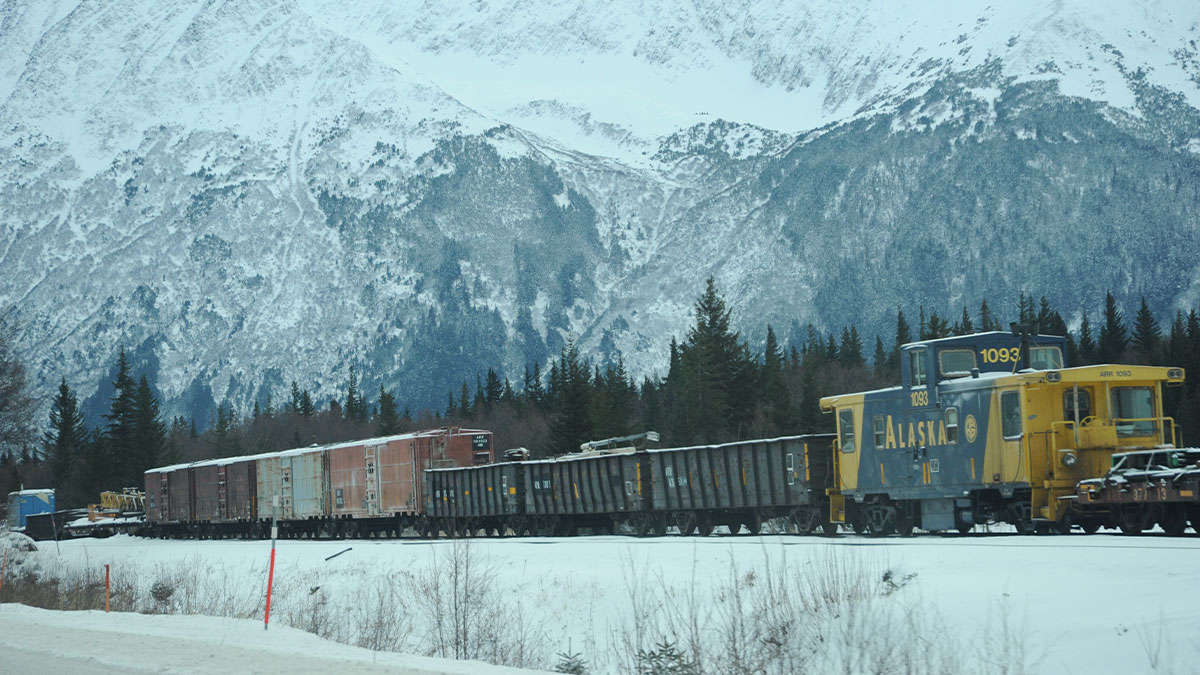
For $265, you can board a train in Anchorage and spend nearly 12 hours traveling through Alaska’s snowy wilderness before reaching Fairbanks.
Along the way, the tracks pass frozen waterways, mountain valleys, and roughly 50 miles of backcountry where ordinary roads don’t exist.
On a clear day, you might even see Denali, North America’s tallest mountain, rising 20,310 feet above sea level.
But there’s something those beautiful winter train photos don’t tell you.
The train doesn’t run every day. It doesn’t have sleeping cabins. And despite its name, the Aurora Winter Train doesn’t guarantee you’ll see the northern lights.
For Tennessee travelers dreaming of an Alaska winter vacation, those details can make the difference between an unforgettable adventure and a very expensive scheduling mistake.
Here’s what the journey actually looks like, what it costs, and how to plan a trip.
The Most Unusual Part of the Journey Has No Roads
About three hours north of Anchorage, the railroad reaches Talkeetna. Beyond it lies a stretch of Alaska where a train means something very different from a sightseeing trip.
For approximately 50 miles, the tracks pass through the roadless Hurricane backcountry.
People live in this remote region, but ordinary roads don’t connect their homes to nearby towns.
The railroad helps fill that gap.
Through its flagstop service, passengers can arrange to board or leave trains at locations outside conventional stations, subject to the railroad’s operating rules.
For residents, that can mean a way to reach town for supplies, appointments, or other necessities.
For tourists, it’s a rare opportunity to see a part of Alaska that cannot be reached by simply renting a car.
But don’t mistake these remote stops for places where you can jump off and explore.
Getting off in roadless Alaska requires advance arrangements, winter equipment, shelter, and a dependable return plan.
There may be no road available if your plans fall apart.
That’s what makes this stretch remarkable. More than a century after the railroad was completed, trains still connect people living beyond Alaska’s regular road network.
What Happens During the 12-Hour Ride?
The Alaska Railroad’s Aurora Winter Train travels between Anchorage and Fairbanks.
The northbound train leaves Anchorage at 8:30 a.m. and reaches Fairbanks at 8 p.m., according to the published timetable.
That’s 11 hours and 30 minutes, although actual arrival times can vary.
Along the way, passengers see snow-covered forests, frozen waterways, mountain valleys, and long stretches of wilderness.
The route serves communities including Wasilla and Talkeetna, with conditional stops at locations such as Healy and Nenana and flagstop service through the Hurricane region.
Not every train stops at every location. Check the official schedule before planning a stopover.
And remember, this isn’t a hop-on, hop-off sightseeing tour. If you want to explore a community and continue later, you’ll need separate travel arrangements.
You Could See North America’s Tallest Mountain
One of the biggest attractions is the possibility of seeing Denali.
At 20,310 feet, it’s the highest mountain in North America.
On clear days, passengers traveling north of Talkeetna may see the mountain rising above the Susitna River and surrounding landscape.
But there’s a catch.
Clouds can completely hide Denali, even when the train passes through areas known for mountain views.
Daylight also matters.
During the darkest winter months, portions of the journey happen after sunset. You won’t necessarily get 12 hours of snowy scenery outside your window.
The train also passes through the Denali area, but that doesn’t mean passengers get a full national park visit.
Winter road access is limited. If exploring the park is important to you, check the National Park Service’s visitor information and plan a separate visit.
What Does the Aurora Winter Train Cost?
The published 2026–27 adult fare between Anchorage and Fairbanks is $265 one way.
Children ages 2–11 pay $133.
Here’s what the train tickets alone would cost:
| Travelers | Rail ticket cost |
|---|---|
| One adult, one way | $265 |
| One adult, round trip | $530 |
| Two adults, one way | $530 |
| Two adults, round trip | $1,060 |
These prices don’t include flights, hotels, meals, local transportation, or activities.
For Tennessee travelers, airfare and accommodations could add considerably to the vacation budget.
The railroad also publishes a $133 qualifying half fare for certain seniors, eligible Medicare cardholders, and travelers with disabilities.
Eligibility and applicable dates should be confirmed directly with Alaska Railroad.
You can review the official fare information here.
There’s a Shorter Trip That Costs Less
Want the winter scenery without spending nearly 12 hours on a train?
There’s another option.
An adult ticket from Anchorage to Talkeetna costs $104 one way, or $208 round trip.
The northbound journey takes approximately two hours and 55 minutes.
You could leave Anchorage on Saturday, spend the night in Talkeetna, and return Sunday.
That gives you a winter railroad experience without committing to the entire journey to Fairbanks.
Just remember that you’ll need overnight accommodations and confirmed train reservations in both directions.
The Train Doesn’t Run Every Day
This is probably the most important detail to understand before booking flights.
For the 2026–27 winter season, the Aurora Winter Train operates from September 19, 2026, through May 9, 2027.
Its regular schedule is simple:
| Day | Direction |
|---|---|
| Saturday | Anchorage to Fairbanks |
| Sunday | Fairbanks to Anchorage |
That means you can’t arrive in Anchorage on a Monday and assume there’s a train leaving for Fairbanks the next morning.
Fortunately, the railroad adds departures during February and March.
| Additional service | Dates |
|---|---|
| Tuesday northbound | Feb. 9–Mar. 30, 2027 |
| Wednesday southbound | Feb. 10–Mar. 31, 2027 |
| Thursday northbound | Feb. 25; Mar. 4, 11, 18, 25 |
| Friday southbound | Feb. 26; Mar. 5, 12, 19, 26 |
The Tuesday and Wednesday trains operate weekly during their listed periods. Thursday and Friday departures run only on the specified dates.
These extra departures can make a big difference when planning a vacation around work schedules and flights.
Check the official Alaska Railroad schedule before booking.
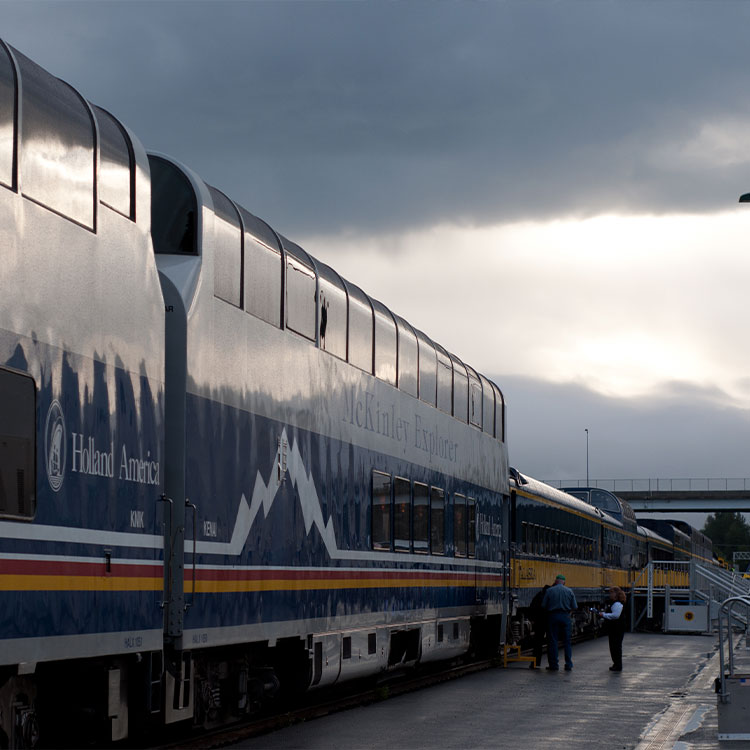
Don’t Expect the Famous Glass-Domed Train Cars
If you’ve seen photographs of Alaska Railroad trains with enormous glass-domed observation cars, there’s something you should know.
The Aurora Winter Train doesn’t offer GoldStar service.
Those famous glass-domed accommodations are associated with certain summer trains.
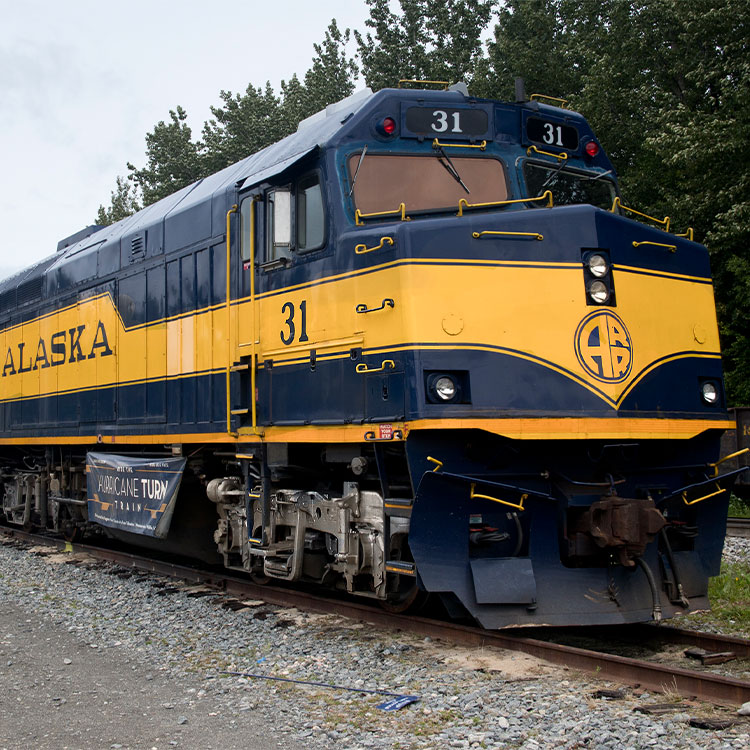
The winter train operates in Adventure Class only, with heated passenger cars and large picture windows.
There are no private sleeping cabins, either.
The train offers dining-car service, but meals aren’t included in the ticket price.
Food purchases are cashless, and you can check the official winter dining menu and prices before traveling.
For a journey this long, bring snacks, water, and something to read.
Don’t depend on Wi-Fi being available. Electrical outlets are also limited and reserved for medical use, so a portable power bank is useful.
Will You Actually See the Northern Lights?
The name Aurora Winter Train makes it sound like passengers are signing up for a northern-lights show.
Unfortunately, nature doesn’t follow a train timetable.
The Aurora Winter Train isn’t a dedicated nighttime aurora-viewing excursion.
Sightings depend on darkness, cloud cover, solar activity, and visibility from the train.
And here’s another detail.
The northbound train is scheduled to reach Fairbanks at 8 p.m.
That means some of the best nighttime viewing opportunities may come after you’ve already arrived.
If seeing the northern lights is your main goal, Fairbanks makes a more practical base than the train itself.
Spending several nights there gives you additional chances if clouds interfere with one evening.
Even then, sightings aren’t guaranteed.
February and March May Offer the Best Balance
When should you plan the journey?
That depends on whether you’re more interested in snowy scenery, daylight, or northern-lights opportunities.
November through January brings long winter nights and snow-covered landscapes. But shorter days mean passengers may miss some scenery.
February and March offer an appealing balance.
Daylight increases, winter scenery remains, and northern-lights opportunities continue. The railroad also operates additional departures during this period.
April through early May brings longer daylight hours, although snow cover and weather conditions vary.
For a first-time visitor hoping to enjoy snowy mountain views and have a chance to see the northern lights, February or March is a sensible period to consider.
You Don’t Have to Ride the Train Back
Here’s a detail that can save you nearly 12 hours of additional travel.
You can take the Aurora Winter Train from Anchorage to Fairbanks and arrange to fly back instead of returning by rail.
Why does that matter?
A round trip between Anchorage and Fairbanks involves approximately 23 scheduled hours aboard trains.
If you leave Anchorage Saturday and return Sunday, you’ll arrive in Fairbanks at 8 p.m. and depart again at 8:30 a.m.
That’s only 12½ hours between trains, much of it overnight.
For many first-time visitors, a more practical itinerary might look like this:
- Fly into Anchorage at least a day before the train.
- Board Saturday’s 8:30 a.m. Aurora Winter Train.
- Reach Fairbanks around 8 p.m.
- Spend several nights exploring Fairbanks and looking for the northern lights.
- Fly home from Fairbanks or arrange another onward flight.
This approach makes the train part of a longer Alaska vacation instead of spending most of your time traveling back and forth.
The $265 one-way rail fare remains the starting point. Compare return flights, accommodations, and other expenses before deciding which option makes the most sense.
Another Winter Train Takes You Into the Wilderness
Alaska Railroad operates another winter passenger service called the Winter Hurricane Turn.
Unlike the Aurora Winter Train, it travels from Anchorage into the Hurricane backcountry and returns the same day.
The published round trip takes approximately 11½ hours, with an adult fare of $153.
Its main attraction is the remote wilderness and unusual flagstop service.
However, it doesn’t provide onboard food service, so passengers need to bring their own meals and snacks.
The Winter Hurricane Turn generally operates on the first Thursday of most months from October through May, with exceptions.
The 2026–27 schedule includes an exception on March 4, when travelers are directed toward an additional Aurora Winter Train departure instead.
For someone who wants a long winter railroad adventure without arranging a hotel in Fairbanks, it’s another possibility.
Just don’t book it expecting to reach Fairbanks.
This Railroad Has Been Crossing Alaska for More Than a Century
The railroad’s history stretches back long before Alaska became a state.
Its main line was completed in 1923.
On July 15 that year, President Warren G. Harding participated in a ceremonial golden-spike event at Nenana marking the railroad’s completion.
Alaska wouldn’t become a state until 1959.
The historical main line extended approximately 470 miles between Seward and Fairbanks.
Today, the Aurora Winter Train follows part of that historic railroad system.
What to Know Before Boarding
If you’re taking the full route, your journey begins at the Anchorage Depot.
Anchorage Depot: 411 West 1st Avenue, Anchorage, AK 99501
Fairbanks Depot: 1031 Alaska Railroad Depot Road, Fairbanks, AK 99701
The railroad instructs passengers departing from Anchorage and Fairbanks to arrive one hour before departure.
For the regular 8:30 a.m. northbound train, plan to reach the station by 7:30 a.m.
Travelers ages 18 and older should bring government-issued photo identification.
The published Anchorage station parking rate is $20 for 24 hours, although you should confirm the current rate.
You can find station details on the railroad’s official depot locations page.
For baggage, passengers can check up to four pieces weighing no more than 50 pounds each.
However, checked baggage service is available only at Anchorage and Fairbanks on the Aurora Winter Train.
The listed carry-on allowance is one bag measuring no more than 15 × 14 × 6 inches. Station luggage storage isn’t available.
Check the official baggage policy if you’re bringing bulky winter equipment.
Wheelchair access is listed at Anchorage, Wasilla, Talkeetna, and Fairbanks. Passengers requiring assistance or accessible accommodations should confirm arrangements directly with the railroad.
Alaska Winter Requires Some Preparation
The train cars are heated, but Interior Alaska can experience temperatures far below zero.
You’ll still need appropriate winter clothing for boarding, transfers, and activities after arrival.
Bring insulated footwear, gloves, and warm layers.
Keep essential medication in your carry-on bag, and remember that the railroad cannot guarantee an allergen-free onboard environment.
Because winter conditions and railroad operations can affect arrival times, leave some flexibility around connecting flights and hotel arrangements.
How to Book the Aurora Winter Train
Reservations are available through the Alaska Railroad’s official website.
You can also call 1-800-544-0552.
Before purchasing, decide whether you want the full Anchorage-to-Fairbanks journey, the shorter Talkeetna trip, or a round trip.
There’s one booking rule worth remembering.
You can’t buy a single Anchorage-to-Fairbanks ticket, get off at Denali for a day, and resume your journey later on that same ticket.
Separate travel segments require separate reservations.
For Tennessee travelers, the simplest approach is to choose your train date first, then arrange flights and accommodations around it.
The published 2026–27 fares and schedules were reviewed on November 3, 2026. Confirm availability and operating details before booking.
The photographs may be what first draw you to this journey. Snow-covered mountains, frozen rivers, and miles of wilderness make a compelling case for going.
But the most unusual part of the Aurora Winter Train isn’t just what you see.
It’s that the same railroad carrying visitors toward Fairbanks still provides a connection through country where ordinary roads don’t reach.
That makes the trip worth understanding before you book—and far more interesting than the photographs alone suggest.