
Thousands of people worked behind guarded entrances in East Tennessee without knowing their jobs supported the construction of an atomic bomb.
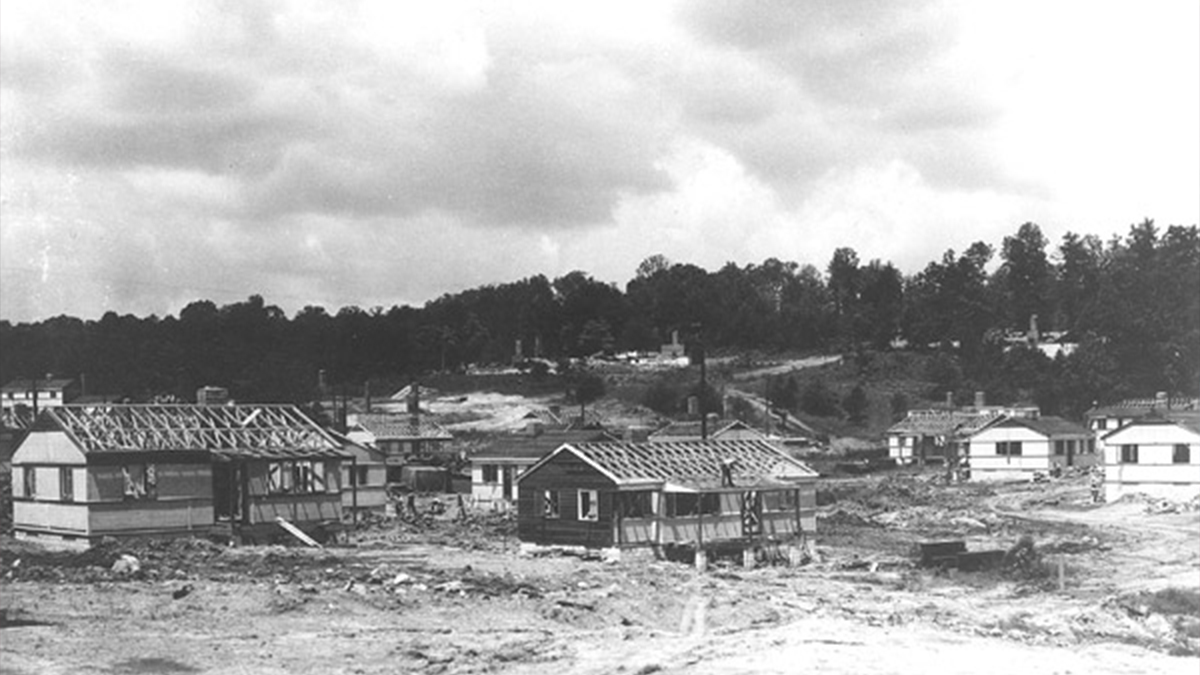
They lived in Oak Ridge, a community the federal government built about 25 miles northwest of Knoxville. By 1945, roughly 75,000 people called it home.
There were schools, stores, theaters, and churches. There were also checkpoints, identification badges, and factories where knowing how to do your job did not mean knowing what it was for.
Behind those restrictions, workers helped enrich the uranium used in the atomic bomb dropped on Hiroshima.
Before they arrived, approximately 3,000 residents had been forced to leave the land where the secret project would rise.
A City Planned for 13,000 Grew Nearly Sixfold
On September 19, 1942, General Leslie Groves approved the East Tennessee location for the Clinton Engineer Works, a vast federal reservation serving the Manhattan Project.
The site offered TVA electricity, water, railroad connections, and access to workers. Ridges separated the industrial valleys and helped screen the plants from the residential community.
The reservation covered roughly 59,000 acres. Oak Ridge was its residential townsite, built to house the people needed for the surrounding industrial work.
Planners initially expected about 13,000 residents.
By 1945, the population had grown to nearly six times that figure. Housing, classrooms, medical care, and shops had to grow alongside the factories. The National Park Service’s history of Oak Ridge traces that rapid expansion and the displacement that preceded it.
Families Had Weeks to Leave Their Homes
The federal government’s chosen site was not empty.
Approximately 3,000 existing residents were forced to leave, often with only weeks to relocate.
One of their communities was Wheat. It had schools, churches, shops, a post office, and farms. Its history included peach growing and Roane College.
Families lost homes and a community before they could know the full purpose of the project replacing them.
The George Jones Memorial Baptist Church, commonly called Wheat Church, survives. It is a physical remnant of the life that existed before the reservation, the checkpoints, and the factories. The NPS account of the Wheat community explains that earlier history.
A Badge Could Get You Inside. It Couldn’t Tell You Everything.
Workers entering Oak Ridge showed identification badges. Incoming personnel could be searched.
Elza Gate, one of seven access gates, served as the townsite’s main entrance from April 1943 until March 1949.
But passing a checkpoint did not grant access to the project’s larger purpose. Inside, information was divided according to each person’s responsibilities.
At Y-12, women historically known as the Calutron Girls operated equipment used to separate uranium isotopes. They learned to perform their assigned work without being told that it supported an atomic weapon.
Their jobs required precision.
Scientists, managers, and other cleared employees had different levels of knowledge. The secret was not equally secret to everyone.
For many workers, however, the connection between their daily tasks and the bomb remained hidden until the atomic project became public in August 1945.
One Building Covered 44 Acres
Oak Ridge’s central wartime contribution was enriched uranium for Little Boy, the atomic bomb dropped on Hiroshima on August 6, 1945.
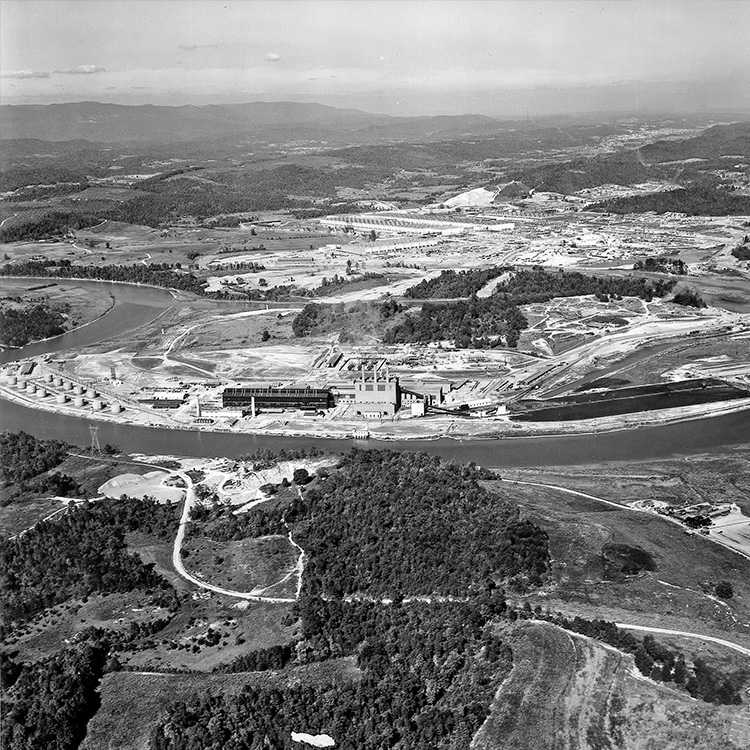
Three plants used different enrichment methods: Y-12 used electromagnetic separation through machines called calutrons; K-25 used gaseous diffusion; and S-50 used liquid thermal diffusion as an earlier enrichment stage.
The original K-25 building alone had an approximately 44-acre footprint.
A fourth major facility had a separate role. The X-10 Graphite Reactor began operating on November 4, 1943, supporting plutonium research and the development of production methods later expanded at Hanford.
The responsibilities were distinct: Oak Ridge enriched uranium. Los Alamos designed and built the bombs. Hanford produced the plutonium used in the Nagasaki bomb.
Some Residents Had Houses. Others Had Plywood Hutments.
Beyond the plants, Jackson Square became a center for shopping and entertainment. Schools, hospitals, theaters, and parks supported the growing community.
Standardized homes identified by letters became known as alphabet houses. Some used Cemesto panels, a cement-and-asbestos material. Flat-top houses were another housing type.
But access to that housing depended heavily on race and job status.
Black workers were excluded from alphabet housing and commonly lived in segregated, single-sex plywood hutments. These had no indoor plumbing. Residents relied on shared bathhouses.
White men also lived in hutments, but Black workers faced racial restrictions that barred them from the alphabet homes. The National Park Service’s hutment history documents these living conditions.
The same federal project that demanded their labor maintained those unequal living conditions.
Official photographer Ed Westcott documented the world around the factories: construction, shopping, work, and community life. His photographs preserve the daily routines of people living inside a guarded city whose purpose many could not explain.
The Secret Became Public. The Gates Stayed Closed.
The atomic project became public in August 1945.
Oak Ridge’s guarded entrances remained.
The town’s gates opened to the public in 1949, several years after the war ended. Municipal self-government followed in 1959.
Today, selected historic properties form the Oak Ridge component of Manhattan Project National Historical Park. Some wartime buildings survive in residential neighborhoods. Others have been demolished or remain inside controlled federal facilities.
The modern city is open. Parts of its atomic history still require special access.
For more Tennessee history told through surviving buildings, our guide to Nashville buildings with overlooked stories explores places closer to home.
Where to See the Secret City Today
Start with the free NPS visitor center. The Oak Ridge Visitor Center, inside the Children’s Museum of Oak Ridge at 461 W. Outer Drive, offers maps, a short film, and help choosing historic sites. The NPS area is free; the Children’s Museum requires separate admission. The visitor center is closed Mondays.
Choose AMSE for history and science together. The American Museum of Science and Energy is at 115 E. Main Street. Exhibits connect the Manhattan Project with Oak Ridge’s continuing scientific work. Adult admission is currently listed at $10.
Visit K-25 to understand the industrial scale. The Atomic History Campus at K-25 is at 652 Enrichment Street. The original plant building is gone, but exhibits and recorded worker accounts explain its operation and the people behind it.
An elevated interpretive center opened in 2025, allowing visitors to look across the former building’s 44-acre footprint. Adult admission is currently listed at $15.
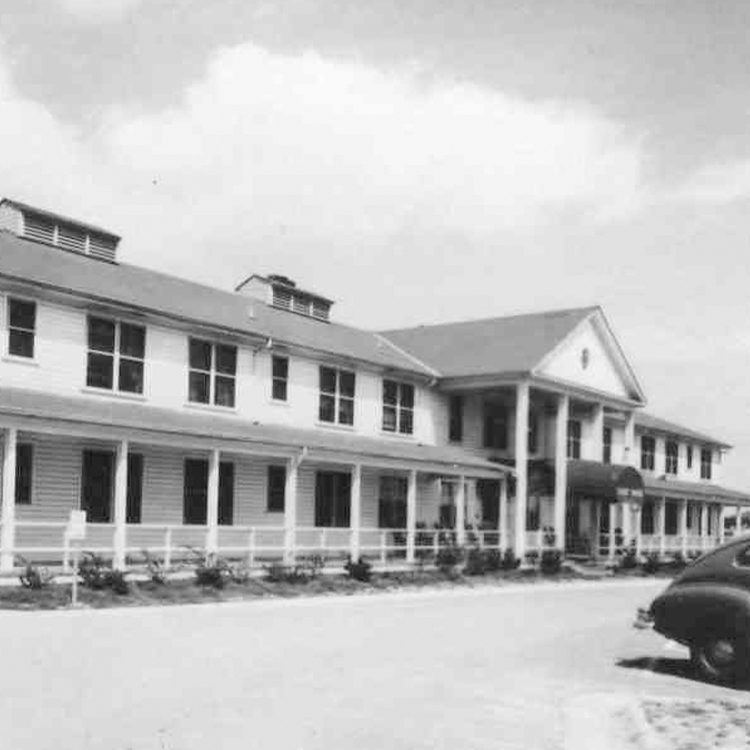
Look beyond the factories. Jackson Square and nearby historic exteriors show the residential side of wartime Oak Ridge. Surviving alphabet houses are private homes. The former Guest House, now Alexander Inn, is a private assisted-living facility. Wheat Church offers a connection to the displaced community; its approach includes gravel, dirt, and an incline near the church.
Plan ahead for a DOE bus tour. Tours are arranged through AMSE, rather than the NPS visitor center. Regular tours cost $20 per person.
Participants must be U.S. citizens aged ten or older. Adults 18 and older need original, valid photo identification; photocopies are not accepted.
Regular tours exclude the X-10 Graphite Reactor. AMSE has advertised a special November 19, 2026, tour that includes X-10 and the Y-12 Pilot Plant for $30 per person. Check availability before booking.
The advertised 2026 tour season ends November 20. Check the specific itinerary before making plans.
If your East Tennessee trip also includes Knoxville, our guide to the River Boardwalk at Ijams Nature Center offers an outdoor stop to pair with the museums and historic sites.