
In August 1956, a Nashville print shop helped advertise six Elvis Presley performances at the Florida Theatre in Jacksonville, Florida.
Elvis was scheduled for three shows on August 10 and three more on August 11. A Hatch Show Print poster helped spread the word.
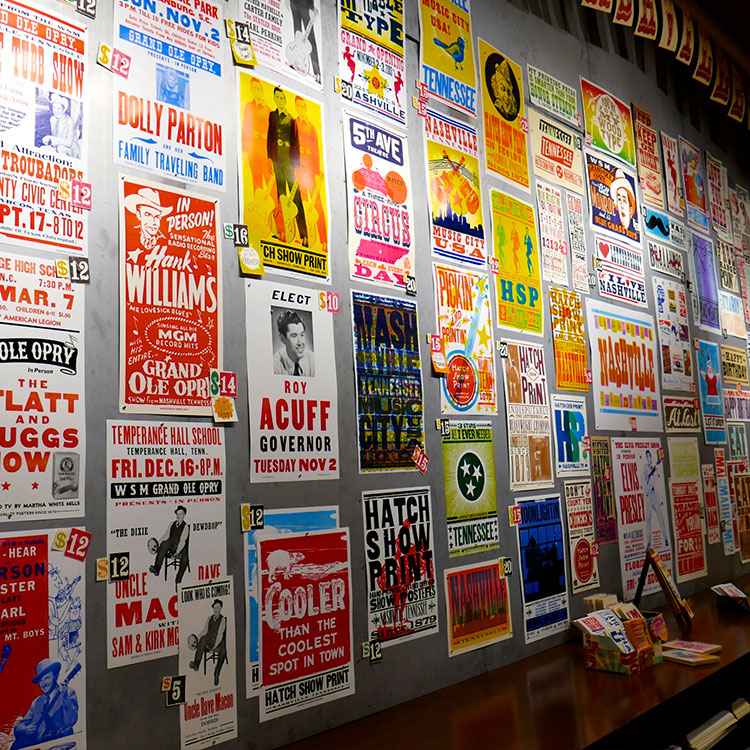
At the time, it was ordinary advertising. People needed to know when and where Elvis was performing. Decades later, that same poster would become a piece of rock ’n’ roll history.
The Nashville business behind it had already been printing for more than 75 years.
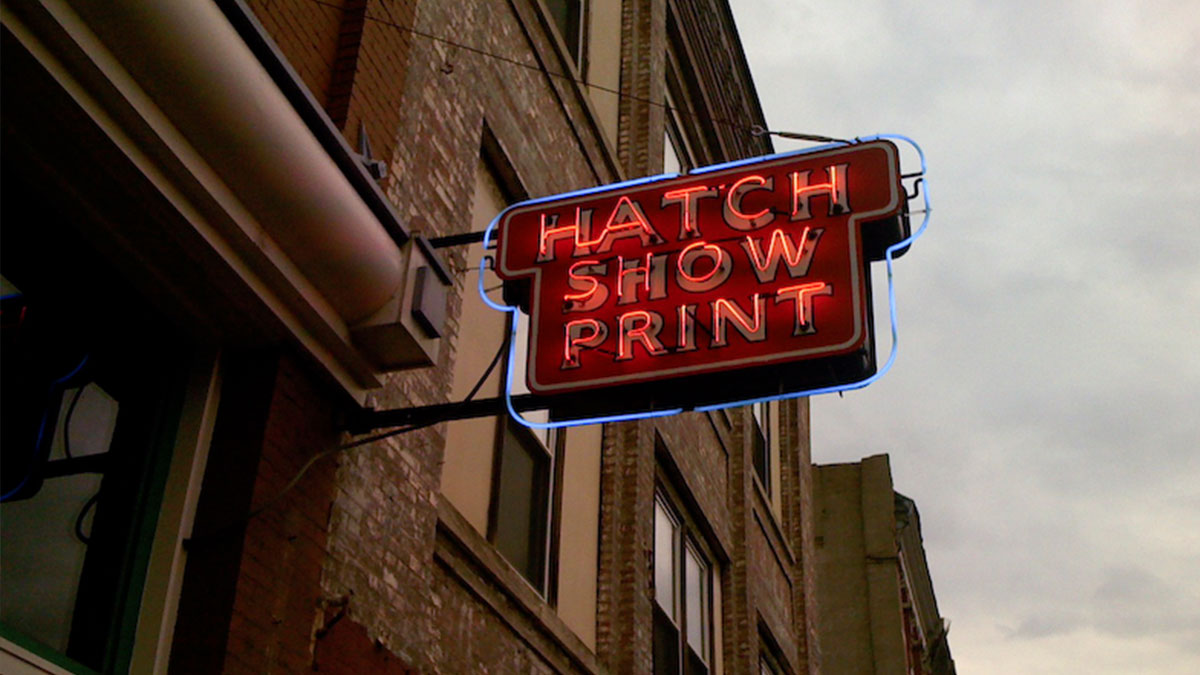
Founded in 1879, Hatch Show Print went on to create posters for country legends, blues singers, jazz musicians, and rock stars. Today, it remains one of America’s oldest working letterpress print shops, and visitors can still see how those posters are made.
From Everyday Advertising to Opry Posters
Brothers Charles and Herbert Hatch founded the business on April 12, 1879, under the name C.R. & H.H. Hatch, Printers.
Their first known job was a small handbill announcing an appearance by Henry Ward Beecher, a prominent minister and public speaker.
Music posters would eventually make the shop famous, but everyday advertising kept the business going.
Grocery stores, laundries, filling stations, and theaters needed printed notices. Hatch also produced posters for circuses, vaudeville acts, and minstrel shows, a form of entertainment with a history rooted in racist caricatures.
Charles Hatch’s son, Will T. Hatch, helped lead the business into its golden age, which stretched from the mid-1920s through the 1950s.
A skilled woodblock carver, he created images that helped define the shop’s recognizable style. Will continued leading the business until his death in 1952, according to Hatch Show Print’s official history.
Country music became an increasingly important part of its work.
The Tennessee Encyclopedia traces that connection to 1928, when Hatch printed posters featuring Jimmie Rodgers, known as America’s Blue Yodeler.
By the 1940s, the shop was producing advertising for Grand Ole Opry stars traveling to perform outside Nashville.
The Opry helped make those performers famous through radio. Hatch posters helped tell audiences when the musicians were coming to their towns.
The Print Shop Behind the Ryman
From 1925 to 1992, Hatch Show Print operated directly behind the Ryman Auditorium, placing the shop just steps from one of Nashville’s most important music stages.
That location placed the business close to Nashville’s growing entertainment industry, particularly during the years when the Ryman hosted the Grand Ole Opry.
But Hatch’s work extended far beyond country music.
The shop printed posters for jazz and blues performers including Bessie Smith, Louis Armstrong, Duke Ellington, and Cab Calloway.
Its country music clients included Bill Monroe and Minnie Pearl. Rock ’n’ roll brought performers such as Elvis Presley and Chuck Berry into the shop’s history.
Some posters advertised local performances. Others traveled with touring entertainers, appearing in towns far from Nashville.
Among the best-known examples is the poster for Elvis’s August 1956 Jacksonville appearances.
According to the Florida Theatre’s official history, Elvis performed six sold-out shows over two days, drawing more than 10,000 people.
The performances also attracted national attention after a local judge threatened to have Elvis arrested if his stage movements were considered too suggestive.
What began as a concert advertisement became a reminder of an important moment in the singer’s early career.
For more places connected to Nashville’s musical heritage, our guide to Nashville’s popular live music venues offers a good starting point.
How Wood, Metal, and Ink Become a Poster
The process behind a Hatch poster begins with something surprisingly simple: raised letters and images.
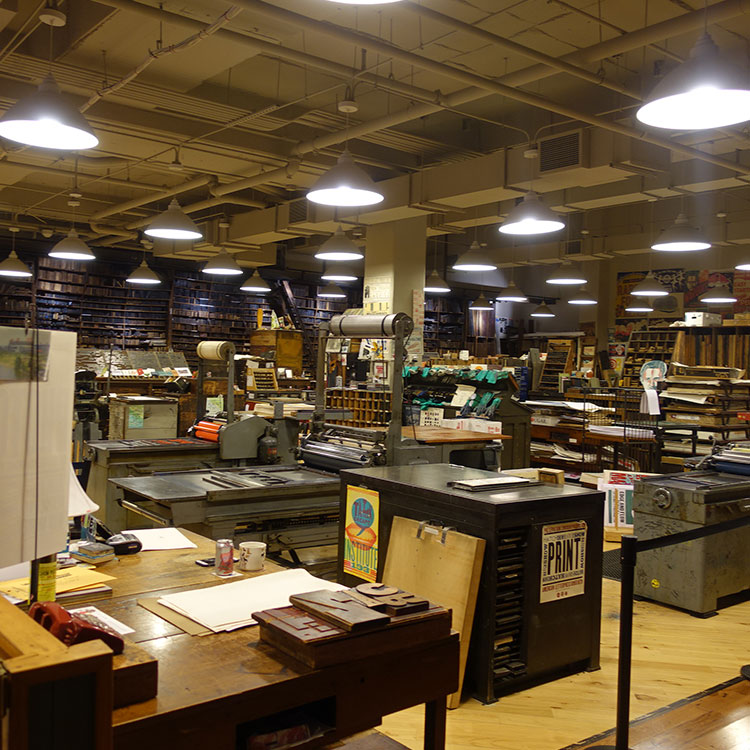
Instead of sending a digital design straight to a modern printer, Hatch’s designers work with movable wood and metal type, carved image blocks, and traditional printing presses.
Letters are arranged backward inside a frame so they’ll appear correctly when printed.
Ink is applied to the raised surfaces. Paper is then pressed against them, transferring the design.
A poster with multiple colors requires more work.
Each color needs its own arrangement of printing elements, and the paper must pass through the press again for every additional layer.
Getting those layers to line up is part of the craft.
The size of a wooden letter, the spacing between words, and the placement of an image all influence the finished poster.
It’s a physical process that visitors can experience through the sounds of the presses and the smell of printing ink.
Hatch continues to use historic wood and metal type alongside carved wood and linoleum blocks. Designers also create new blocks when a project calls for something different.
For certain custom projects, photographs and logos can be reproduced using specially made photoplates, as explained in Hatch’s custom printing guidelines.
The techniques have evolved, but much of the work still relies on the same basic principles used when the shop opened.
And unlike a traditional design studio where one person creates an image and someone else handles production, Hatch’s designer-printers stay involved through the printing process.
You can explore the techniques in more detail through Hatch’s official explanation of letterpress printing.
A Historic Shop Still Making New Work
As faster printing methods spread, Hatch faced the same pressures that threatened traditional letterpress shops elsewhere.
Several owners helped keep the business operating through those changing years. In 1992, Gaylord Entertainment donated Hatch Show Print to the Country Music Hall of Fame and Museum, opening a new chapter in its history.
The shop operated on Lower Broadway until 2013, when it moved into a purpose-built space within the museum complex.
The move gave Hatch more room for printing, preserving its historic materials, and welcoming visitors.
But the important distinction is that Hatch isn’t simply a museum exhibit.
It remains a working print shop producing new designs.
A 2019 museum announcement highlighted work for artists including Dolly Parton, Jason Isbell, Kacey Musgraves, and Beyoncé.
That puts modern musicians within the same printing tradition that once promoted Jimmie Rodgers and Elvis Presley.
The shop also produces restrikes, or modern impressions made from historic printing blocks.
These allow older designs to reach new audiences, but there’s an important difference between a restrike and an original-era concert poster.
A poster printed today from a historic design isn’t necessarily a surviving piece of advertising from the original performance.
For visitors browsing Hatch’s artwork, both types offer a connection to music history, just in different ways.
Visiting Hatch Show Print
Hatch Show Print is located at 224 Rep. John Lewis Way South, Nashville, inside the Country Music Hall of Fame and Museum complex.
Visitors can explore its history through a guided tour, browse the retail shop, or participate in separate hands-on printing workshops.
The standard guided tour lasts approximately one hour.
During the experience, visitors learn about the shop’s history, see its printing equipment and historic artwork, and make a keepsake print in the Universal Music Group Space for Design.
The hands-on portion introduces visitors to letterpress printing. It isn’t a workshop where everyone designs an original concert poster from scratch.
Booking ahead is recommended, especially if you’re visiting on a busy weekend.
Plan to arrive at the Hatch Show Print storefront at least 15 minutes before your scheduled tour.
You can view available departures on the official Hatch experiences page.
Hours and Ticket Prices
As published on October 26, 2026, Hatch’s official visitor information listed the following hours:
- Retail shop: Daily, 9 a.m.–5:30 p.m.
- Production shop: Monday–Friday, 9 a.m.–5 p.m.
- Guided tours: Daily, with advertised departures between 10 a.m. and 4 p.m., subject to availability.
All times are Nashville local time. Holiday closures and schedule changes may apply.
The production shop’s hours are different from the retail store’s hours, and active printing isn’t guaranteed during every visit.
Hatch’s official ticket page listed a $23 individual adult tour ticket, with combined museum admission options also available.
Check the official Hatch ticket page or the Country Music Hall of Fame and Museum’s ticket options for current prices and availability.
Other Ways to Experience Hatch
Visitors who want more hands-on time can book a separate Block Party workshop.
These sessions offer opportunities to work with printing blocks, ink, paper, and fabric while learning more about the techniques used at Hatch.
The Family Block Party is open to participants ages 13 and older, with those under 18 accompanied by a paying adult. That requirement applies to the workshop, not necessarily to standard guided tours.
If you don’t have time for a full experience, the retail shop offers posters, prints, and gifts.
You can also visit the nearby Haley Gallery, which is free and open to the public.
Its published hours were 9 a.m.–5 p.m. daily, with closures on Thanksgiving, Christmas Eve, and Christmas Day. Exhibitions change throughout the year.
For another look at Nashville’s printing history, explore Printers Alley, a downtown passage that once housed newspapers, print shops, and publishing businesses before becoming a nightlife destination.
If you’re planning a budget-friendly day, our guides to free museums in Nashville and free things to do in Nashville offer more places to explore.
Hatch Show Print has spent nearly a century and a half turning performances, businesses, and events into something people could see on paper.
The musicians and audiences have changed. The wooden letters, ink, and printing presses remain.
And in a city known for preserving its musical history, Hatch is still making new pieces of it.