
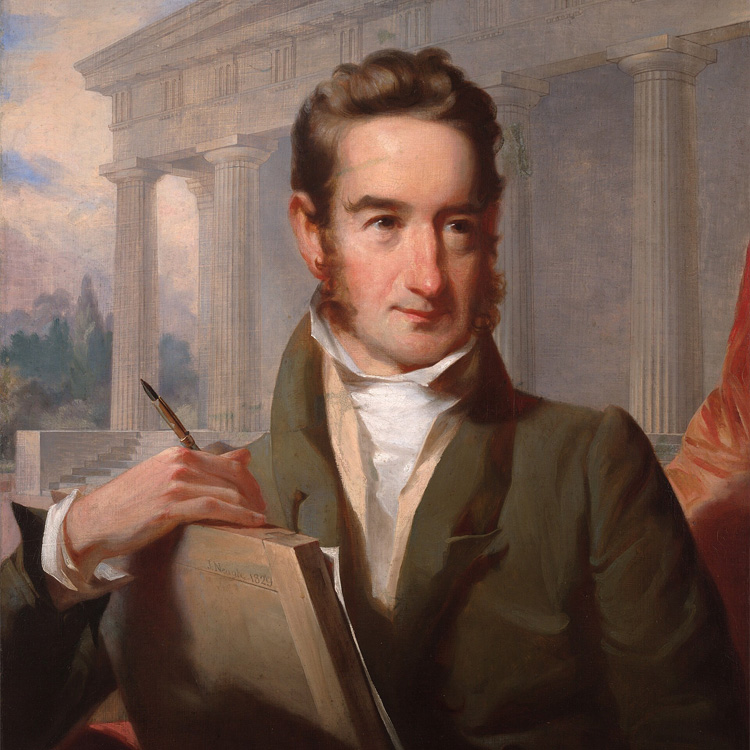
The man who designed Tennessee’s State Capitol never lived to see it finished. But his final resting place is still part of the building today.
William Strickland died in 1854, five years before construction was completed. His remains were placed inside a wall of the very Capitol he had spent years designing.
And this wasn’t simply a decision made after his death.
Strickland had designed his own tomb and asked Tennessee lawmakers for permission to be buried there just weeks before he died.
More than 170 years later, an inscription on the Capitol’s northeast wall still marks his resting place. It’s an unusual piece of Nashville history hiding in plain sight at one of the city’s most recognizable landmarks.
The Capitol He Never Saw Finished
Construction of the Tennessee State Capitol began with the laying of its cornerstone on July 4, 1845.
The project would take nearly fourteen years to finish, stretching well beyond the life of the architect who designed it.
By the time Strickland came to Nashville, he was already an established name in American architecture.
He had trained under Benjamin Henry Latrobe, one of the country’s influential early architects, and designed Philadelphia’s Second Bank of the United States.
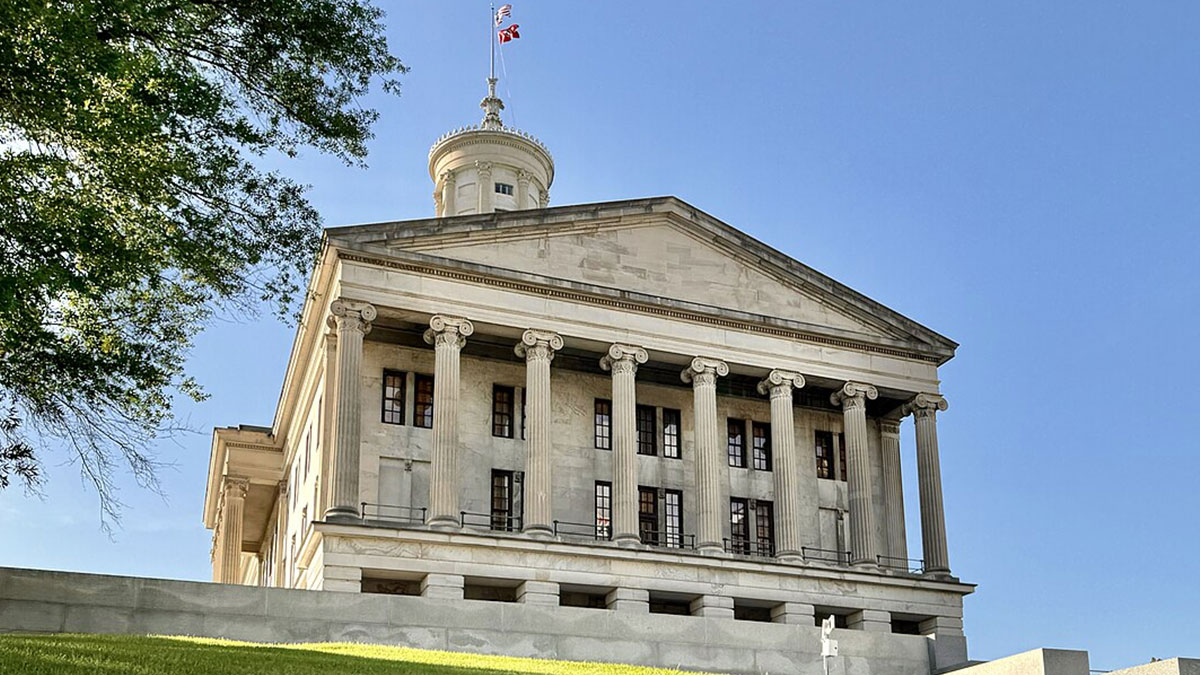
For Tennessee’s new Capitol, Strickland chose the Greek Revival style, drawing inspiration from ancient buildings in Athens.
According to the Tennessee State Museum’s history of Strickland, the Capitol’s design was inspired by two Greek monuments: the Erechtheum and the Choragic Monument of Lysicrates.
The Erechtheum influenced the building’s columned porticos, while the Monument of Lysicrates inspired its distinctive tower.
Built with Tennessee limestone, the Capitol features Ionic columns along its porticos and Corinthian columns on the tower. These classical details helped give the building its recognizable appearance above downtown Nashville.
Turning Strickland’s plans into a finished building required years of labor.
Stone had to be quarried, shaped, transported, and lifted into place. The work demanded considerable expense and involved people whose contributions were often left out of traditional accounts.
The Tennessee State Museum documents that enslaved laborers helped prepare the building site, clear the hill, and excavate the foundation and basement during the initial construction period in 1845 and 1846.
Enslaved workers also helped quarry limestone, while incarcerated laborers performed additional stonework. Their contributions were essential to constructing the Capitol.
Construction progressed slowly enough that state lawmakers began using the building before it was finished.
The Tennessee General Assembly first occupied the Capitol in October 1853, while workers continued completing the structure.
Strickland had lived to see the building become a functioning seat of government.
He would not see the finished result.
On April 7, 1854, Strickland died in Nashville.
His son, Francis Strickland, continued overseeing construction for three more years. After Francis left the project in 1857, architect Harvey M. Akeroyd was brought in to work on the State Library.
According to the Tennessee Encyclopedia’s construction history, the Capitol was officially completed in 1859, five years after William Strickland’s death.
Strickland’s architectural influence extended beyond the Capitol.
He also designed Nashville’s Downtown Presbyterian Church, which looks strikingly different from the government building.
Instead of Greek Revival architecture, the church features an Egyptian Revival design, reflecting another style Strickland explored during his career.
Both landmarks remain part of Nashville’s architectural history, offering two very different examples of the same architect’s work.
A Tomb Within the North Wall
Approximately six weeks before his death, Strickland made an unusual request to Tennessee lawmakers.
He wanted to be buried inside the Capitol he was still helping to build.
According to an October 2025 Nashville Scene interview with Tennessee State Museum historian Jeff Sellers, Strickland had even designed his own tomb.
The Capitol was still under construction when he asked for permission, and the Tennessee General Assembly honored his request.
His remains were placed in a tomb built into the Capitol’s north wall, near the northeast exterior corner.
An inscription carved into the limestone marks the location.
Part of it reads:
“His remains are deposited within this wall.”
Despite what the unusual burial might suggest, there isn’t a secret underground chamber waiting to be explored.
Strickland’s resting place is a relatively small tomb built into the wall itself, not an accessible crypt or a room beneath the Capitol.
Visitors interested in finding it should ask Capitol staff about the northeast wall and whether the marker can be viewed during their visit.
Access near the marker may vary, and not every guided tour necessarily includes a stop there.
The Capitol is also featured in our guide to 11 Nashville Buildings With Secrets Most Locals Have Never Heard, which explores other familiar landmarks with unexpected histories.
The Other People Connected to Its Walls
Strickland isn’t the only person buried within the Tennessee State Capitol.
Decades later, another man involved in its construction received the same honor.
Samuel Dold Morgan, a Nashville businessman who served on the commission overseeing the Capitol’s construction, is entombed within the building’s south wall, near its southeast corner.
Morgan played an important role in helping the project move forward.
The Tennessee State Museum explains that Morgan contributed his own money toward completing the Capitol.
He died in 1880.
After his death, Morgan’s family sought the same burial honor that had been granted to Strickland, recognizing his contributions to the building.
His remains were eventually placed within the Capitol’s walls.
That leaves two men closely connected to the building’s creation entombed within the structure itself.
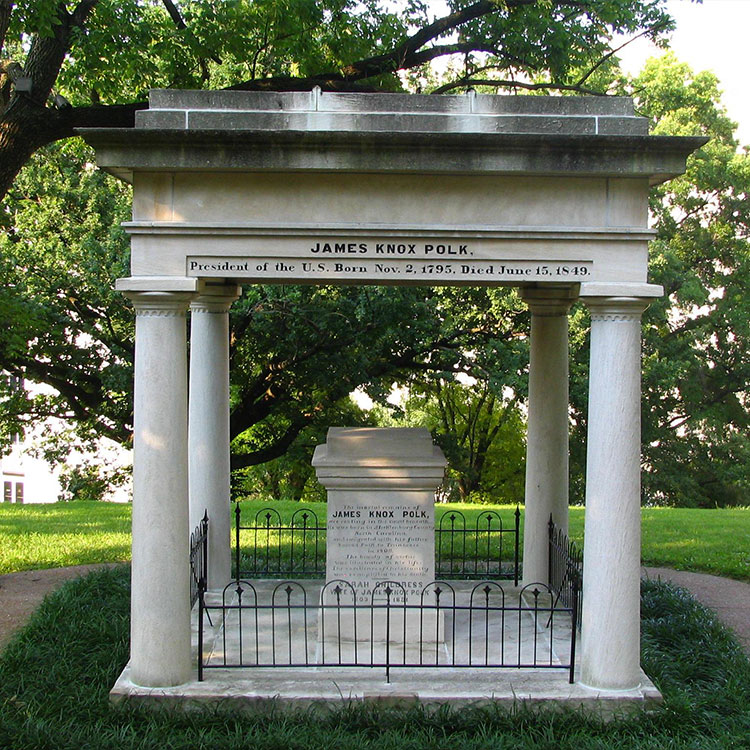
Just outside the building, on the Capitol grounds, stands another tomb with a connection to Strickland.
It contains the remains of President James K. Polk and his wife, Sarah Childress Polk.
Their burial site is separate from the tombs inside the Capitol walls.
Strickland designed President Polk’s tomb, too, according to the Tennessee Encyclopedia’s biography of the architect.
The monument originally stood at Polk Place, the former president’s Nashville home, before being relocated to the Capitol grounds.
Strickland’s work therefore connects two very different burial sites at the same landmark: the president’s tomb outside and the architect’s own resting place within the building.
Both remain part of the Capitol’s history, alongside the government building that Strickland never saw completed.
Visiting the Tennessee State Capitol
You don’t need to pay admission to explore this piece of Tennessee history.
The Capitol offers free admission and guided tours, making it an easy addition to a downtown Nashville outing.
If you’re planning a budget-friendly visit, our guide to 10+ Free Things to Do in Nashville includes other places worth exploring without paying admission.
For another stop focused on Tennessee history, the Tennessee State Museum is also free. It’s among the attractions featured in our roundup of free museums in Nashville.
Here’s what to know before visiting the Capitol.
Location and hours
The Tennessee State Capitol is located at 600 Dr. Martin L. King Jr. Boulevard, Nashville, TN 37243, on Capitol Hill.
Regular visitor hours are Monday through Friday, 9 a.m. to 4 p.m. Central Time.
The Capitol is closed to visitors on state holidays.
Guided tours
Free 45-minute guided tours depart at 9, 10, and 11 a.m., and 1, 2, and 3 p.m. on weekdays.
Tours begin at the first-floor information desk.
Individual visitors can join on a first-come, first-served basis, subject to availability.
Groups of 10 or more should make arrangements in advance through the Tennessee State Museum’s reservation system or by calling 615-741-0830.
Visitors who prefer to explore independently can also take self-guided tours during regular visitor hours.
The official Tennessee State Capitol visitor page provides current tour information and visitor policies.
Parking and security
There is no dedicated visitor parking at the Capitol.
Visitors generally use nearby paid parking lots or metered street spaces.
Because the building is an active seat of state government, everyone entering must go through security screening.
Large bags and backpacks are prohibited. Small personal bags and purses are allowed but must be checked by security.
Personal photography is permitted, although flash photography is not allowed.
Accessibility and entrance changes
Visitors requiring mobility assistance should follow the Tennessee State Museum’s accessibility guidance.
With Motlow Tunnel closed for renovation, the designated accessible route is through the Cordell Hull Building tunnel.
The entrance is located at 425 Rep. John Lewis Way North.
Visitors should tell security guards they are going to the Capitol, and staff will direct them toward the tunnel.
For questions about accessibility or arrangements for viewing specific features such as Strickland’s marker, call 615-741-1886.
There was also an important change to pedestrian access in July 2026.
According to the Tennessee Department of General Services’ July 16 announcement, the permanent stone stairs on either side of Motlow Tunnel reopened for pedestrian use on July 20, 2026, replacing the temporary wooden stairs.
However, the reopening of those stairs did not mean Motlow Tunnel itself had reopened.
The tunnel remained closed under the state’s published renovation arrangements, so visitors should confirm the latest access routes before arriving.
How much time should you allow?
Plan for approximately 60 to 90 minutes if you want to take a guided tour, pass through security, and spend a little time exploring the building and surrounding grounds.
If Strickland’s tomb is your main reason for visiting, ask staff about the marker before beginning your tour.
Even without a special stop at the burial site, a visit offers the chance to see the building that occupied nearly a decade of Strickland’s life.
More than 170 years after his death, William Strickland still rests within the Capitol’s northeast wall, inside the building he never lived to see completed.