


You could spend hundreds of dollars on an international getaway and still overlook the places in Tennessee that deliver a completely different kind of escape. After researching these 12 experiences, from a full-scale Greek landmark to an underground lake and a Victorian village, one thing becomes clear: you don’t have to leave the state to find somewhere that feels worlds away.
Some recreate another country’s architecture, while others have landscapes so unusual they barely resemble the Tennessee most travelers picture. And one of these places lets you explore a lake beneath the earth itself.
The Greek Temple That Appeared in the Middle of Nashville
Nashville’s Parthenon stands in Centennial Park, a full-scale replica of the famous temple in Athens, Greece. Originally constructed for the 1897 Tennessee Centennial Exposition, it was rebuilt in permanent concrete between 1921 and 1931, and the surrounding park remains open daily from dawn until 11 p.m.
You turn a corner on the park’s walking paths, and suddenly those enormous columns rise in front of you. The structure is so unexpected against the familiar Nashville skyline that it takes a moment to remember you’re still in Tennessee.
The columns, triangular pediment, and symmetrical design echo the architecture of ancient Greece. Step back far enough, and you can frame the entire building against the sky, with the green lawns in the foreground and trees surrounding the grounds.
There’s a reason Nashville earned the nickname “Athens of the South.” The city embraced education and the arts, and the Parthenon became a lasting expression of that identity.
Nashville’s Parthenon is a full-scale architectural replica of the original Greek temple, not a miniature monument or a theme-park imitation.
Here’s the insider tip: give yourself time to walk around the outside before heading inside. The changing light makes the columns look different throughout the day, and the broad lawn provides room to appreciate the building’s enormous scale without squeezing through a crowd.
The Parthenon also houses an art museum, so this is more than a quick photo stop. According to its current visitor information, general admission is $15 for adults, $10 for seniors aged 62 and older, and $10 for children ages 4 through 17. Children under four enter free.
The museum’s published regular hours are Monday through Saturday, 9 a.m. to 4:30 p.m., and Sunday, 12:30 p.m. to 4:30 p.m. Special hours can apply, so check before traveling. Large bags, backpacks, food, and drinks aren’t permitted inside the museum.
Centennial Park is a worthwhile stop even if you decide to admire the temple from outside. You can enjoy the grounds without paying museum admission.
And if a Greek landmark in the middle of Music City sounds surprising, wait until you see what happened when an English reformer’s vision for a better society took shape on the Cumberland Plateau.
The Tennessee Village Built Around a Victorian British Dream
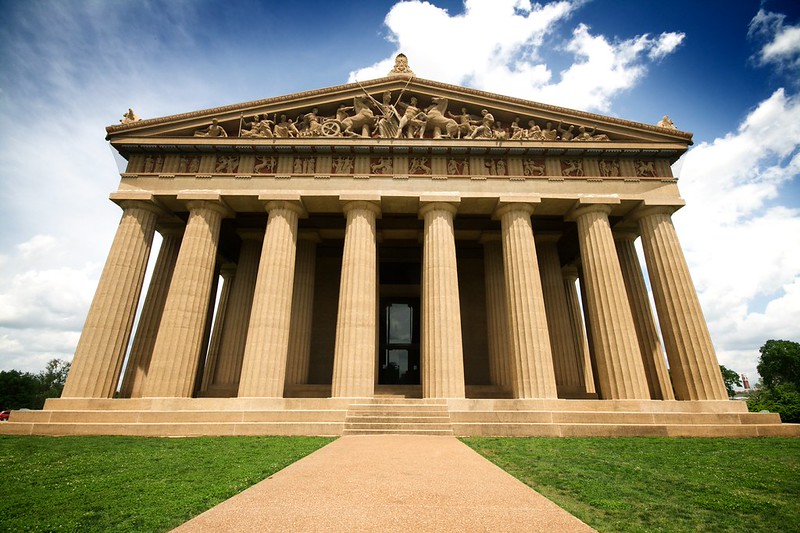
Historic Rugby sits on Tennessee’s Cumberland Plateau, where a Victorian village founded in 1880 still preserves its original architectural character. British author Thomas Hughes established the settlement, which was inspired by ideas about English village life and social reform.
The first thing you notice is the change of pace. Instead of modern shopping centers and rows of identical roadside businesses, the village invites you to slow down and pay attention to the buildings, their proportions, and the landscape around them.
Historic Rugby preserves structures associated with its founding years, including the Thomas Hughes Free Public Library, founded in 1882, and Christ Church Episcopal, built in 1887. The village’s history unfolds through these buildings rather than through a single museum display.
There is something particularly interesting about seeing this architectural tradition in rural Tennessee. The place isn’t pretending that you have crossed the Atlantic. Its British inspiration is part of the actual story of how the community began.
Historic Rugby was founded by a British author in 1880, making its English-inspired appearance part of its documented history rather than a modern decorative theme.
Here’s the insider tip: don’t simply drive through, take a photograph, and leave. A guided tour helps explain the village’s founding ideals and how those ambitions developed in the Appalachian setting.
The visitor center offers a short historical film before guided walks that include original village buildings. The official visitor information lists tours during the season, generally Thursday through Sunday, with specific departure times. For 2026, published admission is $10 for adults, $8 for seniors aged 60 and older, and $5 for students in kindergarten through grade 12. Preschoolers enter free.
The visitor center’s schedule varies by day, and some historic buildings and facilities have their own operating hours. Seasonal tours generally run from mid-March through mid-December, so check the current calendar before making the drive.
Lodging is also available in historic properties and cottages, giving travelers a chance to spend more time exploring the village and nearby woodlands. If you want a quieter trip, plan around the guided-tour schedule rather than assuming every building will be open whenever you arrive.
The important detail is that Rugby is a historic community, not an amusement attraction. Respect the buildings, follow posted guidance, and remember that preservation is part of what makes the experience special.
But Tennessee’s international atmosphere isn’t limited to old buildings. In Memphis, a carefully designed garden offers a completely different kind of escape, one that trades Victorian streets for water, stone, and quiet.
The Japanese Garden Where Memphis Seems Miles Away
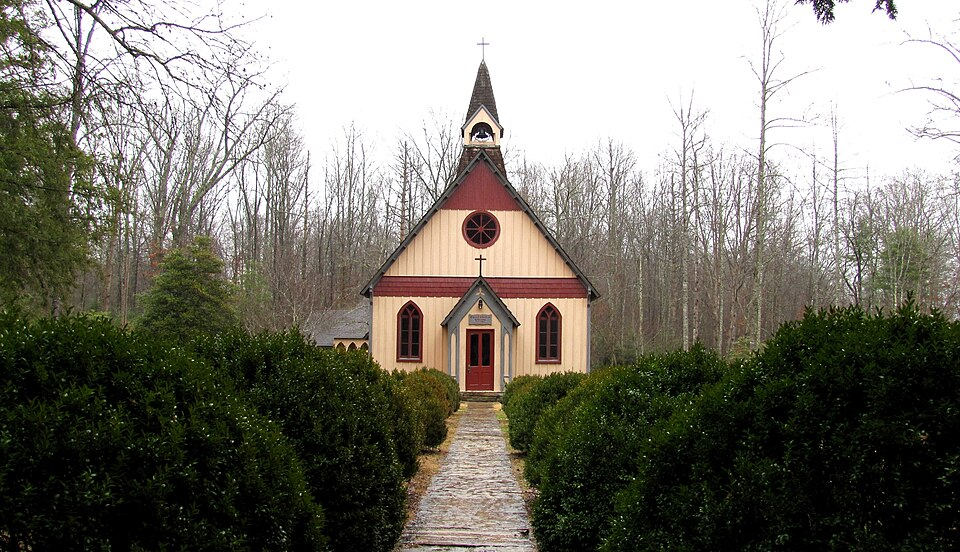
Inside the Memphis Botanic Garden, Seijaku-En, the Garden of Tranquility, offers a Japanese-inspired landscape designed around the beauty of natural forms. The garden was designed by Dr. P. T. Tono of Tokyo in 1966 and later redesigned by noted Japanese garden designer Koichi Kawana and local landscape architect J. Ritchie Smith.
Memphis may be known for blues, barbecue, and its connection to the Mississippi River, but this garden asks visitors to pay attention to something quieter. Paths guide you past carefully arranged rocks, water, plants, and the striking red bridge that has become one of the garden’s best-known features.
The atmosphere changes with the seasons. Spring brings blossoms and fresh green growth. Summer emphasizes the varied shades and textures of foliage, while autumn introduces warmer colors that stand out against stone and water.
The design also rewards patience. Japanese gardens often use the principle of concealing and revealing views, allowing the scenery to unfold gradually as visitors move through the space.
Seijaku-En was designed in 1966 by a Tokyo-based garden designer and later redesigned by Koichi Kawana, whose work helped shape Japanese gardens across the United States.
Here’s the insider tip: don’t rush straight to the red bridge, take a photograph, and head out. Walk the paths slowly, and notice how the composition changes depending on where you stand.
The Memphis Botanic Garden is open year-round and includes 30 specialty gardens spread across more than 96 acres. Published general admission is $12 for adults, $10 for seniors aged 62 and older, and $7 for children ages 2 through 12. Children under two and garden members enter free.
The garden’s published hours are 9 a.m. to 6 p.m. during daylight saving time and 9 a.m. to 4:30 p.m. during standard time. Special events may affect the visitor experience, so check the schedule before visiting.
Wear comfortable shoes and allow enough time to explore more than one garden. If you’re visiting with someone who prefers a gentler outing to a strenuous hike, this is an especially appealing way to spend part of the day.
And if you think a garden can transform the mood of a place, wait until you see how one Tennessee hotel turns an ordinary overnight stay into a year-round Christmas celebration with a distinctly European appearance.
The Bavarian-Style Hotel Where Christmas Never Ends
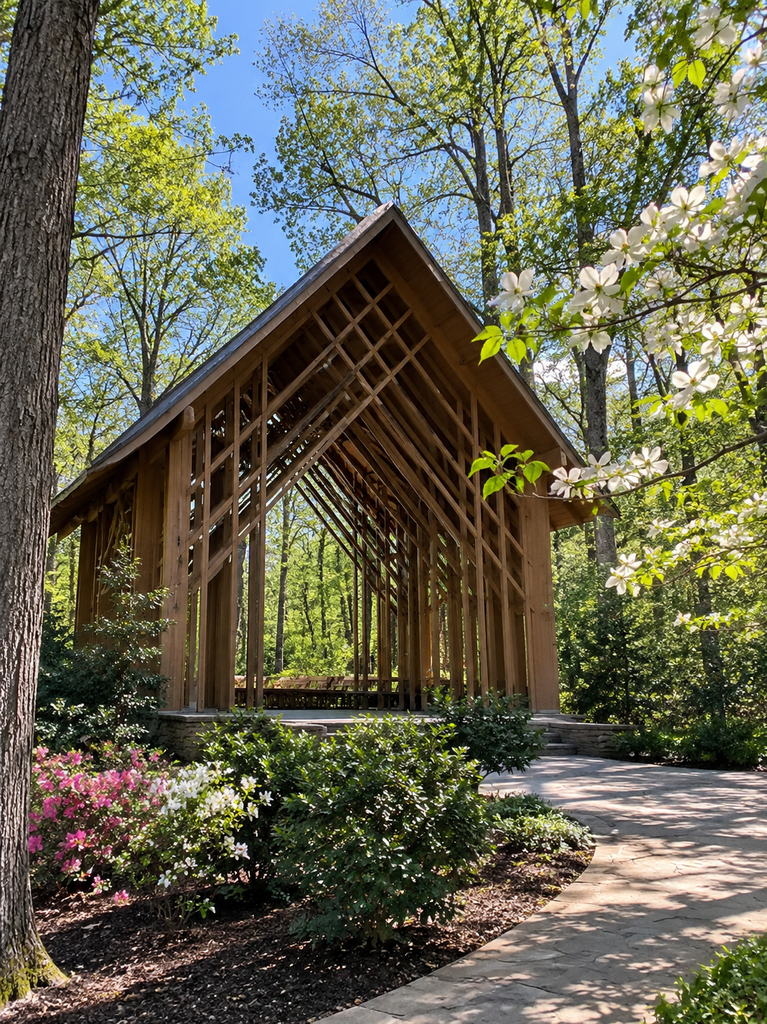
The Inn at Christmas Place in Pigeon Forge brings Bavarian-inspired architecture and Christmas decorations together in a hotel near the foothills of the Great Smoky Mountains. Located at 119 Christmas Tree Lane, the property features themed rooms, landscaped gardens, a pond, and a two-story glockenspiel.
You don’t need to visit in December to find the holiday atmosphere. Christmas-themed rooms and suites are part of the hotel’s identity throughout the year, with festive decorations, warm lighting, and holiday touches that make the property feel different from a conventional roadside hotel.
The Bavarian influence shows in the architecture and the old-world styling. The gardens and pond add a quieter element, while the glockenspiel provides a theatrical moment in the lobby.
For families, the appeal is easy to understand. Children get the feeling of entering a Christmas story, and adults can enjoy the unusual design without having to build an entire holiday trip around December.
The Inn at Christmas Place combines Bavarian-inspired architecture with year-round Christmas décor, including themed suites and a two-story glockenspiel.
Here’s the insider tip: treat the hotel as an experience in its own right, not just a place to sleep between Smoky Mountain attractions. If you’re already planning a Pigeon Forge trip, the themed rooms and landscaped grounds can make the stay feel like part of the vacation.
The property offers complimentary breakfast, free Wi-Fi, an indoor pool, and a seasonal outdoor pool area with a slide. Its newer Winter Wonder Lagoon adds a Christmas-themed outdoor water experience for hotel guests.
Room prices vary with dates, room types, and demand, so check the hotel’s current booking information rather than relying on an old advertised rate. The same goes for seasonal amenities, which may operate differently depending on the time of year.
One thing to remember is that this is a themed hotel inspired by European design, not an authentic Bavarian village. The appeal is its playful interpretation of Christmas and alpine architecture.
If you’re visiting during a busy holiday period, reserve accommodations ahead of time. Pigeon Forge attracts plenty of seasonal visitors, and waiting until the last minute can limit your choices.
Now, if you would rather trade Christmas lights for a more everyday European atmosphere, there’s a small shopping area in Gatlinburg where winding pedestrian lanes provide a welcome change from the main road.
The Gatlinburg Shopping Corner That Feels Like a European Village
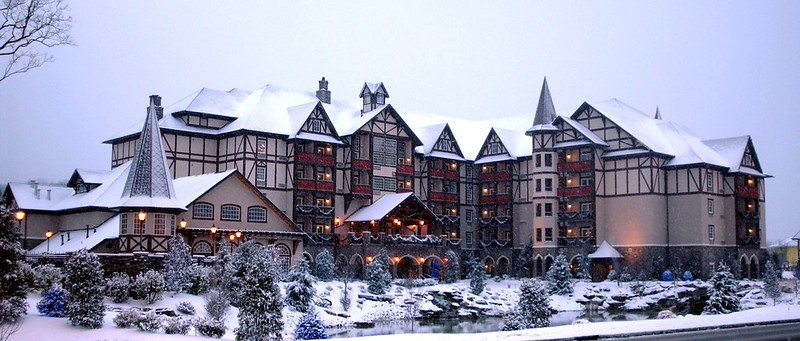
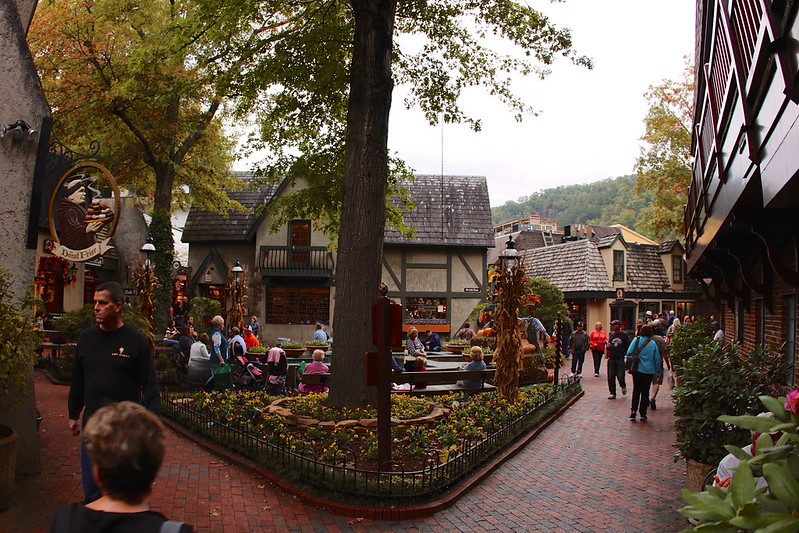
The Village Shops in downtown Gatlinburg offer a pedestrian-friendly collection of shops and eateries with European-inspired architecture and a quieter atmosphere than the town’s busy main Parkway. The setting encourages visitors to wander between storefronts instead of treating shopping as a quick stop between attractions.
Gatlinburg can feel crowded, particularly during holiday periods and peak fall foliage season. The Village offers a different rhythm, with intimate walkways, decorative details, and small storefronts that make the experience feel more like strolling through a traditional shopping courtyard.
You can browse at your own pace, stop for something to eat, and enjoy the architectural details along the way. The atmosphere is particularly appealing to travelers who like discovering independent-looking shops and interesting corners rather than visiting another large retail center.
The European influence is primarily visual and atmospheric. This isn’t a reconstruction of one specific European town, and it doesn’t need to be. Its charm comes from creating a walkable shopping environment within a destination that can otherwise revolve around traffic and major attractions.
The Village Shops provide an alternative to Gatlinburg’s main Parkway, with pedestrian lanes and old-world-inspired styling in a compact shopping district.
Here’s the insider tip: visit with time to spare. If you arrive with a strict checklist and try to rush through every shop, you’ll miss much of what makes the place appealing.
The Village is also easy to pair with other downtown Gatlinburg stops. Rather than making a special trip solely for the shopping area, work it into a day that includes a meal, a stroll through town, or a scenic drive nearby.
Individual businesses set their own operating hours, and these can vary by season. Check the shops or restaurants you specifically want to visit before setting out. Parking in downtown Gatlinburg can also become competitive during busy periods, so plan for a short walk instead of expecting to park directly beside every attraction.
The main trap is assuming that everything in Gatlinburg has the same atmosphere. Some areas are loud, heavily commercial, and packed with visitors. The Village offers a more intimate experience, but it is still a popular shopping destination.
And now for a change of scale. Our next stop doesn’t merely look like another country. It takes you below the surface of Tennessee, where an ordinary-looking hillside conceals a remarkable underground lake.
The Underground Lake Where a Boat Ride Happens Inside a Cave
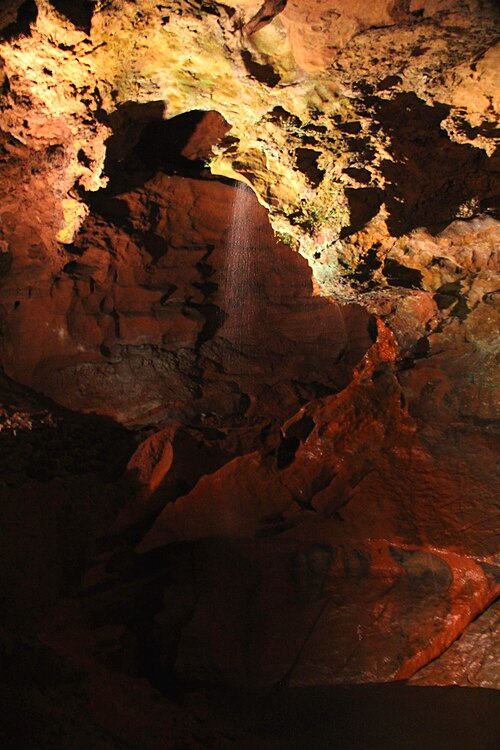
The Lost Sea Adventure in Sweetwater takes visitors into Craighead Caverns for a guided cave tour that includes a boat ride on an underground lake. The tour covers approximately three-quarters of a mile round trip and takes roughly 75 minutes, making it a substantial excursion rather than a quick walk through a cavern.
The change begins as you move away from daylight and deeper into the cave. The familiar landscape outside gives way to rock formations, sloping passages, and a cool underground environment.
Then comes the lake.
Instead of reaching an open shoreline beneath the sky, you board a boat inside the cavern. The water is surrounded by rock, and the absence of an outdoor horizon changes your sense of scale. The experience feels more like exploring a subterranean world than taking a conventional sightseeing cruise.
The Lost Sea is also a reminder that Tennessee’s landscape is shaped by geology as much as by mountains and forests. Underground cavities and water systems have created environments that most people never encounter during an ordinary road trip.
The Lost Sea Adventure combines a guided cave walk with a boat ride on an underground lake, all within a tour lasting about 75 minutes.
Here’s the insider tip: wear comfortable walking shoes and bring a light layer. Underground temperatures can feel cool compared with the weather outside, and the sloping cave paths make footwear more important than fashionable vacation shoes.
Book tickets ahead of time and check the attraction’s official updates before leaving home. The Lost Sea has reported lower-than-normal lake levels during drought conditions, which can affect the experience. Current tour details matter more here than an old travel recommendation.
The route involves a substantial walk on sloping paths, so consider the physical demands before booking for anyone who has difficulty walking or standing for extended periods. Check current accessibility guidance if a member of your group has mobility concerns.
The attraction operates as a guided experience, not an independent cave hike. Follow the guide’s instructions and stay on the established route.
The biggest mistake is assuming that an underground lake means a simple, level boat ride. The cave walk is part of the experience, and the terrain deserves respect.
But if you want an underground adventure that ends with the sound and sight of falling water, another Tennessee mountain has an entirely different surprise waiting inside it.
The Mountain That Hides a Waterfall 260 Feet Below Ground
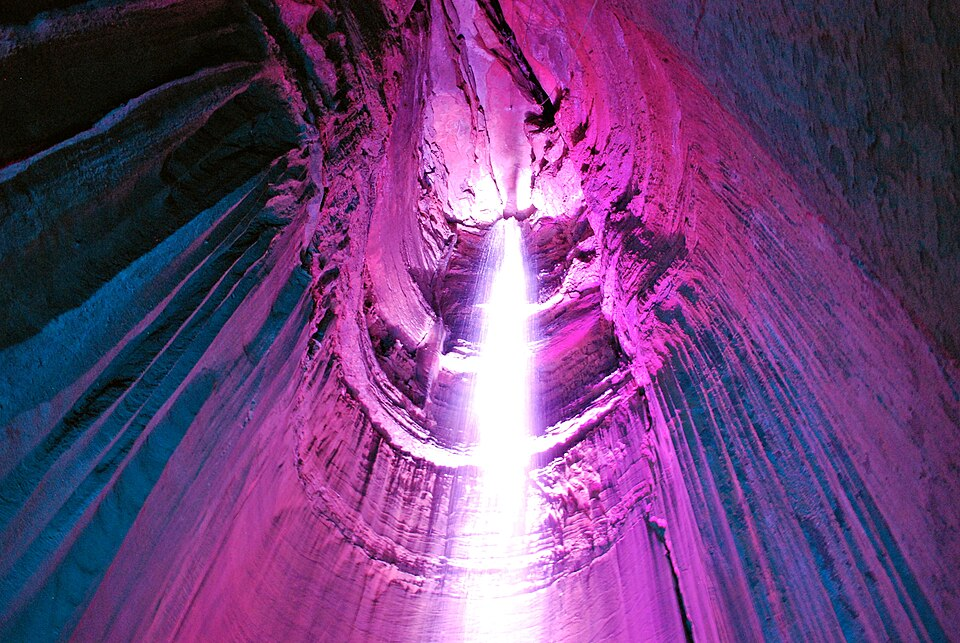
Ruby Falls, on Lookout Mountain near Chattanooga, takes visitors deep inside a mountain to see an underground waterfall. Guests descend 260 feet by glass-front elevator before following a guide-led cave trail to the falls.
From the outside, Lookout Mountain appears to be a solid mass of rock, trees, and ridgelines. Inside, however, the experience changes completely. The cave trail leads through underground chambers and past natural formations before reaching the waterfall.
The setting is unlike an ordinary waterfall hike. You don’t arrive at a roadside overlook and walk down to a stream. Instead, the route follows the contours of the cave, with the rock walls enclosing the journey.
When the waterfall comes into view, the contrast between the enclosed cavern and the moving water makes the destination especially memorable. It’s a reminder that Tennessee’s landscapes can be just as extraordinary below ground as they are from a mountain overlook.
Ruby Falls takes visitors 260 feet below the surface of Lookout Mountain to a waterfall reached by a guided cave walk.
Here’s the insider tip: reserve your cave tour in advance. Ruby Falls uses timed-entry tickets, and the attraction warns that popular time slots can sell out quickly.
Ticket prices vary by tour and date. Published cave-tour prices range from $19.95 to $42.95, depending on the experience and booking details. Check the current calendar and ticket options before planning your visit.
Wear comfortable shoes suitable for walking on cave paths, and read the accessibility information carefully if you have concerns about confined spaces, uneven surfaces, or sustained walking. The attraction offers different experiences, and the right choice depends on your group’s needs.
Ruby Falls also has scenic overlooks, a historic limestone castle built in 1929, and seasonal outdoor activities that can make the visit longer than a single cave tour. Those activities may require separate tickets.
Don’t confuse the waterfall tour with an easy stroll through a visitor center. The main attraction involves an elevator descent and a guided walk through the cave, so plan accordingly.
The underground setting is dramatic, but the next destination delivers a different kind of surprise. In northwest Tennessee, water, cypress trees, and a remarkable geological history create scenery that feels far removed from the state’s familiar mountain postcards.
The Cypress Lake That Looks Nothing Like the Tennessee You Expected
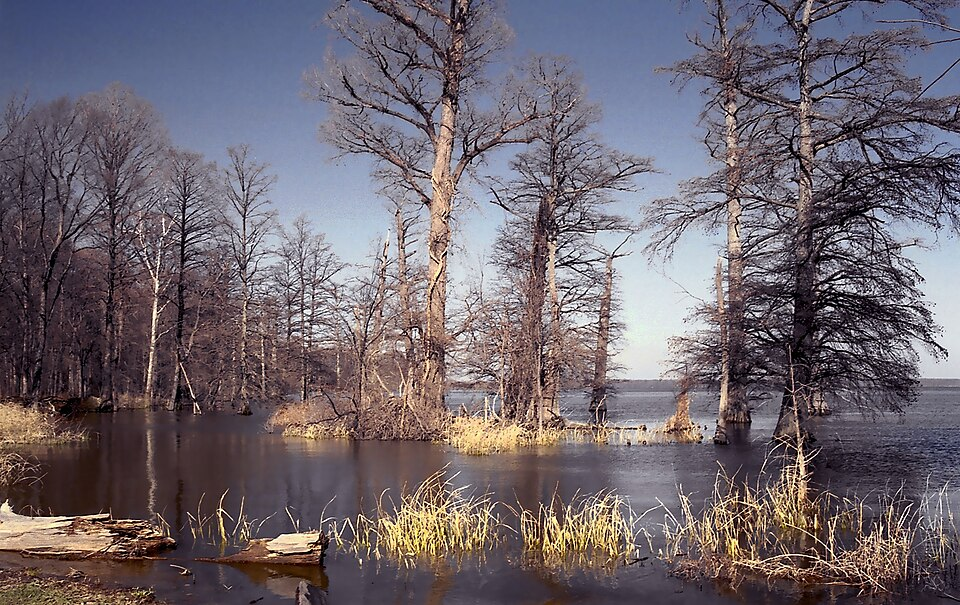
Reelfoot Lake in northwest Tennessee offers a landscape of shallow water, cypress trees, wetlands, and abundant birdlife. The lake formed following the powerful New Madrid earthquakes of 1811 and 1812, giving it a geological history unlike that of many other Tennessee destinations.
The scenery is strikingly different from the Smokies. Rather than steep mountain slopes and long ridgelines, the view opens across water, with cypress trunks rising from the lake and their branches creating irregular shapes against the sky.
Depending on the season, the surrounding wetlands support a range of birdlife, making the area appealing to photographers and nature enthusiasts. The quiet, waterlogged landscape can feel closer to a swamp expedition than a typical mountain getaway.
The setting also encourages a slower pace. Instead of rushing from one overlook to another, visitors can spend time observing the water, listening for birds, and watching how the light changes among the trees.
Reelfoot Lake formed following the New Madrid earthquakes of 1811 and 1812, and its cypress-filled wetlands create one of Tennessee’s most unusual landscapes.
Here’s the insider tip: consider a guided boat outing if conditions and schedules allow. Seeing the cypress trees from the water offers a different perspective from viewing the lake only from shore.
Seasonal wildlife activity can shape the experience, especially for visitors interested in birdwatching. Check current tour availability, water conditions, and local wildlife information before traveling. Don’t assume that a boat tour operates every day or that the same species will be visible in every season.
Bring binoculars if you enjoy watching birds, and pack for changing weather. Wetland conditions can feel different from those in nearby towns, and a little preparation makes it easier to spend time outdoors comfortably.
Reelfoot Lake is a place for observation, not hurried sightseeing. Give yourself room to pause, and avoid disturbing wildlife or venturing into restricted areas.
The trap is expecting a conventional lake vacation with broad sandy beaches and open swimming areas. Reelfoot’s appeal lies in its wetlands, wildlife, and distinctive cypress scenery.
From here, the landscape changes again. At Lookout Mountain, a winding trail passes through dramatic rock formations, gardens, and narrow passages that feel as though they belong in a storybook.
The Rock Garden Where a Narrow Passage Opens Onto Seven States
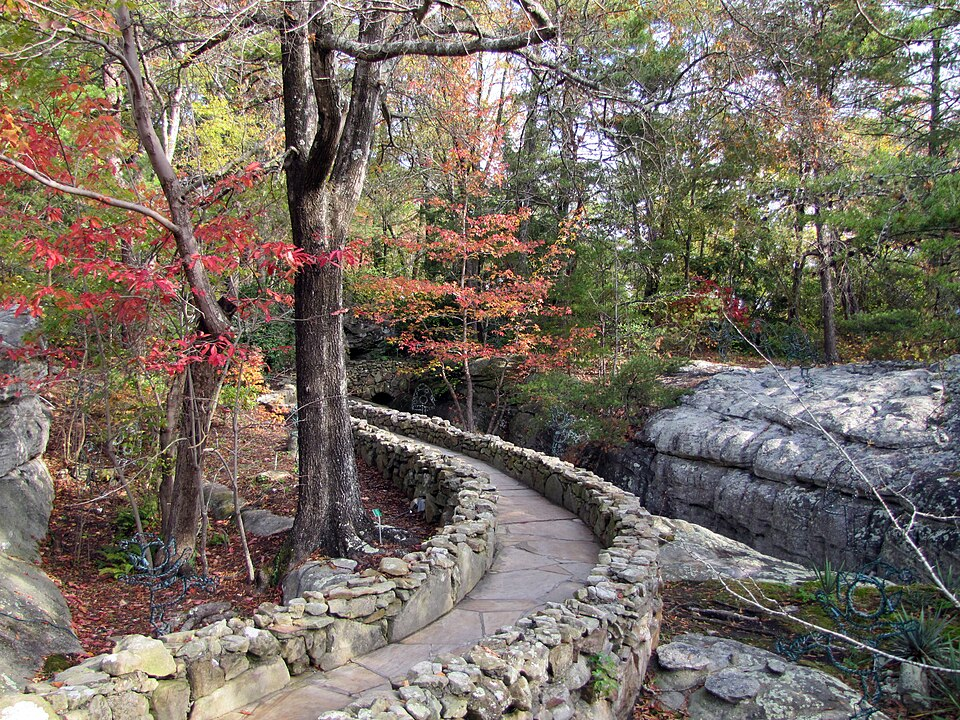
Rock City, on Lookout Mountain, combines unusual rock formations, winding garden paths, and panoramic overlooks. On clear days, the views can extend across seven states, giving the attraction a reputation that reaches well beyond the Chattanooga area.
The experience begins on a landscaped trail that winds through gardens and between enormous rock formations. Some passages narrow enough to make you slow down and watch where you’re stepping, while other areas open into broader spaces with views across the surrounding countryside.
The rock formations provide the drama. Massive stones sit at unusual angles, creating natural corridors, ledges, and sheltered spaces. The combination of greenery and stone makes the trail feel like a landscape assembled for a fantasy story, even though its most striking features are natural.
The gardens soften the rugged setting, bringing flowers and carefully maintained paths into a landscape dominated by rock. As you move through the attraction, the scenery shifts between enclosed passages and expansive views.
Rock City’s panoramic overlooks can offer views spanning seven states on a clear day, alongside its gardens and distinctive natural rock formations.
Here’s the insider tip: don’t rush straight to the overlook. The winding trail is a major part of the experience, and the smaller passages and garden areas deserve attention.
Wear comfortable walking shoes and allow time to explore. The terrain includes steps, narrow passages, and changes in elevation, so check the attraction’s current accessibility information if needed.
Tickets are sold separately from other Lookout Mountain attractions, including Ruby Falls. Buying tickets online in advance may provide savings, according to the attraction’s visitor information. Check current prices and operating hours before traveling.
Weather matters here. A clear day offers the best chance of expansive views, while rain can affect how comfortable the outdoor paths feel. Seasonal flowers and foliage also change the atmosphere throughout the year.
One common mistake is treating Rock City as nothing more than a photo stop. The overlooks are memorable, but the trail and rock formations are what make the visit distinctive.
After all that climbing and exploring, the next stop takes the pace down several notches. In Chattanooga, an old neighborhood above the river brings together art, coffee, handmade bread, and a distinctly European-style setting.
The Riverside Neighborhood Made for a Long Coffee Break
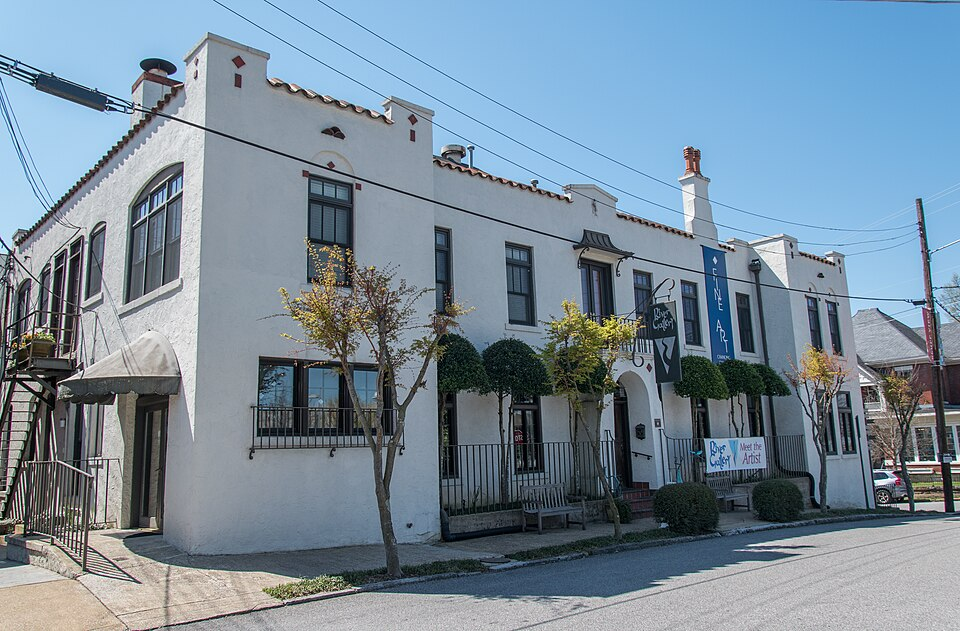
Chattanooga’s Bluff View Art District occupies a historic neighborhood above the Tennessee River, with restaurants, galleries, a bakery, gardens, and courtyards spread across roughly one and a half city blocks. The district’s architecture and landscaping draw on the atmosphere of a small European village.
The river provides the backdrop. From the bluff, you can look toward downtown Chattanooga and the Walnut Street Bridge, while the neighborhood’s paths and patios offer places to pause between stops.
This is not the kind of destination that requires an elaborate itinerary. A coffee, a pastry, a stroll through the sculpture garden, and a look inside an art gallery can fill a relaxed afternoon.
Rembrandt’s Coffee House serves house-roasted coffee and handmade pastries, while Bluff View Bakery produces artisan breads using traditional European recipes. Tony’s Pasta Shop and Trattoria offers another way to extend the visit into a meal.
The appeal comes from the combination. Art, gardens, architecture, and food are close enough together that you can explore on foot without constantly returning to your car.
Bluff View Art District combines a historic European-style neighborhood with river views, an artisan bakery, a coffee house, galleries, and a sculpture garden.
Here’s the insider tip: don’t plan every minute of the visit. Choose one café or restaurant, then leave time to wander the paths and courtyards. The district is most enjoyable when the schedule isn’t packed too tightly.
Individual businesses have their own hours, menus, and prices, so check the details of the places you want to visit. If you plan to eat at Tony’s Pasta Shop and Trattoria, note that the district’s official visitor information says reservations and call-ahead seating are not available there.
Comfortable walking shoes are useful because the neighborhood sits above the river on stone cliffs, and the paths and streets are not all flat. If you’re visiting with someone who has limited mobility, check the route and access details in advance.
The main trap is assuming that every restaurant, gallery, and shop follows the same schedule. Plan around the specific places that matter to you, especially if your visit falls on a weekday or during a quieter season.
But Tennessee’s unusual landscapes aren’t limited to large attractions or carefully designed neighborhoods. Near Sparta, a waterfall drops through lush greenery before disappearing into the rock, creating a setting that has even appeared on the big screen.
The Waterfall That Looks Like It Belongs in a Rainforest Film
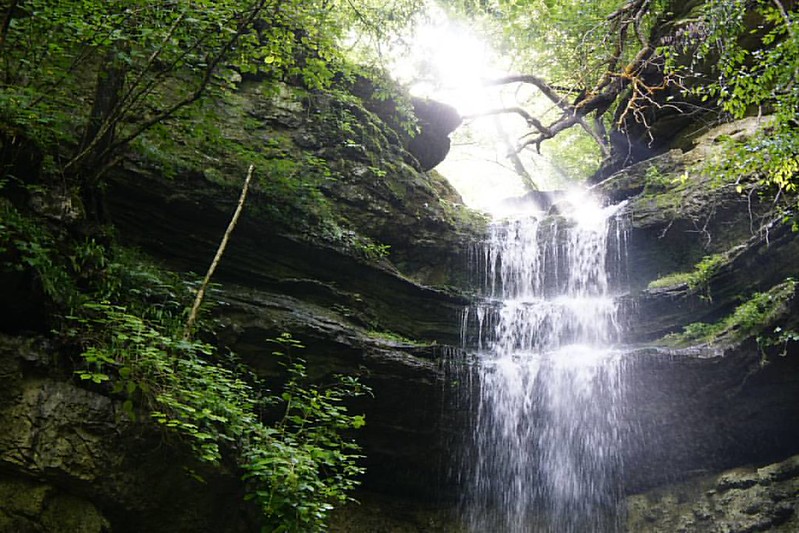
Lost Creek Falls, near Sparta, is a waterfall of about 40 feet that flows from a large spring before disappearing into underground caverns. The surrounding greenery, ferns, and rock formations give the area an almost tropical appearance, especially when the landscape is damp.
The approach brings you into a different kind of Tennessee scenery. Instead of broad overlooks and distant mountain views, the surroundings close in with vegetation and rock, creating a more intimate landscape.
Water moves through the setting before vanishing into the earth, making the falls interesting for more than their height. The combination of surface water and underground geology is part of what makes the location distinctive.
The waterfall also has a film connection. The lush surroundings appeared in the 1994 film The Jungle Book, which helped make the location recognizable to movie fans.
Lost Creek Falls drops about 40 feet before disappearing into underground caverns, and the surrounding landscape appeared in the 1994 film The Jungle Book.
Here’s the insider tip: check the current access and trail conditions before leaving home. The site is managed as part of Lost Creek State Natural Area, and the official state information says the area is open year-round from sunrise to sunset.
The natural area has approximately one mile of trail on the property, with parking available. Camping is not permitted, and visitors should follow posted restrictions and remain on appropriate routes.
Wear shoes with good traction, particularly after rain, when damp ground and rocks can make walking more difficult. Bring water and allow time to enjoy the surroundings without stepping onto unstable areas or disturbing the natural environment.
Don’t assume that the waterfall’s appearance means swimming or cave entry is permitted. Check current park guidance, and never enter an underground passage simply because an opening appears accessible.
The other trap is expecting a large visitor complex with restaurants, gift shops, and extensive facilities. This is a natural area, so arrive prepared and plan your food, water, and other necessities ahead of time.
And for the final stop, trade the close, green world of the waterfall for a road that stretches through centuries of history. It’s a reminder that sometimes the most unexpected journey is the one where you simply slow down and let the landscape come to you.
The Historic Road That Makes You Forget the Interstate Exists
The Natchez Trace Parkway follows a historic travel corridor for 444 miles through Tennessee, Alabama, and Mississippi, with its northern terminus near Nashville. The route traces a corridor used by Indigenous peoples and later travelers, and today it offers a quieter alternative to conventional highway driving.
In Tennessee, the parkway passes through wooded landscapes, rolling countryside, and scenic overlooks. The road encourages you to notice the places between destinations rather than treating them as empty space on the way to somewhere else.
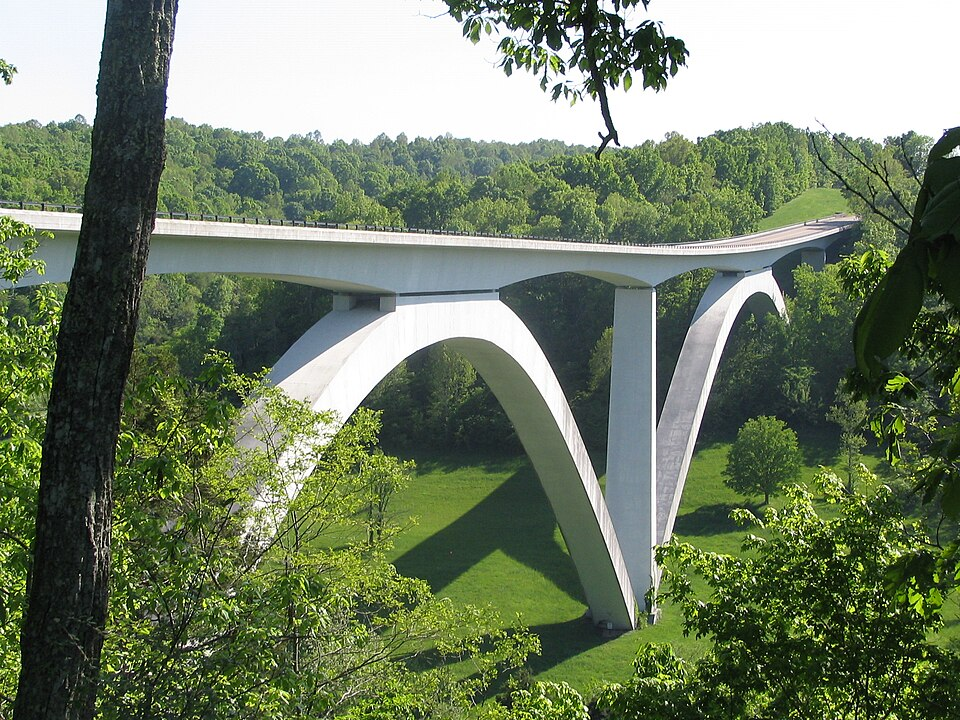
The Double Arch Bridge at Birdsong Hollow is one of the route’s best-known sights. The structure crosses Tennessee Highway 96 and provides a striking example of modern engineering set within a landscape that feels removed from the traffic and commercial development of nearby cities.
History is part of the experience, too. The old corridor served many groups of travelers over the centuries, including American Indians, settlers, traders, and soldiers. The route’s past is complex, and understanding it means recognizing both its role in travel and the Indigenous homelands through which it passes.
The Natchez Trace Parkway stretches 444 miles across three states, and the National Park Service recommends anything from a short afternoon drive to a multiday journey.
Here’s the insider tip: choose a manageable section rather than attempting the entire parkway in one day. If you’re starting near Nashville, the northern portion offers a convenient introduction without requiring an extended road trip.
The National Park Service says a full drive from Natchez to Nashville takes at least 10 hours without accounting for lengthy stops. A shorter visit can still include scenic viewpoints, historic sites, and a walk along a trail.
There is no need to plan every stop in advance, but downloading a map and checking current road notices can make the trip easier. Services are not distributed like they are along an interstate, so plan fuel, food, and rest stops with care.
The parkway has a posted speed limit of 50 mph unless otherwise indicated. That slower pace is part of the point. It’s designed for scenic travel, not hurried commuting.
The biggest mistake is driving it like a shortcut. Pull over only in designated areas, give yourself time to explore, and remember that some historic sites require a short walk from the road.
Unlike the more elaborate attractions on this list, the parkway doesn’t need a ticketed experience or a carefully timed tour to feel different. Its appeal lies in the quiet stretches of road and the history beneath them.
The Unexpected Fact About Tennessee’s International Side
Tennessee’s ability to surprise visitors isn’t just about architecture that resembles Greece or a garden inspired by Japan. It’s also about how the state’s own history and geography have created places that feel dramatically different from one another.
The Parthenon in Nashville began as part of an exposition in 1897, while Historic Rugby was founded by a British author in 1880. In Memphis, the Japanese Garden reflects a deliberate exchange of horticultural ideas, and in Sweetwater, the Lost Sea offers an underground experience shaped by geology rather than architecture.
These places aren’t substitutes for traveling abroad. They’re something more interesting in their own way: examples of how international influences, local history, and unusual natural features can come together in one state.
You don’t need to cross an ocean to find a place that changes your perspective. Sometimes, you only need to take the road less traveled and give yourself enough time to look around.