
Tennessee road trips can get expensive fast when every interesting exit leads to another $20 or $30 attraction. But some of the strangest things beside our highways cost absolutely nothing, including a 125-foot steel sculpture, a giant pink elephant, and a cave sitting behind a grocery store.
These 11 stops were researched with current 2026 information in mind. Some are old-fashioned roadside Americana. Others are so peculiar you may wonder who dreamed them up in the first place.
The Steel Giant That Looks Like an Abandoned Factory
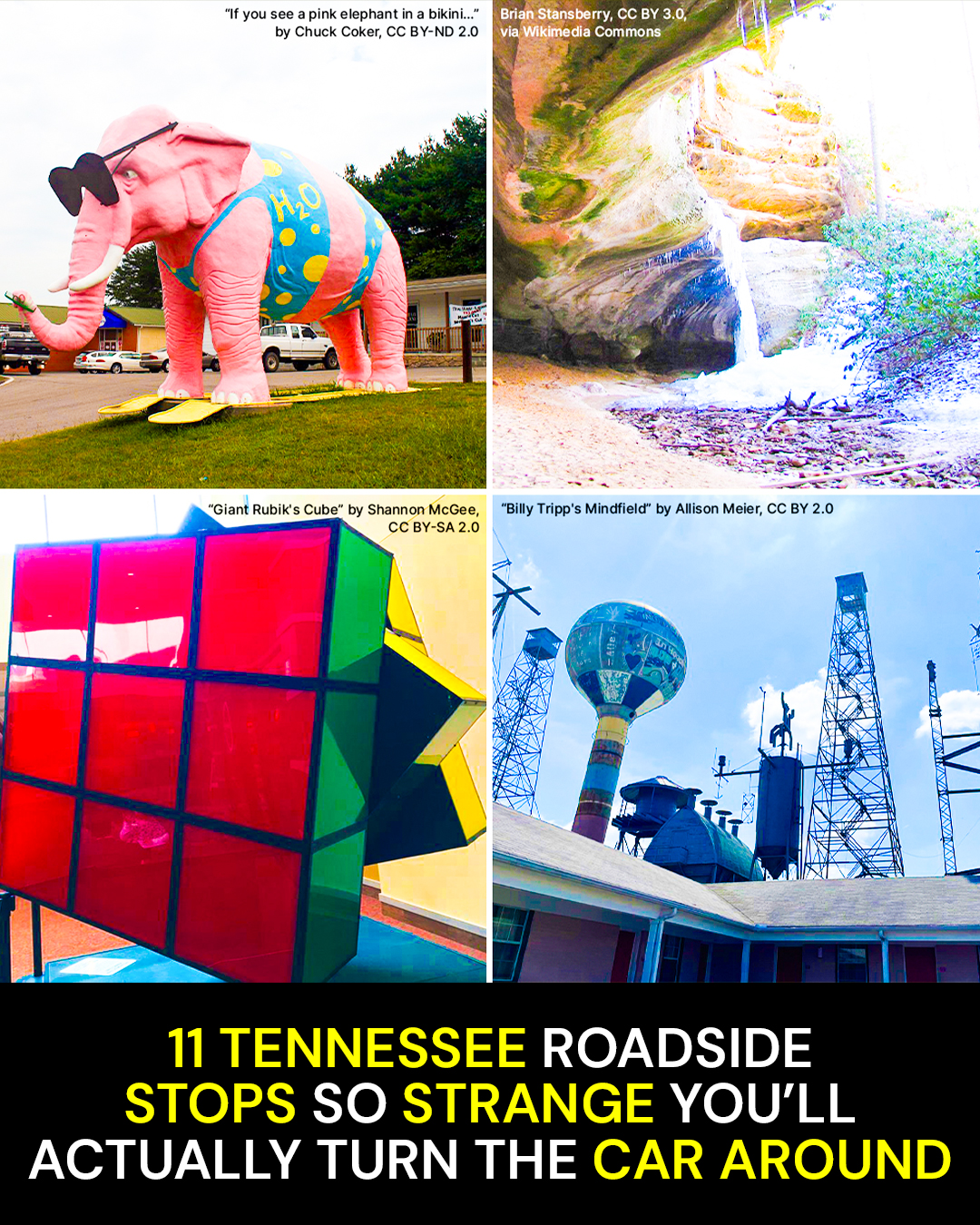
Billy Tripp’s Mindfield rises over downtown Brownsville in West Tennessee, not far from I-40. Tripp began building it in 1989, and the enormous steel installation has grown into the tallest metal outdoor sculpture in Tennessee.
From a distance, it does not look much like conventional art.
Steel towers shoot upward. Beams cross one another at odd angles. Boats hang where boats have no business hanging. Industrial pieces, lettering, figures, old machinery, and salvaged objects seem to have been stacked into a giant mechanical puzzle.
Then you get closer.
Individual pieces begin revealing themselves inside the mass of metal. The installation represents events, memories, emotions, and periods in Tripp’s life. What first resembles an abandoned industrial structure starts feeling more like somebody's enormous three-dimensional diary.
Here's what catches people off guard.
The Mindfield has been growing since 1989, and the strange structure you see today is the product of decades of one man's life and work.
This is also one of the easiest roadside oddities on the list to see without committing half a day. The structure is visible from the road, admission is free, and street parking is available nearby.
Give yourself time to walk around instead of taking one photograph through the windshield. The scale changes depending on where you stand, and smaller objects disappear inside the steel until you move closer.
Brownsville still treats the Mindfield as a living part of town rather than an abandoned curiosity. In August 2026, the site even hosted Mindfield Meet, where drone pilots navigated around the structure.
The trap is assuming you have accidentally found the remains of an industrial operation and driving straight past.
Slow down.
Because Tennessee's next strange roadside resident is easier to recognize. She's enormous, pink, and has been helping Clarksville drivers find their way around town for decades.
The Pink Resident Locals Have Used for Directions for Decades
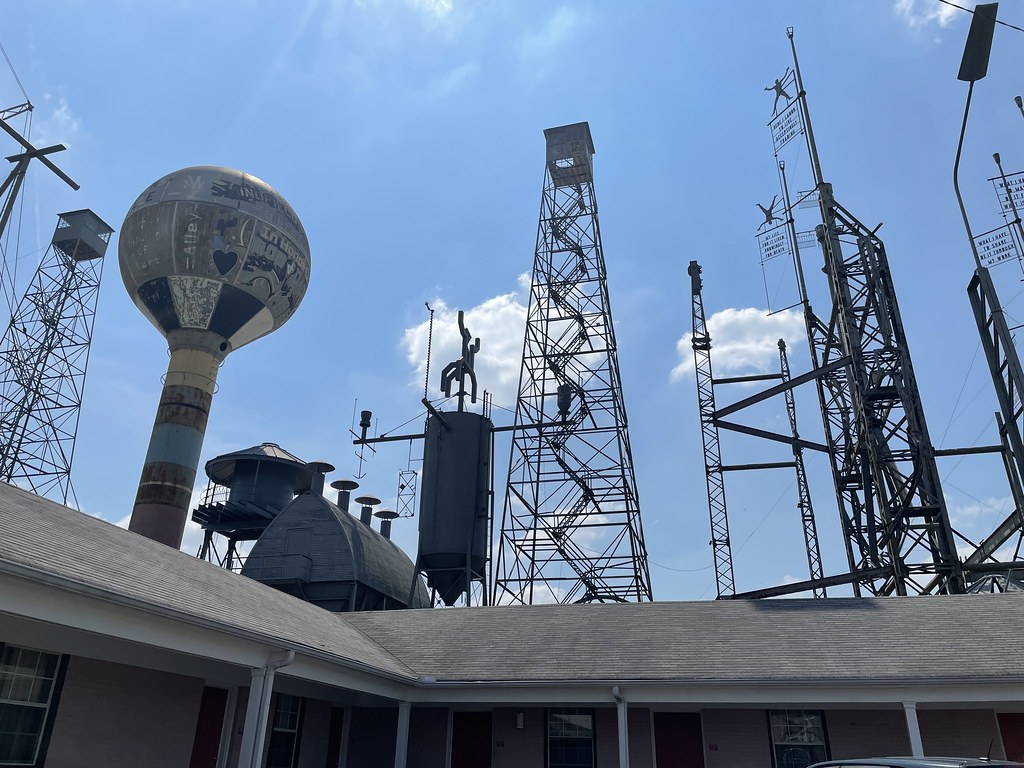
Carlotta the giant pink elephant currently stands at 1164 Fort Campbell Boulevard in Clarksville. She has been a local landmark for roughly four decades, surviving different businesses, owners, and locations along the way.
And yes, she is very, very pink.
Carlotta is a huge fiberglass elephant wearing oversized black glasses. Put her beside ordinary cars, utility poles, pavement, and strip-mall scenery, and the whole thing begins to look like somebody slipped a cartoon character into real life.
That's precisely why she works as a roadside attraction.
There is no grand museum entrance. No elaborate exhibit explains what you are seeing. You're driving through Clarksville, and suddenly there is an enormous pink elephant staring across a car lot.
Her name is part of the joke. “Carlotta” plays on “car lot,” because businessman Curtis Johnson placed her at his dealership after reportedly buying the fiberglass elephant from a man transporting it through town. A contest later gave her the name that stuck.
Here's the part outsiders miss.
Carlotta became so recognizable that generations of Clarksville residents have used the giant pink elephant as a local landmark for giving directions.
As of May 2026, Carlotta was reported bolted down at Auction World Autos on Fort Campbell Boulevard, with the current owner intending for her to remain there.
Older references may point travelers toward Providence Boulevard, because she has moved over the years. Use the Fort Campbell Boulevard location rather than relying on an old roadside-attraction listing.
There is no attraction admission. This is essentially a roadside photo stop, but remember that the elephant stands on commercial property. Be respectful, stay out of the way of customers, and don't treat a working business like a theme park.
Carlotta is classic roadside Tennessee: ridiculous enough to make you smile, old enough to trigger nostalgia, and familiar enough that locals barely need an explanation.
But the next stop makes even less sense until you see what is directly behind it.
The Cave Most Shoppers Never Expect Behind Their Grocery Store
Rock Quarry Cave in Erin might have Tennessee's strangest approach. You do not hike miles through a state park to reach it. You head toward a Piggly Wiggly.
Yes, that Piggly Wiggly.
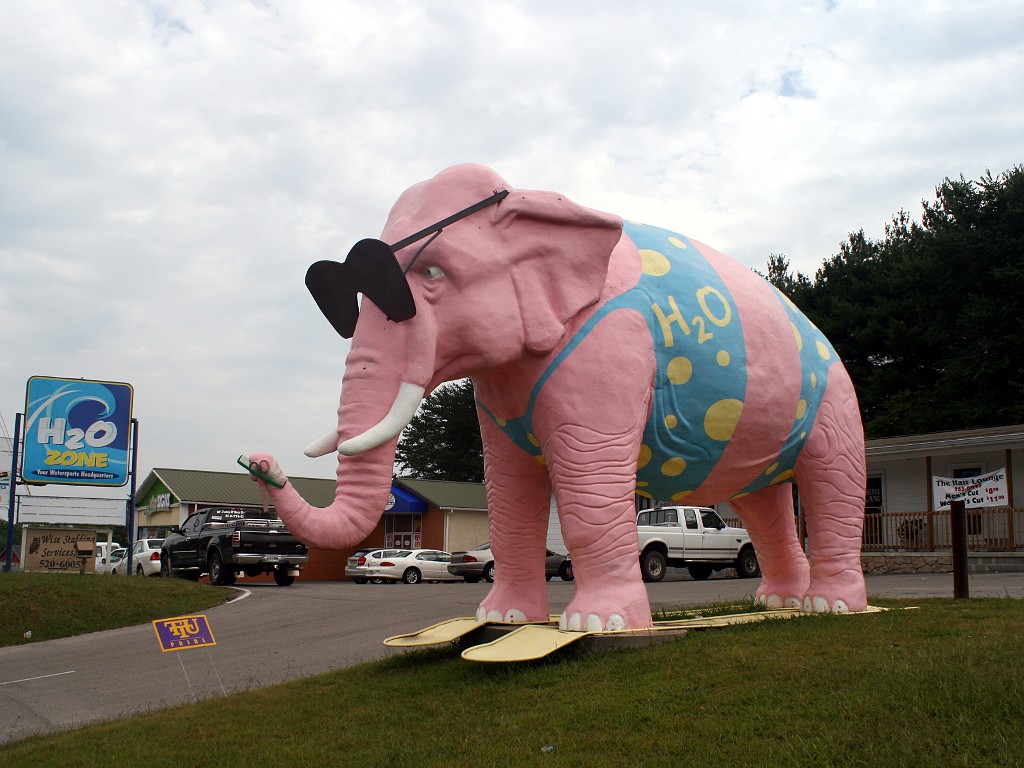
Behind the grocery-store area sits a massive artificial limestone cave left from an old quarry operation. The limestone industry around Erin developed in the 1870s, and remnants of that industrial history still survive around town.
The transition is wonderfully strange.
First comes the grocery store and ordinary pavement. Then a towering limestone wall appears. Beyond it is a high cavernous space with a striking blue pool.
One minute you are in the sort of parking area where somebody is loading milk and paper towels into a trunk.
The next minute, the landscape looks like a forgotten movie set.
Here's what nobody expects.
Rock Quarry Cave is currently described as free, open year-round, and requiring no attraction ticket or reservation.
That makes it an easy detour when you're passing through Houston County, especially for travelers who like odd places more than polished attractions.
The best trick is simply knowing it exists. Plenty of travelers would never think to investigate the enormous rock face behind a supermarket.
Treat it like a historic industrial site rather than a commercial cave tour. There are no promises here of elaborate tourist infrastructure, guided underground expeditions, or gift-shop theatrics. The visual surprise is the attraction.
And because water, rock, and old quarry environments deserve common sense, don't turn a quick photograph into an excuse to climb somewhere questionable.
This stop proves something Tennessee road-trippers learn sooner or later: the weird stuff is often sitting beside the ordinary stuff.
Still, Erin has nothing capable of cooking breakfast for 650 people.
For that, you need to keep driving.
The Skillet Big Enough to Fry About 650 Eggs
The Lodge Museum of Cast Iron sits at 220 East 3rd Street in South Pittsburg, roughly 30 minutes outside Chattanooga. The museum is open daily from 8 a.m. to 6 p.m. Central, with adult admission currently $10 plus tax.
But we're here for the skillet.
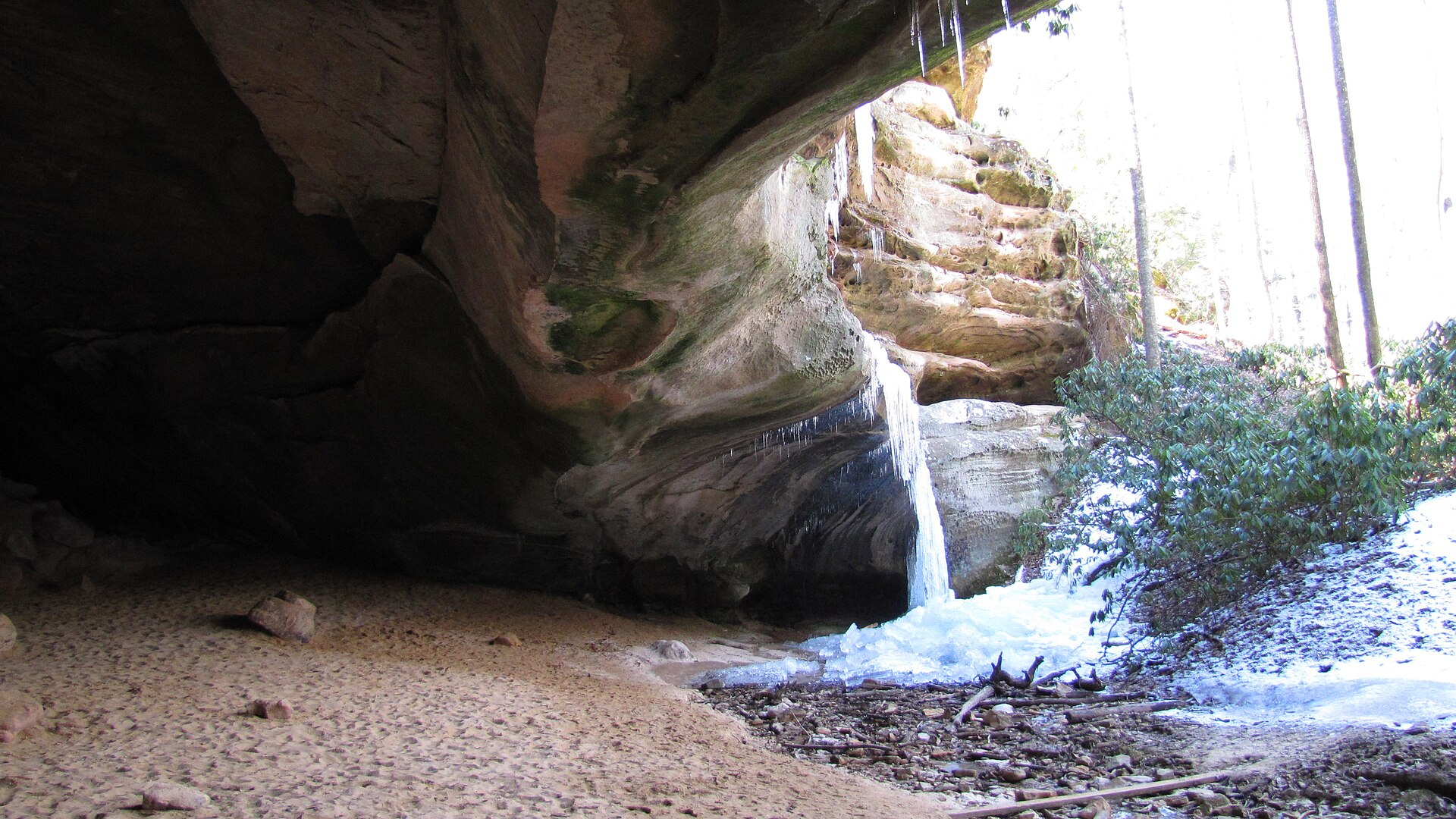
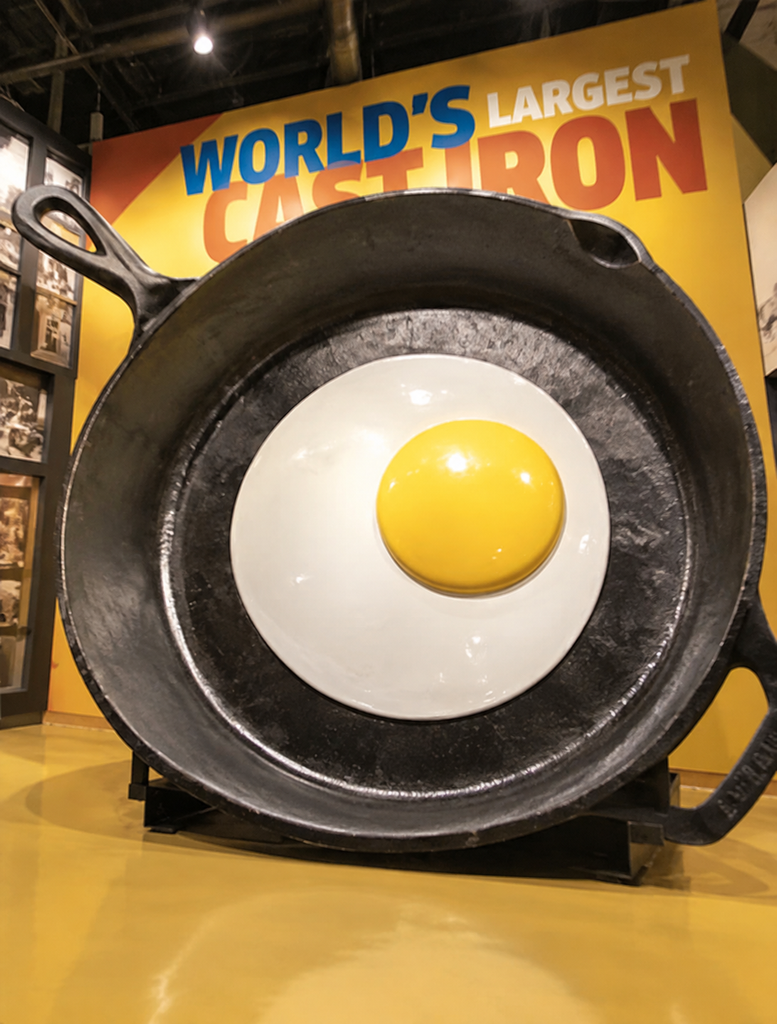
Lodge's World's Largest Cast-Iron Skillet measures more than 18 feet from handle to handle and weighs 14,360 pounds.
Stand near it and an object you have seen thousands of times suddenly feels absurd. The familiar curved edge becomes a wall. The handle stretches outward like part of a bridge.
It is the kind of scale that photographs need a person in the frame to explain.
The museum around it digs into Lodge's history dating to 1896, how cast iron is manufactured, and why the cookware became such a permanent fixture in American kitchens.
That gives the giant skillet a little more substance than your average oversized roadside object.
But let's not pretend everybody pulls off the highway because they're desperate for a metallurgy lesson.
Here's the number you'll remember.
Lodge estimates that its 14,360-pound skillet could fry roughly 650 eggs at the same time.
Children under five currently enter the museum free. Lodge suggests budgeting around an hour for the museum itself and another hour if you plan to eat and shop while you're there.
The insider move is to treat this as a Chattanooga-area road-trip add-on instead of rushing through South Pittsburg only for one photograph. The museum gives the oversized skillet context, and an hour is manageable even on a travel day.
The trap is forgetting the time zone. South Pittsburg operates on Central Time, an important detail when you're coming from Chattanooga and planning a day around posted opening or closing times.
From a 14,360-pound frying pan, Tennessee roadside logic naturally leads to France.
Well, sort of.
Where You Can Visit Paris Without Leaving West Tennessee
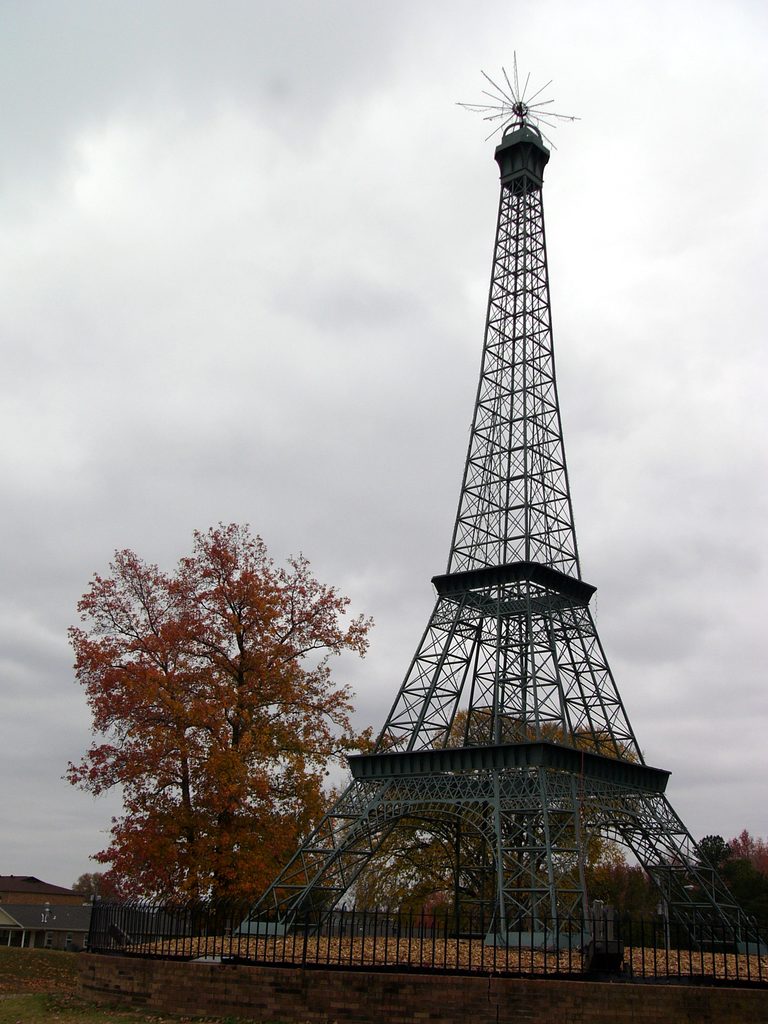
The Tennessee Eiffel Tower stands at Eiffel Tower Park, 1020 Maurice Fields Drive in Paris. The steel tower reaches 60 feet high and anchors a public city park rather than a commercial attraction.
The joke writes itself.
You drive across rural West Tennessee, arrive in a town called Paris, and there it is: an Eiffel Tower rising above the park.
No passport. No overnight flight. No attempting to remember the French you learned in high school.
Just Paris, Tennessee.
The tower is dramatically smaller than the Parisian original, which is part of the fun. Nobody needs to pretend otherwise. This is roadside Americana built around a geographic coincidence and embraced enthusiastically enough that the surrounding park is now called Eiffel Tower Park.
Here's the fact worth knowing before you go.
The Tennessee Eiffel Tower stands 60 feet tall in a city genuinely named Paris, making this one of the easiest roadside jokes in the state to photograph.
Seeing the tower and visiting the public park are free. The surrounding complex also includes a walking track, playgrounds, splash pad, trout pond, tennis courts, pickleball courts, pool, and disc golf.
That makes this one especially useful when you're traveling with children or grandchildren. Instead of piling everyone out for a two-minute picture and immediately putting them back in the car, you can stretch your legs.
The smart move is to enjoy the joke for what it is. Do not arrive expecting a near-scale reproduction of France's landmark.
The entire charm is the opposite.
It is a small Tennessee city's very large wink at its own name.
And if a 60-foot Eiffel Tower seems like an unlikely survivor of American roadside culture, wait until you meet the giant puzzle Knoxville kept from the 1980s.
The 1,200-Pound Puzzle Left Behind by a World's Fair
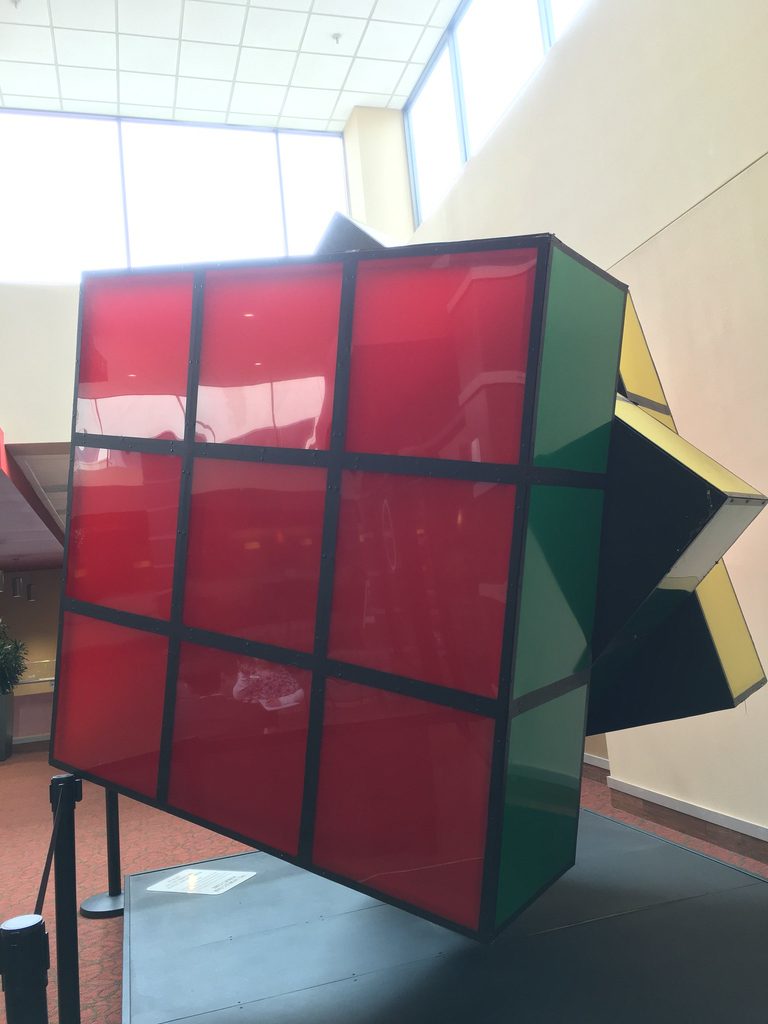
Knoxville's giant Rubik's Cube is displayed inside the Knoxville Convention Center downtown. It stands 10 feet tall, weighs approximately 1,200 pounds, and dates back to the 1982 World's Fair.
Hungary gave the enormous puzzle to Knoxville for the fair.
More than four decades later, it's still here.
The cube looks immediately familiar, but its proportions scramble your sense of scale. A toy designed to fit between two hands has become something that towers over visitors.
Individual panels weigh around 300 pounds.
Try imagining twisting that.
The surrounding downtown makes the stop more interesting because Knoxville still carries visible reminders of the 1982 World's Fair, most famously the nearby Sunsphere. Together, they feel like artifacts from a moment when Knoxville briefly became an international exhibition ground.
Here's the heavyweight detail.
The giant Rubik's Cube weighs about 1,200 pounds, with individual panels weighing roughly 300 pounds each.
Tennessee Tourism currently lists visitor hours of 8 a.m. to 5 p.m. daily for seeing the cube, and there is no admission charge to view it.
Nearby parking may cost money, so this is one of those “free” attractions where the actual expense can be getting the car situated downtown.
The insider move is obvious: pair the cube with the Sunsphere area rather than driving downtown, seeing one object, and leaving. They belong to the same World's Fair story.
The trap is expecting a modern oversized novelty built for social media.
This thing predates social media by decades.
Now we go from a 1980s puzzle to an object that was already enormous when Grover Cleveland was president.
The Giant Bucket That Once Held 1,566 Gallons of Beer
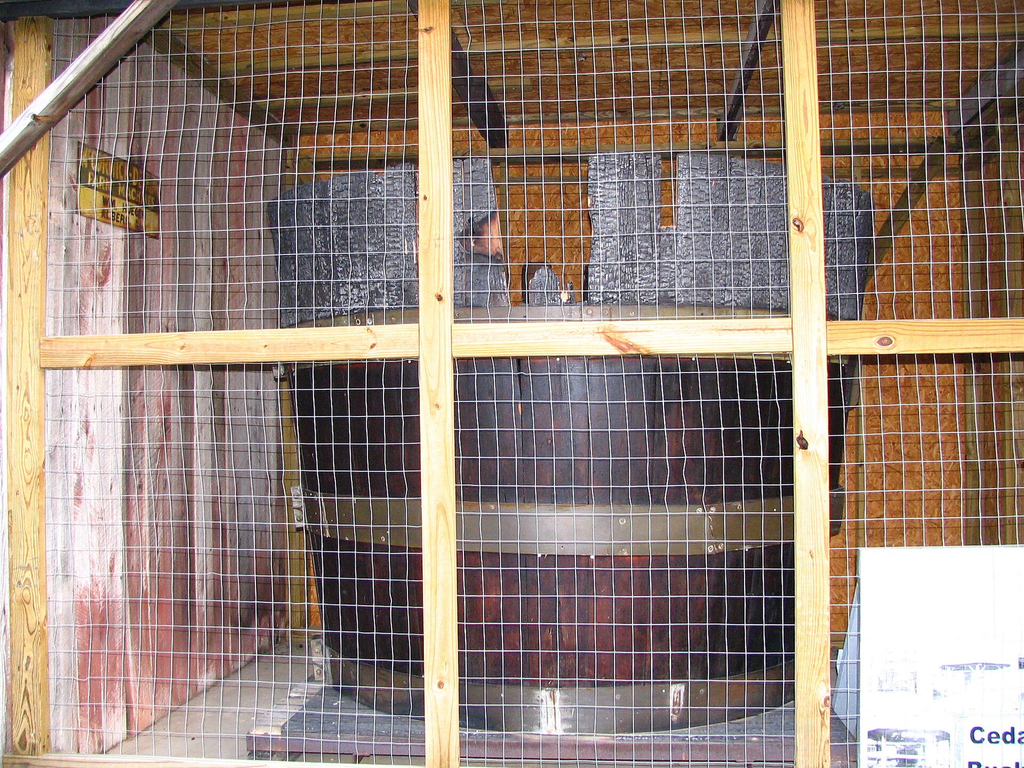
The World's Largest Cedar Bucket sits inside Cannonsburgh Village at 312 South Front Street in Murfreesboro. The original was constructed in 1887 by the Tennessee Red Cedar Woodworks Company, and today's giant bucket is roughly six feet tall and nine feet across the top.
A giant bucket sounds silly.
Its résumé is not.
The original traveled to major fairs and won blue ribbons at the 1893 Chicago World's Fair and the 1904 St. Louis World's Fair.
Then things got properly strange.
During the St. Louis exposition, a beer company leased the bucket, filled it with 1,566 gallons of beer, and built a catwalk around the top.
Here's the Tennessee trivia you'll repeat later.
This enormous cedar bucket was once filled with 1,566 gallons of beer at the 1904 St. Louis World's Fair.
The bucket eventually returned to Murfreesboro and was placed at Cannonsburgh Village in 1976. Fire badly damaged it in 2005, but local craftspeople refused to let the story end there. The Rutherford County Blacksmith Association rebuilt it, and the bucket returned in 2011.
Cannonsburgh makes the detour more worthwhile. The village interprets Tennessee life from roughly the 1830s through the 1930s and includes structures such as a gristmill, schoolhouse, blacksmith shop, general store, and caboose.
Self-guided visits are free.
Current April through October hours are Tuesday through Friday from 9 a.m. to 6 p.m., Saturday from 9 a.m. to 4 p.m., and Sunday from 1 to 4 p.m. Winter hours are reduced, and the city recommends checking ahead because private events can occasionally close the village.
That's the trap. Don't assume a free outdoor historic village is accessible at every hour of every day.
The next stop shrinks everything back down to tabletop size.
It just happens to have thousands upon thousands of tables' worth.
The $3 Museum Devoted to Something on Almost Every Dinner Table
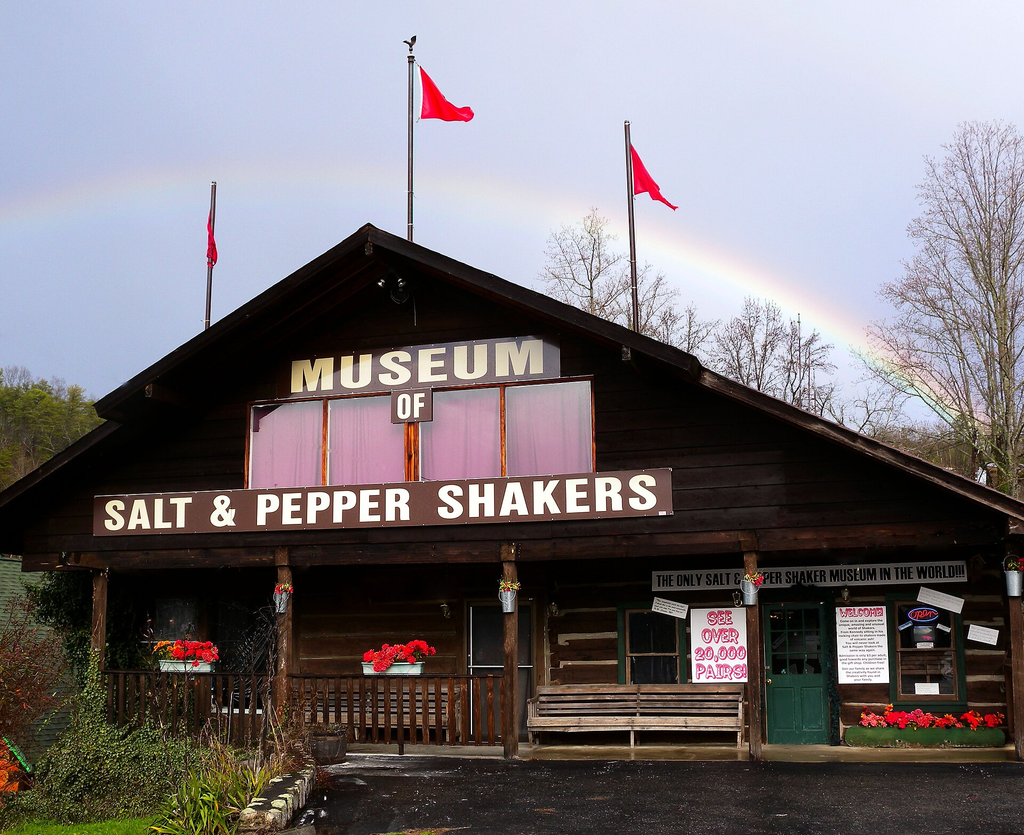
The Salt and Pepper Shaker Museum is at 461 Brookside Village Way in Gatlinburg. In 2026, it remains independently operated, with admission just $3 for adults and free entry for children 12 and younger.
In Gatlinburg, three dollars barely sounds like attraction money.
That's part of the charm.
Step inside and one of the most ordinary objects in American homes becomes an obsessive study in design. Salt and pepper shakers appear in shapes, materials, themes, and styles that turn a kitchen necessity into a record of changing tastes.
Some are cute. Some are wonderfully tacky.
Some make you wonder who saw an object and thought, “You know what this needs to be? A pepper shaker.”
The collection works particularly well if you remember novelty shakers sitting in a grandmother's china cabinet, appearing at souvenir shops, or coming out for holidays.
Suddenly the museum isn't just about seasoning containers.
It's about what people collected.
Here's what makes the cheap admission even better.
The current $3 adult admission can be applied toward a shaker purchase in the museum gift shop.
Current hours are Monday through Saturday from 10 a.m. to 4 p.m. and Sunday from 10 a.m. to 2 p.m. The museum recommends checking its Facebook page for unexpected closures.
That last part matters.
This is not a giant corporate attraction with hundreds of employees. Build a little flexibility into the day rather than assuming the doors will always operate like a major theme park.
The insider move is to use this as a change of pace in Gatlinburg. When the bigger attractions and crowds start wearing you down, a tiny museum devoted to one very specific household object feels almost refreshing.
Our next stop is far more solemn.
And it may be the most beautiful strange place on this entire route.
The Crystal Cave Hiding Inside a Memphis Cemetery
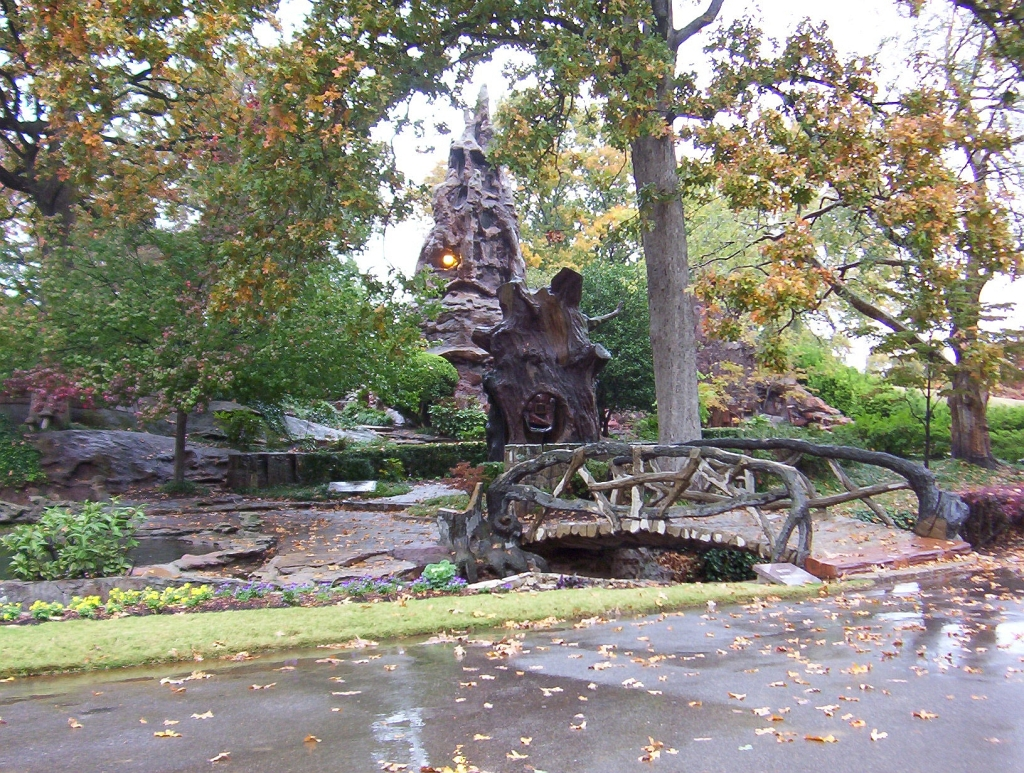
The Crystal Shrine Grotto sits inside Memorial Park Cemetery at 5668 Poplar Avenue in Memphis. Work on the cemetery's fantasy-like landscape began in the 1930s, when Mexican artist Dionicio Rodriguez started creating sculptural environments there.
Memorial Park calls the grotto the only man-made crystal cave in the world.
Walk inside and the mood changes immediately.
Colorful stones and crystals surround religious scenes inside an artificial cave. Outside, Rodriguez's work extends through an unusual landscape of concrete creations designed to resemble natural materials, including bridges and other fanciful structures.
The setting adds another layer.
This isn't an amusement park.
It is an active cemetery.
That combination of art, faith, mortality, and fantasy gives the grotto an emotional weight the giant skillets and pink elephants simply do not have.
Here's the history behind it.
Memorial Park's collaboration with Dionicio Rodriguez began in 1935 and continued for eight years, leaving Memphis with one of Tennessee's most unusual folk-art environments.
The cemetery grounds and grotto have traditionally been accessible without attraction admission. Cemetery hours are listed from sunrise to sunset, while the Poplar gate is listed as open from 6 a.m. to 10 p.m.
Still, this is one place where “Can I?” matters less than “Should I?”
Remember where you are.
The insider rule is simple: admire the artwork quietly, stay respectful around services and visitors, and never use gravesites as props for photographs.
The grotto remains part of Memphis life. Memorial Park held its traditional Easter Sunrise Service there as recently as April 2026.
After something this contemplative, Tennessee has exactly the antidote.
Tow trucks.
Lots and lots of tow trucks.
The Museum Where a Tow Truck Went More Than 100 MPH
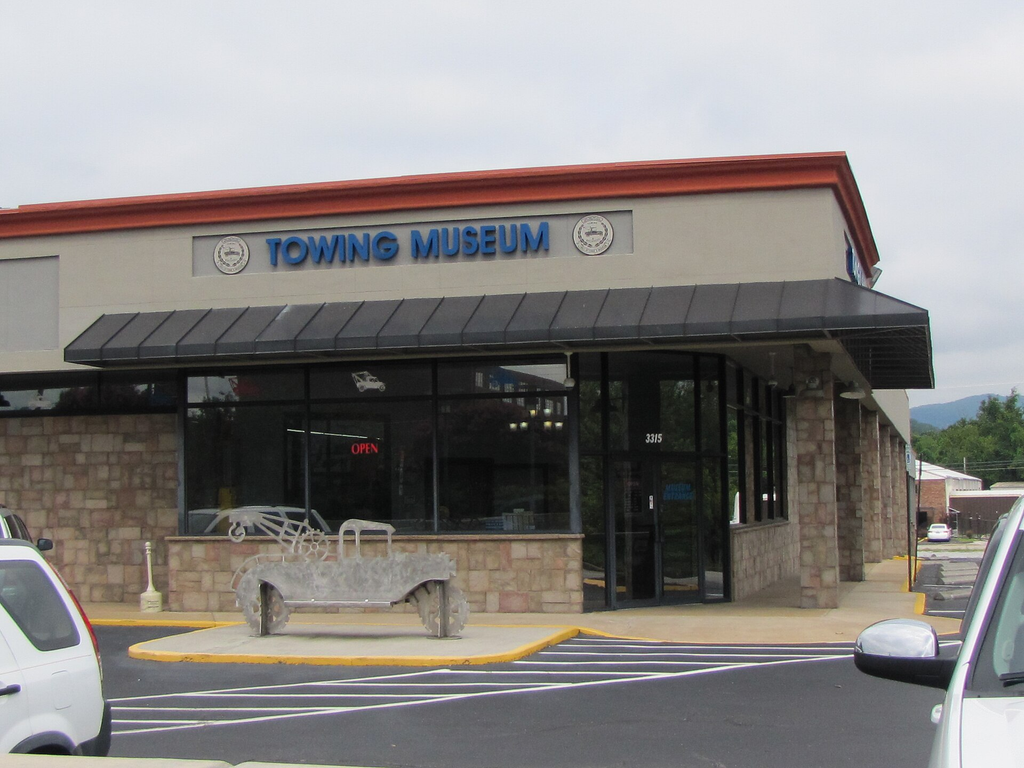
The International Towing & Recovery Museum is at 3315 Broad Street in Chattanooga. Since January 2026, it has operated from 9 a.m. to 5 p.m. daily except specified holidays.
Yes, there is an entire museum about towing.
And Chattanooga is exactly where it belongs.
The museum traces the American towing industry back to 1916 and considers Chattanooga its birthplace. Inside are more than 24 historic tow trucks, along with vintage gas pumps, pedal cars, towing memorabilia, and what the museum describes as the world's largest toy tow-truck collection.
The machinery gives the room a completely different feel from a typical transportation museum.
These are working vehicles built to rescue other vehicles. Heavy booms, cables, steel, tires, and mechanical hardware turn something most of us associate with a bad parking day into an industrial history lesson.
Then you reach the speed record.
Here's the detail that changes the whole conversation.
The museum's World’s Fastest Tow Truck reportedly averaged 109 mph during a lap at Talladega.
Adult admission is currently $12. Seniors 55 and older, military visitors, and AAA members pay $10, while admission for ages 6 through 14 is $8. Children under five enter free.
The insider tip is to give the displays a chance even if nobody in your group thinks they care about tow trucks. The story is less about roadside breakdowns than how a specialized American industry developed and the machinery evolved with it.
The trap is assuming this is a five-minute novelty stop.
With more than two dozen historic trucks and all the surrounding exhibits, there's considerably more here than one goofy photograph.
Still, if 109 mph sounds excessive for a tow truck, Tennessee has another oversized object that doesn't move at all.
The Roadside Collection With Roughly 5,000 Whiskey Decanters
The Whiskey Decanter Museum is in Historic Granville at 169 Clover Street. Its collection has grown to roughly 5,000 decanters, with current museum hours Wednesday through Friday from 11 a.m. to 3 p.m. and Saturday from 11 a.m. to 5 p.m.
Five thousand bottles sounds repetitive.
It isn't.
The collection began with around 2,000 Jim Beam decanters donated by Betty and Charles Barrett after more than 30 years of collecting. Gussie and Joe Miller later contributed roughly 3,000 more, and an expanded museum opened in 2023.
Rows of collectible bottles turn into a strange visual history of American novelty culture.
There are decanters themed around vehicles, sports, states, people, casinos, and other subjects. The collections include names such as Jim Beam, Ski Country, Ezra Brooks, and Wild Turkey, plus Elvis Presley pieces representing different phases of his career.
It feels less like staring at liquor bottles and more like walking through several decades of things Americans decided were worth turning into liquor bottles.
Here's the number that puts it into perspective.
Granville's collection now contains approximately 5,000 collectible decanters and is billed as the World's Largest Limited Edition Decanter Museum.
Admission is included with Granville's Town Tour Ticket, currently $7 for adults and $5 for ages 6 through 12. Children under six are free. The ticket also covers several other museums and historic buildings around Granville.
That makes the $7 ticket a much better value if you leave enough time to see more than the decanters.
The biggest trap here is timing.
Granville operates on limited, volunteer-supported hours. Do not spontaneously make a Sunday or Monday detour expecting the museum complex to be open.
And for our last stop, we're going back to the kind of roadside object that requires almost no explanation.

The Unexpected Fact About Tennessee's Roadside Oddities
The strangest thing about Tennessee's roadside attractions may be how much serious history is hiding underneath the silliness.
Murfreesboro's giant bucket traces its story to 1887 and two World's Fairs. Knoxville's enormous Rubik's Cube survives from the 1982 World's Fair. Chattanooga's towing museum preserves an industry it traces to 1916. Memphis has artwork begun in 1935. Billy Tripp has been turning his life into steel in Brownsville since 1989.
These aren't just random things somebody installed last year to attract social-media photographs.
They are pieces of Tennessee's habit of building, collecting, preserving, and occasionally refusing to throw away something wonderfully strange.
The interstate gets you there faster. The weird little stop you almost drove past is the part you'll still be talking about when you get home.
https://commons.wikimedia.org/wiki/File:Expo_82_Rubik%27s_Cube.jpg