
A single afternoon of Nashville sightseeing can get expensive once you add museum tickets, entertainment, and downtown parking. But some of Music City’s best experiences still cost exactly $0 to enter.
From a full-scale Greek temple to a Civil War fortress and honky-tonks filled with live music, these 11 Nashville attractions prove you don’t need a big vacation budget to enjoy the city. And a few of the best ones are places visitors walk right past without realizing what they’re missing.

1. The Museum That Lets You Explore Centuries of Tennessee History for $0
The Tennessee State Museum at 1000 Rosa L. Parks Boulevard is one of Nashville’s best deals, and admission is completely free. Its current building opened in 2018, just steps from Bicentennial Capitol Mall State Park and the Nashville Farmers’ Market.
This isn’t some little museum you finish exploring before your coffee gets cold.
The galleries take you through Tennessee’s story, beginning with its earliest inhabitants and continuing through the frontier years, the Civil War, Reconstruction, and modern life.
You can see artifacts connected to Daniel Boone and World War I hero Alvin C. York. There’s even a mastodon jawbone, a reminder that Tennessee’s history began long before the first settlers arrived.
The Tennessee Time Tunnel helps put the state’s history into perspective. Instead of jumping between unrelated displays, you move through different periods and see how one chapter led to another.
The museum also explores difficult parts of Tennessee’s past. Slavery, war, and the struggle for civil rights are part of the story, not something tucked away out of sight.
Here’s what surprises people.
You can explore the museum’s permanent exhibits without purchasing an admission ticket, and the museum even provides free parking in its shared lot.
That’s a pretty remarkable combination for a major attraction near downtown Nashville.
The smartest way to visit is to make this your starting point for a larger afternoon. The Farmers’ Market and Bicentennial Capitol Mall are nearby, so you can enjoy several attractions without moving your vehicle.
The museum is generally open Tuesday through Saturday from 10 a.m. to 5 p.m. and Sunday from 1 to 5 p.m. It is closed on Mondays.
Allow at least 90 minutes, and two hours is better if you enjoy reading exhibits rather than rushing past them.
Families should look for the Children’s Gallery, which offers younger visitors a more hands-on introduction to Tennessee history. Check the museum’s calendar for special exhibits and guided programs, since schedules and any additional charges can vary.
The biggest mistake is treating this like a quick stop.
There’s enough here to make it the centerpiece of an afternoon, especially when Nashville’s weather turns hot, cold, or rainy.
And when you’re ready to get back outside, another free attraction nearby lets you walk across the entire state of Tennessee without ever leaving downtown.\

2. The Downtown Park Where You Can Walk Across Tennessee
Bicentennial Capitol Mall State Park sits at 600 James Robertson Parkway, directly below the Tennessee State Capitol. Opened in 1996 to celebrate Tennessee’s 200th birthday, this 19-acre park is part outdoor museum, part public gathering place, and completely free to explore.
The first thing worth finding is the enormous granite map of Tennessee.
It’s the sort of feature that makes adults stop and look just as closely as children.
You can trace the state’s shape from the mountains of East Tennessee through Middle Tennessee and toward the Mississippi River. For Tennessee families, it’s fun to find hometowns and familiar regions.
Keep walking and you’ll discover the Pathway of History, where important events from the state’s past are presented along the grounds.
Then there’s the World War II Memorial, a more reflective space honoring Tennesseans who served during the war.
The Court of Three Stars represents Tennessee’s three grand divisions: East, Middle, and West. It’s a reminder that the Volunteer State contains several distinct regions, each with its own geography and traditions.
But one of the park’s most unusual features is something you hear.
The park’s 95-bell carillon represents all 95 Tennessee counties, turning the state’s geography into a musical tribute.
That’s the kind of detail visitors can easily miss if they hurry through.
Look for the river-themed water features as well. Their operation can be seasonal, so don’t count on running fountains during every visit.
For the best experience, begin near the State Museum and walk toward the Capitol. That gives you a natural progression through the park and an impressive view of the government building above.
Plan on spending 30 to 60 minutes here.
Admission is free, but downtown transportation and parking can add expenses. If you’re already parked at the State Museum or Farmers’ Market, walking between these attractions makes much more sense than driving.
Wear comfortable shoes and bring water in warmer weather. Much of the experience is outdoors, and Tennessee sunshine can make an afternoon stroll feel longer than expected.
Don’t overlook the historical markers. They’re what turn this from an ordinary park into something special.
And that grand building overlooking the park? You can actually go inside without buying a ticket.
3. The Government Building With a Secret Buried Inside Its Walls
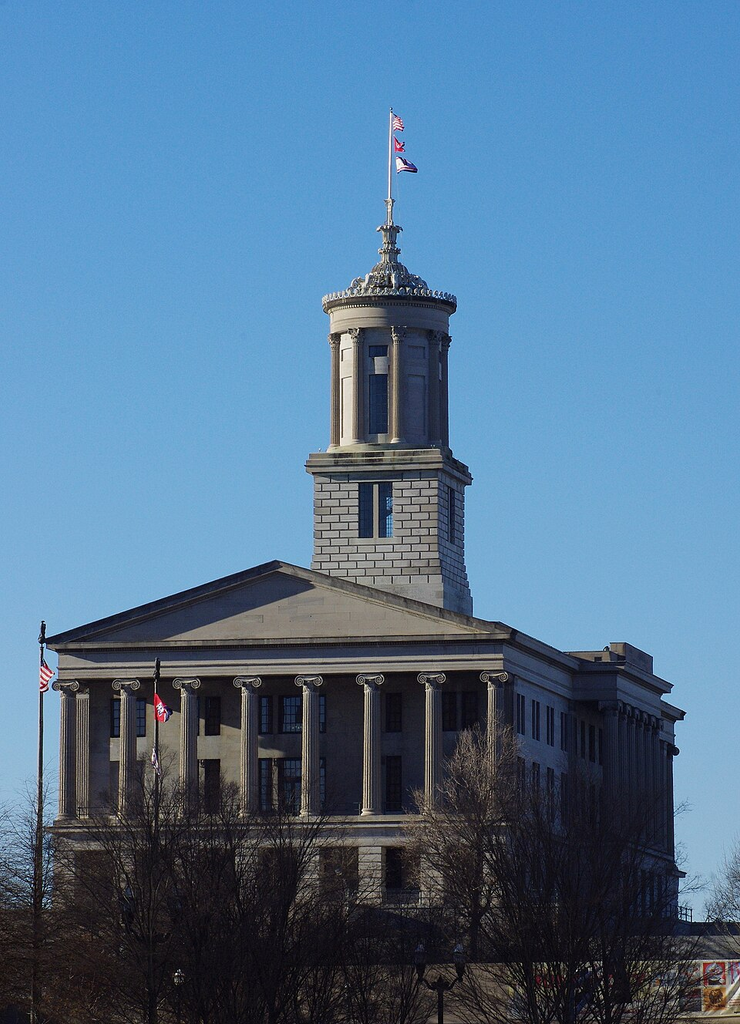
The Tennessee State Capitol stands at 600 Dr. M.L.K. Jr. Boulevard, overlooking downtown Nashville. Construction began in 1845 and was completed in 1859, making it one of the city’s most significant surviving nineteenth-century buildings.
And unlike many historic buildings, the Capitol offers free public tours.
Designed by architect William Strickland, the building features Greek Revival architecture, with massive columns, stonework, and interiors that reflect the importance Tennessee placed on its state government.
From the grounds, the building rises above the city with a commanding presence.
Inside, visitors can explore public areas and learn about the history of Tennessee’s government.
But the most unusual story involves the architect himself.
Strickland died in 1854, before construction was finished. Rather than being buried in a traditional cemetery, he was laid to rest within the Capitol building.
The architect who designed Tennessee’s State Capitol is entombed in the very building he helped create.
That’s not a detail you hear about many government buildings.
The grounds also contain the tombs of President James K. Polk and his wife, Sarah. Their presence adds another chapter to the site’s historical significance.
If you enjoy architecture, choose a guided tour instead of simply walking through on your own. Understanding the building’s design and history makes the experience much richer.
Guided tours are generally offered Monday through Friday at 9, 10, and 11 a.m., then 1, 2, and 3 p.m. They last approximately 45 minutes.
Self-guided visiting hours are generally Monday through Friday, 9 a.m. to 4 p.m.
Both options are free.
Guided tours have limited capacity, and larger groups should make arrangements in advance. Holidays and government activities can affect access, so check the current schedule before visiting.
Parking is another consideration. Don’t assume you’ll find free parking immediately outside the building.
A weekday morning works especially well because you can tour the Capitol and then walk down toward Bicentennial Mall.
Here’s the mistake to avoid: showing up on a weekend expecting the same interior access.
The grounds and the building have different access arrangements, and the regular public tour schedule is a weekday activity.
After all that Tennessee history, there’s a nearby place where the attractions smell considerably better.

4. The Nashville Market Where Browsing Is Half the Fun
The Nashville Farmers’ Market sits beside Bicentennial Capitol Mall and the Tennessee State Museum. Its roots reach back to the early nineteenth century, and today’s market combines an indoor Market House with outdoor farm sheds.
Walking through doesn’t cost a penny.
And even if you don’t plan to buy lunch, there’s plenty to enjoy.
The farm sheds bring a changing selection of produce, flowers, and seasonal goods. Depending on the day, you may find tables of colorful vegetables, locally grown products, and specialty items.
Inside the Market House, the atmosphere changes.
Food counters and restaurants bring together different flavors and cooking styles. You might catch the smell of something sizzling on a grill, fresh bread, or a sweet treat being prepared.
It’s a pleasant change from the souvenir-heavy shopping areas downtown.
The market also gives visitors a chance to see a side of Nashville that isn’t built entirely around country music.
Here’s the part budget-conscious visitors should appreciate.
Admission to the Nashville Farmers’ Market is free, and designated customer parking areas offer up to two hours of free parking under the market’s posted rules.
That’s especially useful when you’re trying to enjoy several nearby attractions without accumulating parking charges.
The Market House generally operates daily from 8 a.m. to 8 p.m., although individual businesses and outdoor vendors have their own schedules.
Don’t assume every farm stall will be operating whenever the building is open.
Seasonal offerings change, and the outdoor sheds can look very different depending on the time of year.
The best strategy is to combine the market with the Tennessee State Museum and Bicentennial Capitol Mall.
Start with the museum, explore the park, and finish at the market when you’re ready for a break.
You can spend 30 to 60 minutes browsing without buying anything. Of course, once you start looking at the food, sticking to that plan may take some determination.
The biggest trap is confusing free admission with free food. Meals, produce, flowers, and handmade goods all cost extra.
Still, there’s no requirement to purchase anything just to enjoy the atmosphere.
And for a completely different kind of Nashville experience, head toward a landmark that looks as though it belongs in ancient Greece.

5. The Full-Size Greek Temple Standing in the Middle of Nashville
Centennial Park occupies 132 acres at 2500 West End Avenue, and its centerpiece is one of the strangest and most impressive landmarks in Tennessee: a full-scale replica of the Parthenon in Athens, Greece.
The original Nashville Parthenon was created for Tennessee’s Centennial Exposition in 1897. The permanent structure visitors see today was rebuilt during the early twentieth century.
There’s a reason Nashville earned the nickname Athens of the South.
The city developed a reputation as an educational center, and the Parthenon became a striking symbol of that identity.
Still, knowing the history doesn’t quite prepare you for seeing the building.
You approach through a green city park, and suddenly enormous classical columns rise above the lawns.
The scale is what gets you.
Stand near the base and look upward. Those columns seem to go on forever, especially when you’re close enough to appreciate their size.
The surrounding park offers walking paths, open lawns, Lake Watauga, and places to sit beneath the trees.
It’s an excellent location for a picnic or a relaxed afternoon.
Here’s the money-saving distinction that matters.
You can walk around the entire Parthenon exterior and enjoy Centennial Park without paying admission.
The Parthenon’s interior museum, which houses artwork and a large statue of Athena, requires a paid ticket.
But the exterior alone is worth seeing.
For photographs, try arriving earlier in the morning when the grounds are generally quieter. The softer light can also make the building’s details easier to capture.
Don’t rush away after taking a picture of the columns.
Walk toward Lake Watauga and explore the surrounding paths. The park deserves more than a quick stop.
Allow 45 to 90 minutes for the exterior and grounds.
Parking conditions can vary during busy periods and special events, so give yourself extra time when the park is hosting activities.
Centennial Park also hosts outdoor events, including Musicians Corner concerts during scheduled seasons. Those performances can add free live music to your visit, but check the event calendar rather than assuming a concert will be happening.
One common mistake is arriving expecting the museum inside to be free.
It isn’t.
But the park, lake, and unforgettable exterior are yours to enjoy without an admission ticket.
And Nashville has another spectacular free attraction where the view gets better the farther you walk.

6. The Bridge That Gives You a Million-Dollar Nashville View for Free
The John Seigenthaler Pedestrian Bridge crosses the Cumberland River between downtown Nashville and the East Bank near Nissan Stadium. The historic bridge dates to the early twentieth century and stretches approximately 3,150 feet across the river.
Today, it’s one of the city’s most recognizable places for skyline photography.
And it doesn’t cost anything to walk across.
From downtown, you step onto the bridge and begin climbing toward the open views.
The noise of the streets starts to feel farther away.
The Cumberland River stretches beneath you, while downtown’s hotels, office towers, and entertainment buildings rise in the distance.
Turn around and you’ll notice how the perspective changes with every few steps.
The bridge is especially beautiful around sunset.
As daylight fades, the skyline begins to glow. Building lights appear across the river, and their reflections shimmer on the water below.
It’s the sort of Nashville photograph people often assume came from an expensive rooftop bar.
Here’s the better option.
Some of Nashville’s most impressive skyline photographs can be taken from this public pedestrian bridge without buying a drink, a ticket, or a sightseeing package.
For the best experience, arrive shortly before sunset and allow enough time to stay as the city lights come on.
Don’t simply walk to the first viewpoint and turn around.
The changing angles across the bridge provide different compositions, especially if you enjoy photography.
Allow 30 to 45 minutes for a comfortable round trip with stops for pictures.
The bridge itself is free, but downtown parking is not necessarily free. If you’re already exploring Lower Broadway or the riverfront, walking over makes more sense than paying to park somewhere else.
Check the schedule at Nissan Stadium before visiting. Games and major events can bring much heavier pedestrian traffic to the area.
Comfortable walking shoes are helpful, and a light jacket can be useful when the wind picks up over the river.
The biggest mistake is treating the bridge as nothing more than a shortcut.
Slow down.
The view is the attraction.
And just a short walk from Nashville’s entertainment district, another free stop lets you stand among the names that helped make Music City famous.
7. The Sidewalk Where Dolly Parton and Johnny Cash Share the Spotlight
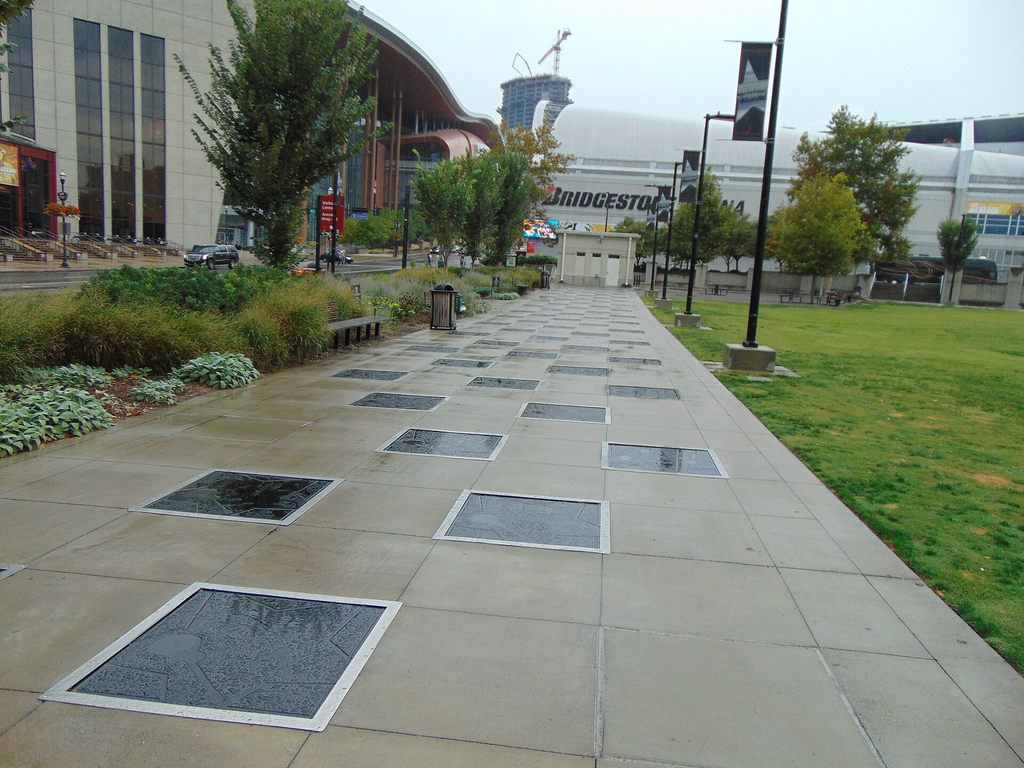
The Music City Walk of Fame is located along Demonbreun Street between Fourth and Fifth Avenues South, near the Country Music Hall of Fame and Museum. This public attraction honors performers, songwriters, musicians, and music industry figures who shaped Nashville’s reputation.
Admission is free, and the outdoor walk is open year-round.
Think of it as Nashville’s own tribute to the people behind the music.
Stars are set into the walkways, each recognizing someone whose work contributed to Music City’s musical heritage.
You’ll find familiar names such as Dolly Parton, Elvis Presley, Johnny Cash, and Reba McEntire.
For longtime country music fans, those names bring back memories.
Maybe it’s a Johnny Cash record playing in the kitchen, a Dolly Parton song on the car radio, or a Reba hit that still sounds just as good decades later.
The attraction has a nostalgic quality that doesn’t require a guided tour or elaborate display.
You simply walk, read, remember, and take photographs.
But there’s something visitors sometimes overlook.
The Music City Walk of Fame honors people from different musical genres, not just traditional country stars.
That’s fitting for a city whose musical identity reaches well beyond cowboy boots and steel guitars.
The smartest way to visit is while you’re already downtown.
Pair it with the nearby Country Music Hall of Fame building, Broadway, and the riverfront.
The Walk of Fame itself is free, but regular admission to the Country Music Hall of Fame and Museum is not.
Allow 15 to 30 minutes for the stars, longer if you enjoy stopping to read names and take pictures.
Since this is an outdoor attraction, weather matters. A sunny morning is more comfortable than a rainy afternoon, especially if you’re planning photographs.
Parking downtown can be expensive, so avoid driving to this attraction as a separate stop if you’re already within walking distance.
Occasional induction ceremonies are open for public viewing, but those depend on the event schedule.
Here’s another tip: don’t assume the biggest celebrity names are the only ones worth noticing.
Some of Nashville’s most important musical figures worked behind the scenes as songwriters, musicians, and industry leaders.

8. The Famous Street Where Live Music Doesn’t Require a Concert Ticket
Lower Broadway, especially the stretch between First and Fifth Avenues, is home to Nashville’s famous Honky Tonk Highway. Many of its bars feature live music without a regular cover charge, with performances often beginning around 10 a.m. and continuing into the early morning.
This is the Nashville experience most visitors picture before they arrive.
Neon signs glow above the sidewalks.
Guitars ring out through open doorways.
One band might be playing an old country standard while another venue has a crowd singing along to a modern hit.
And you don’t need an expensive concert ticket to hear talented musicians.
Tootsies Orchid Lounge, with its famous purple exterior, is one of Broadway’s best-known establishments.
Robert’s Western World is especially associated with traditional country music and an old-school honky-tonk atmosphere.
The Stage on Broadway is another recognizable stop along the strip.
Different venues offer different styles, and that’s part of the fun.
Here’s what first-time visitors sometimes misunderstand.
Many Broadway honky-tonks don’t charge a regular cover, but the musicians still depend on tips from the people enjoying their performances.
Free admission doesn’t mean the entertainment has no value.
Bring some cash for the tip jar, especially if you plan to request a favorite song.
For a more relaxed experience, visit during the afternoon rather than on a busy weekend night.
Daytime crowds are often easier to navigate, and you can listen to music without competing with the loudest late-night party atmosphere.
Family admission policies vary by establishment and time of day. Some venues allow younger visitors earlier, then switch to adults-only admission later.
Check the individual venue’s rules before bringing children.
There’s no universal admission policy covering every honky-tonk.
Also remember that special events can have different entry requirements or charges.
You don’t have to buy drinks or meals just to appreciate the idea of Nashville’s free live music scene, but follow each establishment’s policies and support the performers when you can.
The biggest mistake is assuming every venue sounds alike.
Walk a little farther. Listen before choosing where to stop.
Sometimes the band playing your favorite kind of music is just one doorway away.
But Nashville’s story isn’t all neon lights and country songs. One free historic site reveals a much harder chapter of the city’s past.

9. The Civil War Fortress Built by Workers Whose Stories Deserve to Be Remembered
Fort Negley stands at 1100 Fort Negley Boulevard, south of downtown Nashville. Built in 1862 during the Civil War, the fort became an important Union military position following the federal occupation of the city.
Today, visitors can explore the historic grounds and learn about the site without paying admission.
The setting feels very different from Broadway.
Instead of crowded sidewalks and live music, you’ll find stone fortifications, interpretive displays, and elevated views across the surrounding city.
Walking through the site, you begin to understand why the location mattered strategically.
But the fort’s military history is only part of the story.
Fort Negley was constructed using the forced labor of Black workers, including people who had escaped slavery and sought freedom behind Union lines.
Their labor helped create a major military fortification, often under brutal circumstances.
That history deserves more attention than it sometimes receives.
Fort Negley is not simply a Civil War landmark. It is also a place to confront the experiences of Black laborers whose work helped shape wartime Nashville.
The visitor center provides educational exhibits and films that help explain the site’s history.
Take time to read the interpretive materials rather than treating the grounds as just another scenic overlook.
The combination of military history, slavery, emancipation, and Nashville’s changing role during the war makes this one of the most meaningful stops on the list.
Admission to the grounds and visitor center is free.
The outdoor park is generally accessible during daylight hours, while the visitor center follows its own posted schedule.
Check Metro Nashville Parks information before visiting, especially if you want to see the indoor exhibits or participate in a guided program.
Comfortable shoes are important because exploring the historic grounds involves outdoor walking and uneven surfaces.
Allow 45 to 90 minutes.
The mistake here is arriving only for photographs and leaving without learning what happened on the site.
Some Nashville attractions entertain you.
Fort Negley asks you to remember.
And after a visit like that, a peaceful walk beside a Tennessee lake can offer a welcome change of pace.

10. The Peaceful Lake Where Nashville’s Traffic Feels a World Away
Radnor Lake State Natural Area protects more than 1,300 acres of woodland, lake habitat, and wildlife southwest of downtown Nashville. Its public trails offer free access to one of the area’s most peaceful natural settings.
You don’t need to drive deep into the Tennessee mountains to enjoy beautiful scenery.
At Radnor Lake, the atmosphere changes almost as soon as you leave the busy streets behind.
Tall trees frame the paths.
The lake reflects the sky through openings in the branches.
You might hear birds calling from the woods or notice movement along the shoreline.
Wildlife sightings can include deer, turtles, and a variety of birds.
For anyone who enjoys photography, birdwatching, or simply walking somewhere quiet, this is a wonderful change from downtown sightseeing.
The lake is especially appealing in autumn when the surrounding trees begin changing color.
But here’s what makes Radnor different from an ordinary city park.
Radnor Lake is a protected natural area with special rules designed to preserve wildlife, including restrictions on pets, jogging, and bicycles along its protected trails.
Those rules help maintain the peaceful environment visitors come to enjoy.
This isn’t the place for a loud group outing or a fast-paced exercise session on the protected trails.
It’s a place to slow down.
The Lake Trail is a good starting point for visitors interested in lake views, but check the current trail map and conditions before choosing a route.
Some paths have uneven surfaces, and trail difficulty varies.
The smartest tip is to arrive early.
Parking is limited, and popular visiting periods can fill the available spaces quickly.
Admission to the natural area is free, and you can easily spend 60 to 120 minutes enjoying the scenery.
Bring water, wear comfortable shoes, and dress for the weather.
Leave wildlife alone and observe animals from a respectful distance.
The biggest mistake is assuming every trail is suitable for every visitor.
Check accessibility and trail conditions in advance, especially if you’re traveling with someone who has limited mobility.
And don’t expect the same rules that apply at a typical neighborhood park.
Radnor Lake’s preservation requirements are part of what makes the experience special.
After all that fresh air, there’s one final Nashville attraction that might be the biggest surprise of the entire list.
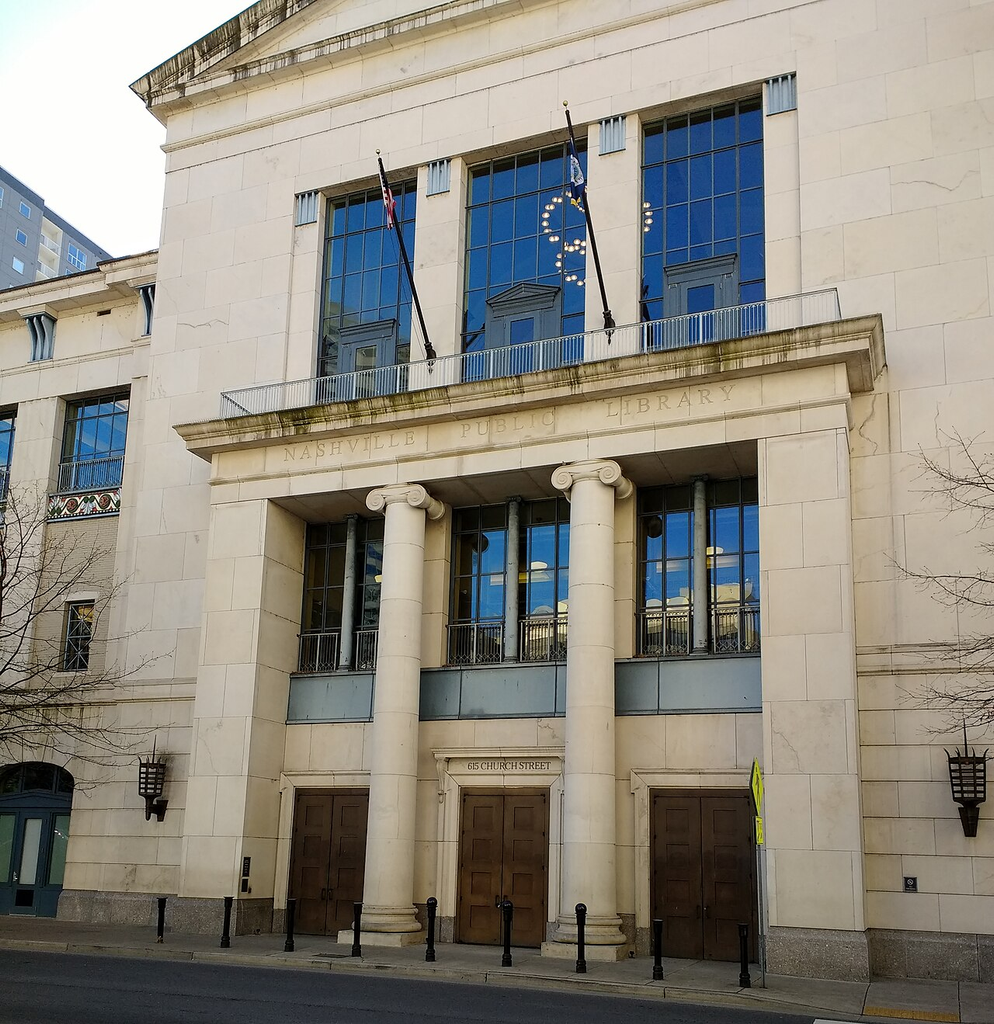
11. The Downtown Building Tourists Walk Past Without Knowing What’s Inside
The Nashville Public Library’s Main Library stands at 615 Church Street in downtown Nashville. Opened in 2001 and designed by Robert A.M. Stern Architects, the approximately 300,000-square-foot building offers far more than shelves of books.
And walking inside is free.
From the street, it might not immediately register as a sightseeing destination.
But step through the doors and you’ll discover a grand interior with elegant architectural details and impressive public spaces.
The main staircase is particularly striking.
The building also includes the Margaret Ann and Walter Robinson Courtyard, offering a pleasant outdoor space within the library complex.
There are art displays, special collections, and cultural programs that make this more than an ordinary place to borrow books.
One of its most important features is the Civil Rights Room.
This space explores Nashville’s role in the civil rights movement, including the struggle against segregation and the efforts of people who helped change the city.
It’s an important part of Nashville history that visitors can learn about without paying museum admission.
But there’s another reason budget-minded visitors should pay attention to this library.
Eligible Nashville Public Library cardholders can use the Community Passports program to borrow admission for two adults to the Country Music Hall of Fame and Museum, subject to availability and program rules.
That’s a benefit for eligible library users, not a free ticket that any tourist can claim.
Still, it’s a valuable reminder that public libraries offer more than books.
The Main Library generally operates Monday through Friday from 9 a.m. to 6 p.m., Saturday from 9 a.m. to 5 p.m., and Sunday from 2 to 5 p.m.
Check current hours before visiting.
There’s also an important parking detail.
The library’s adjacent garage is closed, and older online guides mentioning free parking there may be outdated.
The library has advertised discounted parking at participating nearby garages, including a $4.99 rate for up to two hours with the required validation process.
Confirm the current arrangement before parking.
Allow 30 to 60 minutes to explore the public spaces, courtyard, and exhibits.
Check the events calendar if you’re interested in free cultural programs or performances.
And don’t make the mistake of assuming that a library is only worth visiting when you need to borrow a book.
Sometimes the most unexpected attractions are hiding behind the most ordinary doors.
The Unexpected Fact About Free Nashville Attractions
Nashville’s reputation as Music City can make it easy to forget how much of its history exists beyond the stage.
The Tennessee State Capitol contains the tomb of its own architect. Centennial Park has a full-scale replica of an ancient Greek temple. And the Nashville Public Library preserves stories from the city’s civil rights movement inside a building that welcomes the public for free.
Even Nashville’s famous music scene has an unusual relationship with admission prices. You can walk into many Lower Broadway honky-tonks and hear live performers without buying a concert ticket, something that helps distinguish Music City from destinations where live entertainment is usually locked behind a box office.
The trick is understanding that free admission doesn’t always mean a completely free day. Parking, food, tips, and special activities can still cost money.
But you don’t need to spend a fortune to experience the Nashville worth remembering.
Some of the city’s best stories are waiting in public parks, historic buildings, quiet trails, and music-filled rooms.
And the best part is that nobody has to sell you a ticket to discover them.