


You can spend $30 or more on a single Nashville attraction and still miss some of the city’s most interesting history. Several overlooked stops cost absolutely nothing.
These 10 places reveal a different Nashville, from an automobile museum on Murfreesboro Pike to an abandoned airport turned recreation area. Some have been around for generations. Others are hiding behind buildings you’ve passed a hundred times.
And one of the most surprising places on this list isn’t even open for regular tours.

The Ordinary Building on Murfreesboro Pike Hiding Some Extraordinary Cars
Lane Motor Museum sits at 702 Murfreesboro Pike in South Nashville, inside a building that gives little indication of what waits beyond the entrance. The museum specializes in unusual automobiles, particularly European vehicles, and its collection includes everything from tiny microcars to experimental machines that barely resemble conventional cars.
This is not your typical museum filled with shiny Mustangs and Corvettes.
Picture walking into a room where one vehicle looks like something from a cartoon, another has three wheels, and a third seems almost too small for a grown adult to drive.
That’s the appeal of Lane Motor Museum.
The cars aren’t simply old. Many represent ideas that automobile manufacturers tried when engineers were still experimenting with what personal transportation could become.
Some were designed to save fuel. Others were built to navigate narrow European streets. A few were attempts to solve problems that most American drivers never even considered.
There are vehicles designed for travel on both land and water, along with motorcycles, alternative-fuel designs, and mechanical experiments that show just how imaginative automotive history can get.
Even someone who couldn’t care less about horsepower can find something interesting here.
The fun comes from looking at a strange little car and wondering how anybody managed to squeeze inside it.
Here’s what catches people off guard.
One of Nashville’s most unusual museums has almost nothing to do with country music, and it’s sitting along one of the city’s most familiar commercial roads.
The insider trick is to give yourself time to examine the oddest vehicles instead of racing through the displays. Look closely at the doors, seating arrangements, wheel placement, and steering systems. Those details often reveal more about a vehicle’s purpose than its appearance does.
Lane Motor Museum generally operates Thursday through Monday and is closed Tuesday and Wednesday. Admission is charged, so check the museum’s current ticket information before heading over.
The museum also offers special vehicle-related activities and demonstrations when scheduled. Don’t assume one will be happening during an ordinary visit.
And don’t confuse the museum’s public exhibits with its entire collection. Not every vehicle is necessarily on display at once.
For visitors staying downtown, this is the kind of stop that rewards leaving the Broadway area behind.
But Nashville’s automotive surprises don’t end on Murfreesboro Pike. Another overlooked building tells the story of when this city actually manufactured its own cars.

The Old Factory Where Nashville Once Built Its Own Automobiles
Marathon Village stands at 1305 Clinton Street, northwest of downtown Nashville, inside buildings associated with the Marathon Motor Works automobile company. Today, the former industrial complex contains shops, creative businesses, entertainment spaces, and a free display devoted to its automotive history.
From the street, the old brick buildings still look like they belong to another era.
And that’s exactly what makes them interesting.
Walk through the complex and you encounter the bones of Nashville’s manufacturing past. Brick walls, industrial details, old machinery, and historic automobiles create a setting that feels nothing like a modern shopping mall.
Before Nashville became famous for bachelorette weekends and packed honky-tonks, workers here were involved in building automobiles.
Think about that for a minute.
Nashville once had an automobile manufacturing industry substantial enough to leave behind an entire factory complex.
The Marathon Motor Works buildings date to the early twentieth century, when American car manufacturing was still developing and different companies were competing to build the vehicles of the future.
The surviving complex offers a rare opportunity to see a part of Nashville history that has little connection to recording studios or country stars.
Here’s the detail that makes this stop worthwhile.
You can see historic Marathon automobiles and explore part of Nashville’s manufacturing story without buying a museum admission ticket.
Start with the Marathon Motor Works museum and showroom before browsing the surrounding businesses. That gives the whole property context. Otherwise, it’s easy to mistake the old equipment and industrial features for decoration.
The historic display is advertised as free, although guided tours and individual businesses may charge separately.
Because Marathon Village is a working commercial property, operating hours vary among its tenants. Check the specific shops or attractions you want to visit instead of assuming everything opens and closes together.
Parking arrangements can also vary with events and business activity. Pay attention to posted signs rather than assuming every space around the complex is available to visitors.
One more thing: don’t expect a perfectly restored factory where every room looks like a museum. Part of the attraction is seeing how old industrial buildings have been adapted for modern Nashville.
And if you enjoy discovering history in places that don’t look especially remarkable from the road, the next stop takes that idea in a completely different direction.
The Downtown Hill That Holds One of Nashville’s Biggest Civil War Stories
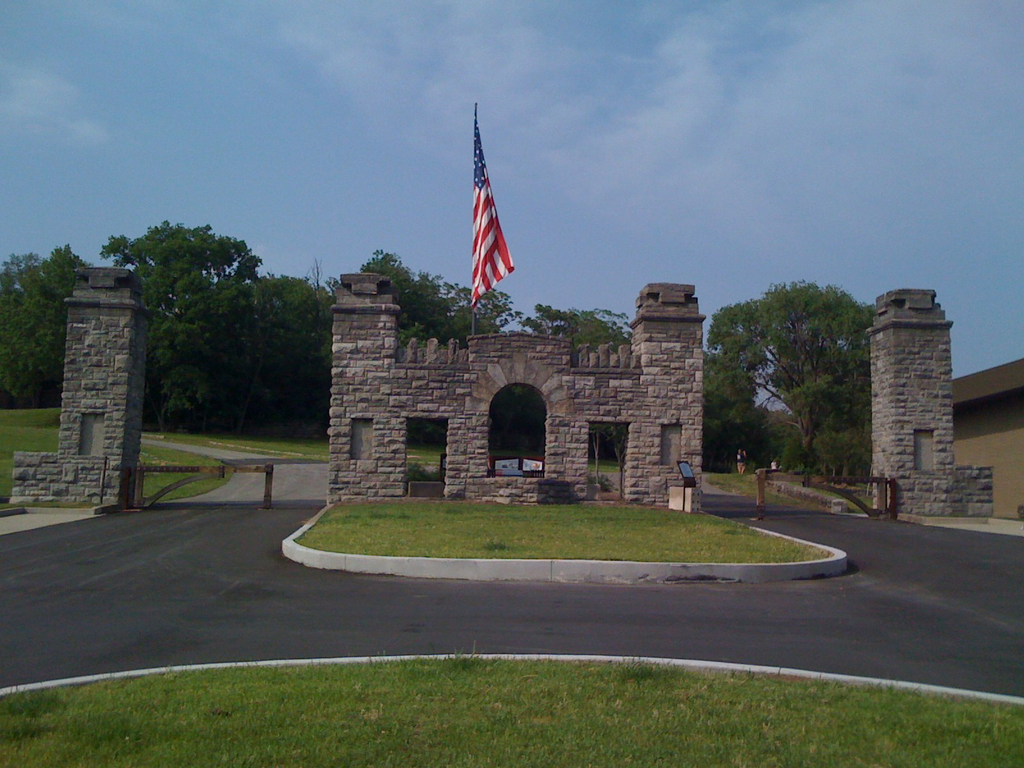
Fort Negley sits at 1100 Fort Negley Boulevard, roughly two miles from Lower Broadway. Built in 1862, it was the largest inland stone fortification constructed during the Civil War, yet many people traveling through South Nashville have never explored its history.
The hill rises above a part of town better known for roads, businesses, and everyday traffic.
But up here, the story changes.
Instead of neon signs and music spilling from open doorways, you find a historic landscape shaped by war, forced labor, and the people who built Nashville under extraordinary circumstances.
The fort’s surviving stonework and interpretive features help explain why Union forces considered this location strategically important after occupying Nashville.
Its elevated position offered a commanding perspective over the surrounding area.
The skyline visible from the hill also makes the contrast between old and new Nashville especially striking.
But the most important part of Fort Negley’s history isn’t the view.
Construction relied heavily on Black laborers, including people who had escaped slavery and others compelled to work under harsh conditions. Their experiences are essential to understanding the fort and the city’s Civil War history.
It’s a difficult story, and one that deserves more attention than a quick photograph of old stone walls.
Here’s what many visitors don’t realize.
Fort Negley’s historic fort structure has been temporarily closed for construction, but the surrounding half-mile park trail has remained available for visitors.
That distinction matters when planning a visit.
Metro Parks reported construction-related restrictions in 2026, with the fort’s reopening anticipated for the fall. Because an exact reopening date was not confirmed in the research, check the latest city information before expecting to enter the historic fort area.
The visitors center offers educational exhibits, historical displays, and films, and admission is free.
Limited parking is available at the site. If you visit, wear comfortable walking shoes and allow enough time to read the interpretive material rather than treating the hill as nothing more than a skyline overlook.
The mistake is assuming that the entire historic fort is accessible simply because the surrounding park is open.
Fort Negley is a place where Nashville’s history becomes impossible to separate from the ground beneath your feet.
But for the next discovery, you don’t need a hill or a fort. You just need to look behind a downtown wall.
The Cemetery Beside Fourth Avenue With Nearly Two Centuries of Nashville Stories
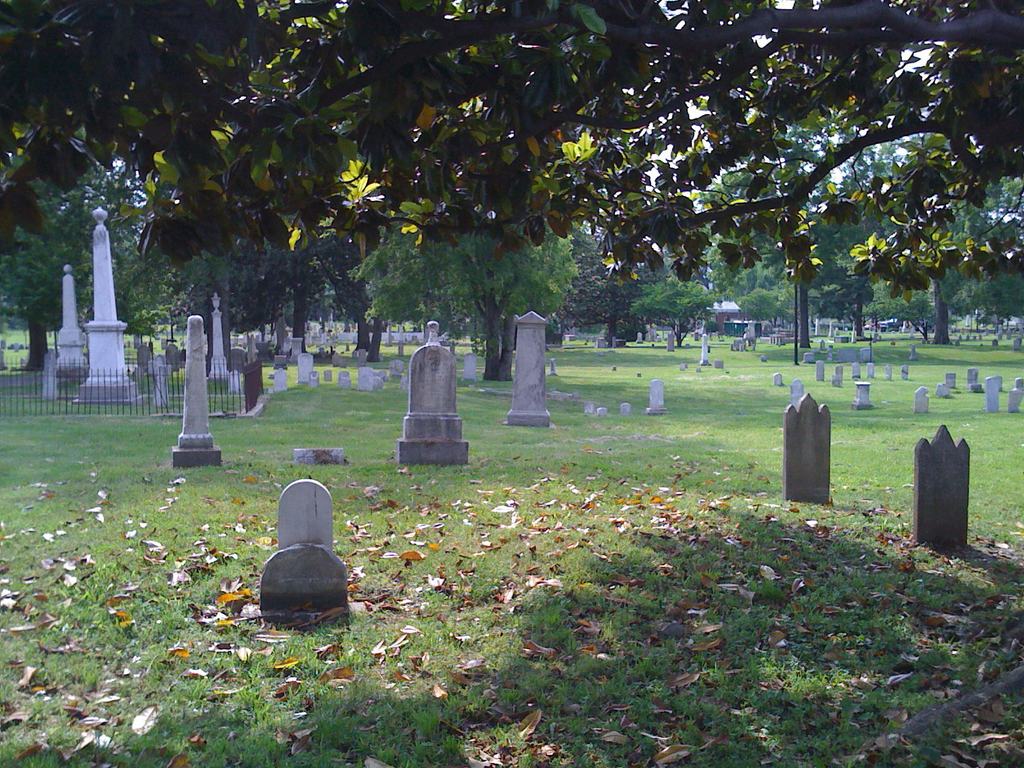
Nashville City Cemetery stands at 1001 Fourth Avenue South, not far from downtown. Established in 1822, it is Nashville’s oldest continuously operating public cemetery, with approximately 27 acres and an estimated 20,000 burials.
That’s a remarkable amount of history sitting beside a road people use for ordinary errands.
The cemetery doesn’t announce itself with flashy attractions or elaborate tourist signs.
Instead, there are rows of old monuments, weathered headstones, family names, and inscriptions that connect modern Nashville to the people who lived here long before the city became a major entertainment destination.
Some stones are elaborate. Others are plain.
The difference can tell you something about the people buried there, the time they lived in, and the resources available to their families.
Walk slowly and the place becomes an outdoor history lesson.
Nashville founders James and Charlotte Robertson are among the notable historical figures associated with the cemetery.
But the most revealing stories aren’t necessarily attached to famous names.
The grounds also reflect generations of illness, loss, family life, and the changing fortunes of a growing city.
Nashville began this cemetery with just four acres. As the community expanded, the burial ground expanded with it.
The city’s history is written across those stones.
Here’s what surprises people who think they know old Nashville.
Nashville City Cemetery dates back to 1822, making it older than many of the landmarks visitors usually associate with the city’s past.
The best way to appreciate the cemetery is to treat it as a historical site, not simply a place to look for famous graves.
Take time to study the inscriptions and notice how monument styles change across the grounds. Formal tours can be arranged through the appropriate city historical resources.
Admission to the historic grounds is free, but visitors should respect posted access rules and remember that this remains an active cemetery.
Avoid climbing on monuments, touching fragile stonework unnecessarily, or walking across graves.
If you’re visiting with children, explain the importance of respectful behavior before entering.
And don’t assume every grave marker will be easy to read. Weathering has affected many historic stones, and some inscriptions require careful attention.
This isn’t a stop for loud entertainment.
It’s a place for remembering that Nashville was a community long before it became a destination.
But another overlooked East Nashville landmark tells a very different story about the past, one involving airplanes, an extraordinary woman, and a runway that no longer needs pilots.
The East Nashville Airport Where the Runway Belongs to Walkers Now
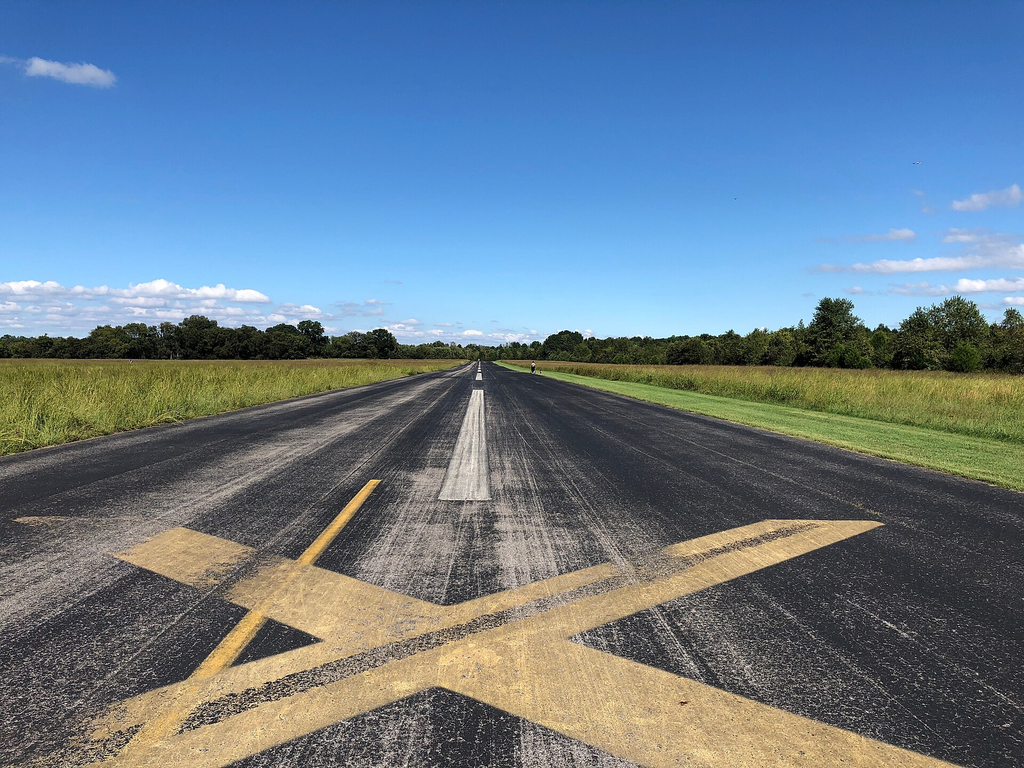
Cornelia Fort Airpark sits near Shadow Lane in East Nashville, connected to the Shelby Bottoms recreational area. The property operated as a public-use airport until 2011, but today its former runway and surrounding space serve people walking, bicycling, and enjoying the outdoors.
Imagine coming around a bend and finding yourself on pavement that looks nothing like a neighborhood sidewalk.
It’s broad, open, and unmistakably different from the winding paths you expect in a city park.
That’s because this pavement was built for airplanes.
Where aircraft once moved across the airfield, people now walk, ride bicycles, and enjoy the unusually open landscape.
There’s something wonderfully strange about seeing an old runway without an airplane in sight.
The wide pavement creates a completely different feeling from the shaded trails found elsewhere around Shelby Bottoms. You can see much more of the surrounding landscape, and the open sky becomes part of the attraction.
But the airpark’s name tells an even more interesting story.
Cornelia Fort was a pioneering Nashville aviator who witnessed the Japanese attack on Pearl Harbor while flying in Hawaii. She later served as a military ferry pilot during World War II.
She died in 1943 while serving her country.
Her connection to aviation gives this former airport a meaning that goes well beyond an unusual place to take a walk.
Here’s the detail worth remembering.
Cornelia Fort Airpark is named for a Nashville aviator whose remarkable life connected Tennessee to one of the most consequential days in American history.
The insider tip is to explore the former airfield as part of a longer visit to Shelby Bottoms rather than treating it as a separate attraction that requires a whole afternoon.
The airpark connects with the surrounding greenway system, making it convenient to combine open pavement with wooded trails and other outdoor scenery.
Access to the public recreation area is free.
Bring water, comfortable shoes, and sun protection. Unlike a heavily wooded trail, the former runway has exposed stretches where shade is limited.
Bicyclists and pedestrians share the recreational space, so stay aware of other people using the pavement.
And remember that the property is no longer an operating airport. The interesting part isn’t watching airplanes take off. It’s experiencing the remarkable second life of a place that once served them.
If you enjoy the outdoors, there’s another East Nashville stop nearby that feels much farther from the city than it actually is.

The Nature Escape Where Nashville Traffic Seems a World Away
Shelby Bottoms Greenway and Natural Area covers approximately 960 acres in East Nashville, with its main trailhead at 1900 Davidson Street. The property includes about three miles of Cumberland River frontage, more than five miles of paved accessible trails, and additional natural-surface paths.
That’s an impressive amount of open space for a city known for traffic, construction, and crowded entertainment districts.
At first, the entrance doesn’t necessarily prepare you for the landscape ahead.
Then the trails begin pulling you away from the roads.
Open fields give way to trees. Wetlands interrupt the landscape. Birds move through the vegetation, and the sound of insects becomes part of the background.
Depending on the season, the experience can change dramatically.
Spring brings fresh growth and bird activity. Summer fills the woods with deep green shade. Fall reveals changing leaves, while winter opens views through branches that were thick with foliage just months earlier.
This is not a carefully manicured garden where every plant sits in a neat flower bed.
It’s a natural area where the land is allowed to look and behave like a living ecosystem.
Shelby Bottoms provides habitat for birds, amphibians, deer, and other wildlife. The mixture of wetlands, streams, open fields, and bottomland hardwood forests creates opportunities to see different species within the same park.
The nature center adds another layer to the visit through educational exhibits and programs.
Here’s what makes this place especially appealing.
Shelby Bottoms offers hundreds of acres of protected natural scenery within Nashville, and exploring its public trails doesn’t require an admission ticket.
The insider move is to stop at the nature center before committing to a long walk. Trail maps and information can help you choose a route suited to your time, mobility, and interests.
If you’re hoping to see wildlife, slow down around wetland edges and wooded sections. Quiet observation usually works better than covering as much distance as possible.
Admission to the nature center is free, although its operating schedule should be checked before visiting.
The trails themselves provide options for different activity levels. The paved greenway is suitable for many walkers and cyclists, while primitive paths can have less predictable surfaces.
Bring drinking water, insect protection, and footwear appropriate for the trail you choose.
One mistake is assuming every path is paved simply because the main greenway is accessible.
Another is setting off without checking your route. Shelby Bottoms is large enough that a casual stroll can become a much longer outing than expected.
And don’t forget to share the trail. Cyclists, walkers, runners, and wildlife all use this landscape.
For the next stop, we’re trading trees and wetlands for something completely different: a downtown building whose architecture looks like it belongs on another continent.
The Downtown Church That Looks Like Something From Ancient Egypt
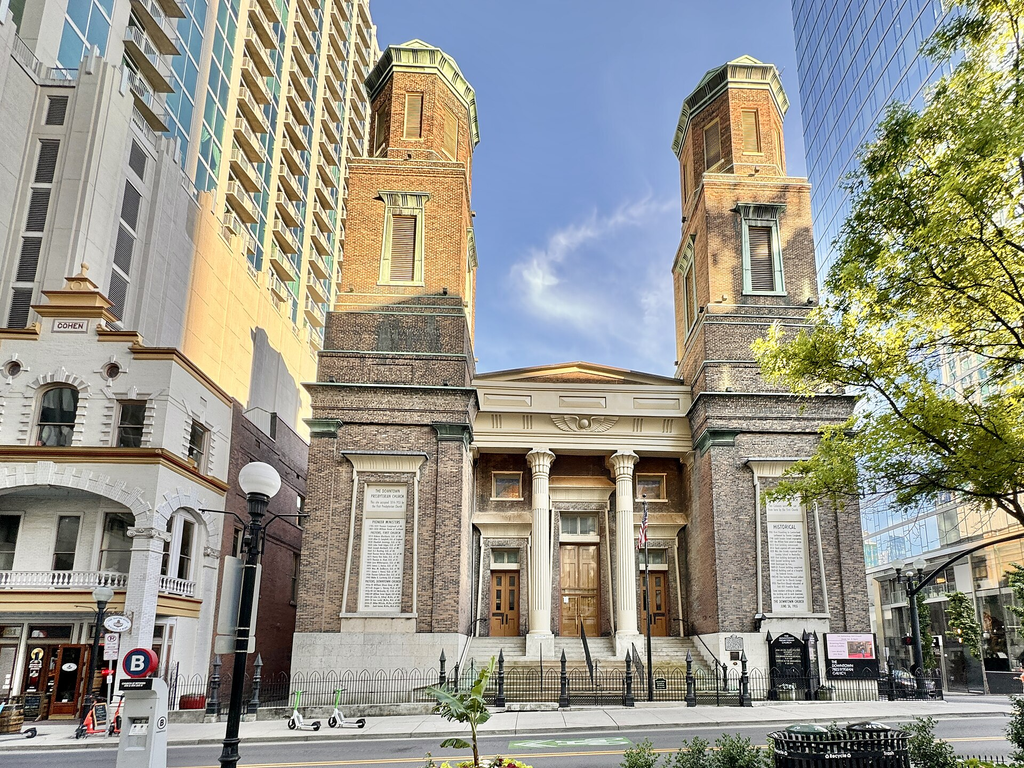
Downtown Presbyterian Church stands at 154 Rep. John Lewis Way North in Nashville’s historic downtown core. Designed by William Strickland, the architect of the Tennessee State Capitol, the nineteenth-century church is one of America’s most remarkable surviving examples of Egyptian Revival architecture.
You can pass this building while concentrating on downtown traffic and never appreciate just how unusual it is.
But look carefully at the architectural details.
Instead of the Gothic arches and familiar steeples found on many historic churches, the building uses design elements inspired by ancient Egypt.
The columns, decorative forms, and unusual proportions make it stand apart from its surroundings.
And the interior is even more surprising.
The sanctuary contains painted architectural illusions, decorative symbols, and a ceiling treatment that creates an atmosphere unlike the typical American church interior.
The painted perspective makes parts of the room appear deeper than they really are.
It’s the kind of visual effect that rewards a second look.
The church’s history is equally fascinating.
During the Civil War, Union forces used the building as a hospital. The congregation later restored and altered the interior, adding much of the decorative treatment that makes it so distinctive today.
But the building nearly disappeared during the twentieth century.
When the original congregation moved toward the suburbs in the 1950s, the downtown property faced the possibility of demolition.
A group committed to preserving the building helped secure its future.
Here’s the part that should make Nashville history lovers pay attention.
This extraordinary Egyptian Revival church survived a plan that could have replaced it with a downtown parking garage.
If you’re interested in seeing the interior, contact the church before visiting. It remains an active religious institution, not a museum with guaranteed walk-in access.
The exterior can be appreciated from the public streets, but that doesn’t mean the sanctuary is available for sightseeing whenever you arrive.
There is no confirmed general sightseeing admission price or daily visitor schedule, so don’t plan around an assumed opening time.
Downtown parking can also require payment. Check nearby parking options and posted rates before leaving your vehicle.
For architecture lovers, even studying the outside is worthwhile.
Look for the Egyptian-inspired columns and decorative symbols rather than simply taking a photograph of the entire facade.
And consider what almost happened here. Another downtown parking garage could have replaced one of the most distinctive historic buildings in Tennessee.
But Nashville’s history gets considerably heavier at the next stop, where a beautiful nineteenth-century house carries the complicated story of a plantation.
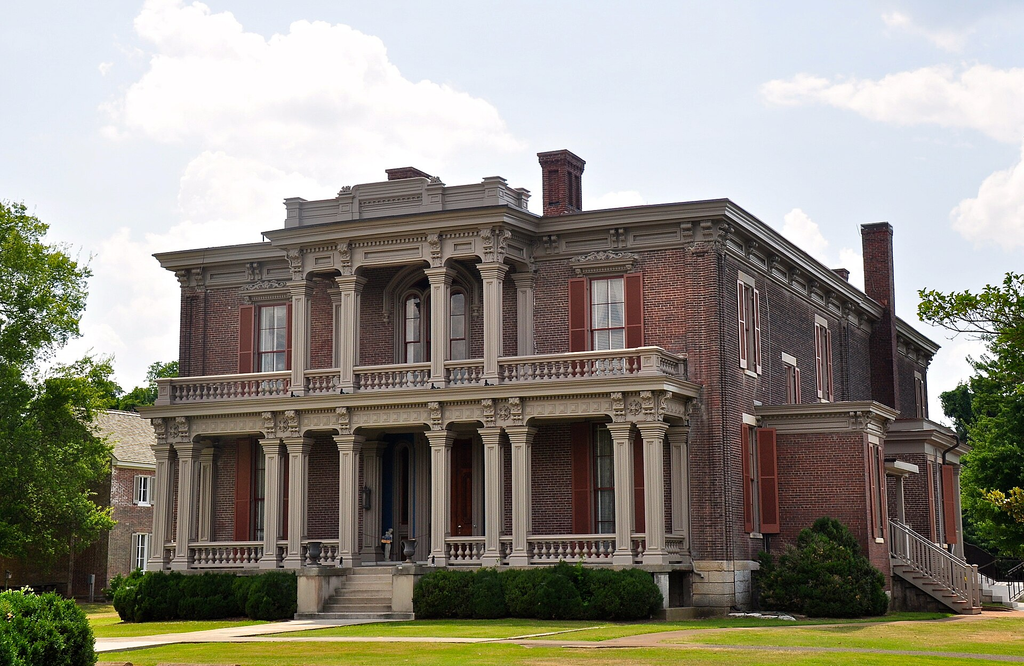
The Beautiful Donelson Mansion With a Much Bigger Story Than Its Front Porch
Two Rivers Mansion stands at 3130 McGavock Pike in the Donelson area. Built in 1859 by David McGavock, the Italianate house was once part of a plantation encompassing approximately 1,100 acres between the Cumberland and Stones Rivers.
Today, the surrounding neighborhood looks very different from the landscape that existed when the mansion was built.
Roads, recreational areas, and modern development have changed the setting.
Yet the historic house remains.
Its architecture reflects a period when wealthy landowners used grand homes to demonstrate their social standing and financial power.
Italianate design brought elaborate architectural details and a sense of elegance inspired by European styles.
The mansion’s surviving presence makes it possible to imagine how different this part of Davidson County once appeared.
But the property’s history cannot be told honestly by concentrating only on the architecture.
Two Rivers was a plantation, and its history includes the system of slavery that supported plantation life in Tennessee.
The McGavock family’s wealth and the labor of enslaved people are part of the same historical story.
That reality matters when looking at a grand house from the nineteenth century.
Beautiful buildings can preserve difficult histories.
The property also contains an older brick house dating to 1802, providing another connection to the area’s early settlement period.
The McGavock family occupied the mansion for three generations, and Metro Nashville acquired the property in 1966.
Here’s what makes this stop different from an ordinary historic-home attraction.
Two Rivers Mansion has no regular public operating hours for walk-in interior visits, despite being one of Middle Tennessee’s notable surviving Italianate houses.
The insider tip is to check for scheduled public tours or special events before making the mansion your main destination.
The house is used for private functions, including weddings and receptions, so arriving without a reservation or confirmed public event does not guarantee interior access.
If you’re exploring the surrounding public park, the historic property can help you understand how the Donelson landscape has changed.
Just respect any signs, event restrictions, or areas closed to general visitors.
Don’t assume the mansion is open simply because the adjacent park is accessible.
Two Rivers Park itself provides public recreational opportunities, including walking areas, picnic facilities, and connections to the greenway system.
This makes the area useful for combining outdoor recreation with an appreciation of local history, even when the mansion interior is unavailable.
The important thing is to see more than a pretty old house.
Every historic property has layers, and some of those layers are uncomfortable.
Now, after that heavier chapter of Nashville history, the next stop offers something lighter: a giant map, a remarkable memorial, and a downtown park that can keep your wallet closed.

The Downtown Park Where You Can Explore Tennessee Without Leaving Nashville
Bicentennial Capitol Mall State Park occupies 19 acres at the foot of the Tennessee State Capitol, with an address of 600 James Robertson Parkway. Opened in 1996 to commemorate Tennessee’s 200th anniversary of statehood, the park contains historical features that many drivers never notice from the surrounding roads.
From a passing car, it can look like another attractive downtown green space.
But once you start walking, the details become much more interesting.
One of the park’s most memorable features is its large granite map of Tennessee.
Instead of studying the state on a phone screen, visitors can examine its geography as part of the landscape.
The park also contains a historical timeline that traces important events in Tennessee’s past.
Then there are the carillon towers, commemorative features, and views toward the Capitol.
It’s a place designed to make the state’s history visible.
The World War II Memorial offers another striking surprise.
Its black granite globe rests on a thin cushion of water, allowing the heavy sphere to rotate with a gentle push.
Think about that.
A substantial stone globe can move because of the way water supports it.
It’s a fascinating combination of engineering and memorial design.
And it sits in a park that many people see only through their windshields.
Here’s the detail that makes this such a good stop for families.
Bicentennial Capitol Mall combines a giant Tennessee map, state history, and a remarkable rotating granite globe in a public park with free admission.
The insider trick is to pair the park with nearby attractions instead of treating it as an isolated stop.
The Tennessee State Museum and Nashville Farmers’ Market are nearby, making it possible to spend a good portion of the day exploring the area.
The park itself is free, although food purchases, parking, and other activities may add to your expenses.
Because the historical features are spread across the grounds, comfortable walking shoes are a good idea.
Bring water during warm weather, especially if you plan to read the timeline and explore the memorials instead of walking straight through.
The mistake is stopping only for a Capitol photograph and missing the park’s other features.
Take time to find the granite map and the World War II Memorial.
Those details are what turn an ordinary walk into a memorable visit.
And if the sight of a giant stone globe makes you appreciate Nashville’s unexpected engineering, wait until you see what connects two of the city’s major greenways across the Cumberland River.

The Riverside Trail With a Bridge Most Nashville Visitors Never Think to Cross
Stones River Greenway runs through the Donelson and Hermitage area, connecting the Cumberland River Pedestrian Bridge with the J. Percy Priest Dam area. The greenway system includes approximately 10.7 miles of paved routes, with access through Two Rivers Park at 3150 McGavock Pike.
For a city famous for its downtown pedestrian bridge, this other river crossing deserves more attention.
The Cumberland River Pedestrian Bridge connects the Stones River Greenway with Shelby Bottoms in East Nashville.
And unlike the familiar downtown bridge, this crossing is surrounded by a landscape dominated by trees, water, and recreational trails.
As you approach, the bridge rises above the river.
The view opens across the Cumberland, giving you a perspective that is difficult to appreciate from the nearby roads.
Below, the water follows its course through the landscape.
On either side, greenway paths connect neighborhoods and parks that can feel surprisingly separate when you’re traveling by car.
That’s one of the most interesting things about Nashville’s greenway system.
Places that require navigating busy roads by automobile can be connected by peaceful routes designed for walking and bicycling.
The surrounding Two Rivers Park offers additional recreation, including picnic areas and other outdoor facilities.
But the bridge is the standout feature.
Here’s the detail worth remembering.
The Cumberland River Pedestrian Bridge connects two major Nashville greenway systems, allowing people to cross the river without getting into a car.
The insider tip is to start at Two Rivers Park if you want to combine a bridge walk with other nearby recreation.
You can also approach the crossing from the Shelby Bottoms side, depending on your plans.
Two Rivers Park is generally open from dawn until 11 p.m., according to Metro Parks. Greenway access and specific sections may be affected by maintenance or temporary closures.
The Stones River Greenway has experienced boardwalk damage and closure notices, so check current trail conditions before attempting a long-distance route.
Don’t assume that because the pedestrian bridge is accessible, every connected trail section is open.
The public greenway is free to use, and trailhead parking is available at designated locations.
Bring water, wear comfortable shoes, and remember that bicycles share the path with pedestrians.
For anyone who has spent years driving through Donelson without exploring the riverside trails, this is an opportunity to see familiar territory from a completely different angle.
And the final surprise isn’t another attraction. It’s a piece of Nashville history that explains why so many of these overlooked places are worth preserving.
The Unexpected Fact About Nashville’s Forgotten Places
Nashville’s Downtown Presbyterian Church was nearly lost to a parking garage in the 1950s. Today, its Egyptian Revival architecture remains one of the city’s most unusual historic treasures.
That single story says a great deal about the places we pass without noticing. An old factory can become a gathering place. A former airport can become a recreation area. A historic cemetery can preserve generations of stories while the city changes around it.
Nashville will always have its bright lights, famous stages, and expensive attractions. But some of its most memorable discoveries are sitting beside roads you’ve traveled for years.
Sometimes the best way to discover Nashville is to stop driving past it.