

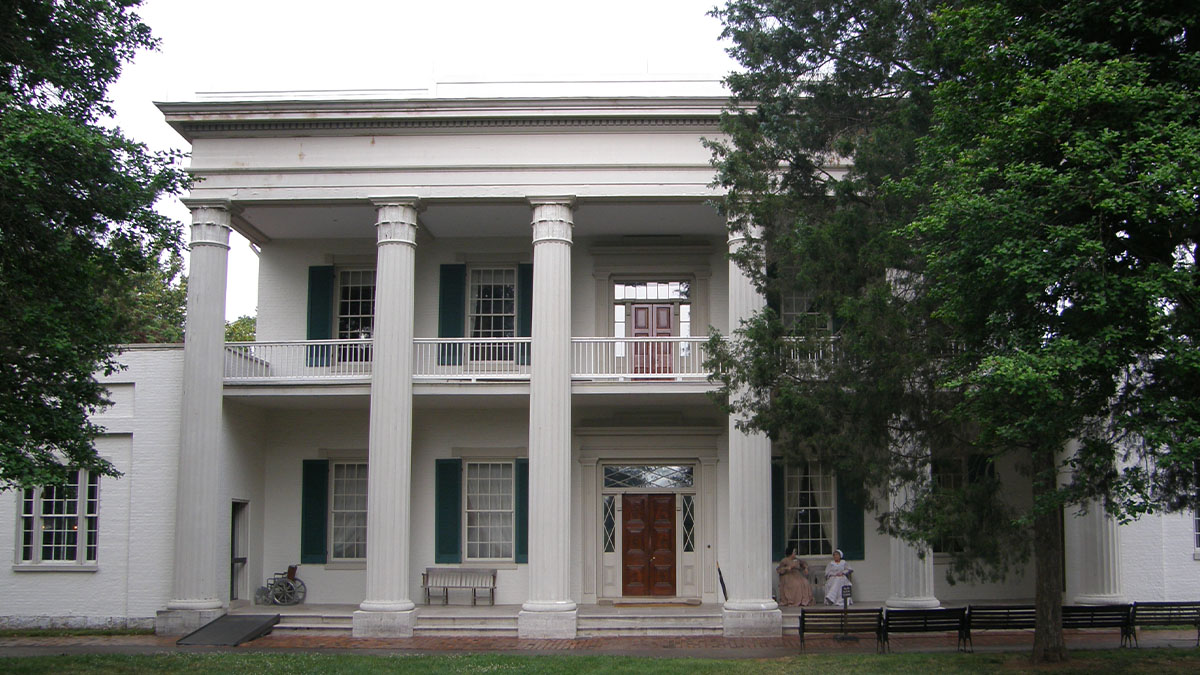
On Christmas Eve in 1828, Rachel Jackson was buried in her garden at The Hermitage. She had died at home two days earlier, at 61. Rachel Jackson’s biography
On the Christmas by Lamplight Tour, guides lead visitors through the mansion and nearby grounds by lantern light. Along the way, they tell the story of Rachel’s death and explain how some American Christmas customs began. Christmas by Lamplight Tour
What Rachel Planted in the Garden
One surviving receipt gives a glimpse of the garden Rachel knew. She bought a lemon tree, geraniums, daisies, boxwoods and polyanthus from a seller in Louisville. The plants were for the garden beside the brick mansion, which Andrew Jackson had hired English gardener William Frost to design. The Hermitage has records of other gardeners and carpenters being paid to work on the garden, fences and gates. Garden history
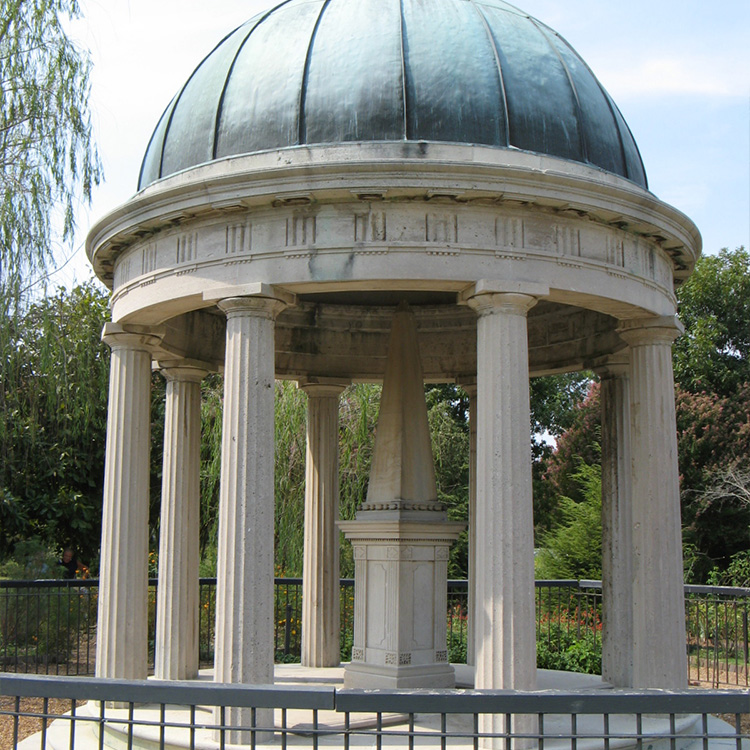
Rachel died after Andrew won the presidency and before he took office. He still had to decide where they would eventually be buried. He chose the garden because it was her favorite place. A few years later, he commissioned a tomb for them both. The limestone structure with a copper roof was finished in 1832. Rachel Jackson’s biography · History of the Jackson tomb
The garden shifted east when the mansion’s library wing went up in 1831. The tomb and the family cemetery now sit in one corner of it. If seeing the grave is a priority, the garden and tomb are included with daytime admission. Garden history · Daytime admission
What You’ll See Inside the Mansion
The mansion is decorated for an early 1800s Christmas. In the entrance hall, look for the French wallpaper pattern Rachel chose. After the 1834 fire damaged the original paper, Andrew Jackson had it replaced. The rebuild was finished in 1837. Mansion history · Photos of the entrance hall
Give the wallpaper a second look. The scenes follow Telemachus, the son of Odysseus, as imagined in a French novel. The staircase beside it comes from the rebuild. Before the fire, the stairs rose in two straight flights. The builders gave the hall a sweeping curved staircase in their place. Mansion history
The house changed considerably between Rachel’s burial and the end of the rebuild. The brick mansion she knew was completed in 1821. The six columns across the front porch belong to the Greek Revival design that followed the fire. The wallpaper pattern carries one of her choices into rooms that took much of their present shape after her death. Mansion history
The dining room has a smaller detail worth looking for if your group passes through it. The glossy paint was meant to reflect as much light as possible. The Jacksons served their main meal there at 3 p.m., a detail that makes the room easier to imagine in use. Think of the lamps and candles as one part of the room’s lighting and the painted surfaces as another. Room-by-room guide
The People Who Worked at The Hermitage
The mansion was part of a cotton plantation that relied on the labor of enslaved people. In the 1830s, guests who walked into that entrance hall were greeted by Hannah, an enslaved woman who managed the household. In the kitchen, an enslaved cook named Betty prepared meals for as many as 25 people in a day. Under the kitchen table is a trapdoor to the root cellar. The Hermitage’s enslaved community · Room-by-room guide
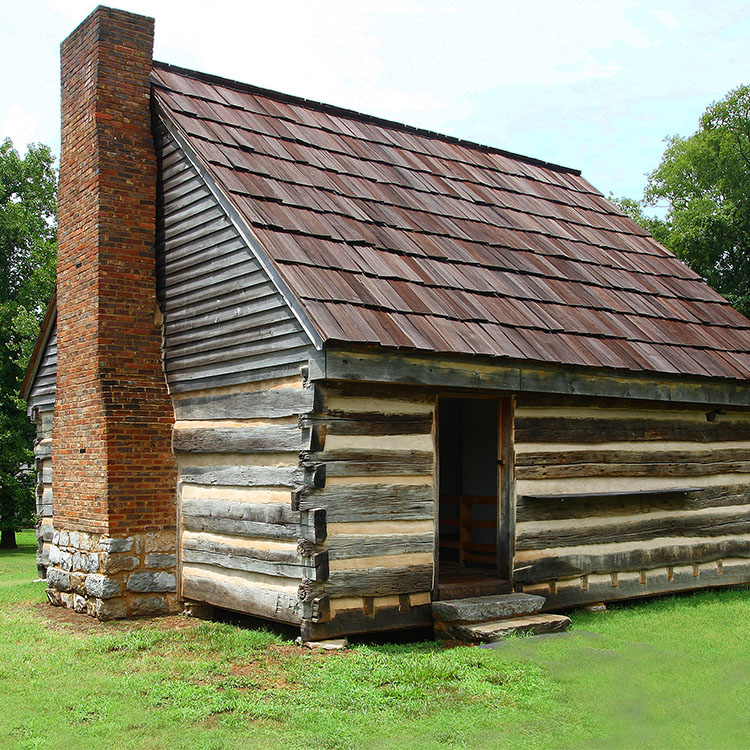
Behind the mansion, one log cabin survives in the work yard. It has two rooms arranged around a central chimney and is named for Alfred Jackson, who had been enslaved at The Hermitage and lived in the cabin as a free man until his death in 1901. You can find the cabin on the property map if you’re planning time on the grounds during a daytime visit. Alfred’s Cabin and other outbuildings · Hermitage property map
Some of the homes that once stood around the mansion survive only as archaeological sites. Between the garden fence and Alfred’s Cabin, archaeologists identified the site of a brick dwelling known as the Yard Cabin. On a daytime walk, the distance between those two landmarks gives you a way to picture how close some of the enslaved families lived to the mansion and its work yard. Enslaved archaeological sites
For a visit focused on the enslaved community, The Hermitage offers a separate walking tour called In Their Footsteps. It starts at Alfred’s Cabin, covers about half a mile and lasts about an hour. The Hermitage asks guests to arrive at the Andrew Jackson Center 30 minutes ahead so they have time to reach the cabin. In Their Footsteps tour
When the Tours Run and What Tickets Cost
Every tour starts at 6 p.m. Central. The Hermitage lists these remaining 2026 dates as of Nov. 20. Official tour schedule
- November: 20, 21, 27 and 28
- December: 4, 5, 11, 12, 18, 19 and 26
Hosting family over Thanksgiving? Nov. 27 and 28 are on the schedule. Dec. 26 is the only scheduled tour after Christmas. Check the ticket calendar for availability before making plans. Official ticket calendar
Listed general admission is $50, or $100 for two at the listed price. The Mt. Juliet Chamber lists a $45 Hermitage member rate. Confirm that rate with The Hermitage before booking. Check the total at checkout and call Guest Services if you need child pricing for the evening tour. General admission ticket listing · Chamber listing
If you’re planning another holiday evening around Nashville, our guide to Tennessee Christmas light displays covers Cheekwood’s garden light walk and what it costs to add the mansion.
Kids Can Get a Free Ticket to the Dec. 5 Tulip Grove Festival
Taste 1800s-style hot chocolate at the Jacksonian Christmas Festival and step inside Tulip Grove, an 1836 house across Lebanon Pike. The house was built for Rachel’s nephew, Andrew Jackson Donelson, who served as the president’s private secretary. The same architects who oversaw the rebuilding of The Hermitage mansion worked on Tulip Grove. Festival announcement · Tulip Grove history
Inside, look for the painted walls in the entrance hall. They were made to resemble marble, and the original finish survives. A curved staircase rises through three stories. Tulip Grove is outside the regular Hermitage tour, so the festival gives you a chance to see a house most daytime visitors pass by. Tulip Grove history
The festival runs from 10 a.m. to 4 p.m. on Saturday, Dec. 5. Adult tickets are $20, and children 13 and under can get a free ticket. The festival explores holiday traditions of both the Jackson family and the enslaved community. There’ll also be crafts, games, music, dance performances, food vendors and a Santa visit. Festival tickets · Official festival details
If you want to come back for the 6 p.m. lamplight tour, book both events separately and budget $70 per adult at the listed prices. There are two hours between the festival’s scheduled close and the evening tour’s start. That leaves time to get an early dinner before you return. Festival hours · Evening tour tickets
Where to Park and What to Ask Before You Go
The mansion is at 4580 Rachel’s Lane. Parking is free. Follow the signs from Old Hickory Boulevard. Rachel’s Lane has no access from Lebanon Pike. If you’re doing both events on Dec. 5, check the arrival directions on each ticket so you know which entrance to use. Directions and parking
Part of the tour takes place outdoors after dark, so bring a layer and wear shoes you’re comfortable walking in. Call Guest Services at 615-889-2941 to ask where to check in, how early to arrive and how long the evening tour lasts. Guest Services
The mansion’s first floor is wheelchair accessible. If you need a step-free route, an accessible restroom or a golf cart ride to the mansion, call the same number before booking to ask which services are available at 6 p.m. If stairs are a concern, ask which areas the evening group visits and whether staff can show you photos of any upstairs rooms on the route. Accessibility and assistance · Visitor FAQ
What a Regular Daytime Ticket Covers
Regular daytime admission is $29.95 for ages 13 and up and $19.95 for ages 5 to 12. It includes a guided mansion tour, the museum, a film, the garden and grounds. The time on your ticket is when you arrive on site. Standard mansion tours take visitors in the order they arrive at the mansion entrance, and the guided portion lasts about 25 to 30 minutes. Daytime admission · Plan your visit
If you have a short window during the day, head to the mansion entrance first to see when you can get in. Leave time afterward to walk through the garden to the tomb. If you have longer, the property map can help you find the outbuildings and historic sites beyond the front porch. The Hermitage also offers an audio tour and interpretive signs along the grounds. Daytime admission · Hermitage property map
For a longer stop on the grounds, head to the log farmhouse at First Hermitage. The Jackson family lived in the earlier farmhouse complex before moving into the brick mansion. The property then housed enslaved families. The exhibit First Hermitage: Worlds Apart, Side by Side uses artifacts found at the site to tell both parts of that history. The farmhouse and kitchen were restored to reflect their period as quarters for enslaved people. In the farmhouse, a single large room took up the ground floor. It’s a different scale of building to keep in mind when you walk back toward the mansion’s front porch. First Hermitage exhibit · Outbuildings
If you’re drawn to the buildings and the people who lived and worked in them, see our guide to unusual historic sites in Tennessee for more places you can visit.