
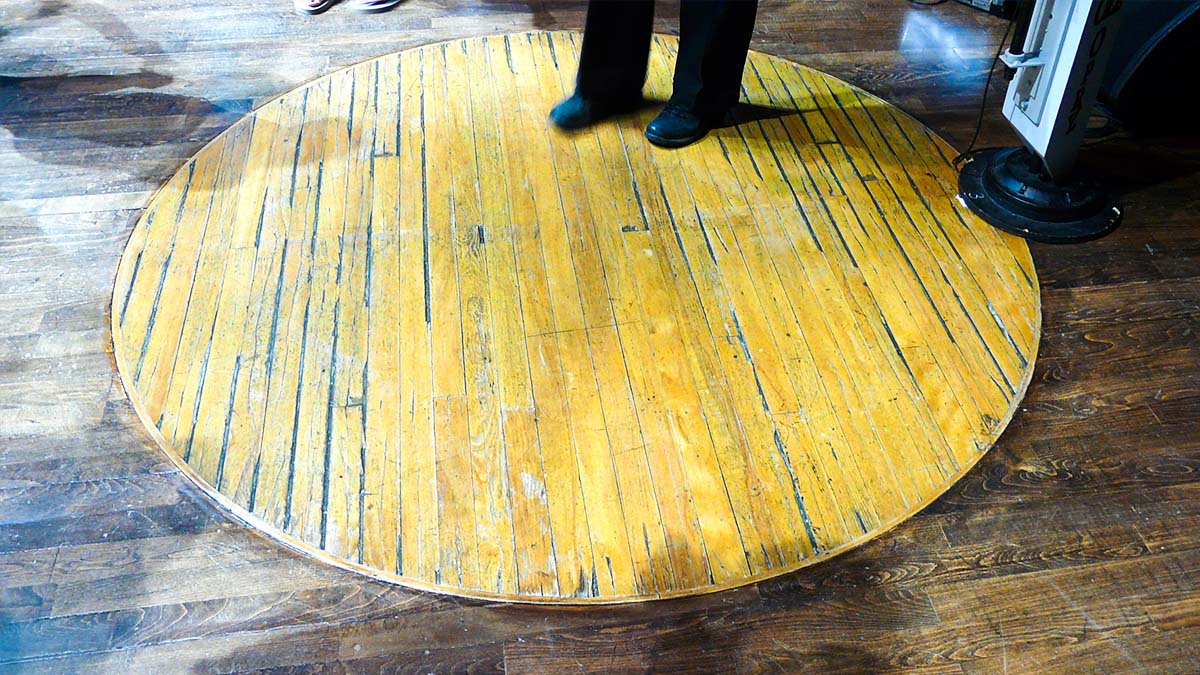
The famous wooden circle on the Grand Ole Opry stage came from the back of the Ryman stage. Workers chose that location so they could conceal and cover the removal area while events continued.
On January 9, 1974, they removed an eight-foot square of flooring. The Opry still had more than two months of shows left at the Ryman before its final broadcast of that residency on March 15.
Workers shaped that square into the six-foot-diameter circle installed at the new Opry House.
For audiences watching performers stand inside it today, the circle connects two Nashville buildings with very different settings: the historic auditorium downtown and the larger Opry House approximately 10 miles away.
Why the Opry Left the Ryman in 1974
The Ryman housed the Grand Ole Opry from 1943 to 1974. After roughly 31 years, ticket demand exceeded the auditorium’s capacity, and production needs had grown.
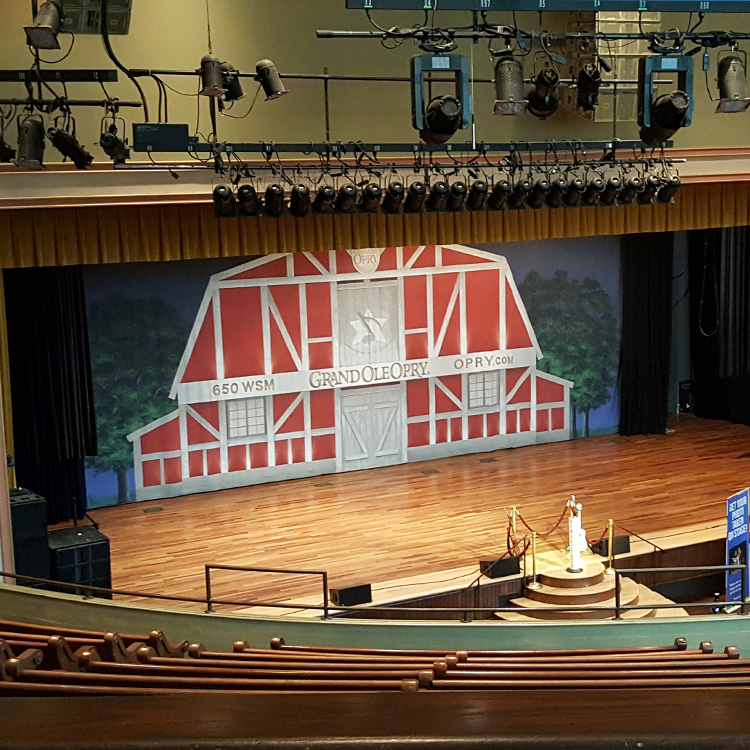
The new Opry House offered more room, improved broadcasting facilities, better sound and lighting, and air conditioning. Its 4,440 seats gave the show space for a larger audience.
But leaving the Ryman meant changing the setting audiences and performers had associated with the Opry for decades. Transferring part of the stage gave the new building something familiar beneath its performers’ feet.
The move also raised questions about the Ryman’s future. There were proposals to demolish the auditorium and reuse its bricks to build a chapel at Opryland, where the new Opry House was located.
Those plans did not go ahead. Opry management decided the Ryman would remain standing, while a much smaller piece of the building made the trip across town.
Why Workers Cut From the Back of the Stage
It’s easy to picture workers cutting around the spot where the microphone stood. The Ryman’s own account explains otherwise.
The wood came from the rear of the stage, where the removal area could be hidden without disrupting concerts and other events. The work happened while the auditorium still had an active schedule.
That means the circle was not necessarily the exact flooring beneath the famous performers who appeared at the Ryman.
At the Opry House, the boards received a very different position. Flooring taken from the back of one stage became the recognizable centerpiece of another.
Roy Acuff Helped Place the Six-Foot Circle
According to the Opry’s history of the circle, Roy Acuff personally supervised its installation, directing workers as they positioned the wood.
“Move it just a hair to the right,” he told them.
The flooring included white oak and maple. Once it was secure, Acuff walked into the center, becoming the first person to step inside the newly installed circle.
He also proposed a more visible reminder of its origins: painting an image of the Ryman directly onto the wood so people would know where it came from.
That proposal never became part of the finished stage. The circle remained unpainted, with the wood itself on display.
It was ready for the Opry House’s opening on March 16, 1974. When the curtain rose, the six-foot circle occupied center stage in the show’s new home.
Two Programs Marked the Last Ryman Night
The final night of the Opry’s Ryman residency has a detail that is easy to blur when retelling the story.
On March 15, 1974, George Morgan closed the Opry’s final show of that residency with “Candy Kisses.”
Johnny and June Carter Cash performed “Will the Circle Be Unbroken” afterward, during the separate Grand Ole Gospel Time program.
The next night, Roy Acuff began the first show at the new Opry House with “The Wabash Cannonball.”
The Ryman’s own story continued, though its years immediately after the move were quieter. It hosted occasional tours and filming during a period of limited activity.
Following restoration, the auditorium reopened in June 1994. Today, it serves as both a concert venue and a daytime tour attraction. The Opry also returns for performances there from time to time.
If you’re adding another show to your visit, our guide to Nashville’s live music venues offers more places to consider.
The Circle Survived 46 Inches of Floodwater
In May 2010, floodwater covered the Opry House stage and its historic flooring.
An announcement issued by the Opry that August reported 46 inches of water over the stage and circle—just two inches short of four feet.
After the water receded, the historic flooring was recovered and refurbished. The circle could be saved, even as the venue needed extensive recovery work before audiences could return.
On August 25, 2010, Brad Paisley and Little Jimmy Dickens helped return the circle to the stage. They performed “Will the Circle Be Unbroken.”
The wood’s return came before the building reopened. Regular performances at the Opry House resumed on September 28.
During the closure, the show continued at other Nashville venues, including the Ryman. The former home once again provided a stage while work continued at its newer one.
The circle onstage today is the historic wood refurbished after that flood, rather than a replacement installed during the recovery.
How to Visit the Opry House and the Ryman
The Grand Ole Opry House is at 600 Opry Mills Drive, approximately 10 miles from downtown Nashville. This is where the transferred circle is installed.
As of November 1, 2026, the Opry daytime backstage tour was listed at $46.65, including taxes and fees, with an advertised duration of about 50 minutes.
The tour advertises an opportunity to step into the circle, but stage access depends on availability. If standing on the wood is the main reason for your visit, confirm access for your departure before purchasing.
Use the official dated tour calendar to check departures and availability. A live Opry show offers the chance to see performers using the stage; show admission and backstage tours are separate purchases.
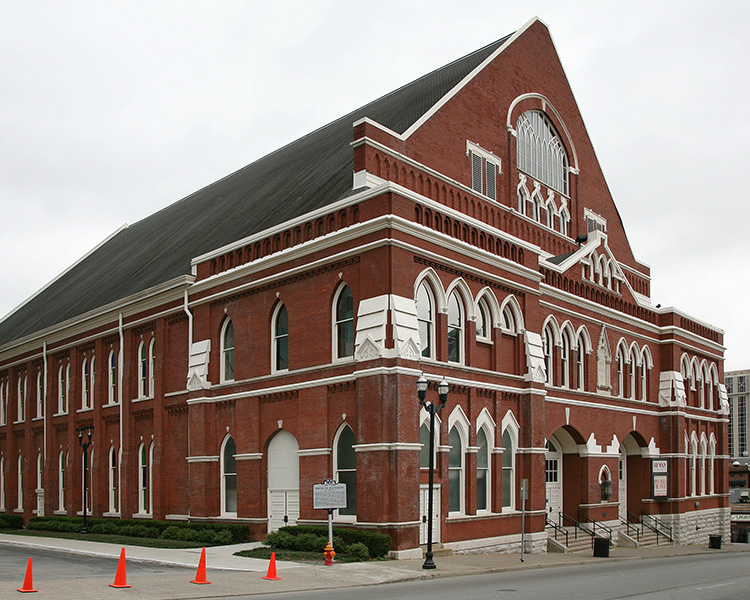
The Ryman Auditorium is at 116 Rep. John Lewis Way North in downtown Nashville. Its advertised Opry 100 exhibit explores the show’s Ryman years.
The Ryman’s official tour page lists general daytime hours of 9 a.m. to 4 p.m. daily, subject to production schedules. Check the special-hours notices for your date before booking.
For help planning the rest of your stay, see our guide to what to check before booking a Nashville trip.
If you plan to visit both buildings, check ticket options and availability for each, and allow transportation time between them.