
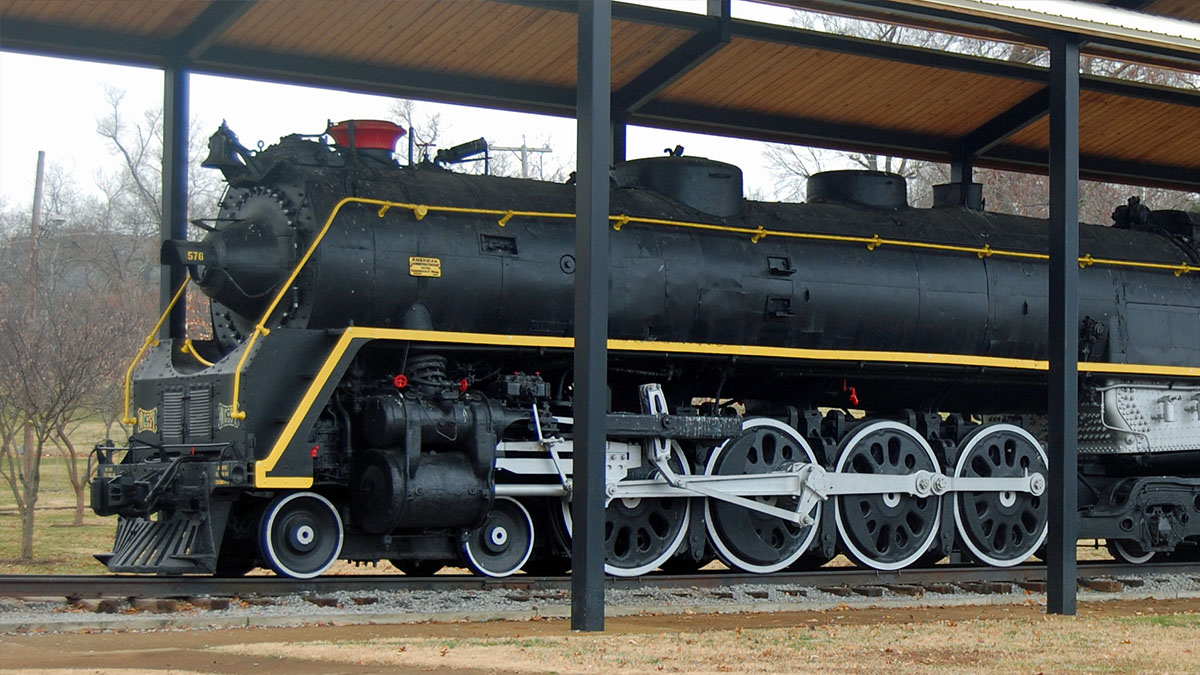
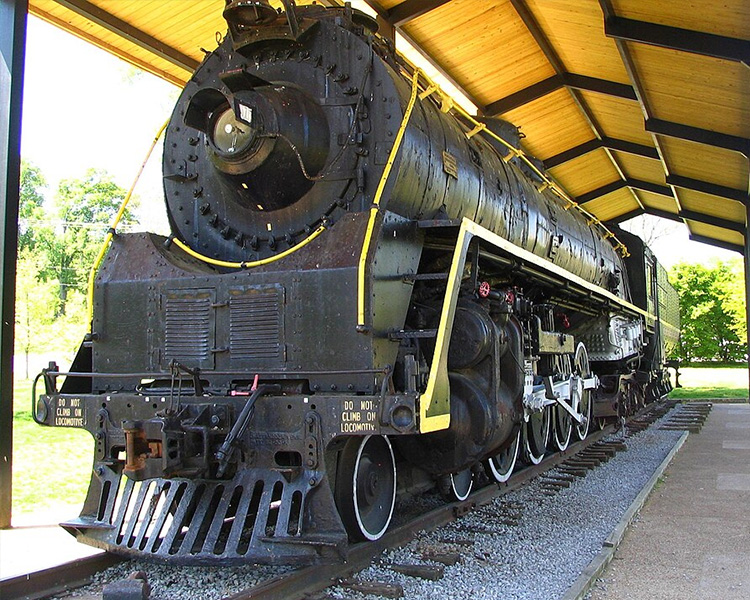
It worked on the railroad for about ten years. It spent roughly 66 more sitting in Centennial Park. Now, Nashville’s familiar steam locomotive has been fired up for the first time since 1952.
No. 576 is still in Nashville, at the Tennessee Central Railway Museum. Nashville Steam Preservation Society has spent years restoring the engine, with passenger excursions targeted for 2027.
You may be able to see it under steam before then. A free public open house is scheduled for November 7, 2026.
For anyone who remembers the locomotive from park visits, that’s a considerable change. The engine hasn’t simply found another place to sit. The restoration is intended to return it to work.
Here’s where it went, why the project has taken years, and what you can actually plan to see.
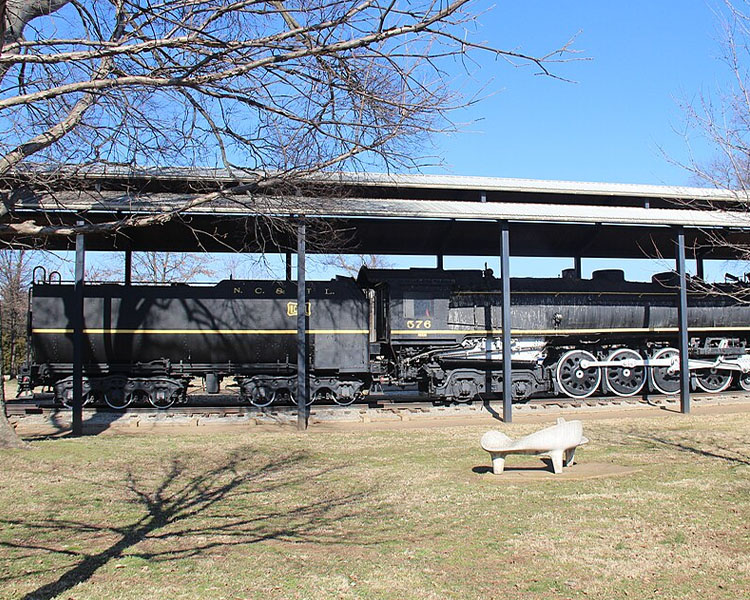
Ten Years Working, Six Decades in the Park
The American Locomotive Company built Nashville, Chattanooga & St. Louis Railway No. 576 in August 1942.
It arrived during World War II, when the railroad needed powerful locomotives to move military personnel, supplies, passengers and freight. Its working life was relatively short: the engine retired in 1952 as the railroad switched to diesel-electric power.
In 1953, it was donated to Nashville and placed in Centennial Park. It stayed until 2019.
Those dates explain why the locomotive’s park history may feel more familiar than its railroad history. It spent far longer on display than it did hauling trains. Someone who first saw it as a child could return decades later and still find it there.
For roughly 66 years, visitors encountered No. 576 as a stationary monument. Restoring it to pull trains would require far more than cleaning it up.
Why the Engine Left Centennial Park
Plans to redevelop Centennial Park included moving No. 576 to another location within the park.
Preservationists proposed a bigger change: restore it so it could pull trains again.
That meant giving the locomotive a different future. Keeping an engine on public display and preparing it to operate are very different jobs. One preserves something visitors can look at. The other requires bringing its machinery back into dependable working condition.
Metro approved a restoration lease in 2016, giving Nashville Steam a path to begin the project. The city retained ownership of the locomotive.
Nashville Steam Preservation Society manages the restoration. The Tennessee Central Railway Museum provides its home and is the planned partner for future excursions.
Those roles help explain what happened after the engine disappeared from the park. It remained Nashville’s locomotive, with a preservation organization managing the work at a railroad museum.
A Move That Took Months
No. 576 left Centennial Park on January 13, 2019. Reaching the museum was a separate undertaking.
The relocation plan called for the locomotive and its tender to travel nearly two miles through Nashville on specialized heavy transporters. From there, they would reach the Nashville & Western Railroad for the rail portion of the journey.
The tender—the vehicle behind a steam locomotive that carries its fuel and water—had to make the move, too. This was a relocation involving large pieces of railroad equipment, with both road and rail stages.
The Tennessee Central Railway Museum dates completion of the relocation to March 2019.
That explains the two dates associated with the move: January was the departure from Centennial Park; March marked arrival at its restoration home.
If you remember seeing photographs of the engine leaving the park in January, that was the beginning of the relocation. Getting it out of its longtime display space and getting it settled at the museum were separate milestones.
Rebuilding More Than Its Appearance
A locomotive can look ready for a photograph while needing years of work before it can safely move a train.
No. 576 needed repairs to its boiler, new tubes and flues, servicing of its driving wheels and axles, and rebuilding of the machinery that transfers power to the wheels.
Much of that work is less immediately visible than the locomotive’s exterior. But those components determine whether the engine can produce steam, hold pressure and turn its wheels reliably.
The boiler alone must safely hold pressure. A successful pressure test, announced in September 2025, was an important step. It still had to be followed by live-steam testing, inspections and final work.
That sequence matters when following restoration announcements. A successful test establishes progress on a particular part of the project. It doesn’t automatically establish that the entire locomotive is ready to carry passengers.
Returning it to operation meant making its working parts dependable again. The goal has always required more than making the engine look as it did during its railroad years.
Its First Steam Test Since 1952
In July 2026, Nashville Steam announced No. 576’s first steam test since 1952.
After approximately 74 years, the engine that so many Nashvillians knew as a silent park display was producing steam again.
For people following the restoration, that was a major milestone. The work had reached the point where the boiler could be fired and the locomotive tested under steam.
But that milestone did not mark the start of passenger service. Nashville Steam’s October update still described final reassembly and testing as ongoing.
There’s an important difference between seeing steam rise from the engine and buying a ticket for a train it will pull. The first has happened during testing. The second remains a future goal.
No. 576 is the surviving example of the Nashville, Chattanooga & St. Louis Railway’s mainline steam locomotives. The other engines in its J-3 class were scrapped.
Passenger Trips Are Targeted for 2027
Nashville Steam is targeting 2027 for passenger excursions in partnership with the Tennessee Central Railway Museum.
The planned trips would use the Nashville & Eastern Railroad corridor, which also carries the WeGo Star. As of October 29, 2026, the announcements reviewed did not establish exact dates, fares or trip lengths.
For now, treat 2027 as a planning target. It gives supporters a sense of where the project is heading, but it isn’t a confirmed departure date you can build a trip around.
The museum already offers train excursions, so check its current excursion listings carefully before buying tickets. An existing museum trip does not establish that No. 576 will pull it.
For that experience, wait for an announcement that specifically names the locomotive. Look for the operating date, route and ticket details together before making reservations around it.
If you’re looking for other rail outings while restoration continues, our guides to Nashville’s wine train and Tennessee’s Hiwassee Loop train ride explain two separate experiences to consider.
How to See No. 576 This November
The next announced public opportunity is the Fall Open House and Train Show at the Tennessee Central Railway Museum.
It takes place Saturday, November 7, 2026, from 9 a.m. to 3 p.m. Nashville time, at 220 Willow Street, Nashville, TN 37210. Admission is free.
No. 576 is scheduled to be under steam, weather permitting. The announcement also lists vintage passenger cars, model railroads, train vendors, souvenir shopping and lunch in a dining car.
That gives visitors more to look around at during the open house, particularly if someone in the family enjoys model trains or historic passenger equipment.
The event advertises viewing the locomotive. No passenger ride behind it is announced.
Plan for an opportunity to see the restoration’s progress and the engine under steam, subject to the weather. If your main reason for going is to ride behind No. 576, this announcement doesn’t offer that experience.
Check the event notice before leaving, and confirm accessibility arrangements if you need step-free access, accessible restrooms or assistance entering display cars. The museum directs special-needs questions to [email protected].
The locomotive is on private property, and the museum has no regular weekday visiting hours. Plan around an announced event or an authorized arrangement.