
You can spend $30 or more on a Nashville attraction and still walk right past something extraordinary that costs absolutely nothing. That’s the funny thing about Music City. Some of its best stories aren’t advertised on giant signs or sold with expensive tickets.
These nine places reveal a different side of Nashville, from a church that looks like ancient Egypt to a downtown alley honoring a dog. A few are so close to the tourist crowds that it’s almost ridiculous how easily people miss them.
1. The Downtown Church That Looks Like Something Out of Ancient Egypt
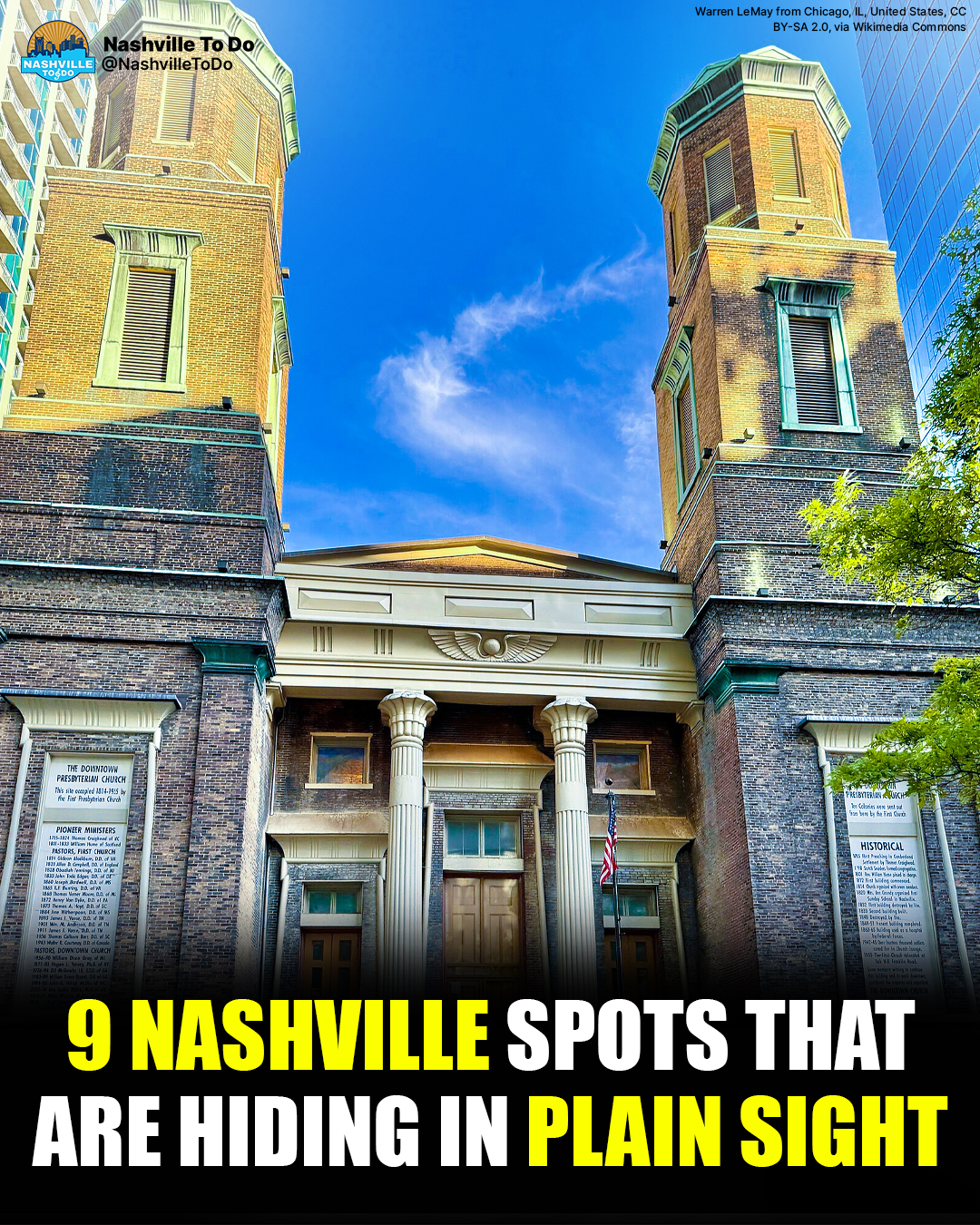
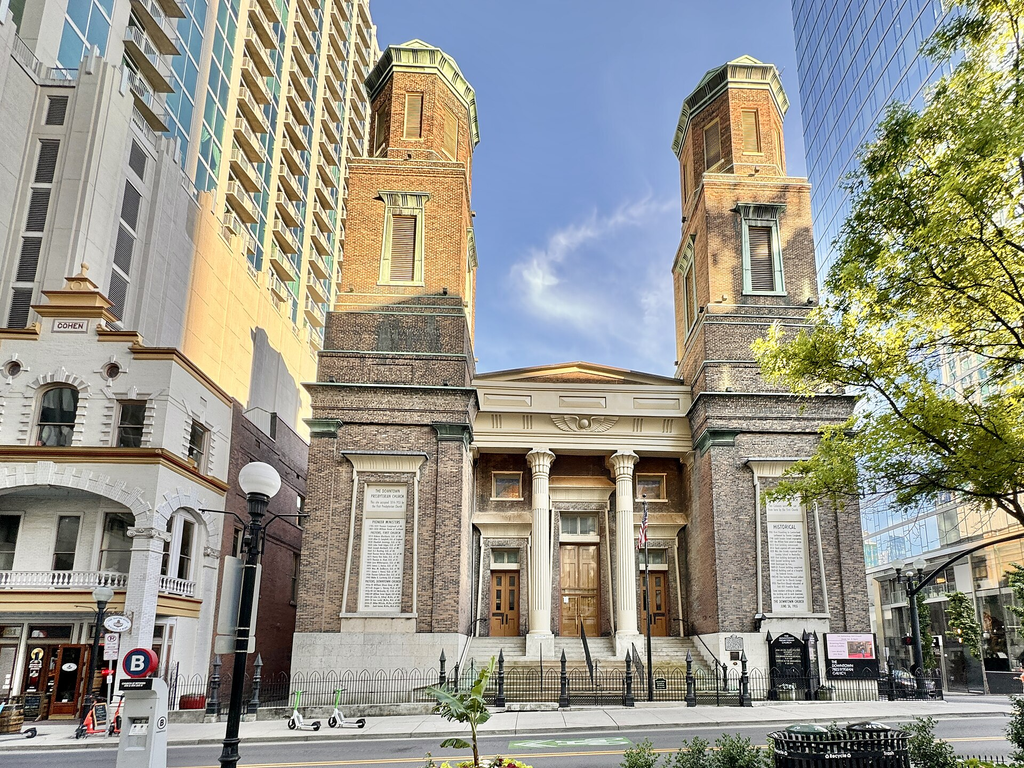
Downtown Presbyterian Church sits at 154 Rep. John Lewis Way North, right in the middle of downtown Nashville. The present building dates to 1851, and its Egyptian Revival architecture makes it one of the most unusual churches in Tennessee.
Most people walking through downtown are looking for honky-tonks, restaurants, and country music landmarks.
They’re certainly not expecting ancient Egyptian design.
But that’s exactly what makes this place so remarkable.
The church’s architecture draws inspiration from the temples and decorative traditions of ancient Egypt. Its columns, lotus motifs, and elaborate interior details feel worlds away from the brick storefronts and modern buildings surrounding it.
Step inside when the sanctuary is open to visitors, and the contrast is striking.
Instead of the familiar Gothic arches and stained-glass arrangements found in many historic churches, you encounter an interior shaped by Egyptian artistic traditions. The decorative patterns and architectural details make you look twice.
And then you start wondering how something like this ended up in Nashville.
The answer begins in the years before the Civil War, when American architects were experimenting with historical styles from around the world.
Egyptian Revival was an unusual choice for a Southern church. That’s part of what makes this building so important architecturally.
But its history goes beyond appearance.
During the Civil War, the building served as a Union hospital. Imagine the difference between the quiet sanctuary visitors encounter today and the activity that once filled this space during one of the most difficult periods in Tennessee history.
Here’s what catches people off guard.
One of downtown Nashville’s most extraordinary architectural interiors is inside an active church that many tourists walk past without recognizing its significance.
The insider trick is to treat this as an architectural stop, not a conventional tourist attraction. Look closely at the decorative details rather than simply stepping inside, taking a photograph, and leaving.
Pay attention to the columns and the Egyptian-inspired ornamentation. Those features are the reason this church stands apart from so many other historic buildings downtown.
There’s an important practical detail, though.
This is an active congregation, not a museum with guaranteed daily sightseeing hours. Public access depends on church activities and visitor arrangements.
Check with Downtown Presbyterian Church before planning a visit specifically to see the sanctuary. Worship services and other church events deserve priority over sightseeing.
Its downtown location makes it easy to combine with other nearby attractions, especially if you’re already exploring the historic streets around the Tennessee State Capitol.
And don’t judge the experience entirely from the sidewalk.
The interior is the real surprise.
But Nashville has another historic downtown building that feels like stepping into a different century, and this one was built for shopping.
2. The Shopping Center That Was Ahead of Its Time by Decades
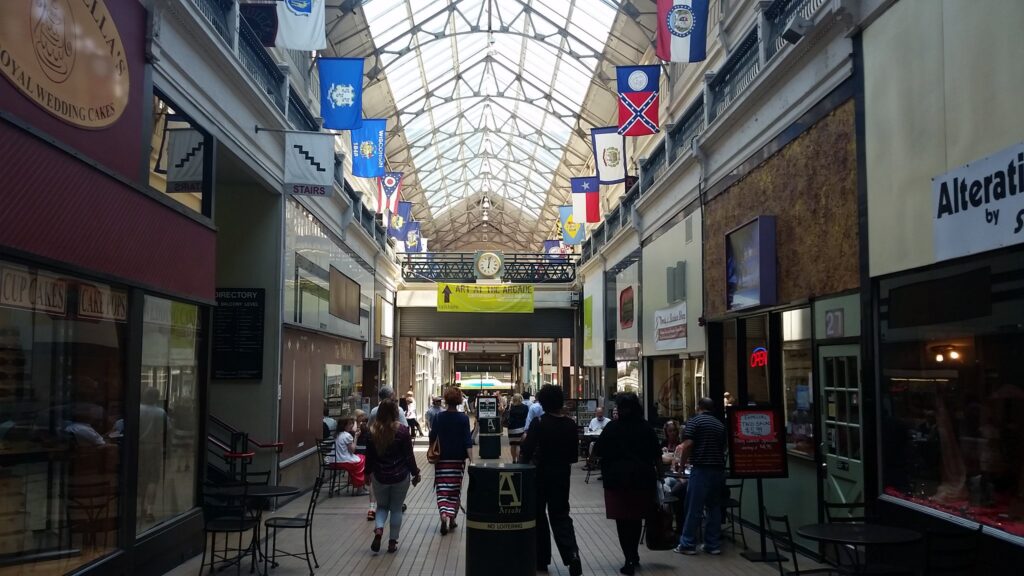
The Nashville Arcade, at 223 Fourth Avenue North, opened in 1903 as the city’s first enclosed shopping center. Its design drew inspiration from European shopping passages, including the famous arcades of Milan.
That’s right.
Nashville had an enclosed shopping destination long before the modern suburban mall became part of everyday American life.
From the street, the Arcade can be surprisingly easy to overlook.
Its entrances sit among ordinary downtown storefronts, and someone hurrying toward Broadway might not realize an entire historic passage stretches through the building.
But walk inside and the atmosphere changes.
A glass-covered roof brings daylight into the passage. Storefronts line the walkway, while upper-level spaces recall an era when shopping districts were designed as architectural experiences rather than enormous parking lots surrounded by chain stores.
There’s something wonderfully old-fashioned about the arrangement.
You can picture shoppers arriving in their best clothes, stopping to browse the windows, and meeting acquaintances along the passage.
That image belongs to a very different Nashville from the one filled with pedal taverns and rooftop bars.
The Arcade also reflects a time when downtown was the city’s primary shopping destination.
Before suburban shopping centers changed retail habits, places like this brought merchants and customers together in the commercial heart of town.
The architecture was part of the attraction.
And more than a century later, that’s still true.
Here’s the detail worth remembering.
The Nashville Arcade opened in 1903, making it an early example of enclosed shopping architecture in a city now better known for music and nightlife.
The best way to explore is to slow down.
Don’t treat the passage simply as a shortcut between streets. Look upward at the glass roof, notice the arrangement of the storefronts, and pay attention to the upper-level galleries.
Those details tell you far more about the building than a quick photograph of its entrance.
Public passage areas can be explored without purchasing an admission ticket, although individual businesses have their own operating schedules.
And that’s an important distinction.
A historic shopping arcade isn’t the same thing as a museum. Shops may open at different times, and the businesses inside can change.
If there’s a particular gallery or merchant you want to visit, check its current hours before making a special trip.
Downtown parking can also be an unnecessary expense if you’re already visiting other attractions nearby. This is the kind of stop that makes sense as part of a walking route rather than a separate drive.
The trap is expecting a modern shopping mall.
Come for the architecture and history first. Consider any shopping an added bonus.
And just a short distance away, another downtown building holds a piece of Nashville history that deserves far more attention than it gets.
3. The Free History Lesson Hiding on a Library’s Second Floor
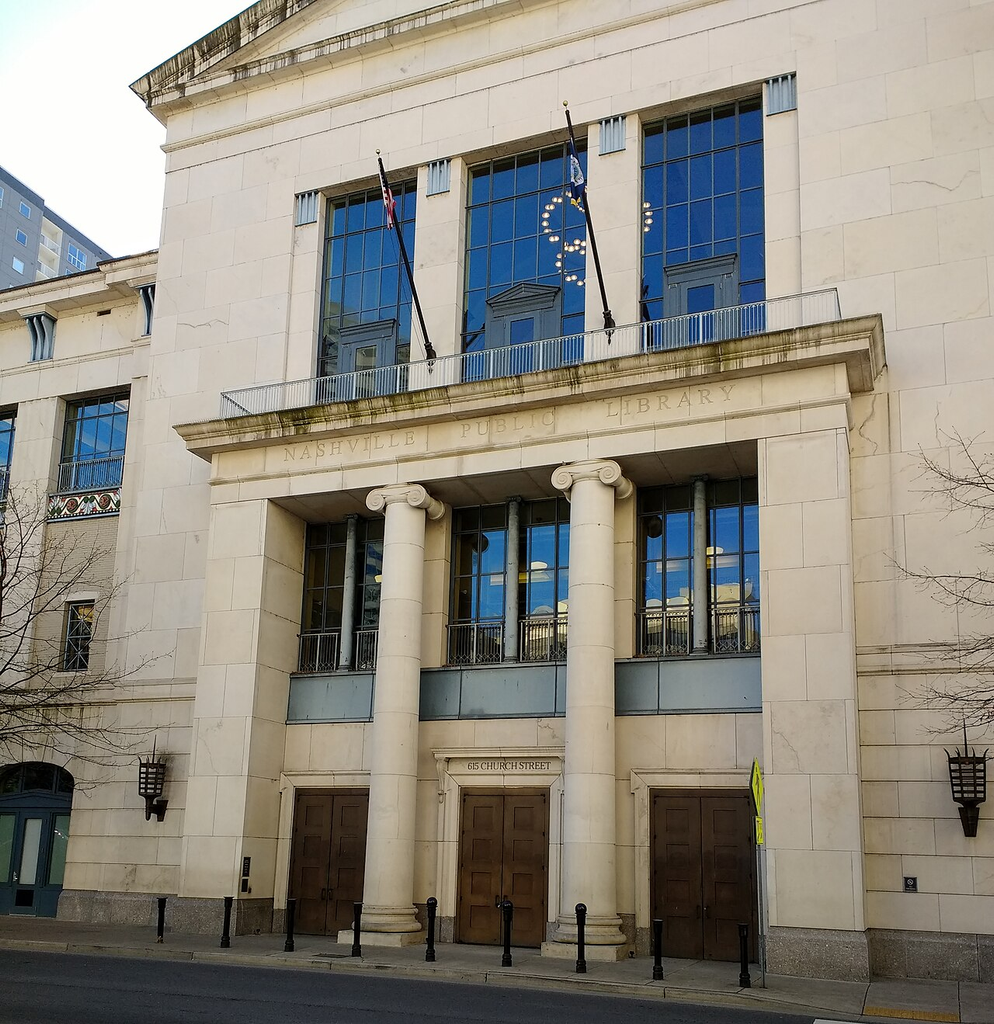
The Civil Rights Room is located on the second floor of the Nashville Public Library’s Main Library at 615 Church Street. Inside the Nashville Room, visitors can explore exhibits about the city’s civil rights movement, including the student sit-ins of 1960.
And admission to the public library is free.
That combination is remarkable when you consider the importance of what happened on Nashville’s downtown streets.
Walk into the Main Library and you might initially notice the architecture, the quiet reading areas, or people going about their everyday routines.
It’s a working library, after all.
But upstairs is a space that tells one of the most important stories in modern Nashville history.
The Civil Rights Room includes a symbolic lunch counter, historical photographs, timelines, and educational displays connected to the struggle against segregation.
One particularly meaningful exhibit features the Ten Rules of Conduct followed by students participating in the Nashville sit-ins.
Those rules reflected the discipline required of demonstrators who were committed to nonviolent protest, even when confronted with hostility.
Think about what that meant.
Young people entered segregated public spaces knowing they could face verbal abuse, physical attacks, or arrest.
They were challenging an entire system of discrimination through organized, peaceful action.
The lunch counter display makes that history feel immediate.
It’s no longer simply a chapter in a textbook. It’s a reminder that ordinary places, including stores and restaurants, became settings for extraordinary acts of courage.
The room’s windows also overlook the intersection of Church Street and Seventh Avenue North, an area connected to Nashville’s civil rights demonstrations.
That connection between the exhibits and the surrounding streets is especially powerful.
Here’s what makes this stop different.
You can study Nashville’s 1960 civil rights movement inside a free public library while looking toward downtown streets connected to the events themselves.
The insider tip is to visit the Civil Rights Room before exploring other civil rights landmarks downtown.
It gives you historical context that can completely change the way you see familiar streets and buildings.
Instead of simply passing old storefronts, you begin to understand the struggles and decisions that shaped the city.
The library says the room is available during Main Library operating hours, but it’s wise to confirm current access before visiting.
Allow yourself enough time to read the exhibits carefully.
This isn’t a place that benefits from rushing.
And remember that you’re inside a public library. Keep conversations quiet and respect other people using the space.
For families, the exhibits can open up meaningful conversations about fairness, courage, and the changes that have taken place in Tennessee.
For longtime residents, the experience may reveal details about familiar downtown locations that they never learned growing up.
There’s no need to purchase an expensive tour to begin understanding this part of Nashville’s history.
Sometimes the most meaningful experience in town is waiting upstairs in a building people associate with borrowing books.
Now, after a stop that carries so much historical weight, Nashville has something considerably lighter tucked into a downtown passage.
And this one has four paws.
4. The Little Downtown Alley That Honors a Four-Legged Local Legend
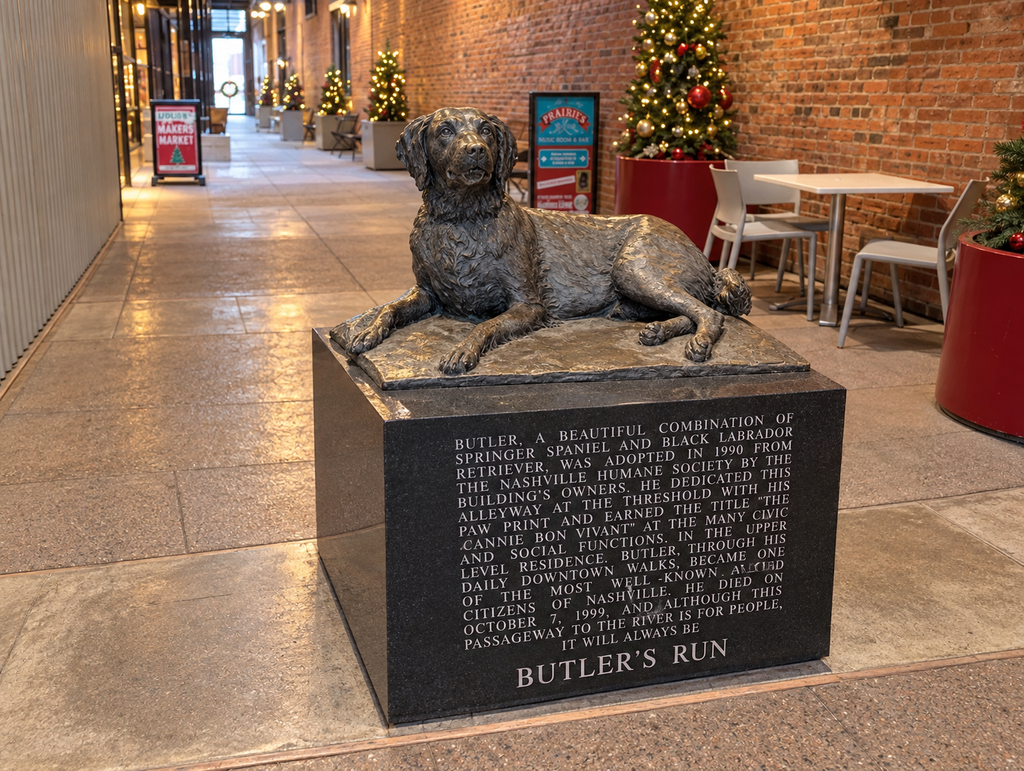
Butler’s Run is a small downtown passage between First and Second Avenues, not far from the city’s busy entertainment district. It honors Butler, a black Labrador-spaniel mix who became a familiar neighborhood presence during the 1990s.
And yes, Nashville has a landmark dedicated to a dog.
Not a famous singer’s dog. Not a movie star’s pet.
A neighborhood dog who became part of the city’s everyday life.
That’s what makes this little place so charming.
Downtown Nashville has changed enormously over the years. Buildings have been renovated, businesses have come and gone, and streets once associated with everyday neighborhood life now attract visitors from around the world.
But some stories survive in unexpected ways.
Butler’s Run preserves one of them.
The passage includes a statue honoring Butler and preserved paw prints that give the alley its unusual personality.
You might walk through without realizing there’s a story attached to those little marks.
But once you know, it’s hard not to smile.
Imagine the Nashville of the 1990s, before the current wave of tourism transformed so much of downtown.
A neighborhood dog becoming a recognizable local character feels like the kind of thing that belongs to a smaller, more personal city.
And in many ways, that’s exactly what this memorial represents.
Not every important local memory involves a politician, musician, or famous building.
Sometimes a place becomes meaningful simply because people grow attached to someone, or something, they see regularly.
Here’s the sweet little surprise.
Butler’s Run preserves the memory of a beloved downtown dog through a statue and actual paw prints, right in the middle of Nashville’s urban landscape.
The insider tip is simple: Look down.
Most people exploring downtown naturally look toward neon signs, restaurant entrances, and impressive buildings.
At Butler’s Run, the details near your feet are part of the attraction.
Take a moment to find the paw prints and appreciate the memorial rather than treating the alley as another shortcut.
This is a free outdoor stop, and you don’t need to purchase a ticket to appreciate the public passage.
It’s also a good example of an attraction that doesn’t require an elaborate itinerary.
You can work it into a downtown walk without dedicating a large part of your day to it.
Just remember that this is a small urban space, not a park or visitor center. There are no exhibits to browse for an hour or gift shops filled with souvenirs.
The story is the attraction.
Wear comfortable walking shoes, stay aware of your surroundings, and don’t make a separate parking purchase just for this stop if you’re already exploring downtown on foot.
For families traveling with children, the dog memorial offers a welcome change from the usual Nashville attractions.
And for anyone who remembers the city before its current tourism boom, it offers something even better.
A reminder that Nashville’s personality has always come from more than its famous entertainers.
Speaking of entertainers, the next overlooked spot has been helping advertise some of music’s biggest names since the nineteenth century.
And it’s still making things the old-fashioned way.
5. The Place Where Country Music History Is Still Made One Poster at a Time
Hatch Show Print is located at 224 Rep. John Lewis Way South, inside the Country Music Hall of Fame and Museum complex. Founded in 1879, it remains one of America’s oldest working letterpress print shops.
That’s nearly a century and a half of printing history.
And the remarkable part is that the tradition is still alive.
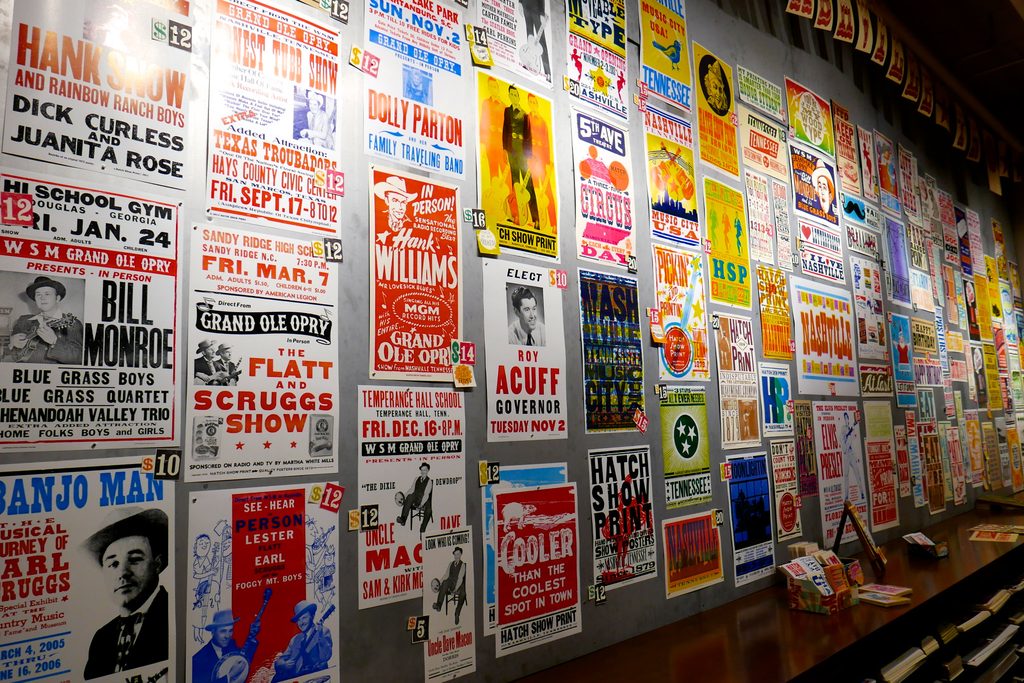
If you’ve ever admired an old country music concert poster with bold lettering, bright colors, and wonderfully imperfect character, you’ve seen the kind of work that made Hatch Show Print famous.
These aren’t simply designs created to look old.
They’re part of a printing tradition built around physical type, carved imagery, ink, and pressure.
For generations, posters helped spread the word about concerts, traveling performers, and entertainment events.
Before social media announcements and digital advertising, a striking poster could be one of the most important ways to attract a crowd.
Hatch Show Print helped create that visual language.
Its work has promoted performers associated with the Grand Ole Opry, including Bill Monroe, Minnie Pearl, and Ernest Tubb.
The shop also produced advertising connected to major rock-and-roll entertainers, including Elvis Presley and Chuck Berry.
That range tells you something important about Nashville’s musical history.
Music City has never been quite as one-dimensional as its reputation sometimes suggests.
And Hatch Show Print’s posters are part of the evidence.
The designs have a physical quality that modern digital graphics often try to imitate.
Letterpress printing creates its own visual character through the interaction of ink, type, paper, and the press itself.
On a guided tour, visitors can learn about those tools and processes while seeing how this traditional craft continues.
Here’s what many people don’t realize.
Hatch Show Print isn’t just a collection of vintage music posters. It’s a working print shop that still produces new designs using a tradition dating back to 1879.
The insider tip is to separate the free experience from the paid one.
You can browse the Hatch Show Print gift shop without purchasing a guided tour. The nearby Haley Gallery also offers free public access to art exhibitions.
That’s a worthwhile option if you’re watching your spending.
But if you’re especially interested in how the posters are made, the guided Hatch Show Print experience provides a much deeper look at the craft.
The official schedule lists the gift shop as open daily from 9 a.m. to 5:30 p.m., while the working print shop operates Monday through Friday from 9 a.m. to 5 p.m.
Guided experiences have separate ticketing and schedules, so check availability before arriving.
And don’t assume that buying admission to the Country Music Hall of Fame automatically includes every special experience in the complex.
That’s an easy mistake to make.
Another useful detail: Hatch Show Print has an entrance in the Rep. John Lewis Way South lobby. Visitors entering through the main museum building can follow the interior route toward that lobby.
The surrounding SoBro neighborhood has plenty of other attractions, so this is an easy stop to combine with a downtown sightseeing day.
Just don’t rush past the posters.
Look at the lettering, the colors, and the slightly different qualities that make letterpress work feel so personal.
There’s a reason these designs still appeal to people who grew up seeing concert posters in record stores and theater windows.
They remind us of a time when advertising could be something worth keeping.
But Nashville’s next overlooked attraction has an even stranger historical detail.
The man who designed it never really left.
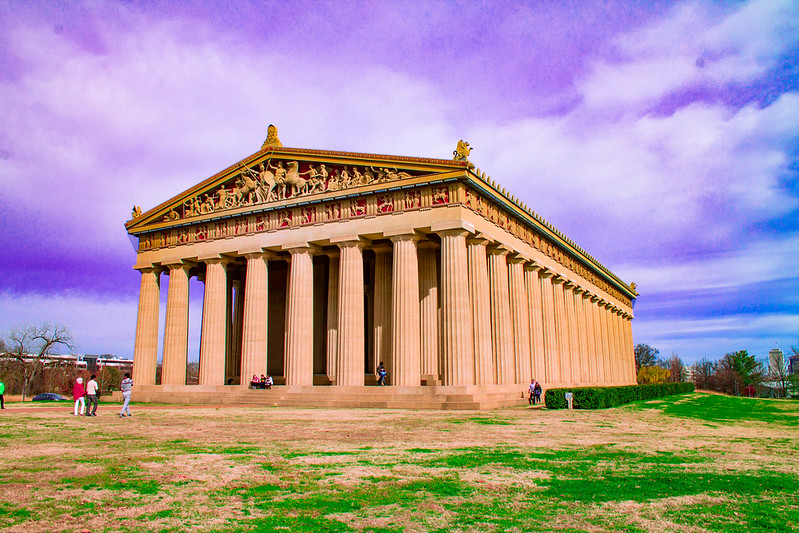
6. The Famous Building Where the Architect Is Buried Inside His Own Masterpiece
The Tennessee State Capitol stands at 600 Dr. Martin Luther King Jr. Boulevard on Capitol Hill. Completed in 1859, the Greek Revival building was designed by architect William Strickland, who died during construction in 1854.
And here’s the part that surprises almost everybody.
Strickland is buried inside the building he designed.
The Capitol is one of Nashville’s most recognizable landmarks.
Its prominent hilltop position makes it visible from different parts of downtown, and its classical architecture gives the building a sense of permanence.
But seeing it from the street is only part of the experience.
Inside, the Capitol offers a closer look at Tennessee’s political and architectural history.
The design reflects the classical ideals that influenced many important American public buildings during the nineteenth century.
Columns, formal spaces, and carefully planned architectural details were meant to communicate the importance of government.
It’s the sort of place where the architecture itself encourages you to slow down.
But the story behind the building is even more interesting than its appearance.
Construction began with the laying of the cornerstone on July 4, 1845.
Strickland worked on the project until his death in 1854, several years before the building was completed.
He was buried in the Capitol’s north facade.
Think about that for a moment.
The architect who devoted his final years to creating one of Tennessee’s most important buildings became a permanent part of its history in the most literal way imaginable.
And there’s another burial story on the grounds.
President James K. Polk and his wife, Sarah, are buried at the Capitol.
That means a visit here connects architectural history, presidential history, and Tennessee government in one place.
Here’s the detail worth telling somebody back home.
The Tennessee State Capitol contains the burial place of its own architect, William Strickland, who died five years before the building was finished.
The insider tip is to take advantage of the guided tours rather than simply photographing the exterior.
The Tennessee State Museum lists free Capitol tours Monday through Friday at 9, 10, and 11 a.m., and 1, 2, and 3 p.m.
Tours begin at the first-floor information desk.
Schedules can change for government activities or special circumstances, so confirm arrangements before visiting.
Groups of ten or more are asked to make reservations in advance.
The Capitol is a working government building, which means security procedures and access restrictions may apply.
Bring only what you need, allow time to enter, and be prepared to follow instructions from security staff.
Parking around Capitol Hill can require planning, especially during the workweek.
If you’re already visiting downtown attractions, consider combining the Capitol with nearby stops rather than moving your car repeatedly.
The grounds themselves also deserve attention.
Statues and memorials reflect different chapters of Tennessee history, and the hilltop setting provides an interesting perspective on the surrounding city.
For anyone interested in architecture, government, or the stories behind familiar landmarks, this is an unusually rewarding free experience.
And there’s something satisfying about discovering that a building you’ve seen in photographs for years contains stories that aren’t obvious from the outside.
But Nashville’s next surprise doesn’t involve politics or country music.
It involves something many people don’t associate with the city at all.
Automobiles.

7. The Old Factory That Proves Nashville Once Built Its Own Cars
Marathon Village occupies the former Marathon Motor Works buildings at 1305 Clinton Street, northwest of downtown Nashville. The historic industrial complex now houses shops, creative businesses, entertainment spaces, and a collection of surviving Marathon automobiles.
Yes, Nashville once manufactured cars.
Not just sold them.
Actually built them.
That little piece of history tends to catch people off guard because the city’s modern identity is so closely connected to music, hospitality, and tourism.
But the old factory buildings tell a different story.
Marathon Village preserves part of Nashville’s manufacturing past in a setting that still feels industrial.
Instead of a polished modern shopping center, visitors encounter the character of a former automobile factory.
The old brickwork and industrial features help establish the atmosphere.
You can imagine machinery operating inside these buildings and workers arriving for another day of production.
It’s a different picture of Nashville from the one presented on Lower Broadway.
And that’s precisely why the place is interesting.
The Marathon automobile was part of an earlier chapter in American manufacturing, when automobile companies were competing to establish themselves in a rapidly changing industry.
Today, the surviving vehicles help tell that story.
Marathon Village’s own visitor information says its collection displays five of the seven original Marathon automobiles it identifies as surviving examples.
That’s a remarkable concentration of automotive history inside the former manufacturing complex.
The vehicles themselves offer a glimpse into the design and engineering of another era.
Look closely at their proportions and details.
They belong to a period when automobiles were still developing into the familiar machines that eventually transformed American transportation.
And the setting makes the experience more meaningful.
These cars aren’t simply displayed in an unrelated building.
They’re connected to the very industrial history that gave the complex its identity.
Here’s the fact that deserves more attention.
Marathon Village offers a free automobile museum inside the former factory complex where Nashville’s Marathon manufacturing story unfolded.
The insider trick is to visit for the history first and the shopping second.
Marathon Village has become known for its collection of businesses, but the old automobile displays are what distinguish it from an ordinary retail destination.
Take time to explore the museum area rather than heading straight for the shops.
The official Marathon Village website describes the Marathon Motor Works museum and showroom as free to visit.
Guided historical tours are a separate experience that should be arranged in advance.
Individual shops, restaurants, and entertainment venues operate according to their own schedules.
That matters because visiting the complex doesn’t guarantee that every business or activity will be available.
Parking arrangements and visitor access should also be checked before a special trip, particularly if an event is taking place.
This is a good stop for people who enjoy antique vehicles, old factories, historic architecture, or seeing buildings find a new purpose.
It’s also a refreshing alternative to attractions centered entirely on Nashville’s entertainment industry.
For longtime Tennesseans, the factory offers a reminder that the state’s economic history includes far more than the industries we talk about most today.
And for visitors, it’s an unexpected answer to a question they probably never thought to ask.
What did Nashville make before the city became such a major tourist destination?
The old cars tell part of that story.
But the next location carries a more difficult chapter of Nashville’s past, and understanding it changes the way you see the city.

8. The Hilltop Fortress Built During One of Nashville’s Darkest Chapters
Fort Negley is located at 1100 Fort Negley Boulevard, just south of downtown Nashville. Built during the Civil War, it became the largest inland stone fortification constructed during the conflict and served as a major defensive position for Union-occupied Nashville.
It’s one of the city’s most significant historic sites.
And one of the easiest to overlook.
Most people associate Nashville with the Grand Ole Opry, hot chicken, honky-tonks, and country music.
But during the Civil War, the city occupied an enormously important strategic position.
Its location along the Cumberland River, together with its railroad and road connections, made Nashville valuable to both Union and Confederate forces.
After Union forces occupied the city, military defenses became a major priority.
Fort Negley was part of that effort.
The fort’s stone construction and commanding position reflected the military concerns of the period.
But the story of the people who built it is especially important.
The fort was constructed through the labor of thousands of workers, including Black laborers, many of whom had escaped slavery or been compelled to work under harsh conditions.
That history is inseparable from the structure itself.
When you look at Fort Negley, you’re not simply looking at an old military installation.
You’re looking at a place connected to slavery, emancipation, military occupation, and the human cost of war.
Those stories deserve to be understood together.
The site also carries a later history of preservation, neglect, and restoration.
Its surviving landscape is a reminder that historic places don’t automatically remain protected just because important events happened there.
People have to recognize their significance and make decisions about their future.
Here’s the detail that gives this place its weight.
Fort Negley is the largest inland stone fortification built during the Civil War, and its history includes the labor and suffering of Black workers whose contributions are essential to understanding the site.
The insider tip is to begin at the visitor center.
The exhibits and educational materials provide context that makes the surrounding landscape much more meaningful.
Without that background, it’s easy to see only old stonework and a hill.
With it, the site becomes a powerful lesson in Nashville’s history.
There is also an important visiting restriction as of October 2026.
Metro Nashville reports that Fort Negley Park is undergoing construction as part of its master plan.
The half-mile park trail remains open, but access to the historic fort structure at the top of the hill is closed.
The city anticipates reopening that area in the fall, although visitors should wait for an official announcement before assuming access has resumed.
The visitor center remains open under its regular schedule, subject to possible interruptions.
Parking is very limited, and Metro recommends carpooling when possible.
The park is generally open from dawn to dusk, but construction can affect the visitor experience.
Wear comfortable shoes, bring water, and prepare for outdoor conditions.
Most importantly, respect the construction barriers and stay within areas that are open to the public.
Don’t arrive expecting to climb through the fortifications while restoration work is underway.
Fort Negley isn’t the kind of attraction where every visit needs to be cheerful.
Some places matter because they help us understand difficult truths.
And Nashville is a richer, more honest city when those stories aren’t forgotten.
After that heavy history, there’s another overlooked place nearby that offers fresh air, open space, and a surprisingly enjoyable way to explore Tennessee.

9. The Downtown Park Where You Can Walk Across the Entire State
Bicentennial Capitol Mall State Park stretches across approximately 19 acres north of the Tennessee State Capitol. Created for Tennessee’s 1996 bicentennial celebration, the park includes a 200-foot granite map of the state, historical displays, memorials, and a carillon.
And here’s the fun part.
You can explore Tennessee without ever leaving downtown Nashville.
At first glance, Bicentennial Capitol Mall might seem like an ordinary urban park.
There are open spaces, walking paths, and views toward the Capitol.
It’s a pleasant place to get outside.
But start looking closely, and you discover that the entire landscape was designed to tell Tennessee’s story.
The giant granite map is one of the park’s most memorable features.
Instead of studying a small map on a phone, visitors can examine an enormous representation of the state beneath their feet.
It’s especially entertaining for Tennessee residents.
Find your part of the state.
Look for familiar places.
Notice how the geography connects regions that can feel very different from one another.
For visitors from outside Tennessee, the map offers a sense of just how much lies beyond Nashville.
The state stretches from the Mississippi River region in the west to the mountains of East Tennessee.
And every region has its own identity.
But the map is only one part of the experience.
The Pathway of History incorporates information about Tennessee’s past directly into the park’s design.
The Court of Three Stars reflects the state’s three grand divisions.
And the carillon adds another distinctive element to the landscape.
The park becomes more interesting the longer you explore.
Instead of presenting history inside traditional museum galleries, it invites people to encounter it while walking outdoors.
That makes it especially appealing for families and anyone who enjoys learning without feeling as though they’re sitting through a lecture.
Here’s the detail most visitors don’t expect.
Bicentennial Capitol Mall contains a 200-foot granite map of Tennessee, turning a free downtown park into an enormous outdoor geography lesson.
The insider tip is to visit the park as part of a larger outing that includes the Tennessee State Museum and Nashville Farmers’ Market.
These attractions are located close together, making the area particularly useful for visitors trying to get more from their time without spending heavily on transportation.
The park itself is free to explore.
Unlike a ticketed attraction, you can enjoy the outdoor features without paying admission.
That makes it a good choice for families, couples, and anyone trying to balance expensive Nashville activities with more affordable experiences.
Comfortable walking shoes are a smart idea because the attraction is spread across a large outdoor area.
On hot Tennessee days, bring water and consider visiting when temperatures are more comfortable.
And don’t make the mistake of stopping only for a photograph of the Capitol.
The most interesting features are built into the park itself.
Take time to read the historical information and explore the different sections.
The granite map, memorials, and symbolic design elements all contribute to the experience.
This is also one of those places where locals can get just as much enjoyment as first-time visitors.
You don’t have to be on vacation to appreciate it.
Sometimes a familiar city offers its best surprises when you stop treating it as familiar.
And Bicentennial Capitol Mall proves that an ordinary afternoon walk can turn into something far more memorable.
The Unexpected Fact About Nashville’s Historic Buildings
One of the most surprising things about Nashville is how many of its important places have lived more than one life.
The Downtown Presbyterian Church served as a Union hospital during the Civil War. Marathon Village transformed an automobile factory into a destination for businesses and visitors. The Nashville Arcade continues to preserve the architectural character of an early twentieth-century shopping passage.
These places weren’t all created to become tourist attractions. They were built for worship, commerce, manufacturing, government, and everyday life.
And that’s what makes them special.
Nashville’s history isn’t confined to museums or famous music venues. It’s built into ordinary streets, old walls, quiet passages, and places people pass on their way somewhere else.
The next time you’re downtown, slow down and look a little closer.
The best part of Nashville might be something you’ve walked past a hundred times without ever knowing it was there.