Twenty years ago, a Nashville night could involve cheap parking, a small honky-tonk, and music you discovered by accident. Today, the same outing can mean reservations, packed sidewalks, parking fees, and an itinerary planned on your phone.
Nashville gained remarkable restaurants, museums, hotels, venues, and national attention along the way. But after comparing 12 experiences that longtime residents remember differently, one thing becomes clear. The Nashville people miss is still here. You just have to know where to look.
The Honky-Tonk Experience That Got Much Bigger Than the Music
Lower Broadway was already Nashville’s famous honky-tonk district 20 years ago, but the experience was considerably different from the enormous entertainment corridor visitors encounter today. Historic bars, record stores, small stages, and working musicians gave the street more of a music-district feeling than a vacation-destination feeling.
Walk Broadway now and you hear it before you properly see it.
Bass rolls through open windows. Bands compete from opposite sides of the street. Neon flashes across the pavement. Rooftops fill with people, and groups spill from one multi-level bar to another while pedal taverns and party vehicles crawl through downtown traffic.
It can be enormously entertaining.
It can also feel like somebody turned Nashville’s volume knob until it broke off.
Here’s what catches people off guard.
Broadway is still part of Nashville’s music culture, but Broadway is not Nashville’s entire music culture.
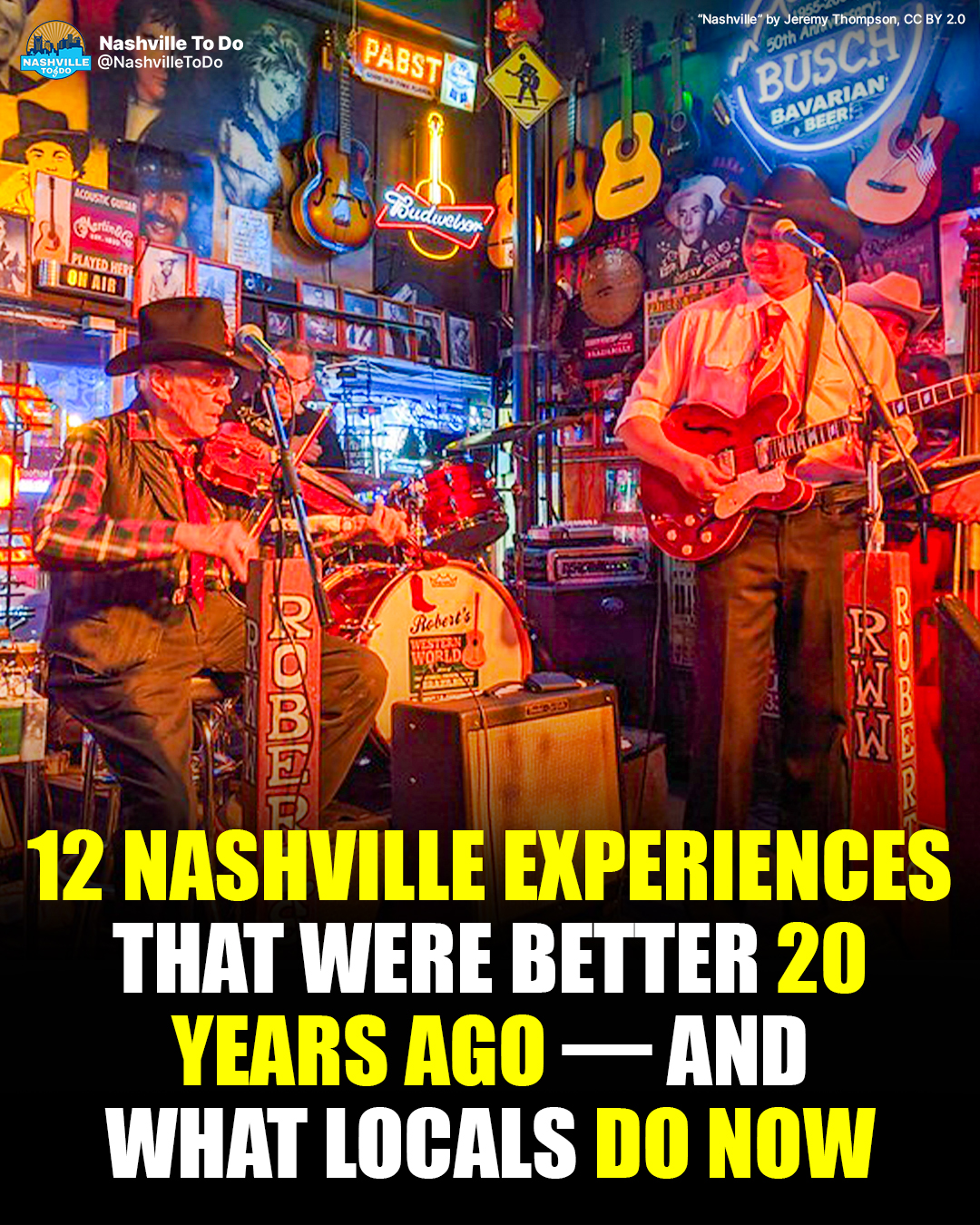
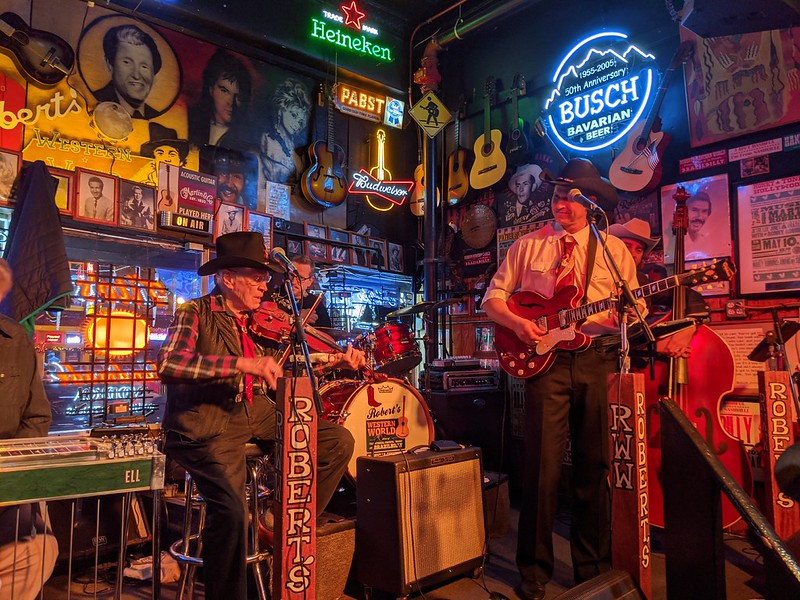
Robert’s Western World is one of the places people seeking an older Broadway atmosphere still gravitate toward. Traditional country music remains central to the experience, rather than being something squeezed between giant video screens and nightclub production.
The insider move is timing.
Visit Lower Broadway earlier in the day if you actually want to notice the buildings, hear the musicians, and move between venues without fighting the heaviest weekend crowds. Then decide whether you want to stay after dark or take your evening somewhere smaller.
And don’t make the classic mistake of trying to hit every famous honky-tonk in one night.
Find a band you like.
Stay awhile.
Tip the musicians.
Twenty years ago, that willingness to stop instead of constantly searching for the next place was a big part of the experience.
But there is another Nashville music tradition that has become even harder to experience spontaneously.
The Tiny Music Room That Turned Getting a Seat Into an Event
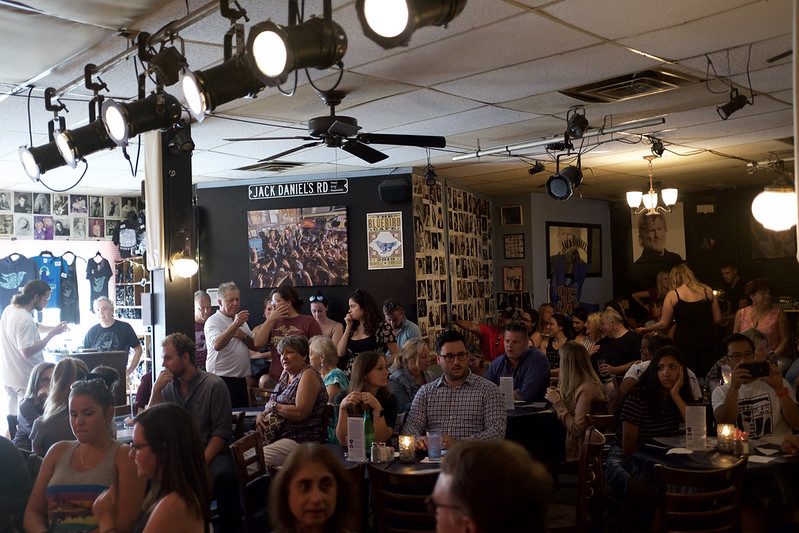
The Bluebird Cafe in Green Hills has only about 90 seats, and its reputation reaches far beyond the little strip-mall room it occupies. The venue became internationally known for songwriter performances where the person behind a famous song might explain how it came together before playing it a few feet from your table.
That intimacy is exactly what made the Bluebird special.
It also created the problem.
You walk inside and there is almost nowhere for the music to hide. Chairs sit close together. Performers are within conversational distance. A guitar does not have to fight its way through a cavernous room.
Then a songwriter starts talking.
The room settles.
A familiar melody suddenly sounds different when it comes from the person who wrote it rather than the superstar who eventually recorded it.
Here’s what catches people off guard.
The Bluebird’s greatest asset, its tiny size, is also the reason getting inside can require much more planning than visitors expect.
That does not mean your Nashville music night is ruined if the Bluebird does not work out.
The Listening Room Cafe offers another way to experience songwriter-centered performances. Instead of treating the Bluebird as the single place where Nashville songwriting exists, treat it as one doorway into a much larger culture.
That’s the local trick.
Follow the songwriter, not the famous room.
Check who is performing before choosing where to spend your evening. Nashville has writers’ rounds and listening-focused shows beyond the places that dominate travel itineraries.
And once the performance begins, listen.
These rooms are not honky-tonks where conversation competes with the stage. The stories between songs are often half the reason to be there.
Miss the tiny room everybody recognizes, and you may accidentally discover something better.
That same principle works especially well a few miles away, where some of Nashville’s biggest history sits behind surprisingly ordinary doors.
The Famous Nashville Street Where Almost Nothing Explains What Happened There
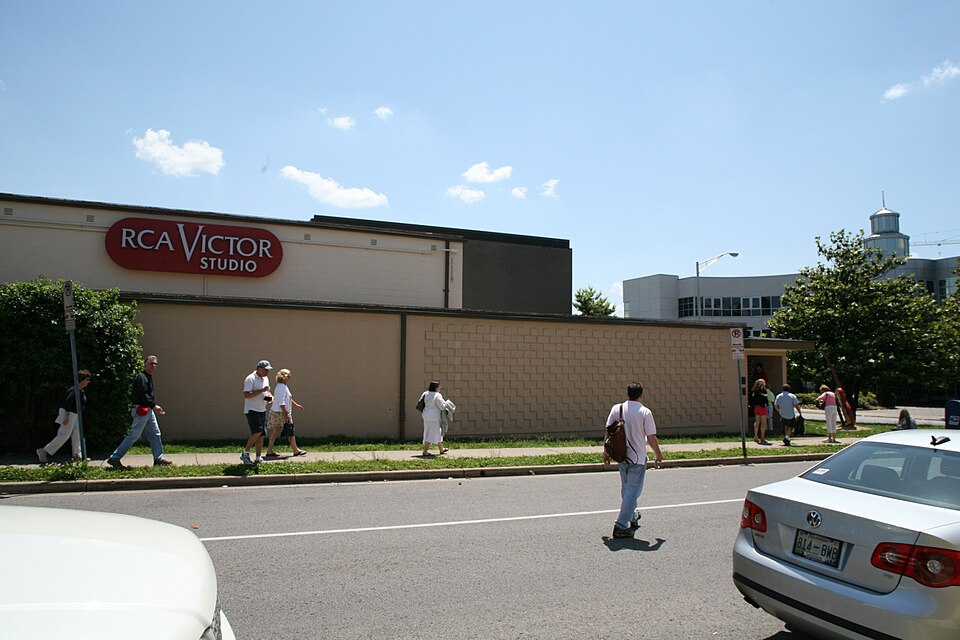
Music Row centers on 16th and 17th Avenues South and has been one of the physical hearts of Nashville’s recording industry. Historic studios, publishers, labels, offices, and converted houses helped turn an ordinary-looking neighborhood into one of the most important music-business districts in America.
The funny part is how little of that history announces itself.
Drive through too quickly and you can miss the point completely.
There are no giant amusement-park gates welcoming you to Music Row. Some of the most important buildings look like houses or modest offices. That understated appearance makes the neighborhood feel almost strange after the spectacle of Broadway.
The history happened indoors.
Behind a door.
Inside a recording booth.
Around a microphone.
Here’s what catches people off guard.
Music Row becomes dramatically more interesting once you stop looking for attractions and start looking for stories.
Historic RCA Studio B is the clearest example.
The studio is associated with recordings by artists including Elvis Presley, Dolly Parton, and Roy Orbison. Walking into a historic recording room creates a connection that driving around Music Row taking pictures of buildings simply cannot match.
The insider tip is to learn before you wander.
Know what you are looking at. Understand why Studio B matters. Pay attention to the older houses that became music-industry offices and the way an entire business grew inside what still resembles a neighborhood.
The trap is expecting Music Row to behave like Broadway.
It doesn’t.
That’s exactly the point.
Music Row was a workplace. The magic was never supposed to happen on the sidewalk.
And if the industry’s old neighborhood has changed, wait until you see what happened across the river.
The Neighborhood That Became Famous for Not Feeling Famous
East Nashville had an established reputation for independent restaurants, musicians, artists, older homes, vintage shopping, and an anything-goes creative streak long before it became a standard stop on Nashville travel itineraries.
As Nashville grew, East Nashville grew with it.
Walk around today and you can still find porches, independent businesses, neighborhood restaurants, music, old houses, and the slightly off-center personality that drew people across the Cumberland in the first place.
But you will also see something that would have seemed far less common two decades ago.
Visitors arriving specifically to experience “East Nashville.”
That’s what fame does to a neighborhood.
People begin traveling there because it supposedly feels local, which gradually changes what “local” feels like.
Here’s what catches people off guard.
The best way to experience East Nashville is not to race through a checklist of its most photographed businesses.
Slow down.
Grimey’s New & Preloved Music is one place where Nashville’s music culture still feels tactile. Browse records. Read the handwritten dividers. Look at what people are actually buying instead of treating the neighborhood like a backdrop.
Then stay on the east side awhile.
Have lunch. Walk. Browse an independent shop. Find somewhere to hear music later.
The mistake is trying to “do East Nashville” in 45 minutes before rushing to 12 South, The Gulch, and another neighborhood before dinner.
That turns neighborhoods into attractions.
Nashville makes more sense when you stop collecting neighborhoods and start spending time in them.
And nowhere is the difference between collecting and experiencing Nashville more obvious than at the table.
The Nashville Food That Was Never Supposed to Be a Pain Contest
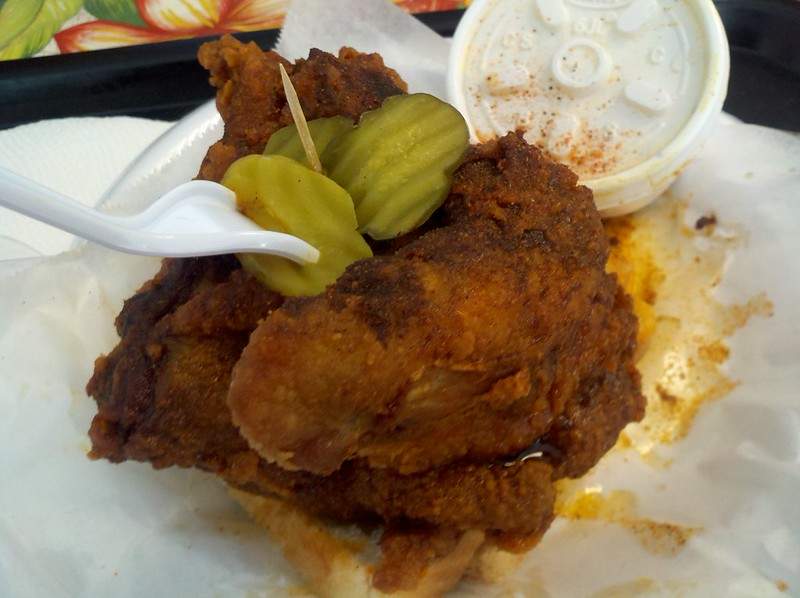
Nashville hot chicken began as a Black Nashville food tradition long before visitors started arriving with cameras and increasingly ambitious heat-level plans. Prince’s Hot Chicken remains inseparable from that history, while places such as Bolton’s Spicy Chicken & Fish represent another longstanding connection to the dish.
Twenty years ago, hot chicken was much closer to neighborhood food than a national tourism phenomenon.
Today it is everywhere.
The smell reaches you first.
Fried chicken, hot oil, cayenne, warm bread.
Then comes the color, from orange-red to a shade that should probably make a reasonable person reconsider several recent decisions.
You bite through crisp skin into juicy meat, then the heat starts climbing.
Not always immediately.
Sometimes it waits.
Here’s what catches people off guard.
Hot chicken was food before it became a dare, and ordering the hottest possible level is not required to experience it properly.
Locals who actually want lunch tend to understand this.
Order a heat level you can enjoy. Pay attention to the chicken itself. Eat the white bread underneath after it has soaked up the seasoned oil. Use the pickles to cut through the richness.
And don’t overlook fish.
Bolton’s is known for spicy chicken and fish, and that second half of the name matters.
The trap is ordering based on pride.
Heat scales are not universal. “Medium” at one restaurant does not guarantee the same experience somewhere else.
There is no prize for spending the rest of your afternoon regretting lunch.
Eat for flavor.
Then notice the sides.
Greens, slaw, beans, potato salad, grits, or whatever the restaurant does particularly well can tell you more about a Nashville kitchen than the hottest item on the menu.
Speaking of meals that became destinations, breakfast has undergone its own Nashville transformation.
The Southern Breakfast That Still Requires You to Slow Down
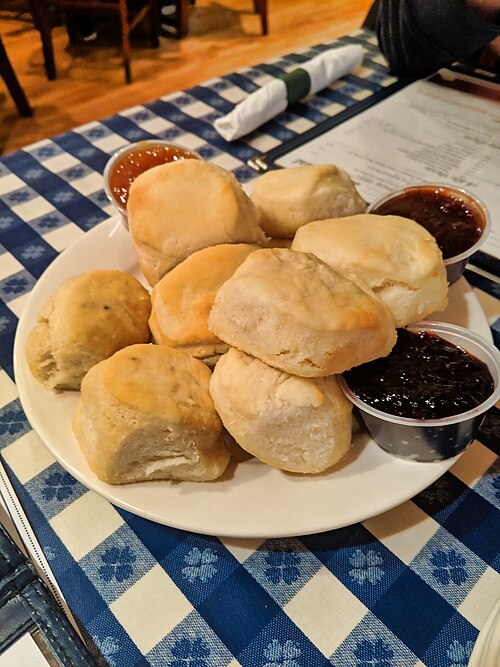
Loveless Cafe sits southwest of downtown Nashville near the northern end of the Natchez Trace Parkway. Its history stretches back decades, and its biscuits have become one of the best-known breakfast traditions in Middle Tennessee.
It is not a secret.
That’s important.
The parking lot fills. Visitors take pictures. People arrive specifically because they have heard about the biscuits.
Yet there is something about the meal that still feels connected to an older style of Tennessee road travel.
A plate lands on the table.
Biscuits come apart in your hands.
Preserves turn the inside sticky and sweet.
Country ham brings the salt.
Coffee keeps appearing.
Nobody needs to construct a towering brunch dish just so somebody at the next table will photograph it.
Here’s what catches people off guard.
The appeal is not that Loveless is undiscovered. It is that the food still connects Nashville to the roadside Southern restaurant culture that existed before brunch became an event.
The insider move is simple.
Don’t treat breakfast like something to squeeze between three attractions.
Give it time.
If you are continuing onto the Natchez Trace Parkway, the meal makes even more sense as the beginning of a slower morning rather than a standalone photo stop.
The trap is assuming a famous Nashville breakfast automatically means fast.
Popularity changes the rhythm.
Crowds happen.
If your schedule has no flexibility, you may spend the entire meal watching the clock instead of tasting it.
That is exactly the habit old Nashville punishes.
The city used to reward wandering.
Now you sometimes have to deliberately build wandering back into the day.
And one of the best places to understand what Nashville lost is not a restaurant or music venue at all.
It is a place that disappeared.
The Nashville Attraction People Still Talk About Decades After It Closed
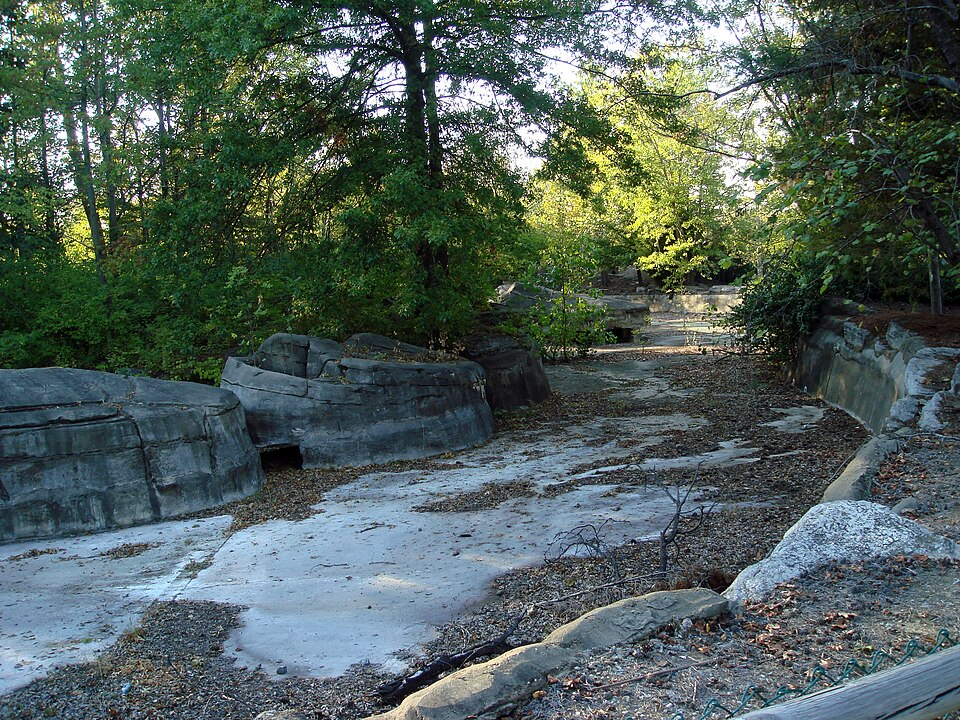
Opryland USA closed in 1997, which means the theme park was already gone by 2006. But its absence still hangs over conversations about how Nashville tourism changed because the park represented a very different idea of what a Nashville vacation could be.
For generations of families, the Opryland area was the trip.
Rides.
Shows.
Country music.
The Grand Ole Opry.
A hotel stay.
Parents, grandparents, and children could all have something to do without building a weekend around downtown nightlife.
The park itself is gone, so this is not a recommendation to search for something that no longer exists.
It is a clue.
Here’s what catches people off guard.
The nostalgia surrounding Opryland is partly nostalgia for a version of Nashville tourism that revolved around families and country music rather than nightlife.
You can still build that kind of trip.
The Grand Ole Opry remains. Nashville has museums, historic sites, parks, daytime performances, neighborhoods, and attractions that have nothing to do with late-night Broadway.
The insider tip is to stop letting Nashville’s loudest marketing define the entire city.
A family does not have to choose between dragging children through an adult entertainment district and skipping Nashville altogether.
Build the day around music history.
Spend time outside.
See the Opry.
Explore somewhere away from Lower Broadway.
The trap is believing modern Nashville begins and ends under neon lights.
It never has.
And the institution that survived Opryland offers perhaps the strongest bridge between those two versions of the city.
The Nashville Show That Makes More Sense When You Stop Treating It Like an Attraction
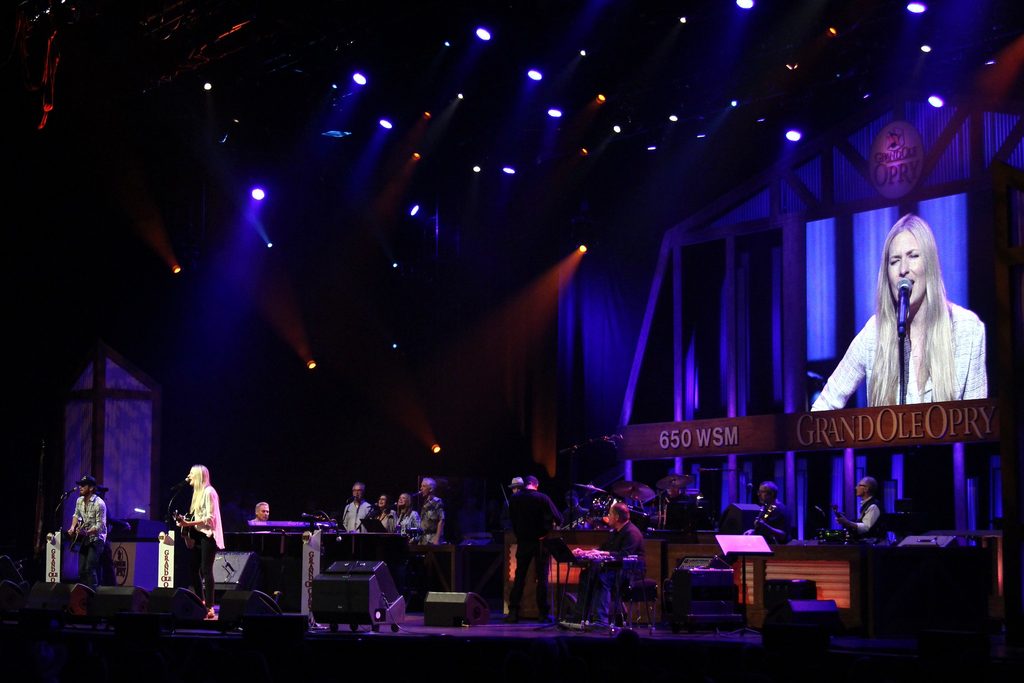
The Grand Ole Opry remains one of Nashville’s defining institutions and one of the world’s best-known country music traditions. Its importance stretches far beyond the modern tourism boom that transformed downtown.
A strange thing happens when you actually sit down for the show.
The modern city fades.
The format asks something different from you.
Listen.
One performer gives way to another. Generations share the same stage. Newer artists appear alongside performers carrying decades of country-music history.
There is less interest in making every second look enormous.
That’s part of the charm.
Here’s what catches people off guard.
The Opry works best when you stop thinking of it as a Nashville landmark and experience it as a live radio-rooted country music show.
Don’t go only for the building.
Don’t spend the entire performance waiting for the one artist whose name you recognize.
Part of the Opry tradition is the mixture itself.
That is the insider move.
Let the lineup introduce you to somebody.
The trap is comparing the atmosphere to Broadway and deciding one is supposed to replace the other.
They are different Nashville experiences.
Broadway is immediate.
The Opry is cumulative.
Its power comes from realizing how many careers, songs, generations, and Saturday nights are tied to the same tradition.
That history can feel almost heavy.
So the next stop should be lighter, louder, and full of the simple pleasure of flipping through something you can actually hold.
The Nashville Shopping Experience That Still Feels Like Finding Something
Nashville shopping changed as the city’s tourism economy exploded. Downtown now offers practically every imaginable way to put the city’s name, skyline, guitars, boots, or country-music imagery onto something you can carry home.
There is nothing wrong with buying a Nashville T-shirt.
But there is a difference between buying proof that you visited Nashville and finding something you would have wanted even if the city’s name were not printed across it.
Walk into an independent record store, vintage shop, maker space, or neighborhood boutique and the experience slows down.
You browse.
You touch things.
You change your mind.
You discover an album you forgot existed.
You find an object with no connection to your vacation checklist whatsoever.
That’s the fun.
Here’s what catches people off guard.
The most Nashville thing you bring home may be something that does not say “Nashville” anywhere on it.
Grimey’s is a good example for music fans because browsing records is part of the experience rather than simply a transaction.
Elsewhere, neighborhood stores and independent businesses can give you the same feeling.
The insider trick is asking yourself one question before buying a souvenir.
Would I still want this if it didn’t have Nashville printed on it?
If the answer is yes, you probably found something worth carrying home.
The trap is waiting until your final hour downtown and panic-buying whatever is closest to the hotel.
Slow shopping creates better memories.
And slowing down becomes even more important when you reach Nashville’s historic core, where the past can disappear behind the present almost in plain sight.
The Downtown History Most Visitors Walk Past Without Seeing
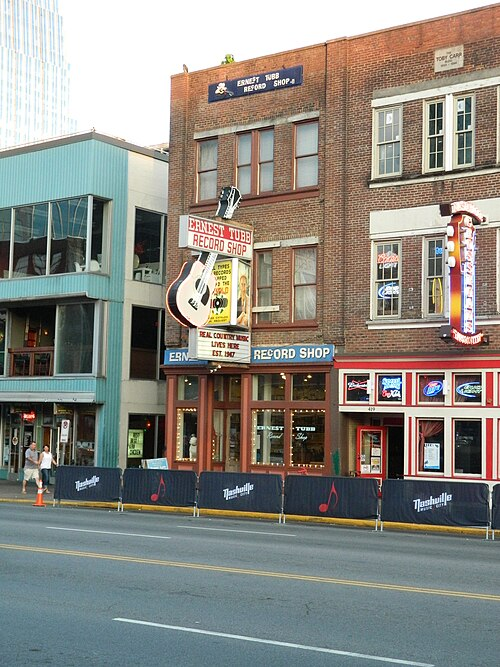
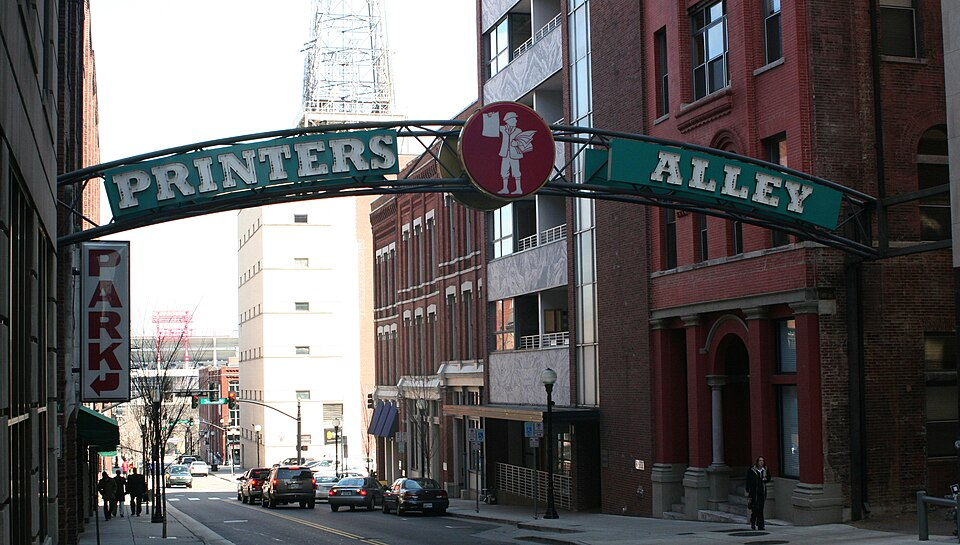
Broadway, Second Avenue, Printer’s Alley, and the surrounding downtown blocks contain layers of Nashville history that existed long before rooftop bars, weekend party trips, and giant entertainment complexes reshaped the visitor experience.
The buildings are still telling the story.
You just have to look up.
Old brick.
Narrow facades.
Upper-story windows.
Alleys that feel dramatically different from the bright streets a block away.
A modern sign may cover part of the view, but the bones of older Nashville remain.
This is one of downtown’s strangest contradictions.
Thousands of people can walk through a historic district without really seeing the history.
Here’s what catches people off guard.
Downtown becomes more interesting when you stop asking what is inside every building and start asking what happened there before you arrived.
Printer’s Alley is a good example.
The narrow passage feels different from the open spectacle of Broadway. Knowing its history gives the architecture and layout context that a quick photograph cannot provide.
The insider move is to walk downtown during daylight at least once.
Nighttime Nashville is designed to grab your attention with sound and light. Daylight lets the older city come forward.
Look at the buildings.
Read historical markers.
Walk instead of hopping from attraction to attraction.
The trap is saving every downtown minute for Friday or Saturday night.
You’ll see Nashville at maximum volume and miss many of the details underneath it.
And if you really want to hear what gets lost in that volume, your next stop needs one thing Nashville nightlife does not always provide anymore.
Silence.
The Kind of Nashville Night Where People Actually Listen
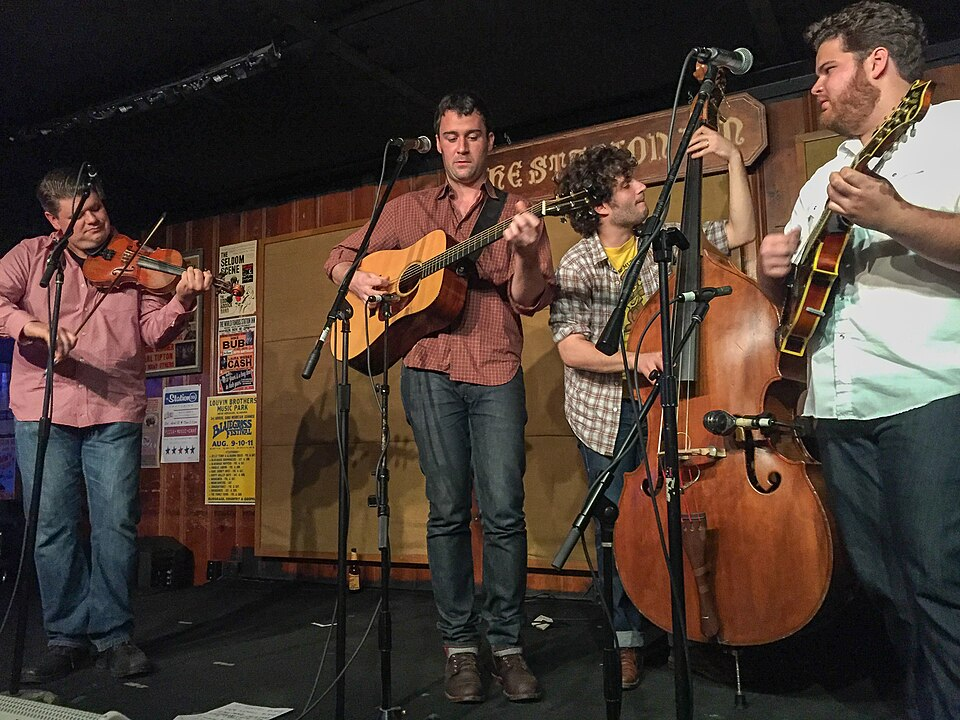
The Station Inn has long been associated with bluegrass and roots music, while Nashville’s listening rooms and smaller venues preserve another side of a city increasingly famous for giant bars and high-volume nightlife.
These rooms ask for a different kind of attention.
The lights lower.
Conversation settles.
An instrument gets tuned.
Then a musician starts playing and nobody needs a giant screen to tell the room where to look.
You hear fingers slide across strings.
You hear a breath before a lyric.
You hear the little spaces between notes that disappear when music has to compete with hundreds of conversations.
That’s old Nashville magic.
Not because every small room is old.
Because listening is.
Here’s what catches people off guard.
One of the easiest ways to make modern Nashville feel more like the city people remember is simply choosing a room where the music is the main event.
Pick the venue based on what you want to hear, not which building is most famous.
Bluegrass, songwriters, rock, Americana, country, indie music, and other scenes all exist beyond the standard Broadway circuit.
The insider tip is to commit to a performance.
Don’t spend 20 minutes listening and immediately leave because another place is trending online.
Stay for the set.
Let the room work.
The trap is venue collecting.
Three rushed music stops rarely beat one show you actually remember.
That lesson applies to the entire city, and nowhere does it save more frustration than on the final day of a Nashville weekend.
The Nashville Itinerary Mistake That Didn’t Exist on This Scale 20 Years Ago
Modern Nashville visitors can arrive carrying a list that would exhaust somebody who lives here.
Best brunch.
Best mural.
Best hot chicken.
Best rooftop.
Best honky-tonk.
Best cocktail.
Best neighborhood.
Best museum.
Best photo.
Best everything.
The phone comes out before breakfast and barely disappears before bedtime.
You rush through 12 South because East Nashville is next. You leave a band you like because your reservation starts soon. You abandon a good conversation because somebody online said there is another place you “have to” see.
By Sunday, you have photographs of Nashville.
You may not have experienced much of it.
Here’s what catches people off guard.
The closest thing to experiencing Nashville the old way may be leaving several hours of your trip completely unplanned.
That is the insider tip.
Leave room.
Not fake free time that already has four backup attractions attached to it.
Actual room.
If lunch runs long, let it.
If the band is good, stay.
If you like a neighborhood, keep walking.
If everybody is tired, sit somewhere.
The trap is treating Nashville like a checklist that can be completed.
It cannot.
The city has too many neighborhoods, too much music, too much history, and too many restaurants to “finish” in a weekend.
Twenty years ago, visitors still made plans.
What was different was the pressure to optimize every minute.
Give yourself permission to waste an afternoon.
It might become the part you remember most.
And that brings us to the Nashville change underneath every other change on this list.
The Unexpected Fact About the Nashville People Miss
The Nashville of 20 years ago was not better at everything.
Today’s city has more restaurants, more hotels, more attractions, more venues, revitalized areas, and a national profile that the Nashville of 2006 did not have on the same scale. The city did not simply lose things. It gained an enormous amount too.
What changed most was Nashville’s relationship with visitors.
Nashville became a destination instead of simply being a city many people happened to visit because of music.
That distinction explains a lot.
Once a place becomes something millions of people arrive determined to experience, spontaneity becomes harder. Reservations matter. Famous restaurants develop lines. Neighborhoods become attractions. Music rooms become bucket-list stops. Ordinary local traditions become things visitors research months before arriving.
The old Nashville did not disappear in one dramatic moment.
It became harder to see underneath the larger city built around it.
That is why chasing nostalgia rarely works.
You cannot reopen Opryland USA.
You cannot make East Nashville undiscovered again.
You cannot shrink Lower Broadway.
You cannot turn the internet off and make a famous restaurant anonymous.
But you can change the way you experience the city.
Listen longer.
Walk slower.
Learn the history behind Music Row instead of driving past it. Order hot chicken because it tastes good instead of because you want to prove something. Spend an afternoon in one neighborhood instead of photographing four. See the Opry as a performance, not a box to check.
And every once in a while, put the phone away and follow the music coming through a doorway.
Nashville got bigger.
The trick is remembering that bigger does not have to mean faster.
Sometimes the Nashville people miss is still right there, waiting for somebody willing to slow down enough to notice it.