A Nashville weekend can get expensive fast when you spend it chasing famous photo stops, premium rooftops, long food lines, and attractions you were told you absolutely have to see.
Some of Nashville’s best-known places deserve their reputation. Others are simply over-visited. The trick is knowing when to take the famous picture and keep moving, because the Nashville locals enjoy is often sitting just beyond the crowd.
The Broadway Bar That Feels Like the Nashville People Came Looking For
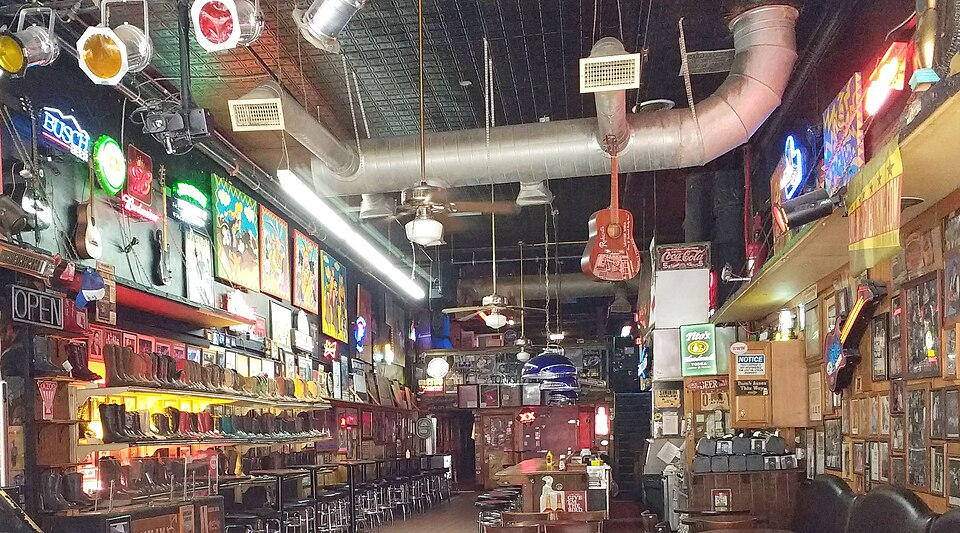
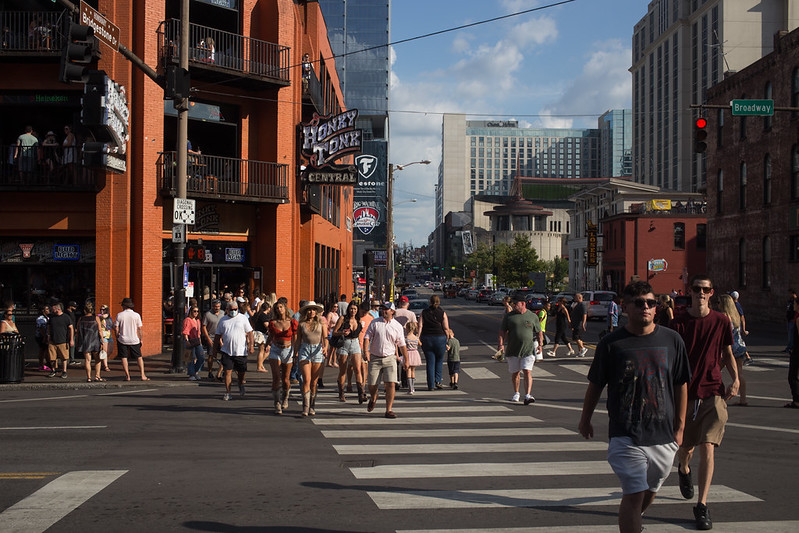
Robert’s Western World sits right in the middle of Lower Broadway, surrounded by giant screens, rooftop bars, packed sidewalks, and some of the biggest celebrity-branded venues in Nashville.
Yet step through its doors and Broadway suddenly feels smaller.
The room is narrow. The stage is close. Traditional country, western swing, and rockabilly still matter here. Instead of wandering through several enormous floors trying to figure out where the music is coming from, you can actually settle in and listen.
Outside, Broadway flashes and roars.
Inside Robert’s, somebody is usually picking a guitar.
Here’s what catches people off guard.
Robert’s famous $6 Recession Special includes a fried bologna sandwich, chips, a MoonPie, and a PBR.
Six dollars does not go far in downtown Nashville anymore, which makes the whole thing feel almost stubbornly out of place.
The insider move is to visit earlier instead of treating Robert’s only as a late-night stop. You can get the old-school honky-tonk atmosphere before Broadway reaches full nighttime intensity.
There is no cover charge, but bring money for the band. Tip buckets matter in Nashville, especially in the honky-tonks where musicians may be playing for tips.
The trap is assuming the largest bar with the most famous name automatically provides the most authentic Broadway experience.
Visit the big places if they interest you. Climb to a rooftop. Look down at the neon.
Then walk into the little honky-tonk.
But a few blocks away, another famous Nashville stop has visitors waiting for a photograph when one of the city’s great listening rooms is practically around the corner.
The Ten-Second Photo That Can Eat Up Part of Your Morning
Kelsey Montague’s What Lifts You wings mural stands on 11th Avenue South in The Gulch. Completed in 2017, the enormous wings rise roughly 23 feet and have become one of Nashville’s most recognizable photo stops.
You know the routine.
Someone steps between the wings.
A friend backs up with a phone.
Pose. Smile. Another picture. Check it. Take one more.
Then the next person moves forward.
The mural itself is clever, with Nashville references worked into the design. But when the picture becomes your entire Gulch experience, you are missing something far more Nashville nearby.
Here’s what catches people off guard.
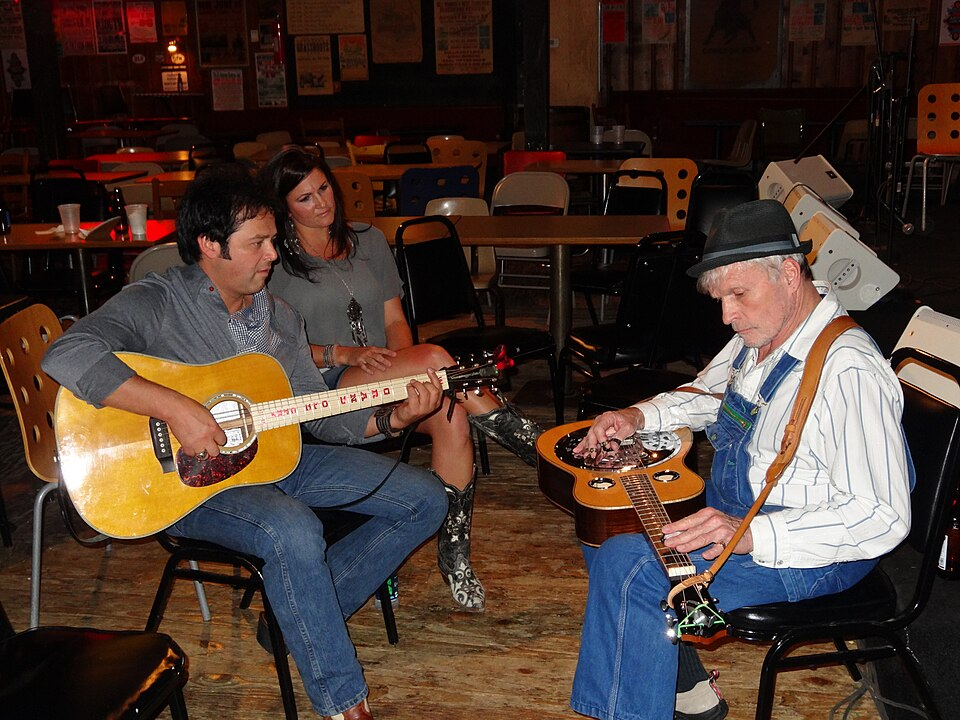
The Station Inn, one of Nashville’s legendary bluegrass and roots music rooms, sits in the same neighborhood.
Its low-slung building almost looks misplaced among The Gulch’s newer glass towers.
That is part of the charm.
Inside, the atmosphere is wonderfully uncomplicated. Acoustic instruments replace giant video walls. Musicians sit close enough for you to watch their fingers move across strings. Pizza, cold drinks, mismatched chairs, and serious picking are more important than polished décor.
The Station Inn’s Sunday Bluegrass Jam is especially worth knowing about. Musicians gather in a picking circle, listeners settle around them, and the emphasis is exactly where it should be: the music.
The insider trick is to take your wings picture when the area is quieter, then spend the meaningful part of your Gulch visit somewhere you can actually experience Nashville’s musical culture.
The trap is spending a large chunk of your morning waiting for a photograph that takes seconds to capture.
Take the picture.
Just don’t mistake the picture for The Gulch.
And if waiting for a mural seems excessive, Nashville has another famous experience where people sometimes wait even longer just to eat lunch.
The Hot Chicken Mistake That Turns Lunch Into an Endurance Test
Prince’s Hot Chicken is the name that matters when you start digging into Nashville hot chicken history. Its tradition stretches back generations, and the restaurant remains one of the foundational names behind the dish Nashville exported to the rest of the country.
That matters because visitors sometimes approach hot chicken as if there is one famous restaurant they are required to stand in line for.
There isn’t.
The first thing you notice when good hot chicken arrives is not a logo.
It is the smell.
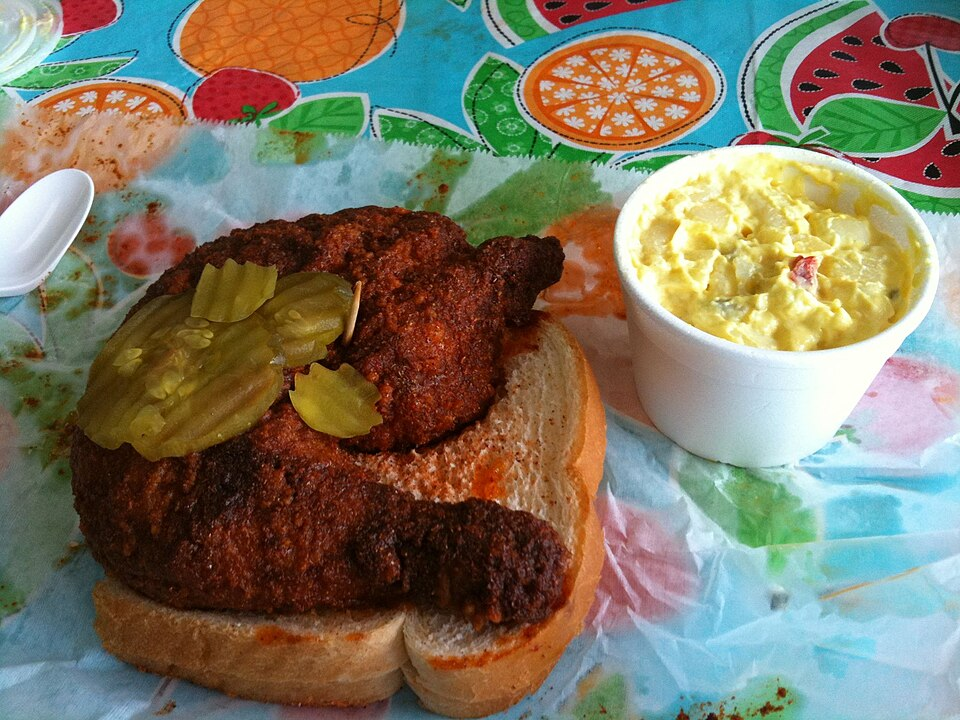
Fried chicken, pepper, seasoned oil, warm bread. Then comes the crunch. Then the heat starts building.
That should be the experience.
Not spending a huge chunk of your afternoon watching a restaurant line inch forward.
Here’s what catches people off guard.
Nashville’s hot chicken tradition is much older and broader than the modern chains that introduced many visitors to it.
Prince’s remains essential to the story. Bolton’s Spicy Chicken & Fish is another old-school Nashville name, and the fish there deserves attention too.
The insider move is to stop treating heat level as a competition.
There is no universal Nashville heat scale. Mild at one restaurant can hit differently from mild somewhere else. Ordering the hottest level simply because you are in Nashville can turn lunch into a sweaty endurance event instead of a good meal.
Dark meat is also worth considering. A leg quarter gives you thigh and drumstick with enough richness to stand up to aggressive pepper seasoning.
Then there is the white bread.
Do not dismiss it.
That plain slice underneath the chicken catches the spicy seasoned oil dripping from the crust. Pickles cut through the richness with a sharp bite.
The trap is believing there is one “correct” restaurant or one correct heat level.
The goal is to eat great hot chicken, not prove anything.
And Nashville’s next overrated stop involves another thing visitors wait to stand in front of, except this time nobody even gets lunch afterward.
The Five-Minute Sign People Build an Entire Neighborhood Visit Around
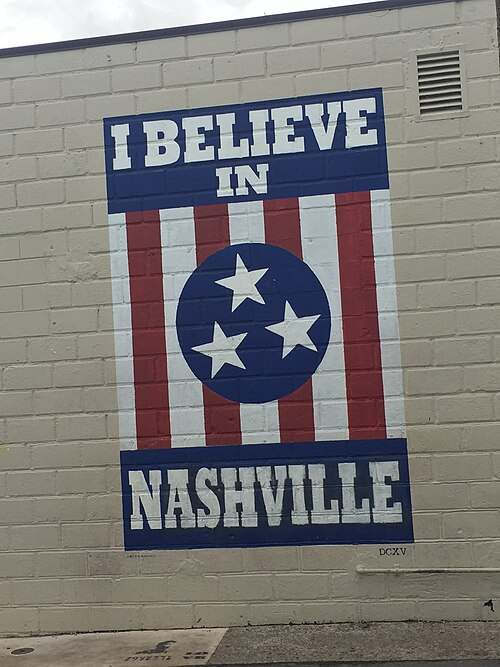
The I Believe in Nashville mural has become one of the city’s signature images, and 12 South is closely associated with it.
The problem is not the mural.
The problem is treating an entire neighborhood like the background for one photograph.
You arrive. Find the familiar design. Wait for your turn. Smile. Take the picture.
Then what?
That question is where the better version of 12 South begins.
Walk.
The neighborhood makes much more sense at sidewalk speed. Storefronts, restaurants, coffee stops, boutiques, homes, and little details start replacing the single image you came to collect.
You hear conversations spilling out of patios. You smell coffee and lunch before you decide where to stop. You start noticing things that never appeared on the itinerary.
Here’s what catches people off guard.
The mural should be a stop during your 12 South visit, not the entire reason you came to 12 South.
The insider trick is almost embarrassingly simple. Build your visit around something you actually want to do, such as lunch, coffee, or browsing the neighborhood, and let the mural happen along the way.
That reverses the usual tourist itinerary.
Instead of driving into the neighborhood, hunting for the picture, taking it, and immediately driving somewhere else, you get a sense of how the area fits together.
There is another advantage.
Nashville traffic can turn a collection of tiny photo missions into half a day spent staring at brake lights. Every time you move the car to chase another famous Instagram location, you gamble with congestion and parking.
Pick a neighborhood and stay awhile.
The trap is believing you need every Nashville photograph you have already seen online.
You don’t.
One good afternoon beats six rushed pictures.
And speaking of landmarks people photograph without really experiencing, Nashville has an enormous Greek temple sitting in a city park that far too many visitors never bother to enter.
The Giant Nashville Landmark People See Only From the Parking Lot
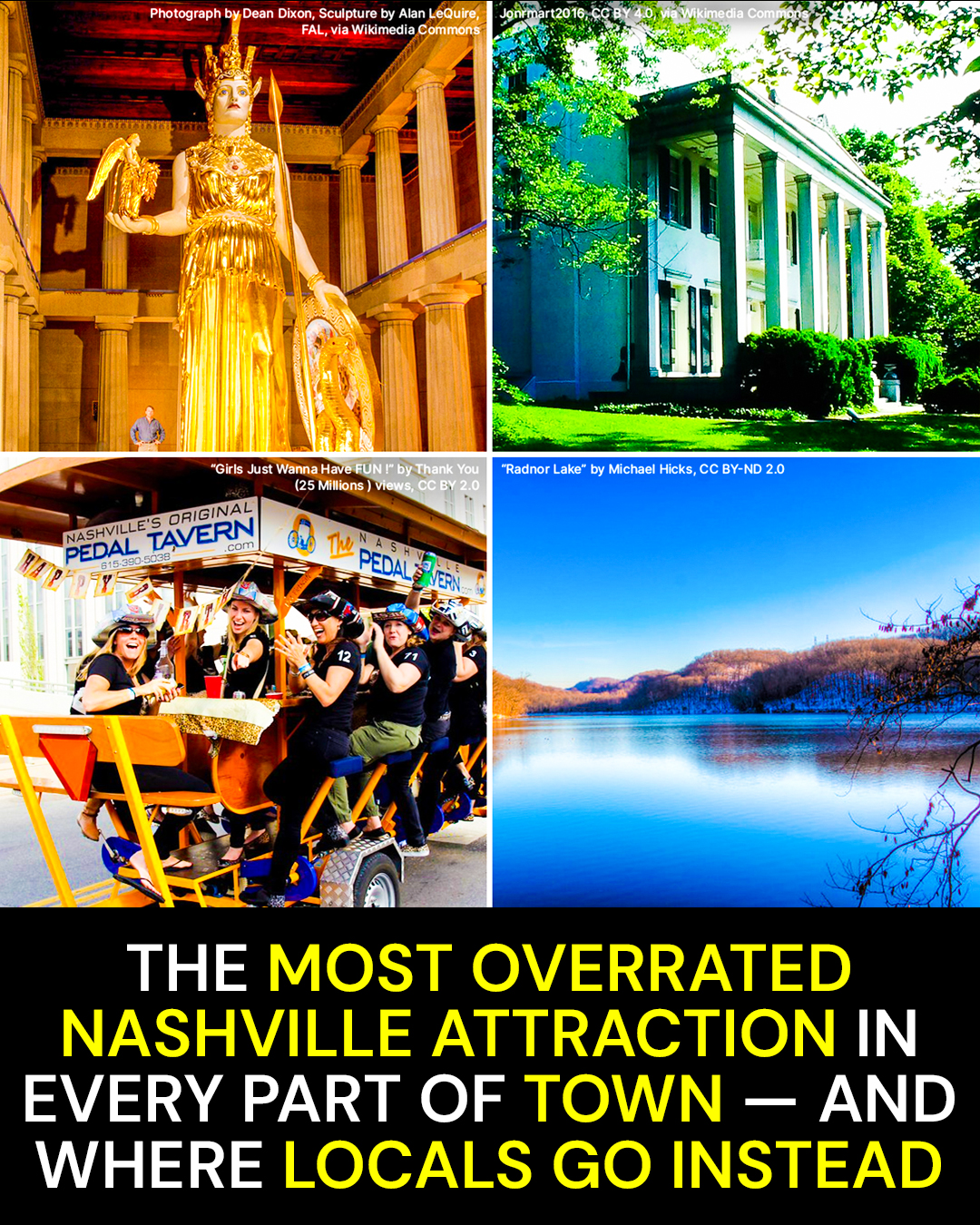
The Parthenon stands in Centennial Park and is a full-scale replica of the ancient Greek Parthenon. It was originally built for Tennessee’s 1897 Centennial Exposition, then later reconstructed as the permanent structure visitors see today.
Most people recognize it immediately.
That creates an odd problem.
Visitors pull into Centennial Park, walk toward the columns, take a photograph, circle the building, and leave.
The outside is certainly impressive.
Those columns feel enormous when you stand beneath them. On a clear afternoon, pale stone catches the sunlight while people spread blankets across the grass and ducks move around the park.
But the exterior is only half the story.
Here’s what catches people off guard.
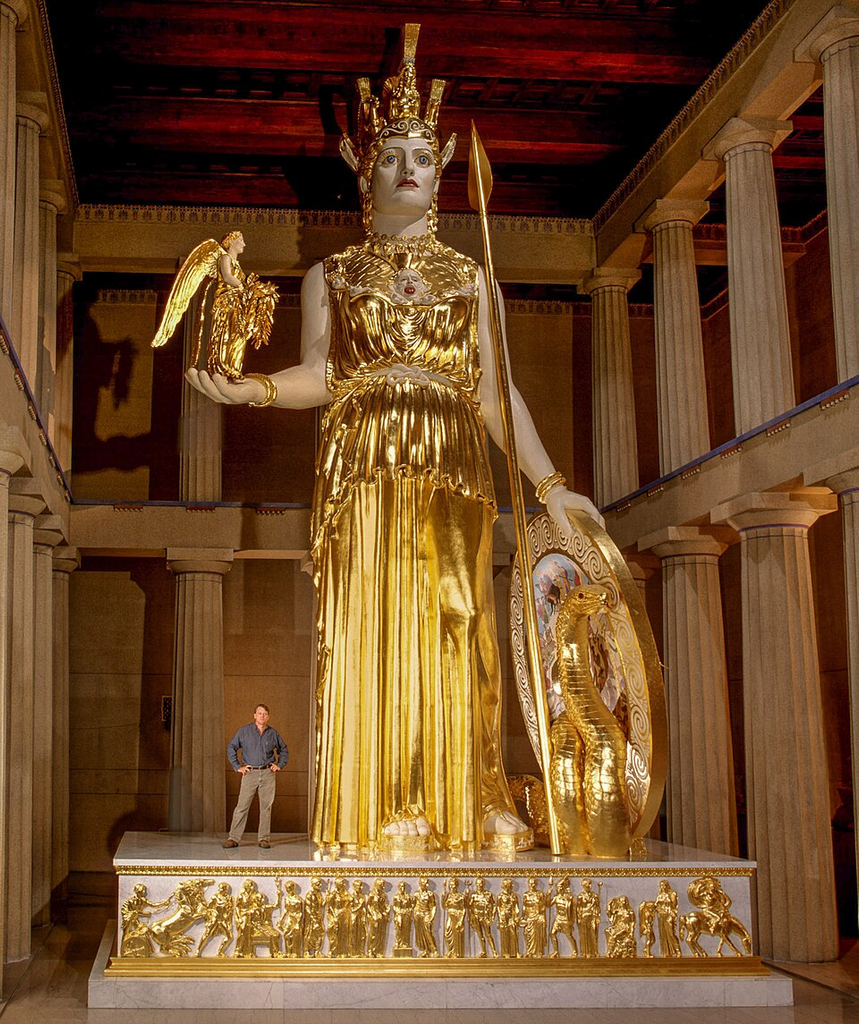
Inside stands a roughly 42-foot statue of Athena, one of the largest indoor sculptures in the United States.
Suddenly the strange Nashville replica makes more sense.
This is not simply an oversized photo prop. The building also functions as an art museum, and understanding why Tennessee built the structure explains a piece of Nashville’s old “Athens of the South” identity.
The insider move is to give Centennial Park an afternoon instead of giving the Parthenon fifteen minutes.
Walk around the lake. Sit beneath the trees. Bring coffee. Watch Nashville slow down around you.
The park itself does not require an admission fee, although entering the Parthenon does.
The trap is scheduling it between two other attractions as if you are collecting landmarks.
You will get your photograph quickly.
The part you remember may happen after you put the phone away.
And if a giant Greek temple feels unexpected in Tennessee, wait until you see how many visitors completely misunderstand another Nashville neighborhood famous around the world.
The Famous Music District That Barely Looks Like an Attraction
Music Row is one of the most famous names in Nashville, but it is not a conventional attraction.
That surprises people.
Visitors arrive expecting something resembling Broadway: obvious entertainment, giant signs, music pouring into the street, and a clear spot where someone can announce, “This is Music Row.”
Instead, they see houses, office buildings, studios, publishing companies, plaques, and ordinary-looking doors.
Some drive through once and leave disappointed.
That is the mistake.
Music Row is interesting because of what happened inside those buildings.
Songs were written here. Records were cut here. Publishing deals were made here. Careers were built inside rooms that can look surprisingly ordinary from the sidewalk.
You are not looking at a theme park built to resemble the music business.
You are looking at the music business.
Here’s what catches people off guard.
Music Row is more meaningful when you understand the studios, publishers, labels, and musicians connected to the buildings rather than searching for one giant attraction.
The insider move is to slow down.
Do a little homework before visiting. Know which historic studios or landmarks interest you. Read plaques. Look at the buildings instead of treating the neighborhood as a drive-by photo stop.
RCA Studio B is one of the places that gives the neighborhood’s history physical meaning. Once you connect ordinary-looking rooms with the recordings made inside them, Music Row changes completely.
The trap is expecting constant entertainment.
Music Row does not perform for you simply because you arrived.
Its appeal is quieter than Broadway’s.
That makes it easy to underestimate.
But sometimes Nashville’s quiet places tell the loudest stories.
And across town, another neighborhood has the opposite problem. People arrive expecting “local” Nashville and accidentally spend their afternoon shopping like they could be almost anywhere.
The Trendy Neighborhood That Works Better When You Stop Chasing Trends
East Nashville has become one of the city’s best-known neighborhoods for independent restaurants, music, shops, coffee, and creative businesses.
That reputation brought attention.
Attention brought visitors.
And visitors brought businesses designed specifically to catch visitor dollars.
Walk the busiest commercial stretches and you can easily spend an afternoon moving between polished shops, trendy restaurants, murals, and carefully arranged displays.
There is nothing inherently wrong with that.
But East Nashville gets more interesting when you stop trying to find the most photographed storefront.
Here’s what catches people off guard.
Some of the neighborhood’s strongest music and shopping experiences are found away from the obvious tourist routine.
Grimey’s New & Preloved Music is a good example.
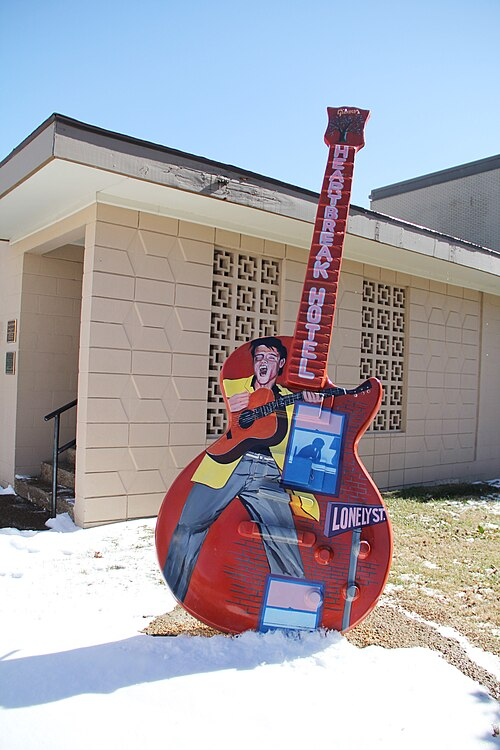
The record store operates from a historic church building on Trinity Lane, with rows of vinyl that invite actual browsing instead of five-minute souvenir shopping.
This is the kind of place where music feels like something people in Nashville still live with, not simply something printed across T-shirts.
The insider strategy is to give yourself permission to browse without a target.
Look through records.
Stop for coffee.
Choose lunch because something smells good rather than because a social media list ranked it number one.
Spend time in the neighborhood instead of driving from one “East Nashville spot” to another.
The trap is turning East Nashville into an Instagram scavenger hunt.
The neighborhood is not one attraction.
It is the atmosphere created by dozens of small places.
That atmosphere takes time.
And when you are ready for even more breathing room, there is a Nashville experience where the skyline disappears, the traffic noise fades, and admission costs exactly nothing.
The Free Nashville Escape People Skip for a $50 Tour
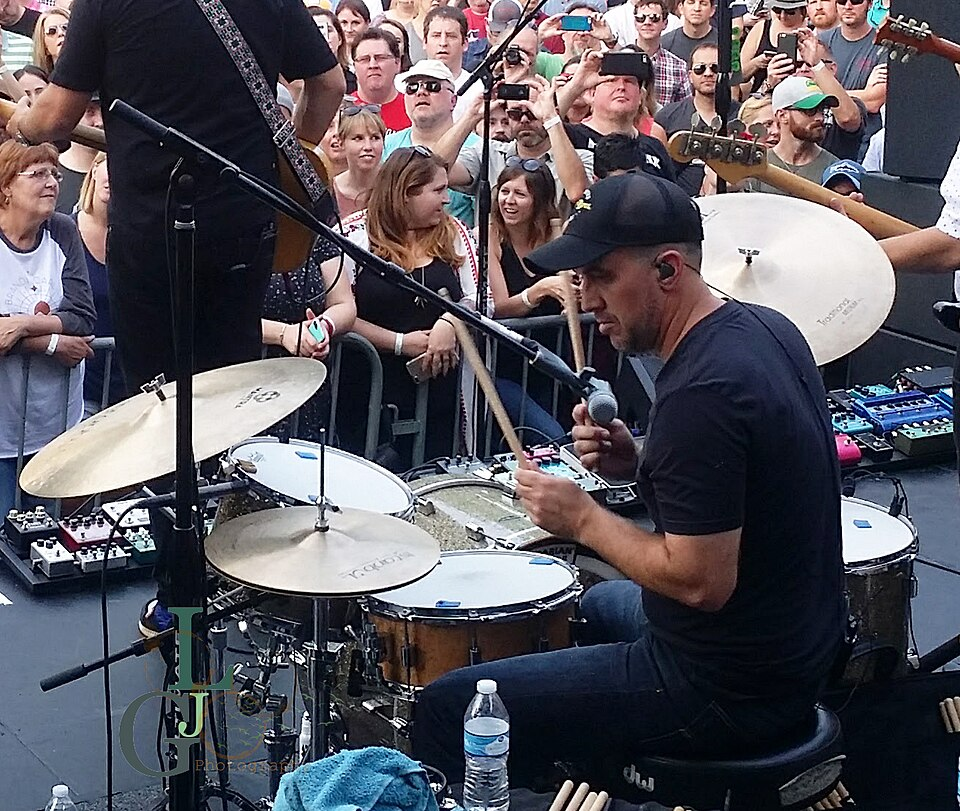
Radnor Lake State Natural Area sits south of downtown Nashville and protects more than 1,300 acres of woods, water, and wildlife.
Admission to Tennessee State Parks is free.
That is worth remembering in a city where visitors can spend serious money simply moving from attraction to attraction.
At Radnor, Nashville seems to shut off.
The traffic fades behind trees.
Footsteps replace rooftop speakers. Leaves move overhead. The lake reflects branches and sky instead of neon.
Wildlife sightings are part of the appeal, but the bigger surprise is how quickly the city feels far away.
You are still in Nashville.
It just doesn’t sound like it.
Here’s what catches people off guard.
You can trade an expensive commercial sightseeing experience for one of Nashville’s most peaceful natural areas without paying an entrance fee.
The insider move is to arrive prepared to walk.
Radnor is not the place for a quick windshield tour. The reward comes from getting onto the trails and letting the pace drop.
Bring water and wear shoes that can handle a trail rather than treating this like another downtown stop.
Also remember that Radnor is protected as a natural area. This is not a recreation park where every outdoor activity goes. Visitors come primarily to walk, observe wildlife, and enjoy the landscape.
Parking can become the real challenge during popular periods.
That is the trap.
Free admission does not guarantee an empty parking space.
Going earlier can make the experience considerably easier.
After several days of honky-tonks, restaurants, traffic, and crowded sidewalks, the quiet can feel almost luxurious.
But Nashville’s most meaningful alternative is not necessarily peaceful. The next one is a room where the whole point is to stop talking and listen.
The Nashville Party Ride That Misses the Best Part of Music City
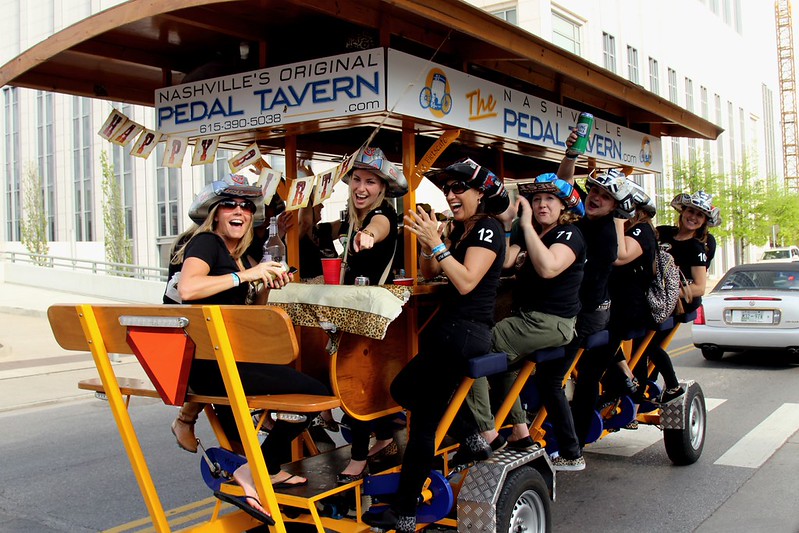
Pedal taverns have become almost impossible to separate from the modern image of downtown Nashville.
You hear them before you really look at them.
Music. Shouting. Matching shirts. Groups waving at strangers on sidewalks while the vehicle rolls through downtown.
For the right group, that may be exactly the experience they want.
But there is an irony here.
People travel to Music City and sometimes spend their precious Nashville hours making so much noise that they barely hear Nashville’s music.
There is another way.
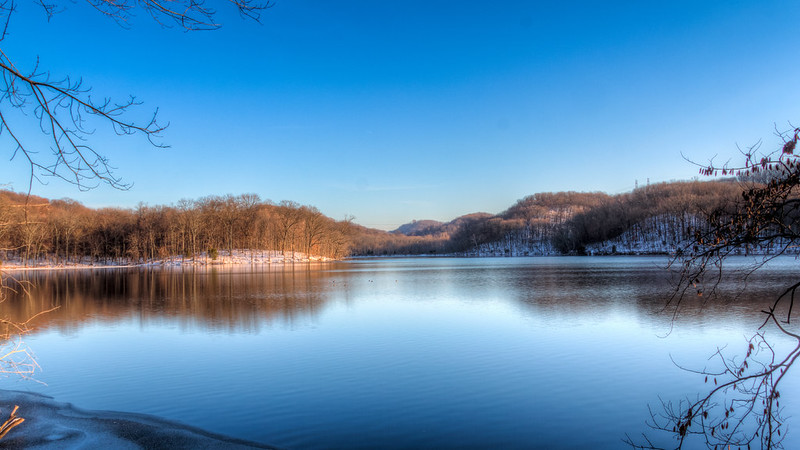
Sit down in a listening room.
Let the songwriter tell you why the song exists.
Listen closely enough to catch the line that makes the entire room go quiet.
Here’s what catches people off guard.
Some of Nashville’s most memorable live-music experiences happen in rooms where listening is more important than partying.
The Station Inn is one option for bluegrass and roots music. Nashville also has songwriter-focused venues where the words themselves are the attraction.
The insider move is to build at least one night around listening rather than bar-hopping.
It changes your relationship with Nashville music.
A song you have heard on the radio can suddenly sound completely different when somebody explains where it came from. An unknown songwriter can walk onto a small stage and deliver the song you remember most from the entire trip.
The practical rule is to check the venue’s schedule before arriving. Listening rooms are performance spaces, not interchangeable bars with identical entertainment every night.
And when the room asks for quiet, respect it.
That is the trap for visitors accustomed to Broadway.
Not every Nashville music venue is designed for shouting over the band.
Sometimes the best thing you can do in Music City is shut up for three minutes.
That lesson becomes even more important when you visit one of Nashville’s most famous institutions, where standing outside for a picture misses almost everything that matters.
The Famous Building That Means Almost Nothing Until the Show Starts
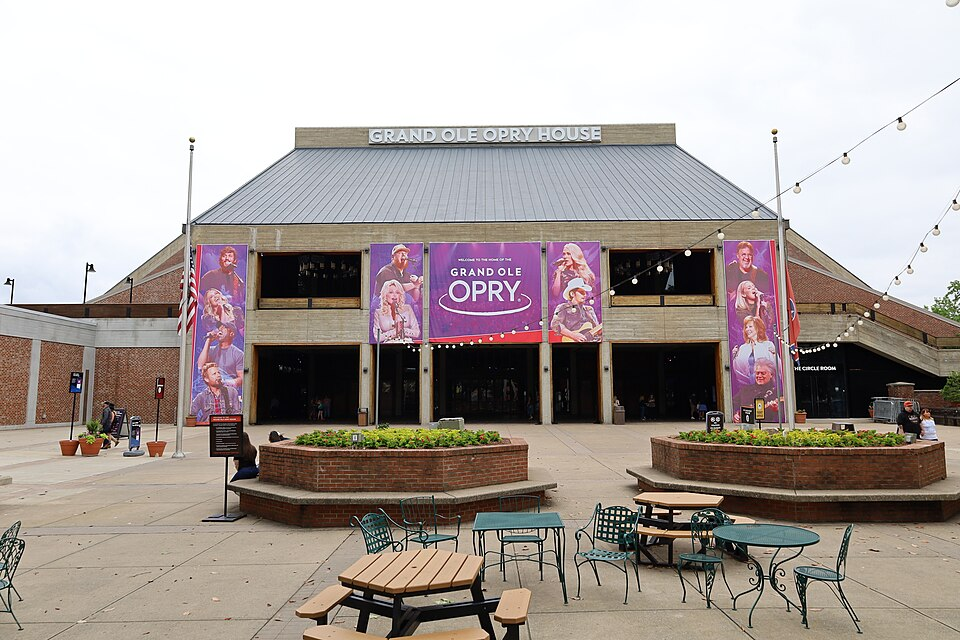
The Grand Ole Opry is one Nashville attraction that does deserve its legendary reputation.
The overrated part is not the Opry.
It is driving to the Opry House, photographing the exterior, browsing around the surrounding area, and leaving without experiencing what made the name famous.
The building is recognizable.
The show is the point.
Inside, the atmosphere changes as the seats fill. Conversations hum around the auditorium. Then the stage lights come up, introductions begin, and decades of country music tradition suddenly stop feeling like museum history.
They are happening in front of you.
Here’s what catches people off guard.
The Grand Ole Opry is a live radio show tradition, not simply a famous Nashville building.
That distinction matters.
The insider move is to check the performance calendar before planning your Opry-area day.
If seeing the Opry matters to you, plan around the actual show first. Do not assume you can simply arrive whenever you happen to be nearby and get the full experience.
If a performance does not fit your schedule or budget, that is fine too.
There is no requirement that every Nashville visitor must check every famous name off a list.
The trap is giving valuable vacation time to the exterior simply because you recognize it.
Take the picture if you are already there.
But country music history is not sitting in the bricks waiting to be photographed.
It comes alive when somebody walks onto that stage.
And Nashville has another historic property where the same rule applies, except the story there is considerably more complicated.
The Beautiful Mansion With a Story That Shouldn’t Be Rushed
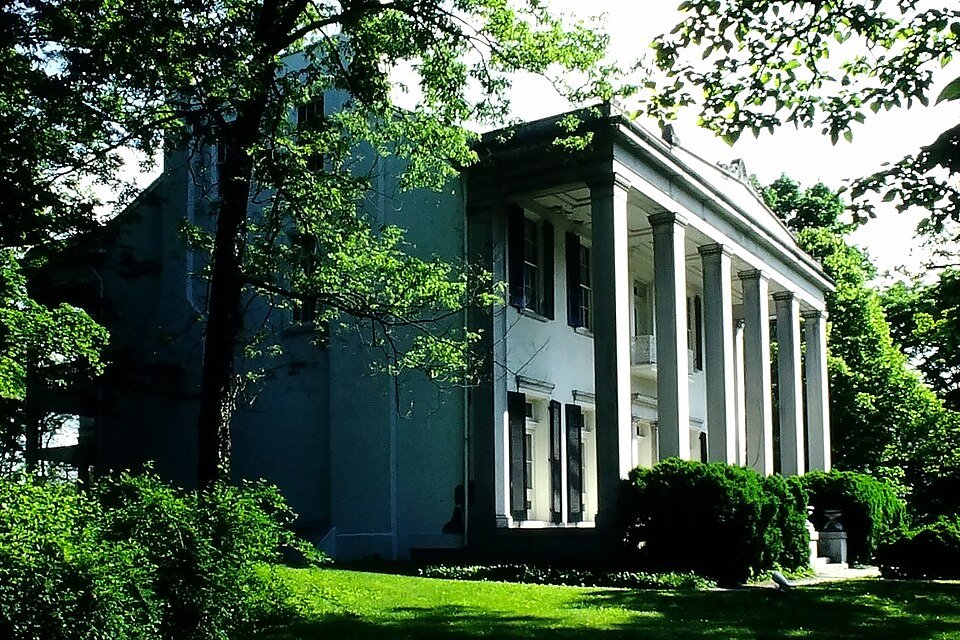
Belle Meade Historic Site is one of Nashville’s best-known historic properties, and its Greek Revival mansion is the image that often draws visitors first.
It is an impressive building.
But treating Belle Meade as a mansion photo stop misses the reason historic places matter.
The grounds are tied to generations of people and to complicated chapters of Tennessee history.
That history deserves more than a quick walk around the front lawn.
Slow down and the property changes.
Architecture becomes evidence.
Rooms become part of a larger story.
The land around the mansion starts to matter just as much as the columns visitors photograph.
Here’s what catches people off guard.
Belle Meade makes more sense when you approach it as a historic site rather than simply as a beautiful old Southern mansion.
That includes confronting stories that are less comfortable than the architecture is pretty.
The insider move is to choose your visit based on the history you actually want to understand rather than showing up only because the mansion appears on Nashville attraction lists.
Read.
Listen.
Give the interpretation time to work.
Historic properties become shallow very quickly when visitors use them only as backgrounds for pictures.
The trap is rushing.
If your itinerary has you watching the clock because you need to reach another neighborhood, another restaurant, and another rooftop within two hours, this is not the place to squeeze in.
Give history room.
Nashville is not only the city that country music built. Its story includes wealth, labor, race, agriculture, architecture, and people whose experiences do not fit neatly into the city’s modern tourism image.
That weight deserves attention.
Then, after something history-heavy, Nashville has the perfect antidote.
Go find a record, grab something good to eat, and enjoy the city without trying to learn anything for an hour.
The Souvenir Trap That Sends People Home With the Same Shirt
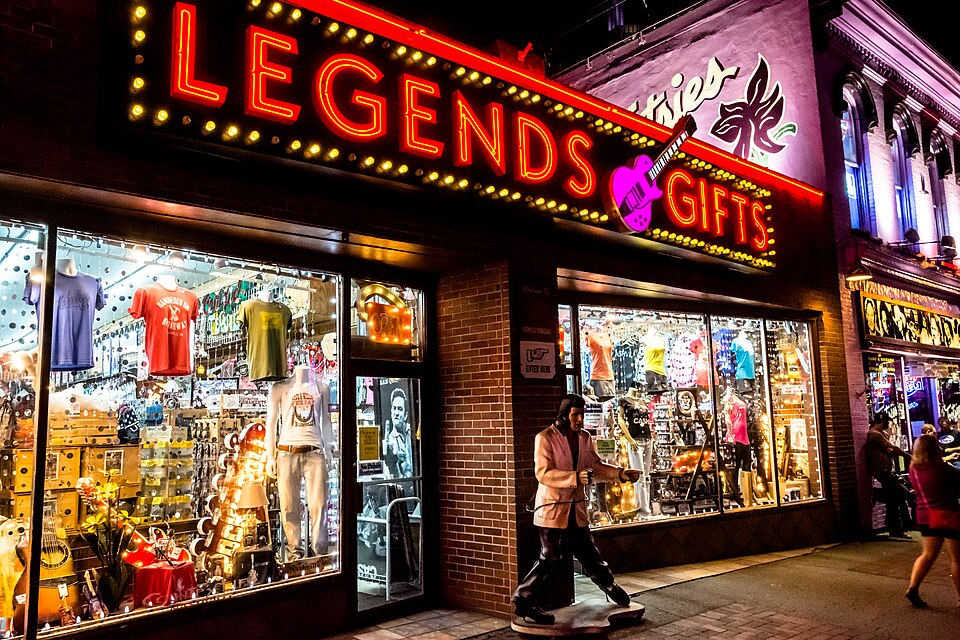
Downtown Nashville makes buying souvenirs ridiculously easy.
Boots.
Hats.
T-shirts.
Signs.
Shot glasses.
Anything that can hold the word “Nashville” will eventually have Nashville printed on it.
After enough time on Broadway, carrying home a bag full of souvenirs can start feeling like part of the required experience.
It isn’t.
The problem with generic souvenir shopping is not that the objects are bad.
It is that many tell you very little about the city you actually visited.
Here’s what catches people off guard.
Some of the best Nashville souvenirs do not say “Nashville” anywhere on them.
A record discovered while flipping through bins at Grimey’s can mean more than another printed T-shirt.
So can something made by a Tennessee artist, a book connected to local history, or an object from an independent neighborhood shop you genuinely enjoyed visiting.
The insider strategy is to buy fewer things.
That sounds almost too simple.
Instead of deciding that everybody back home needs a Nashville souvenir, choose one or two things connected to an actual memory from the trip.
You will probably remember where you found them years later.
The practical advantage is obvious too. Less shopping means less money spent, less luggage space sacrificed, and less time carrying bags around downtown.
The trap is waiting until the final night and panic-buying whatever is closest to your hotel.
Browse neighborhoods while you are already exploring them.
If something catches your eye, great.
If nothing does, Nashville will survive without selling you another cowboy hat.
And the same principle applies to food. The longest restaurant line in town is not necessarily where your best meal is waiting.
The Restaurant Mistake That Makes You Drive Across Nashville for One Dish
Nashville’s food scene has become part of the tourism machine.
A restaurant lands on a national list.
A dish goes viral.
Videos appear.
Suddenly visitors are crossing town, fighting traffic, hunting for parking, and standing in line because somebody online called one plate “life-changing.”
Sometimes the food is excellent.
That does not mean rearranging an entire vacation around it makes sense.
Nashville is spread out enough that one unnecessary cross-town drive can swallow more time than expected.
Meanwhile, the neighborhood you just left probably had several good places to eat.
Here’s what catches people off guard.
Choosing the neighborhood first and the restaurant second can produce a much better Nashville day than chasing famous meals across town.
This is especially useful in places such as Germantown, East Nashville, 12 South, and other areas where restaurants sit among coffee shops, stores, parks, and other things worth exploring.
The insider move is to group your day geographically.
If you are exploring Germantown, eat in Germantown.
If you are spending the afternoon around 12 South, find lunch there.
If you are already across the river in East Nashville, do not automatically drive back downtown because a list told you dinner had to happen on Broadway.
Your feet and your patience will thank you.
The trap is confusing popularity with necessity.
No single restaurant holds the secret key to Nashville.
If the wait is ridiculous and you are hungry, walk away.
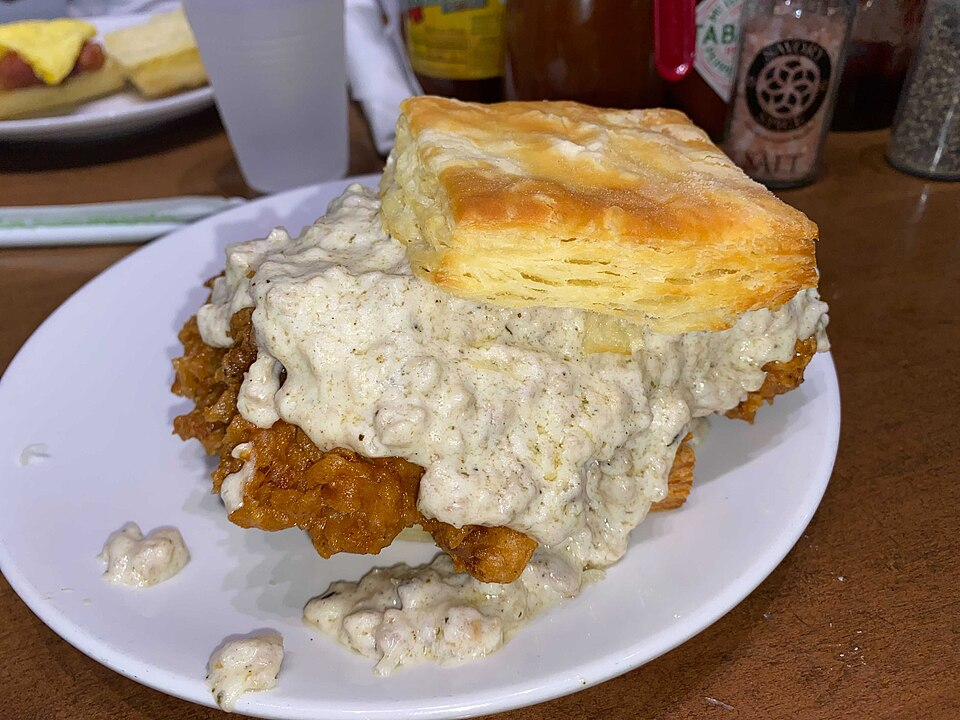
There is no medal for sacrificing two hours of vacation to prove you ate the same biscuit, burger, or chicken everybody else photographed.
And if you really want to save money, there is another Nashville habit worth breaking: paying a premium simply because dinner comes with a skyline.
The Expensive View You Can See Without Ordering a Cocktail
Nashville loves rooftops.
Downtown hotels have them. Broadway bars have them. Restaurants have them. New buildings seem to sprout rooftop spaces almost as quickly as cranes appear on the skyline.
Some are fantastic.
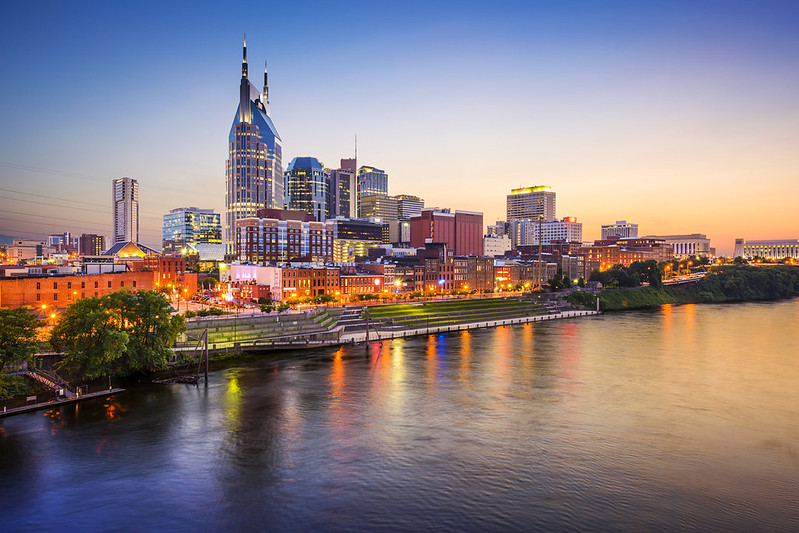
On a warm evening, downtown lights begin glowing while the Cumberland River darkens below. The AT&T Building rises above the city, music floats upward from Broadway, and Nashville looks exactly like the postcard people hoped to see.
But there is a catch.
Sometimes visitors are paying premium drink and food prices when what they really wanted was the photograph.
Here’s what catches people off guard.
You do not need to buy a rooftop cocktail to get a memorable Nashville skyline view.
Walk across the river.
Look back toward downtown.
Explore the pedestrian bridge and public areas around the riverfront where the skyline becomes the attraction rather than the background behind your table.
The city looks especially good when the light starts changing near sunset.
The insider move is to separate two decisions.
Do you genuinely want a rooftop bar?
Or do you want a skyline photograph?
If the answer is rooftop bar, go enjoy one. Sit down, order something, listen to music, and make an evening of it.
If the answer is photograph, you have other options.
The trap is paying for an experience you did not actually want because somebody told you a rooftop was mandatory in Nashville.
Nothing in Nashville is mandatory.
Not Broadway.
Not hot chicken.
Not murals.
Not rooftops.
That freedom is important, because the second-biggest tourist trap in Nashville is trying to fit all of those things into the same 48 hours.
The Nashville Weekend Mistake That Turns Vacation Into a Race
Broadway.
The Opry.
Music Row.
The Gulch.
12 South.
The Parthenon.
Hot chicken.
A museum.
A rooftop.
A tour.
Shopping.
A historic home.
A songwriter show.
Put all of that into one weekend and something becomes obvious.
You are not going to experience Nashville.
You are going to experience your itinerary.
The day becomes a series of alarms, reservations, parking garages, rideshares, restaurant waits, and glances at the clock.
You leave one place before you are ready because another reservation starts in 40 minutes.
You eat when the schedule says to eat.
You listen to half a song because the car is parked somewhere inconvenient.
Here’s what catches people off guard.
Three or four Nashville experiences you genuinely care about can make a better weekend than trying to check off fifteen famous attractions.
The insider move is to choose anchors.
Love music? Build the weekend around music.
Love food? Pick neighborhoods you want to eat through.
Love history? Give the museums and historic sites enough time to tell their stories.
Want nightlife? Sleep late and stop pretending you need to be sightseeing at 8 a.m.
There is no extra credit for exhaustion.
The trap is underestimating how much time disappears between attractions.
Parking takes time.
Traffic takes time.
Waiting takes time.
Finding the correct entrance takes time.
Walking back to the car takes time.
Those little pieces add up until a packed itinerary starts controlling the trip.
Leave blank space.
That is where Nashville tends to surprise you.
And once you understand that, the city’s most overrated attraction becomes obvious.
It is not a bar, mural, restaurant, or museum.
It is the checklist itself.
The Unexpected Fact About Nashville’s Most Famous Attractions
The funny thing about calling Nashville attractions “overrated” is that many of them are not bad at all.
Broadway can be a blast.
The Parthenon is genuinely strange and impressive.
The Grand Ole Opry is legendary.
Hot chicken deserves its place in Nashville food history.
The murals are fun.
The problem begins when visitors assume those places are the complete Nashville experience.
They aren’t.
They are the front door.
Nashville becomes more interesting when you walk through it.
See Broadway, then find the little room where somebody is playing western swing. Take the mural picture, then go hear bluegrass. Eat hot chicken, but order the heat level you actually enjoy. Photograph the Parthenon, then walk inside. Visit the famous neighborhoods, but give yourself enough time to notice what was never on your list.
The best Nashville strategy is surprisingly simple.
See a few famous things.
Then get off the checklist.
Because the Nashville worth remembering is rarely the place where you spent the most money. It is the place that made you forget to check the time.