
Picture your first night on Lower Broadway. The music is loud, the neon is glowing, and your group is having the time of its life.
Now picture one friend suddenly going limp after a drink or two. It’s not a scenario anyone wants to think about on a girls’ trip. But a little planning beforehand can make it far less scary.
Tennessee recently changed its law on drink spiking. Here’s what that means for you, and what the law doesn’t cover.
Tennessee Just Made Drink Spiking A Felony
A new state law took effect on July 1. It was passed as Senate Bill 2372 and House Bill 2301, and it became Public Chapter 1131.
It’s now a Class D felony to intentionally put drugs, adulterants, or controlled substances into someone’s drink, food, or medication. The goal has to be making that person impaired or intoxicated against their will.
The penalty is serious. A conviction can mean 2 to 12 years in state prison and fines of up to $5,000.
That’s good news. Stronger penalties send a clear message.
Here’s The Part That Surprises People
The first draft of the bill asked for more. It would have required licensed bars, restaurants, and venues to stock drink-testing kits or strips. It also called for safety signs in restrooms and bar areas.
That part didn’t survive. After pushback from the hospitality industry over liability and cost, lawmakers passed House Amendment HA0976. It removed the entire venue mandate before Governor Bill Lee signed the bill.
So what does that mean for you?
The law punishes offenders after something happens. But it doesn’t require Broadway venues to protect your drink or hand out test strips.
That doesn’t mean bars don’t care. Many do. It just means you shouldn’t count on the bar to be your safety net. Your group is your safety net.
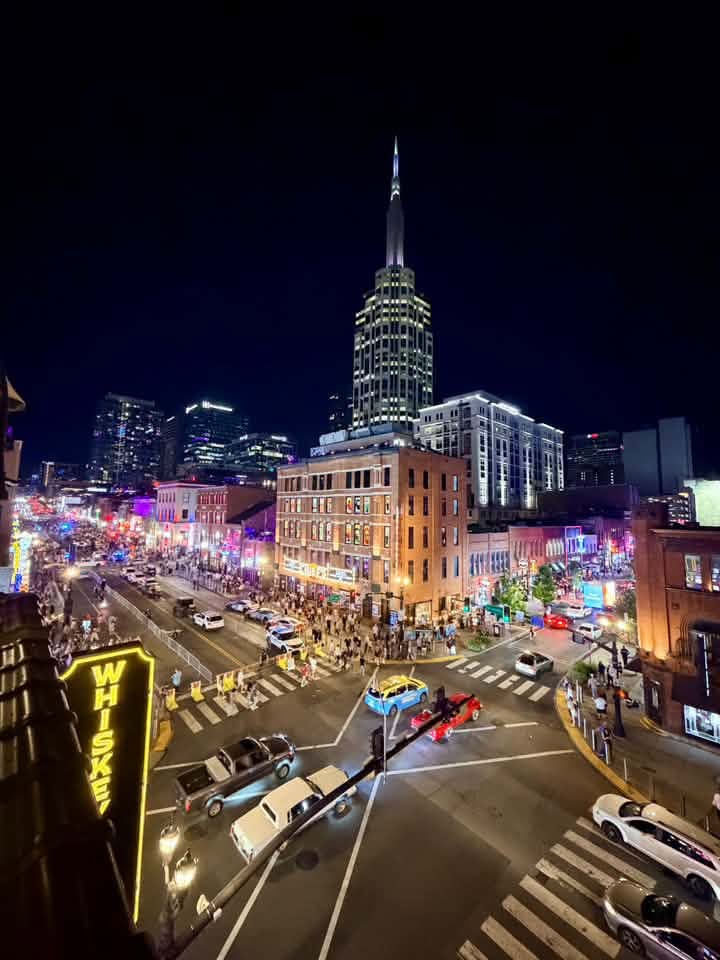
Why Lower Broadway Is A Tricky Place For This
Broadway is a hot spot for bachelorette trips, and the strip draws millions of visitors every year. The setup of the street itself can work against you.
Many of the big honky-tonks have three to six levels. They have rooftop patios, mezzanine bars, packed stairwells, and crowded elevators. Carrying an open drink through all of that is a lot like a video game level with way too many obstacles.
Then there’s the noise. Live music on every floor can hit 90 to 105 decibels. That’s loud enough that you can’t hear a friend ask for help.
It also means a friend who’s in trouble can be easy to miss. If she’s slurring or stumbling, her group may just think she’s being silly. After all, everybody’s being silly.
Matching Outfits Make You Easy To Spot
Sashes, cowgirl hats, matching boots, and neon fringe are a blast. They’re also like a flashing sign that says “we’re celebrating and feeling relaxed.”
Someone with bad intentions can notice that. A group in a great mood is a group that may not be watching its drinks as closely.
Nobody is saying to ditch the outfits. Just know they make you easy to find, and plan with that in mind.
The Drink Ferrying Problem
Here’s a scene you’ve probably lived. The bar is packed, the line is long, and one bridesmaid volunteers to carry four to six drinks back to the group.
Those drinks are now out of everyone’s sight for a few minutes. They’re bumping through a crowd, passing strangers, and sitting on rails.
A simple fix helps. Go to the bar in pairs. One person carries and one person watches the drinks. Better yet, have each person hold her own glass from the moment it’s poured.
Free Rounds And Shared Buckets
Broadway has a friendly side. Strangers love to buy a round of shots for the bride-to-be, and that’s often a sweet gesture.
But shared containers carry a different kind of risk. Pitchers, fishbowls, bucket cocktails, and boot-shaped bowls are shared by the whole squad. If one of those is tampered with, everyone who drinks from it is affected at once.
A good rule is to only accept drinks you watched being poured. If you didn’t see it made, politely pass. A “no thanks, I’m good” costs you nothing.
Too Drunk, Or Something Else?
This is the hardest question, so let’s break it down.
Regular alcohol intoxication builds slowly. It usually takes several hours and goes along with how many drinks someone has had. A person might be loud, emotional, unsteady, or sleepy, but she’s still herself.
Involuntary drugging can look very different. Here are the signs to watch for:
- A sudden crash within about 10 to 30 minutes of a drink
- Collapsing after only one or two seltzers or beers
- Limp muscles, and trouble holding up her head or legs
- Staring blankly, not responding, or muttering things that don’t make sense
- Cold, clammy skin, or shallow breathing
- Vomiting while barely awake
Notice the difference? One is a person who had too much fun. The other is a person whose body is shutting down fast.
If something feels off, trust that feeling. You’re not overreacting.
Never Put Her In An Uber To Sleep It Off
This is the most important section in this post.
When someone’s been drugged, “just send her back to sleep it off” is a risky move. Depressant drugs like GHB, ketamine, and Rohypnol can shut down the gag reflex, especially when mixed with even a little alcohol.
That means if she vomits while asleep and alone in a hotel room or vacation rental, she could choke. It’s a real danger and it’s why she should never be alone.
If her breathing is very slow or shallow, or if you can’t wake her, call 911 right away. The research I reviewed puts the warning line at fewer than 8 breaths per minute. You don’t need to count perfectly. If she’s hard to wake and her breathing looks wrong, that’s an emergency.
Stay with her the whole time. Every time.
The Hospital Clock Is Ticking
Here’s something most people don’t know. Standard hospital urine drug screens usually don’t pick up GHB, ketamine, or designer benzodiazepines.
GHB also leaves the body quickly. It clears from the blood in about 4 to 6 hours, and from urine in about 10 to 12 hours. If your group waits until morning to report what happened, tests may come back clean even if she was drugged.
So speed matters. When you reach the ER, tell the triage staff clearly what you suspect. Here’s a line you can use:
“We suspect involuntary drug-induced spiking with GHB or a dissociative. We request an extended toxicology screen and forensic sample retention.”
Save that in your phone notes before your trip. When you’re scared and it’s midnight, you won’t want to think up the words on the spot.
Where To Go In An Emergency
Three hospitals are the closest to Lower Broadway. All are a short drive away, so don’t try walking.
- Ascension Saint Thomas Hospital Midtown, 2000 Church St, about 2.1 miles away
- Vanderbilt University Adult Emergency Department, 1211 Medical Center Dr, about 2.3 miles away. This is a Level 1 trauma center.
- Nashville General Hospital at Meharry, 1818 Albion St, about 2.5 miles away
Pick one before your trip and drop it into your maps app. If you call 911, the dispatcher will tell you what to do next.
Look For The Nashville Safe Bar Decal
Nashville has a program that helps fill the gap the state law left. It’s called Nashville Safe Bar. It’s supported by the Sexual Assault Center of Nashville and the Metro Public Health Department.
Bars that take part train their staff, security, and bartenders in bystander intervention and drink safety. Certified staff are taught to hold a suspect drink, help arrange safe transportation, and assist guests who are in distress.
Participation is voluntary, so not every bar has signed up. Look for a round window decal that says “Nashville Safe Bar.” You may spot it on Lower Broadway, in Midtown, and on Demonbreun Street.
If you’re unsure where to go for help inside a venue, that decal is a good clue.
Pack These Before You Fly In
A few small items can go a long way. They fit in a purse and weigh almost nothing.
Fabric scrunchie drink covers are one option. You wear one on your wrist like a hair tie, then slip it over your glass.
Flexible silicone covers are another. They seal around standard highball and pint glasses.
Portable test cards are the third. They use a single drop of your drink to check for ketamine and GHB.
One note on strips. They are a helpful extra layer, but they can’t catch everything. Treat them as a backup, not a guarantee.
Try The Guardian Rotation
Telling one bridesmaid to stay sober all weekend sounds fair, right? Until she realizes she’s babysitting for three days.
Here’s a better idea. Pick a “Vibe Guardian” for each bar or each night. That person sticks to one drink, keeps an eye on drink deliveries, and has a rideshare app ready to go.
Rotate the job so everyone gets to enjoy the trip. The bride never has to be the Guardian, and she probably shouldn’t be asked.
Before you head out, take 30 seconds to say who has the job tonight. It’s a small habit that makes a big difference.
One Rule For Every Ride
Make this one non-negotiable: nobody leaves a venue alone, and nobody rides in a rideshare alone.
It doesn’t matter how friendly a stranger seems. It doesn’t matter how convincing a driver or a new “friend” is when they offer to help someone get home. If someone says “I’ll make sure she gets back okay,” the answer is no, thank you.
Your group arrived together, and your group leaves together. Say it out loud at the start of the night so there’s no awkward moment later.