A Nashville visitor can pay $15 just to enter one museum, then spend the rest of the day bouncing between attractions, parking lots, and crowded entertainment districts. But some of the best alternatives to Broadway cost little or nothing at all.
We dug through Nashville recommendations, visitor discussions, venue information, and local favorites. The same places kept surfacing. And one thing became obvious: the Nashville locals show their friends can look nothing like Lower Broadway.
The Neighborhood That Still Lets You Go Out Without Feeling Like You Are on Broadway
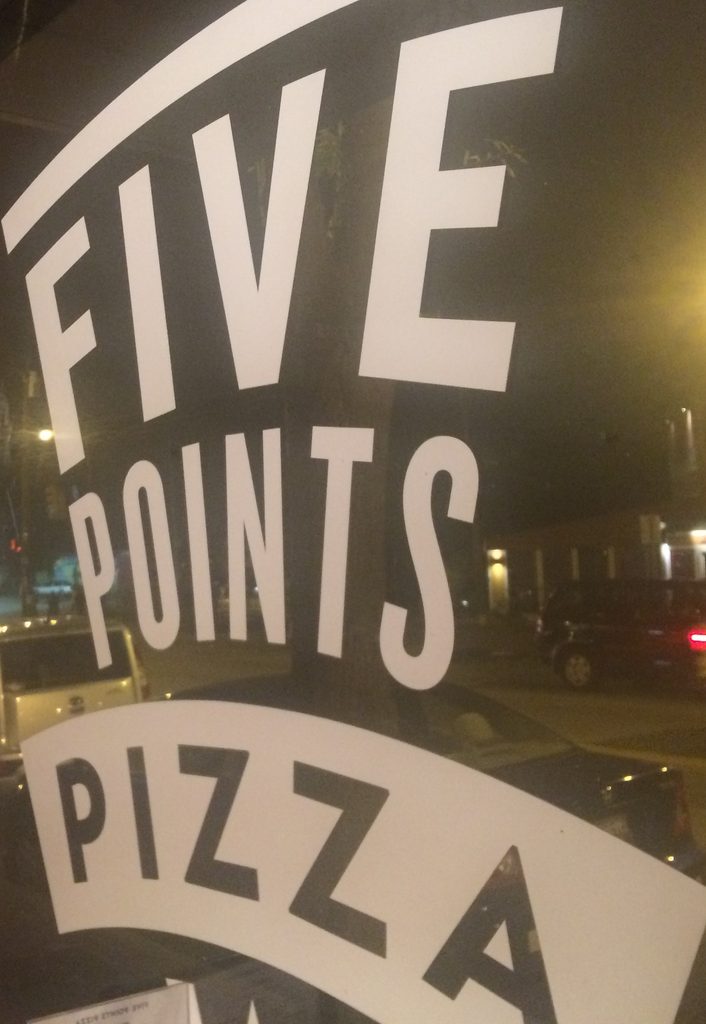
East Nashville, especially the Five Points area, is one of the most consistent recommendations for visitors who want nightlife without Lower Broadway. Five Points Pizza has been serving the neighborhood since 2011, while the surrounding streets are packed with restaurants, bars, shops, and live-music spots.
This is not the Nashville of giant rooftop bars and blocks of matching party shirts.
Five Points feels more like a neighborhood that happens to know how to have a good night.
You can walk past old houses and storefronts, hear music leaking from a doorway, smell pizza coming out of an oven, and decide where to stop without feeling like every building is trying to funnel you into the same experience.
That freedom is part of the appeal.
Instead of planning an entire evening around one enormous attraction, you can have dinner, wander a little, stop somewhere for a drink, hear live music, then change your mind and keep walking.
Here's what catches people off guard.
East Nashville gives you many of the things visitors come to Nashville looking for, including music, food, cocktails, and nightlife, without recreating the Lower Broadway experience.
The insider move is to choose a small part of East Nashville rather than trying to “do East Nashville” all at once. Start around Five Points and let the neighborhood become the evening.
That matters because East Nashville is bigger than visitors sometimes realize.
If you spend the whole night driving from one recommendation to another, you lose the thing that makes Five Points enjoyable in the first place. Park, walk, and give yourself permission to discover something that was not on your list.
For daytime wandering, the Fatherland area can also be paired with Five Points. Local recommendations repeatedly point visitors toward the neighborhood's shops, restaurants, and less commercial atmosphere.
And don't mistake “less touristy” for “nothing happening.”
Locals specifically praise Five Points for live music, including music that reaches beyond the country-cover soundtrack some visitors associate with downtown Nashville.
This is the Nashville recommendation for somebody who says, “I still want to go out. I just don't want that.”
But what if your Broadway-hating friend actually loves country music?
There is a little room in the Gulch that answers that question better than almost anywhere else.
The Music Room That Feels Like Nashville Before Nashville Became a Brand
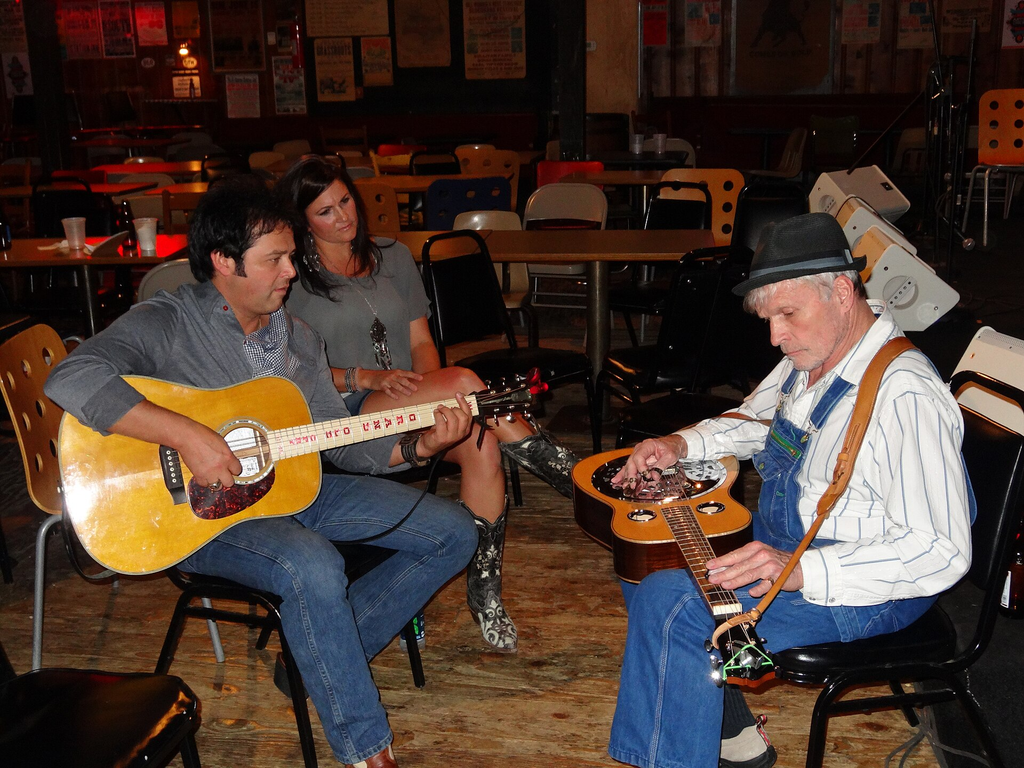
The Station Inn opened in 1974 and moved to its current home at 402 12th Avenue South in 1978. Over the decades, Bill Monroe, Alison Krauss, John Prine, Vince Gill, and other major roots and country performers have appeared there.
Then the Gulch grew up around it.
Today, you can walk through one of Nashville's most heavily developed neighborhoods and suddenly arrive at a place that feels remarkably simple.
Inside, the room is small.
That is the magic.
You are not staring at musicians from the opposite end of a giant entertainment complex. The performers are right there, and the room's scale encourages you to pay attention.
Bluegrass, Americana, classic country, and roots music take priority over spectacle.
The food follows the same philosophy. Think pizza and snacks rather than a giant themed menu. Beer, coffee, and soft drinks are available, but nobody needs a rooftop swimming pool or three-story neon sign to understand why they came.
Here's what catches people off guard.
The Station Inn's traditional bluegrass jam is a real picking circle, with musicians gathering together to play rather than presenting a polished Broadway-style production.
That jam may be the purest answer to the friend who insists Nashville music has become too commercial.
The insider tip is simple: check the night's event before going.
The Station Inn hosts different performers and events, so the experience can change considerably depending on the calendar. Recent 2026 listings have included shows around the $20 to $30 range, but admission varies by performer.
Doors generally open at 7 p.m. unless the individual event says otherwise.
The trap is parking.
The Station Inn itself warns that parking in the Gulch can be difficult. That should tell you something. Do not arrive at the last minute expecting to pull into an easy free space beside the door.
Give yourself time.
Once you are inside, though, the contrast with Broadway is almost comical.
A few miles away, amplified music competes from building to building. Here, you might find yourself watching somebody's fingers move across a mandolin from just a few feet away.
And the next stop proves you do not need music at all to experience one of Nashville's strangest landmarks.
The Nashville Landmark People Photograph Without Realizing What Is Inside
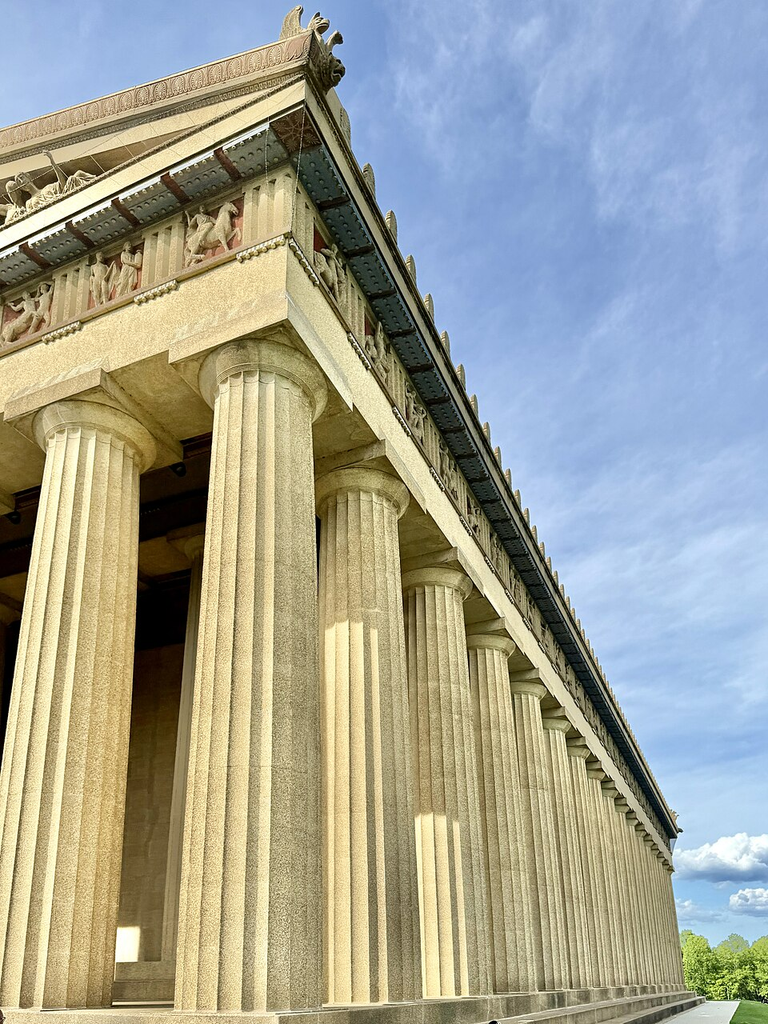
Centennial Park is open from dawn until 11 p.m., and sitting inside it is Nashville's full-scale replica of the Parthenon. The permanent concrete version was reconstructed between 1921 and 1931 after the original structure built for the Tennessee Centennial Exposition.
Yes, Nashville really has a Parthenon.
And no, it is not just a decorative shell for photographs.
Walk through Centennial Park and the building rises above the trees with columns that seem almost absurdly grand for a city better known for guitars and honky-tonks.
The scale is what gets you.
Stand close to those columns and the building stops feeling like a quirky roadside attraction. It becomes one of those Nashville sights that makes first-time visitors ask how they somehow never heard about it.
Then there is the park itself.
Instead of squeezing through crowds, you can slow down, walk, sit outside, and actually hear the person beside you.
Here's what catches people off guard.
Centennial Park remains open until 11 p.m., considerably later than the museum inside the Parthenon.
The insider move is to stop treating the Parthenon as a five-minute photo opportunity.
The museum is currently open Monday through Saturday from 9 a.m. to 4:30 p.m. and Sunday from 12:30 to 4:30 p.m. Adult admission is $15, while admission for seniors 62 and older and children ages 4 through 17 is $10.
But the surrounding park has its own rhythm.
Nashville's long-running Big Band Dance events have also brought live big bands, dance instruction, and food trucks to Centennial Park during summer programming. That is exactly the kind of Nashville night many visitors never associate with the city.
The trap is assuming park hours and museum hours are interchangeable.
They are not.
If seeing the museum interior matters, arrive during museum hours. If you simply want the park and exterior, you have a much larger window.
It is an easy way to spend time in Nashville without organizing your day around drinking, parking downtown, or buying a concert ticket.
The Country Bar Musicians Go to When They Are Not Working Downtown
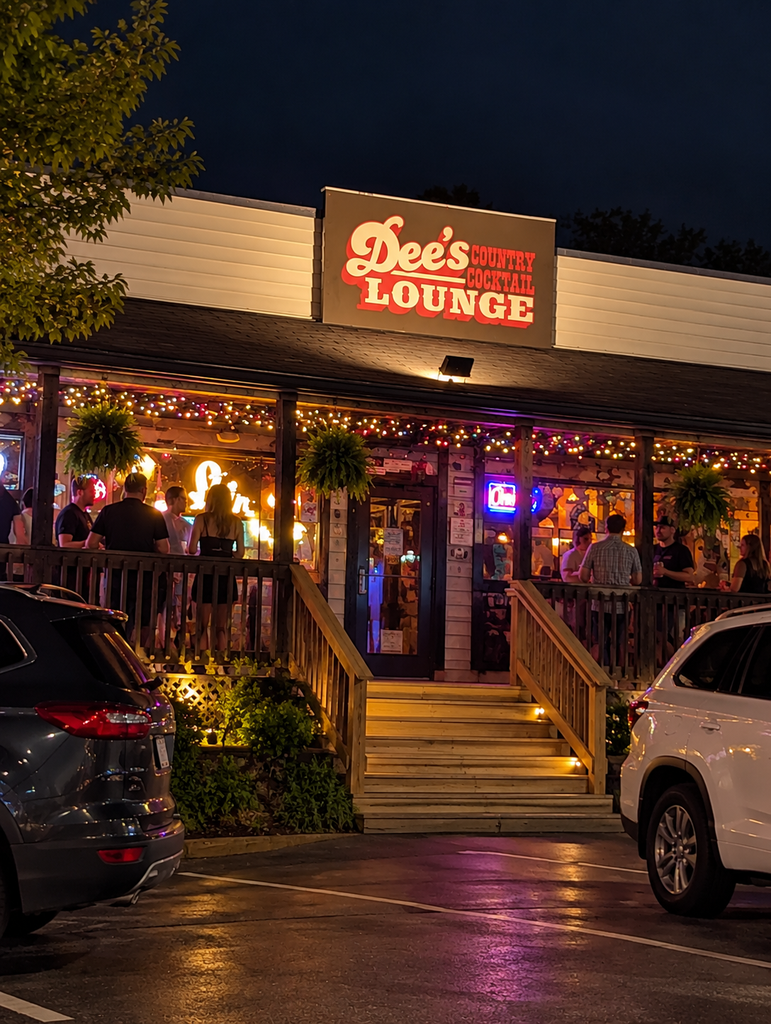
Dee's Country Cocktail Lounge opened in 2016 at 102 E. Palestine Avenue in Madison. It is a 21-and-over neighborhood music venue with a self-described “'70s country groove,” generally opening at 4 p.m. and staying open through the evening's show.
Madison is part of the point.
You do not accidentally stumble into Dee's while following a crowd down Broadway.
You choose to go there.
Step inside and the mood is closer to the country bar people imagine Nashville had before every downtown building became a potential entertainment complex.
The scale is smaller. The emphasis is on the room, the musicians, and the people who deliberately came to hear them.
It feels lived in rather than manufactured for a weekend itinerary.
Dee's describes itself as a neighborhood venue, community builder, and live-music incubator. Singer-songwriter Margo Price has even referred to it as her “watering hole.”
That reputation matters.
Here's what catches people off guard.
Dee's is proof that wanting country music and wanting Broadway are two completely different things.
The insider tip is to look at the performance calendar first instead of treating Dee's as a generic bar stop.
The artist is the reason to make the trip.
That also means you should not expect Broadway's endless rotation of familiar songs designed to catch people walking past an open window.
This is a music venue with its own identity.
Dee's operates seven days a week, but individual shows shape the night, so check the event details before leaving central Nashville.
Remember the age restriction, too. It is 21 and older.
The trap is distance.
Visitors staying downtown sometimes build itineraries as though every Nashville recommendation sits within the same walkable entertainment district. Dee's does not. Going to Madison requires more planning than walking another block on Broadway.
That inconvenience is also what protects the experience.
People are there because they intended to be there.
And if your friend wants to skip nightlife altogether, there is a Nashville afternoon where the biggest admission price is exactly zero.
The $0 Nashville History Stop Tourists Keep Driving Past
The Tennessee State Museum sits beside Bicentennial Capitol Mall State Park and the Nashville Farmers' Market, giving visitors three major stops in one compact area. Museum admission is free, and its current hours are Tuesday through Saturday from 10 a.m. to 5 p.m. and Sunday from 1 to 5 p.m. It is closed Monday.
This is one of Nashville's best answers to the question, “What can we do that isn't another bar?”
Start with Tennessee history.
Inside the museum, exhibits cover the state's history, culture, and art. Outside, the atmosphere changes again as you move toward Bicentennial Capitol Mall and the Farmers' Market.
You can see the Capitol, stretch your legs, browse, eat, and turn the whole cluster into several hours instead of racing between unrelated attractions.
The smells change when you reach the market.
Food counters replace museum galleries. People are eating rather than posing for another downtown photo. The day suddenly feels less like an attraction checklist and more like wandering through the city.
Here's what catches people off guard.
Admission to the Tennessee State Museum is completely free.
The insider move is to combine the museum, park, market, and Germantown rather than visiting any one of them in isolation.
The Nashville Farmers' Market Market House is currently open daily from 8 a.m. to 8 p.m., although individual merchants can keep different schedules.
Outdoor farm shed hours vary seasonally. From March through October, the dependable Friday through Sunday window is 9 a.m. to 2 p.m.
There is also limited free customer parking at the market.
“Limited” is the word to remember.
The trap is arriving with the assumption that every vendor will follow the Market House's overall hours. They do not.
If a particular merchant or farm vendor matters to you, its individual schedule matters too.
This part of town also connects naturally with Germantown. Local itinerary discussions repeatedly suggest combining the neighborhood with the market and Bicentennial area instead of driving away immediately.
Eat something. Walk. Look toward the Capitol. Give the afternoon room to breathe.
Then, when you are ready for music again, Nashville has a room where talking during the songs is exactly what you are not supposed to do.
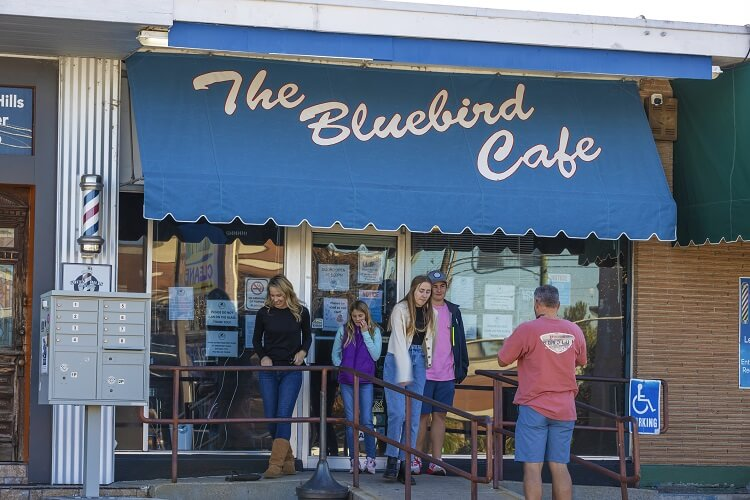
The Famous Nashville Room Where Silence Is Part of the Experience
The Bluebird Cafe is one of Nashville's best-known listening rooms, but its experience is almost the philosophical opposite of Lower Broadway. Most Tuesday-through-Sunday performances hold only about 10 to 12 seats for walk-up customers, and reservations are handled through the Bluebird's website.
The room is about songs.
Not spectacle.
The idea is simple: hear original music from the people who write it, often along with the stories behind those songs.
That changes how an audience behaves.
Conversation during performances is strongly discouraged. Instead of shouting across a table while a band competes with the room, people listen.
You hear lyrics.
You hear the little pauses between lines.
You hear the explanation of how a song came together.
For somebody who believes they dislike Nashville music because their only reference point is Broadway, the Bluebird can feel like somebody quietly turned the entire city inside out.
Here's what catches people off guard.
For most Tuesday-through-Sunday shows, only around 10 to 12 seats are typically held for walk-up customers.
The insider tip is not glamorous: understand the reservation system before building your evening around the Bluebird.
Reservations are made through its website and can be made for no more than six seats.
Monday's 6 p.m. open mic works differently. It is entirely first-come, first-served.
There is also currently a $15-per-seat food and drink minimum in addition to the show's cover charge.
The trap is assuming fame equals capacity.
It does not.
The Bluebird's intimacy is precisely what makes it special, and that same intimacy makes seats difficult to get.
Local commenters often point disappointed visitors toward alternatives such as The Listening Room or Bluebird-related performances at larger venues when reservations disappear.
Do not build an entire Nashville trip around getting a last-minute seat.
But if you do get inside, pay attention.
This is Music City stripped down to the thing underneath all the neon: somebody wrote a song, and somebody else is listening.
The next place gets even quieter, and trades the stage for 55 acres of gardens.
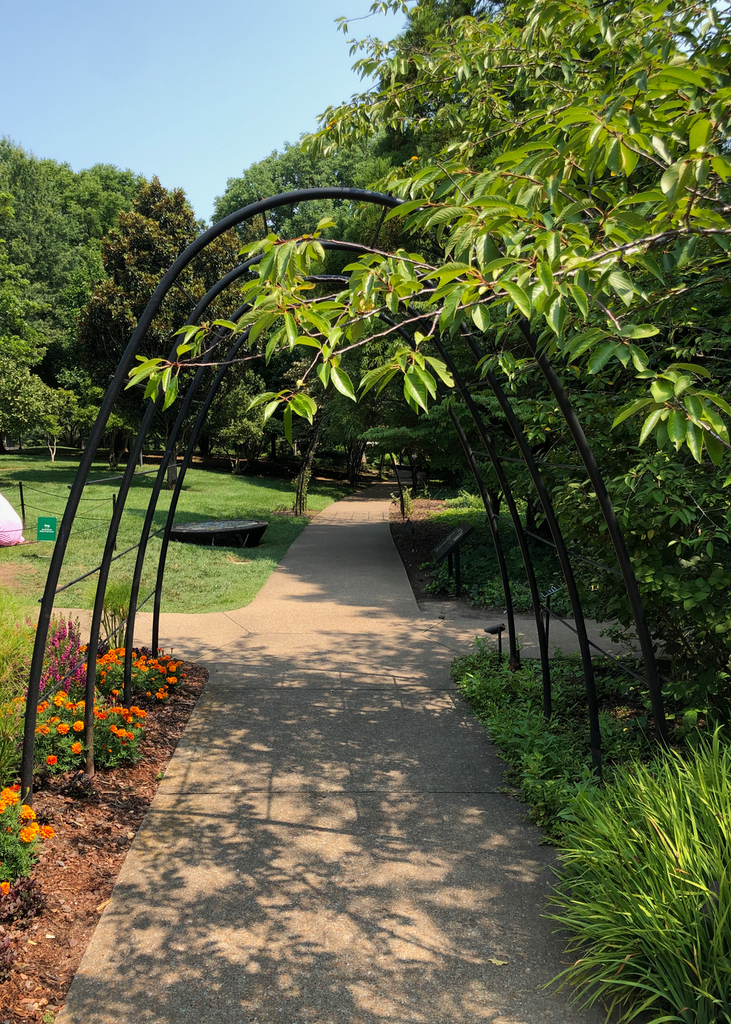
The 55-Acre Escape That Can Make a Broadway Hater Stay Another Day
Cheekwood Estate & Gardens sits about eight miles southwest of downtown Nashville and combines a 1930s mansion with 55 acres of gardens. The property includes 13 distinct gardens and operates as a botanical garden, arboretum, historic estate, and art museum.
This is slow Nashville.
You walk instead of bar-hop.
Trees and landscaped paths replace LED signs. Garden beds replace rooftop crowds. Inside the historic mansion, the mood shifts again toward architecture and art.
The experience also changes with the season.
Spring flowers, summer programming, autumn displays, and holiday events can make two visits to Cheekwood feel surprisingly different.
That seasonal personality is part of why locals keep recommending it to visitors who ask what Nashville has beyond downtown nightlife.
Here's what catches people off guard.
Cheekwood covers 55 acres, so treating it like a quick museum stop is one of the easiest ways to shortchange the experience.
The insider tip is to leave enough time to wander.
Do not reserve timed admission and then wedge Cheekwood between three other attractions as though you are popping into a small gallery.
Normal hours are currently Tuesday through Sunday from 9 a.m. to 5 p.m., and timed-entry reservations are required.
Standard admission varies by date and program. Current adult gardens-only pricing runs roughly $20 to $26, while gardens plus mansion admission runs roughly $26 to $29. Discounts are available for seniors, students, and youths.
The trap is assuming every ticket includes exactly the same experience.
Gardens-only admission and gardens-plus-mansion admission are different options, and seasonal programs can change what is happening on the property.
Read what your ticket includes.
Comfortable walking shoes also make far more sense here than dressing for a downtown night out.
This is a place to notice details: a garden turning a corner, light hitting an old building, a view opening between trees.
Broadway tries very hard to keep your attention.
Cheekwood simply gives your attention somewhere else to go.
Next comes a century-old Nashville institution that once hosted something you probably would never associate with an arthouse movie theater.
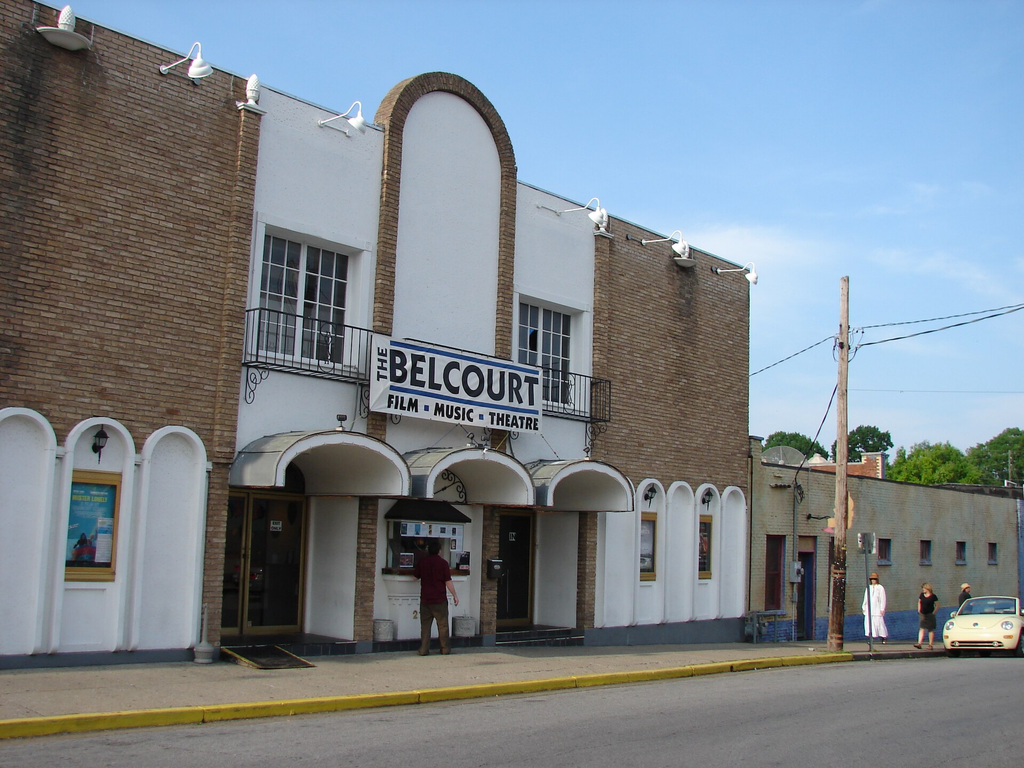
The Neighborhood Movie Theater That Once Hosted the Grand Ole Opry
The Belcourt Theatre sits at 2102 Belcourt Avenue in Hillsboro Village. The building opened in 1925 as the Hillsboro Theater, originally showing silent movies, and later became one of the Grand Ole Opry's homes during the 1930s.
Today, the Belcourt is a nonprofit cinema devoted to independent, international, documentary, repertory, and classic films.
That history alone makes it wonderfully Nashville.
A building that once helped host the Opry now gives moviegoers a place to see films that might never reach the giant multiplexes.
Outside, Hillsboro Village gives you something equally valuable: a neighborhood.
There are places to eat, shops to browse, coffee nearby, and streets that encourage a slower evening.
No requirement to love country music.
No requirement to drink.
No requirement to pretend you enjoy rooftop bars.
Here's what catches people off guard.
The Belcourt is more than a century old, and the building once served as a home of the Grand Ole Opry.
The insider move is to look at the film schedule before deciding when to visit Hillsboro Village.
The Belcourt screens hundreds of films a year, and its programming is the reason to go. This is not a generic cinema where the same handful of major releases simply repeat all day.
Pair the movie with dinner or a stroll through the neighborhood.
The trap is assuming every worthwhile Nashville cultural experience needs to involve live music.
The Belcourt is particularly useful for the visitor who has already told you they do not drink, does not care about country bars, or simply wants a quieter night.
And there is something satisfying about watching a film inside a building that has spent more than 100 years adapting to Nashville's changing cultural life.
Still, our last local favorite leaves theaters, bars, restaurants, and neighborhoods behind completely.
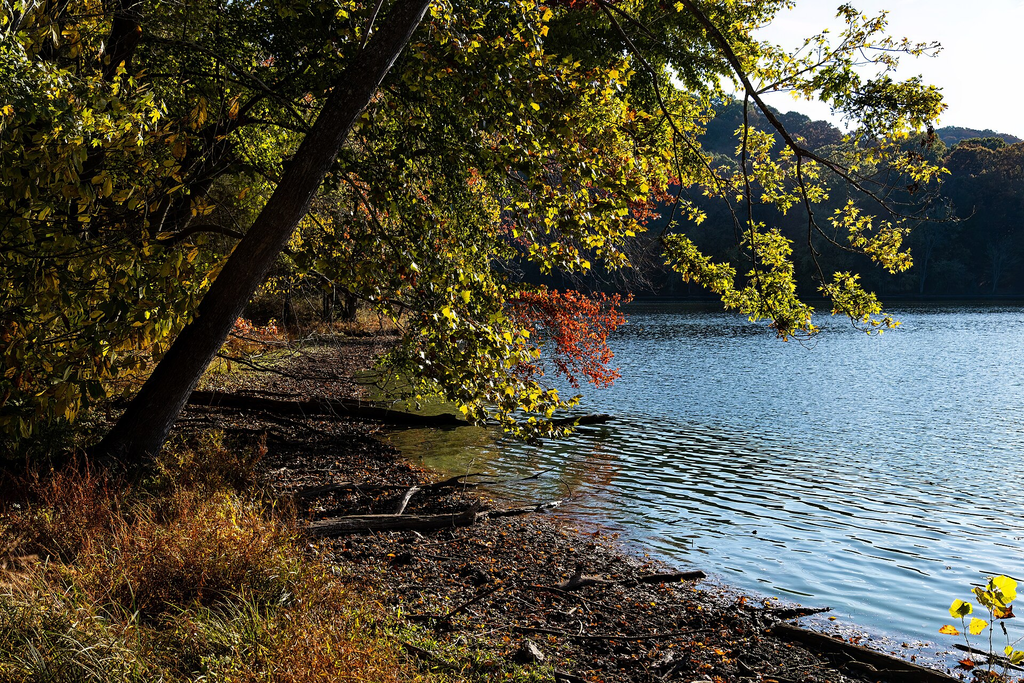
Eight miles from downtown, Nashville suddenly becomes woods and water.
The Place Eight Miles From Downtown Where Nashville Almost Disappears
Radnor Lake State Natural Area covers approximately 1,367 acres and contains more than six miles of hiking trails. It sits roughly eight miles from downtown Nashville and became a protected state natural area after a public campaign fought development of the property.
This may be the biggest surprise on the list.
You leave the urban Nashville most visitors know, then find yourself walking beneath trees beside a protected lake.
Traffic noise fades.
The skyline disappears.
There are no cover charges, songwriter rounds, themed cocktails, or giant signs competing for your attention.
Instead, the entertainment is noticing what moves in the woods.
The area's popularity means you should not expect total solitude, especially at busy times. The state describes Radnor as one of Tennessee's most frequently visited natural areas.
Still, the setting feels remarkably removed from the version of Nashville sold on postcards.
Here's what catches people off guard.
Radnor Lake was created in 1914 as a reservoir supplying water for Louisville & Nashville Railroad steam engines.
That history turns a pretty lake into something distinctly connected to Nashville's past.
The insider tip is to treat Radnor like a protected natural area, not an ordinary city park.
It is day-use only.
There is no camping or fishing.
Dogs are allowed only on paved surfaces and are not permitted on the hiking trails.
That last rule catches people.
If hiking the trails is the plan, bringing the dog changes what you will be able to do.
Parking can also become difficult because Radnor is extremely popular. Arriving without a backup plan during a busy period can turn a peaceful outing into a frustrating hunt for a space.
Once you are walking, though, the reason locals recommend it becomes obvious.
Radnor is not “alternative Nashville nightlife.”
It is an alternative to the assumption that nightlife has to matter at all.
A friend can come to Nashville, walk through protected woods, visit a century-old cinema, explore gardens, listen to songwriters, wander East Nashville, and never once need Broadway to justify the trip.
The Unexpected Fact About the Nashville Beyond Broadway
The most revealing thing about these nine recommendations is how small many of them feel compared with Lower Broadway.
A listening room. A neighborhood cinema. A musician's bar. A garden path. A picking circle. A free museum. A trail beside a lake.
That pattern is not an accident. Local recommendations repeatedly steer visitors away from trying to find another version of Broadway and toward changing the scale of the experience altogether. Broadway is one very specific version of Nashville. It is not the whole city.
Perhaps the best example is Radnor Lake itself. The peaceful water visitors see today began as infrastructure for steam locomotives in 1914. The Belcourt began showing silent films in 1925 and later hosted the Grand Ole Opry. The Station Inn opened in 1974, long before the modern Gulch rose around it.
Nashville keeps changing, but pieces of its older personality survive in surprising places.
So if somebody tells you they hate Broadway, don't try to convince them they are wrong.
Show them the Nashville they haven't met yet.