
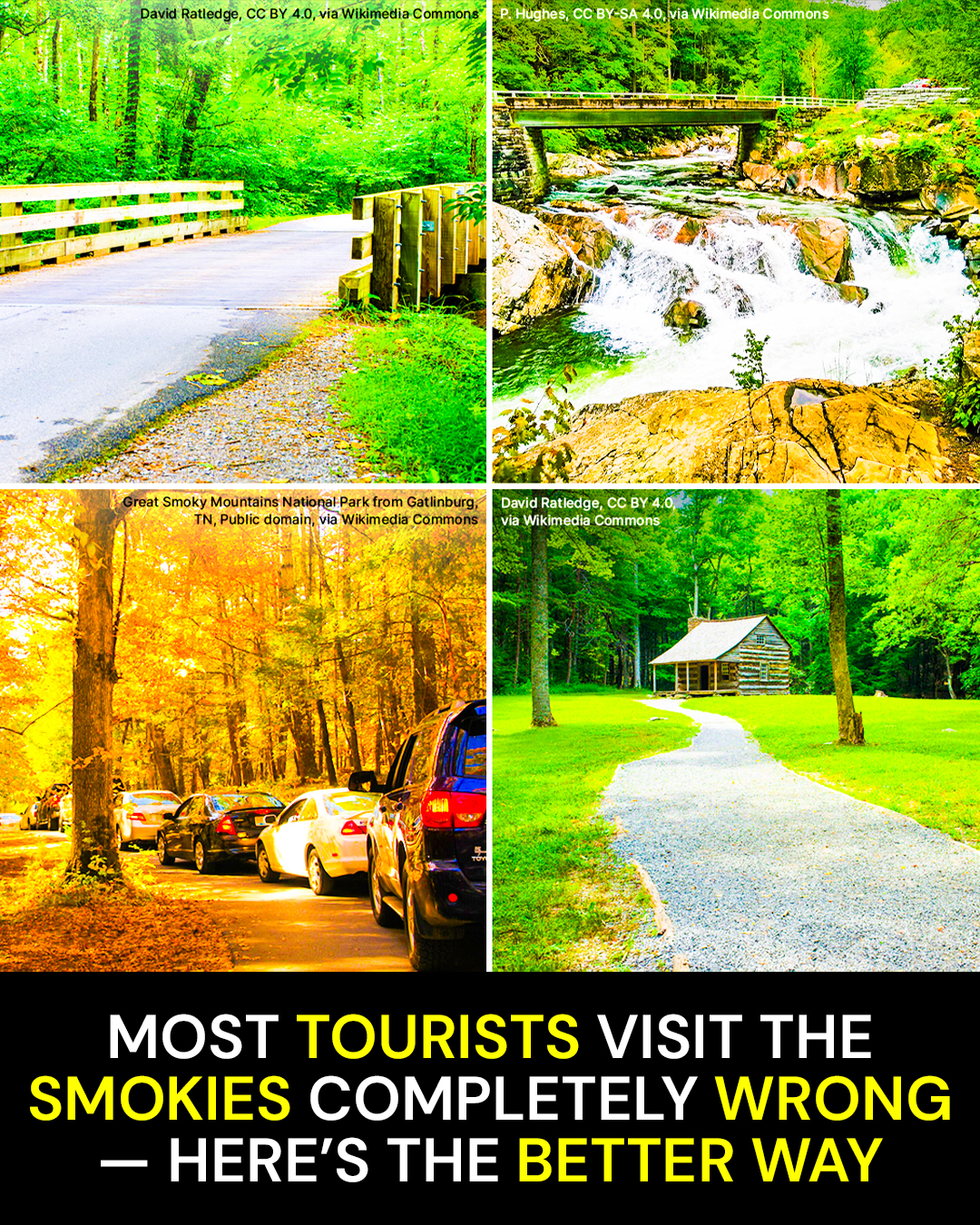
Arrive in Great Smoky Mountains National Park between 9 a.m. and 2 p.m., and you are hitting the park during its heaviest daily visitation window. That can mean full trailheads, crawling traffic, and precious vacation hours spent hunting for somewhere to park.
The Smokies drew 11,527,939 recreational visits in 2025, yet the park spreads across more than 522,000 acres. The problem is not that everyone is visiting the wrong mountains. They are visiting the same corners at the same time. Number 3 explains why even paying for parking does not solve that problem.
The Three-Hour Mistake That Can Ruin Your Entire Smokies Day
Great Smoky Mountains National Park sees its heaviest daily visitation between 9 a.m. and 2 p.m. During busy periods, the National Park Service recommends entering no later than 8 a.m., while around 3 p.m. can offer another useful arrival window as some morning visitors begin leaving.
That changes the entire feel of a day.
Leave the cabin after a leisurely breakfast, crawl toward Gatlinburg, and reach the park at 10:30 in the morning, and you have accidentally joined the biggest wave of the day.
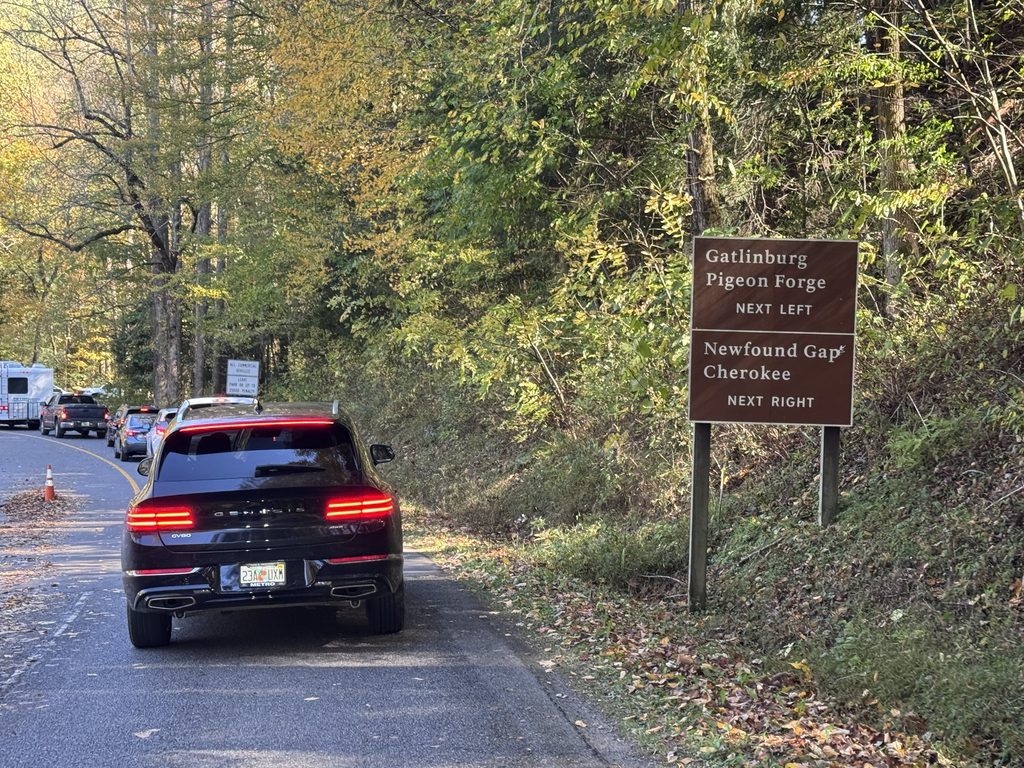
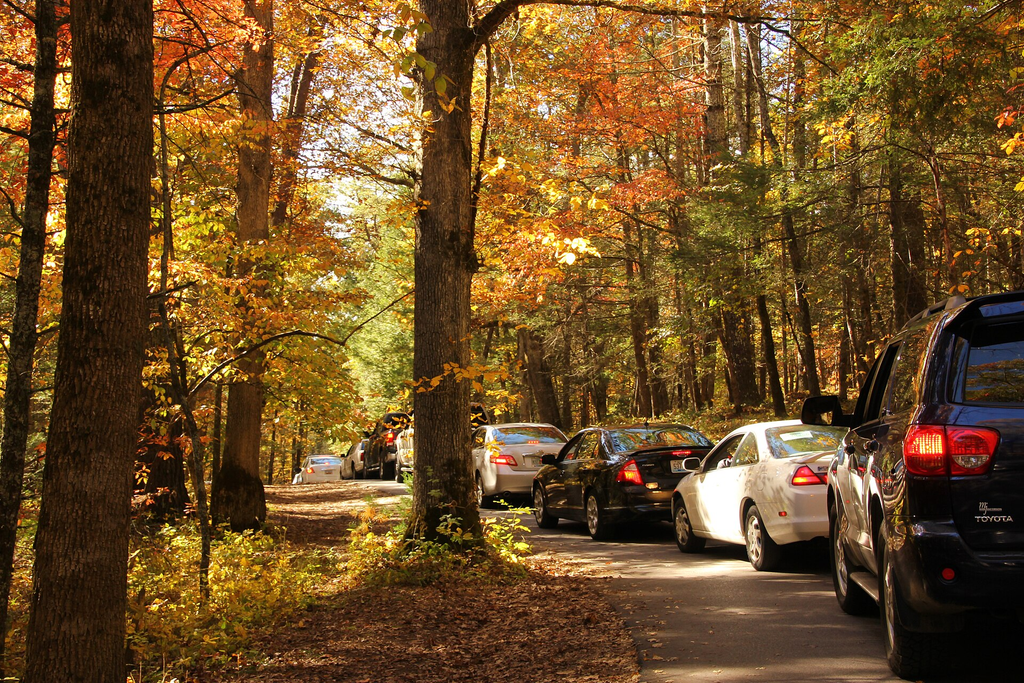
Cars collect around popular trailheads. Brake lights stack along mountain roads. The parking lot you pictured pulling into may already be full.
Go earlier and the rhythm changes. The air is cooler. Morning light slips between the ridges. Instead of immediately negotiating with a line of cars, you can put the hardest-to-park destination first and save flexible stops for later.
Here's what catches people off guard.
You may not need a different Smokies itinerary at all. You may simply need a different clock.
The insider move is to deal with breakfast the night before. Keep something simple at the cabin or eat early enough that breakfast does not push your park arrival into the 9 a.m. rush.
Then make the first destination the one that depends most on parking.
Popular hikes and high-elevation stops belong early. Scenic drives, picnic areas, visitor centers, historic structures, and creekside stops are easier to move around when the day changes.
There is another strategy for people who absolutely refuse to set an early alarm: have a genuinely slow morning outside the park and consider entering around 3 p.m.
Just remember that a late start comes with its own trap. Sunset matters in the mountains, cell service can be limited, and the park warns that driving curving mountain roads after dark requires extra care. Hikers staying out late should be prepared for darkness.
Timing is the first fix.
Geography is the second, because thousands of visitors keep treating one Tennessee town like the only door into half a million acres.
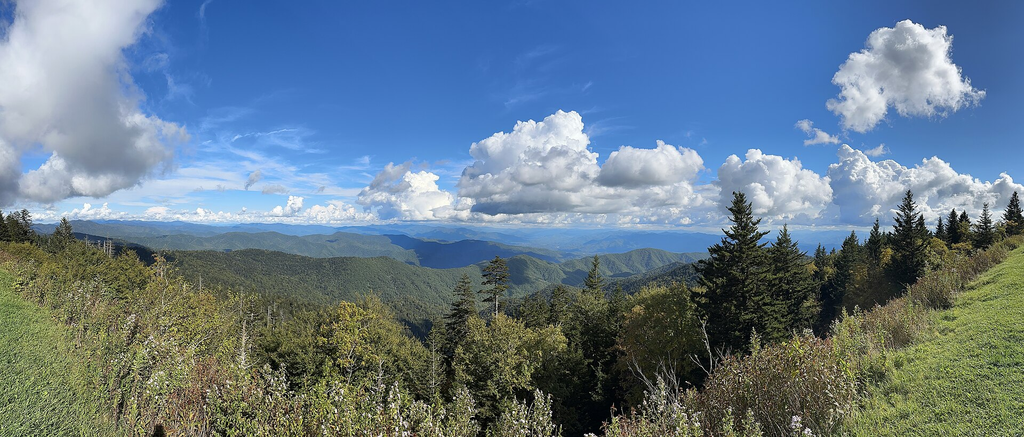
The Front Door Everybody Keeps Trying to Squeeze Through
Great Smoky Mountains National Park covers 522,427 acres across Tennessee and North Carolina, with distinct areas including Cades Cove, Elkmont, Greenbrier, Cosby, Deep Creek, Cataloochee, Oconaluftee, Kuwohi, and Newfound Gap.
Yet an astonishing number of vacations follow essentially one pattern.
Gatlinburg. Sugarlands. Newfound Gap Road. Kuwohi. Turn around.
Gatlinburg is popular for good reason. It is convenient, familiar, and one of the most obvious Tennessee gateways to the national park.
The mistake is not using Gatlinburg.
The mistake is using it for everything.
Build a Cades Cove day from the Townsend side and the geography suddenly makes more sense. Townsend also puts Little River Road and the Tremont area naturally into the same part of your trip.
Cosby opens another side of the Tennessee mountains. Cross into North Carolina and Deep Creek near Bryson City offers creek and waterfall country without requiring another run through Gatlinburg. Oconaluftee and Cherokee make more sense when the day's plans already point toward the southern side.
Here's what catches people off guard.
The Smokies feel much larger the moment you stop planning every day around the same entrance.
The insider trick is to look at a park map before looking at a list of attractions.
Choose an area first.
Then choose what you want to do inside that area.
That sounds backward compared with the way most vacation itineraries are built, but it can prevent hours of unnecessary crossing and backtracking.
The trap is collecting famous places from social media without looking at where they sit in relation to one another. A beautiful waterfall, scenic overlook, historic valley, and wildlife area can all belong on a Smokies trip without belonging on the same day.
The park is simply too big for that kind of checklist travel.
And even after you choose the right side of the park, there is another misunderstanding waiting at the trailhead.
It costs only $5, but that $5 buys much less than many visitors assume.
The $5 Tag That Does Not Save You a Parking Space
Great Smoky Mountains National Park does not charge a general entrance fee, but vehicles parked for more than 15 minutes generally need a parking tag. Current rates are $5 daily, $15 weekly, or $40 annually.
That sounds simple.
Buy the tag. Park the car. Start the hike.
Not quite.
At the busiest trailheads, finding an actual space can be harder than buying permission to use one.
The numbers explain why. The park lists roughly 69 spaces at Alum Cave Trailhead, 48 at Rainbow Falls, 34 at Chimney Tops, 39 at Laurel Falls, and just 17 at Grotto Falls. Newfound Gap has about 141 and Kuwohi about 167.
Now put those numbers beside more than 11.5 million annual recreational visits.
Seventeen spaces suddenly sounds mighty small.
Here's what catches people off guard.
A Smokies parking tag does not reserve or guarantee a parking space.
The insider move is to buy the tag before you need it and identify a Plan B before leaving your lodging.
There is another detail worth knowing. If you buy a daily or weekly parking tag online, it must be physically printed and displayed. A screenshot on your phone does not count, and parking-tag machines are not available at every trailhead.
That is exactly the sort of tiny vacation detail that becomes a giant nuisance once you are standing in the mountains without a printer.
So print it before leaving home, the hotel, or the rental.
Then decide what you will do if the first parking area is full.
The trap is circling and circling because you have already paid for the tag and feel committed to that particular hike.
Do not donate the best hour of the morning to asphalt.
Sometimes the smartest solution is even simpler.
Leave the car somewhere else.
The Ride That Can Be More Valuable Than Another Attraction Ticket
Great Smoky Mountains National Park maintains a list of permitted commercial shuttle operators serving destinations in and around the park. The National Park Service specifically points visitors toward shuttles because parking demand at popular destinations can exceed available capacity.
That matters at places such as Alum Cave, Rainbow Falls, Grotto Falls, Newfound Gap, and Kuwohi.
Think about the usual alternative.
You drive toward the trailhead.
The lot is full.
You continue down the road hoping for a legal space.
Everyone in the car begins watching every parked vehicle for signs that somebody might be leaving.
The mountain view becomes background scenery while the entire vacation revolves around finding an empty rectangle of pavement.
That's backwards.
Here's what catches people off guard.
In a park famous for scenic driving, one of the smartest decisions can be choosing not to drive yourself to the hardest trailhead.
The insider tip is to compare the cost and logistics of a permitted shuttle with the value of your vacation time before the trip, especially when one particular hike is non-negotiable.
A shuttle will not make every Smokies plan better. Plenty of destinations remain easy and enjoyable to reach by car, particularly when you arrive outside the busiest window.
But the trap is assuming that because a road reaches a destination, your own vehicle is automatically the best way to get there.
That assumption sends everybody toward the same small parking areas.
If you do drive, keep the Plan B rule.
A full lot is information, not a personal challenge.
Turn around. Go somewhere else. The mountains will still be there.
And nowhere does that flexibility matter more than the valley where one black bear can turn an 11-mile road into a parking lot.
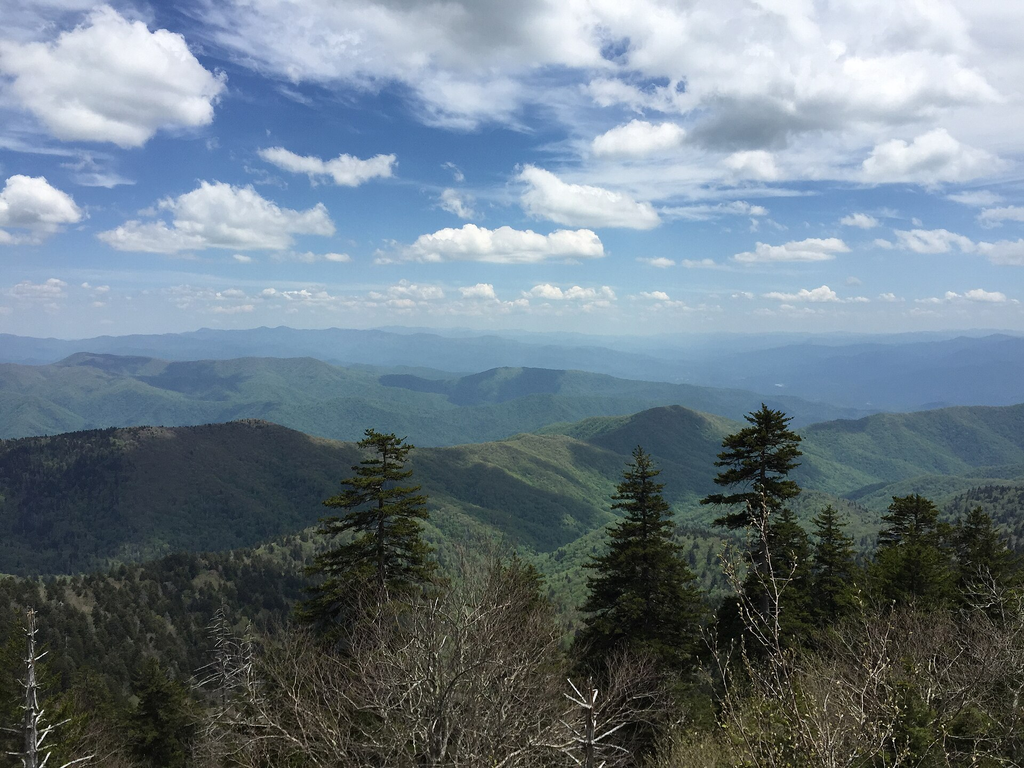
The Famous 11-Mile Loop That Changes Completely With the Clock
Cades Cove Loop Road is an 11-mile, one-way road through one of the best-known historic valleys in Great Smoky Mountains National Park. In 2026, the loop is closed to motor vehicles on Wednesdays from May 6 through September 30 so pedestrians and cyclists can use the roadway.
Cades Cove deserves its reputation.
Open fields spread beneath mountain ridges. Historic cabins, churches, and other structures pull you into a much older version of East Tennessee. Wildlife can appear without warning.
Then somebody sees a bear.
Brake lights come on.
Phones rise through windows.
Traffic slows to a crawl.
The problem is not Cades Cove.
It is trying to experience Cades Cove exactly when everybody else is doing the same thing.
Here's what catches people off guard.
Even Vehicle-Free Wednesdays can become busy enough that the National Park Service has recommended considering an afternoon arrival instead of joining the morning parking rush.
That is a perfect example of how yesterday's insider trick can become tomorrow's crowd.
On normal driving days, earlier morning or later afternoon can be more comfortable than dropping into the loop during the late-morning rush.
On seasonal Vehicle-Free Wednesdays, do not assume “no cars on the loop” means “no parking problem outside it.”
The insider move is to decide beforehand what actually matters to you. You do not have to stop at every historic building, every pullout, and every possible photograph.
Give the valley room to unfold.
And give wildlife even more room.
The trap is treating a bear sighting as permission to stop in the roadway. The park has warned that bear jams can interfere with traffic, emergency vehicles, and the animals themselves.
If you are viewing wildlife from your vehicle, remain inside and keep traffic moving rather than creating another jam.
Cades Cove teaches the bigger Smokies lesson beautifully.
Famous does not mean bad.
It means timing matters.
The same rule applies to waterfalls, especially the handful that social media keeps sending everybody toward.
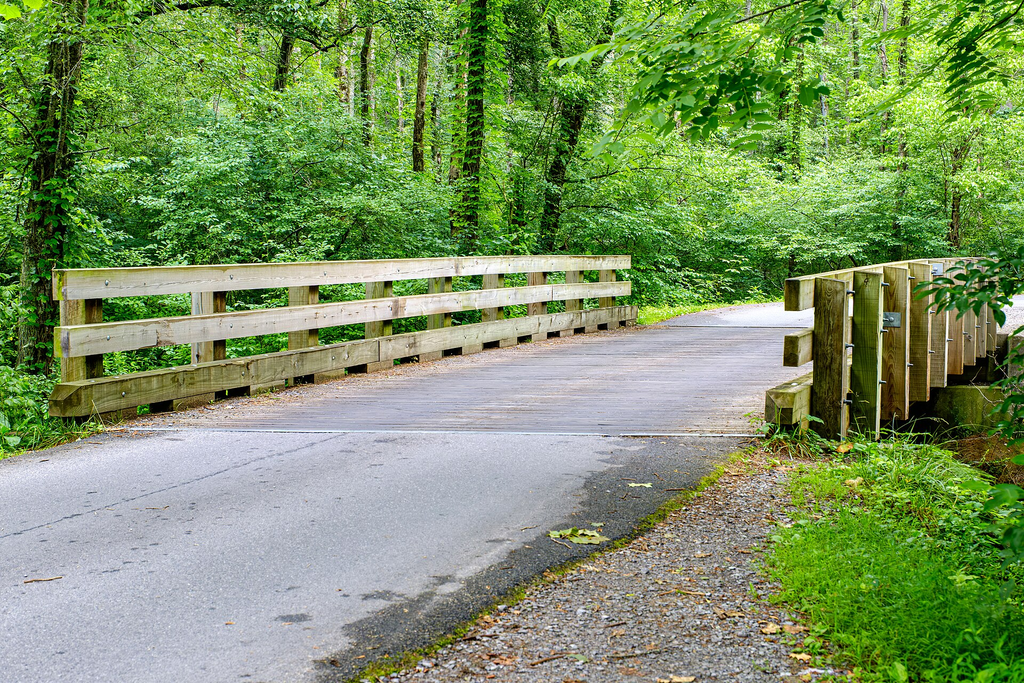
The Waterfall Mistake Instagram Keeps Encouraging
Abrams Falls, Laurel Falls, Rainbow Falls, and Grotto Falls are among the best-known waterfall hikes in Great Smoky Mountains National Park. The National Park Service says the park's popular waterfall hikes collectively receive more than 200,000 visitors annually.
They are popular because they are beautiful.
But there is a strange thing that happens when vacation planning moves entirely online.
Everybody searches “best waterfall.”
Everybody gets similar results.
Everybody drives toward the same trailheads.
Suddenly a walk into the woods starts with a parking battle.
There is another way to do this.
Choose one famous waterfall if seeing it matters to you. Then stop using popularity as the main filter for every other water experience.
After rain, cascades can appear along Little River Road, Tremont Road, and Newfound Gap Road. Deep Creek offers another water-rich corner of the park. Creek walks and less concentrated sections can deliver rushing water, cool forest air, mossy rocks, and the steady sound of mountain streams without turning every outing into a competition for the same trailhead.
Here's what catches people off guard.
A waterfall does not become prettier just because it appears first in a search result.
The insider move is to make one famous falls your early-morning objective, then let the rest of the day be about water rather than names.
There is one rule that matters everywhere.
Do not climb around wet waterfall rocks.
The National Park Service warns that algae, spray, and slick rock surfaces make waterfall areas dangerous, and drowning remains one of the park's leading causes of death.
The trap is seeing somebody else scramble onto a wet ledge and assuming that means it is safe.
It is not.
Stay where you have secure footing and enjoy the water without turning the photograph into the riskiest part of the day.
Water changes with rain.
Fall color changes with something else entirely, and understanding it can save you from chasing a mythical “perfect weekend.”
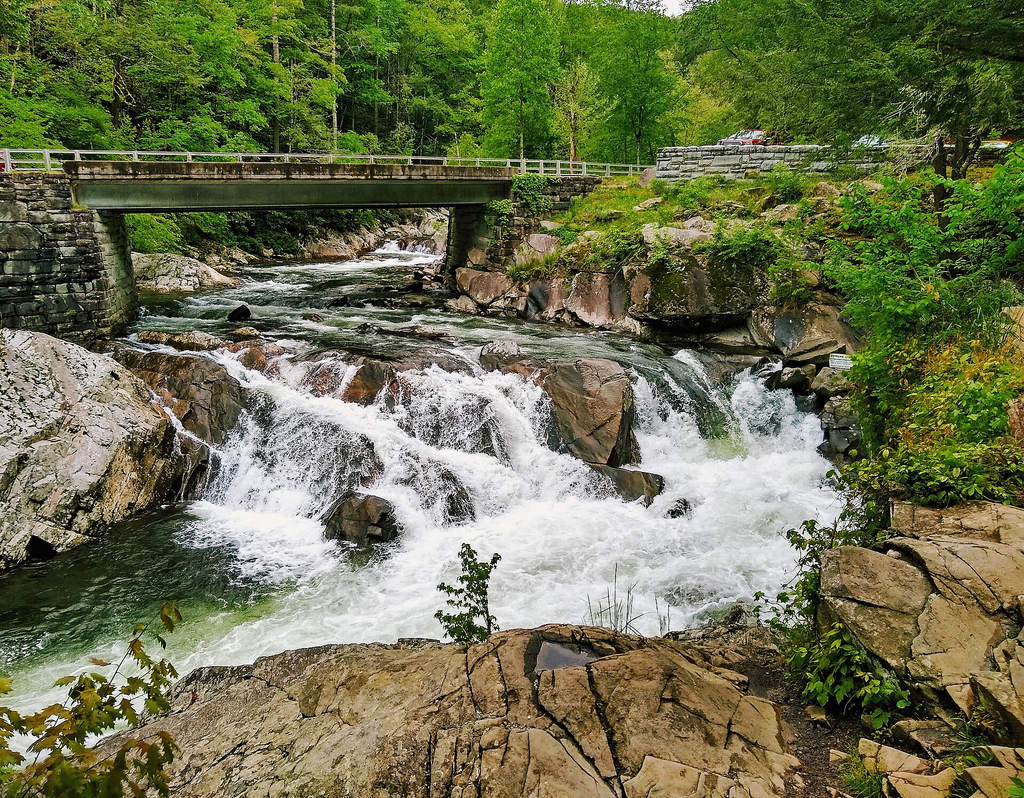
The Mountain That Proves There Is No Single Peak Fall Weekend
Kuwohi, formerly known as Clingmans Dome, is one of the signature high-elevation destinations in Great Smoky Mountains National Park. Its parking area has roughly 167 spaces, and the National Park Service identifies the area as one where parking demand can exceed capacity.
Treating it like a quick roadside stop is the mistake.
This is high country.
The forest changes as you climb. Temperatures can feel different from the valleys below. The drive itself becomes part of the experience, especially when morning light catches the ridges.
A better plan is to pair Kuwohi with Newfound Gap and treat the two as one high-elevation outing.
Go early.
Stop at Newfound Gap.
Continue toward Kuwohi.
Walk to the observation tower while the day is still cooler, then begin descending while the larger late-morning wave is climbing toward you.
Here's what catches people off guard.
Fall color in the Smokies moves with elevation, so there is no single date when every part of the park reaches peak color at once.
National Park Service guidance says color can begin at high elevations in mid-September. Areas above roughly 4,000 feet often develop good color in early to mid-October, while lower and middle elevations can show their strongest displays from mid-October into early November.
The insider trick is to change elevation instead of obsessing over one supposedly perfect weekend.
Earlier in the season, look higher.
Later, look lower.
The trap is treating a social-media “peak color date” like an appointment nature has agreed to keep.
It has not.
Weather and elevation make the mountains more complicated than that.
And if you are visiting in October, color is only half the story.
The other half is traffic.
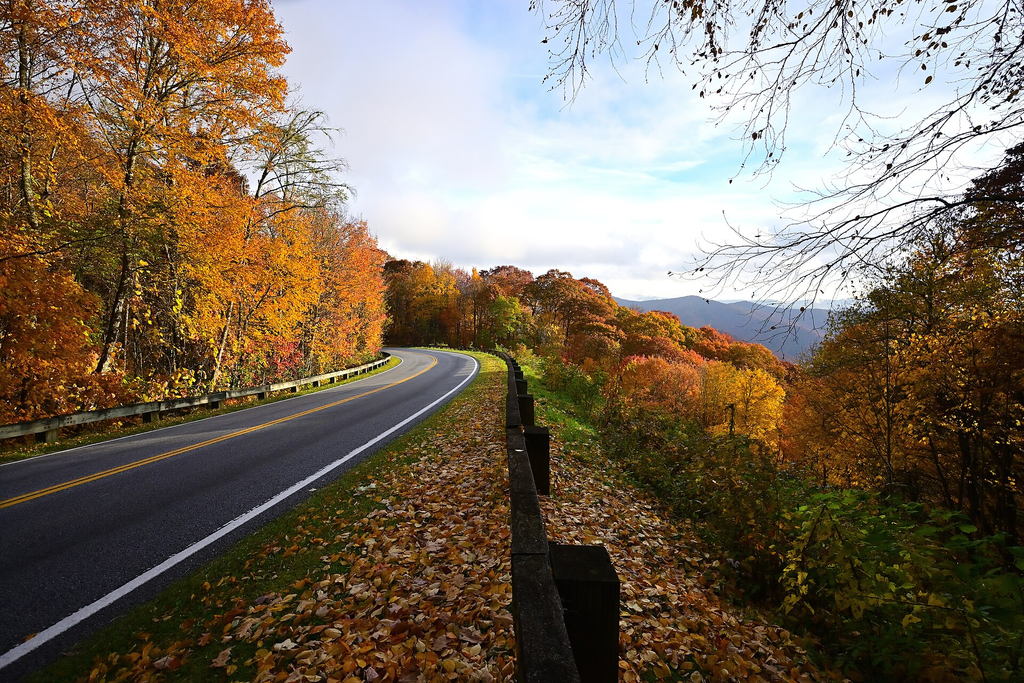
The Month That Needs to Be Planned Like a Major Event Weekend
October is the busiest month of the year in Great Smoky Mountains National Park, according to the National Park Service. Heavy fall visitation can increase travel times by hours.
Read that again.
By hours.
That changes how you build a fall itinerary.
A road that looks perfectly manageable on a map can become a long chain of brake lights when leaf season reaches full swing.
Pullouts fill.
Trailheads fill.
Restaurants outside the park get slammed.
Then somebody tries to squeeze Kuwohi, Cades Cove, a waterfall hike, Gatlinburg, and Pigeon Forge into one Saturday because the driving distances looked reasonable on a phone.
Technically, you may touch all five.
Enjoy them?
That's another matter.
Here's what catches people off guard.
October in the Smokies is not an ordinary mountain weekend with prettier leaves. It is peak-season logistics wrapped in spectacular scenery.
The insider move is to choose one major objective per half-day and leave big cushions between anything time-sensitive.
Keep food and water with you.
Print the parking tag before entering the park.
Know the backup destination.
Avoid bouncing repeatedly from one side of the mountains to the other.
Most importantly, do not make a tight dinner reservation dependent on a long afternoon scenic drive going exactly according to schedule.
The trap is itinerary density.
People fear “wasting” a vacation by doing too little, so they schedule every hour.
Then traffic slips 45 minutes.
Parking adds another 30.
A wildlife jam appears.
Now the schedule controls the trip instead of helping it.
October rewards the opposite approach.
Pick less.
Stay longer.
Watch the light move across the ridge instead of watching the clock.
That becomes especially important when the traffic jam ahead is not caused by leaves at all.
Sometimes it has four legs and a crowd of people pointing phones at it.
The Wildlife Sighting That Should Never Become a Scavenger Hunt
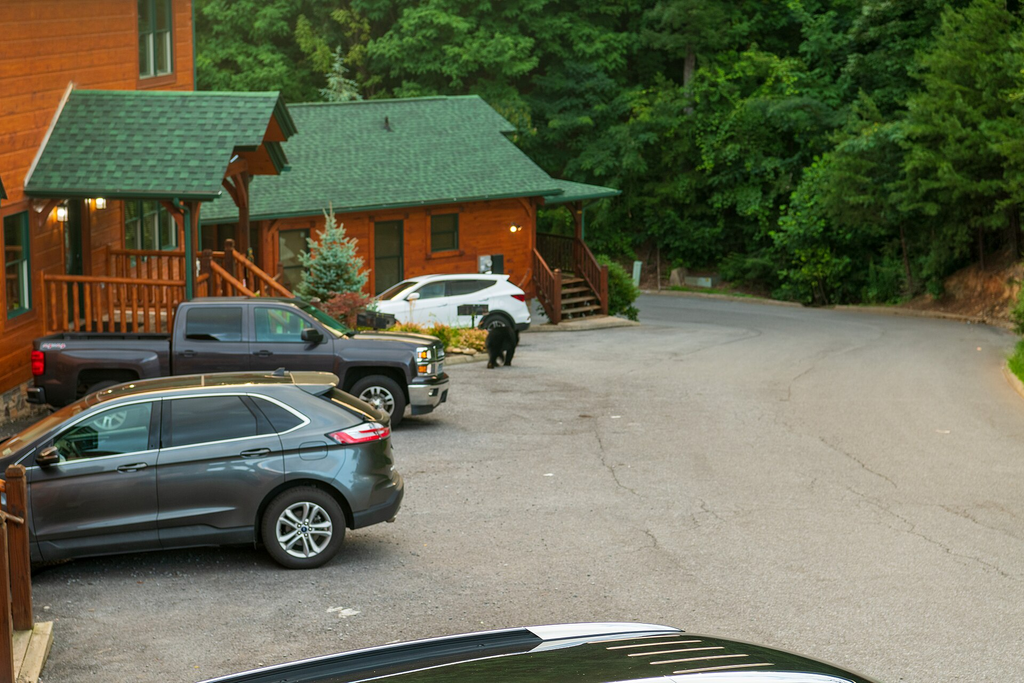
Great Smoky Mountains National Park requires visitors to stay at least 50 yards, or 150 feet, from black bears. For elk, visitors should remain at least 25 yards, or 75 feet, away.
Those distances are not suggestions for getting a better photograph.
They are boundaries.
A bear moving through an open field can stop a whole line of vehicles because everybody wants the same picture. Windows come down. Cars slow. People lean out.
The encounter feels extraordinary because it is.
That is exactly why it should not be forced.
In fall, bears enter hyperphagia, a period of intense feeding before winter, and the park reminded visitors again in September 2026 to view both bears and elk safely as wildlife encounters increase during the season.
Here's what catches people off guard.
The better Smokies trip is one where you notice wildlife, not one where the entire day is organized around chasing it.
Bring binoculars.
Use a telephoto lens if photography matters to you.
If an animal appears, enjoy the moment from the required distance.
Then let it remain a wild animal instead of turning it into an attraction.
The insider move is simple: use legitimate pullouts for wildlife viewing and keep the roadway open.
Never stop in a travel lane because somebody yelled “bear.”
The trap is assuming that a cluster of stopped cars means you should stop too.
That is how a single sighting becomes a bear jam, and those jams can interfere with emergency traffic as well as wildlife.
There is something better than chasing a bear photograph anyway.
Turn off the engine somewhere appropriate, step out, and actually listen to the park.
That is when you realize how much of the Smokies gets missed through a windshield.
The Mountains Were Never Meant to Be Seen Entirely Through Glass
Great Smoky Mountains National Park can be explored through scenic drives, but its experience is not limited to long hikes. Short nature trails, Quiet Walkways, historic structures, creekside stops, picnic areas, and overlooks allow visitors to break a driving day into smaller experiences.
That matters because another version of “doing the Smokies wrong” looks surprisingly productive.
Drive to Newfound Gap.
Drive to Kuwohi.
Drive to Cherokee.
Drive back across the mountains.
Take photographs at overlooks.
Return to the cabin.
You covered a tremendous amount of ground.
But how much of it did you actually feel?
Step out beside a stream and the whole park changes.
Water knocks against rounded stone. Leaves shift above you. The temperature drops near the creek. A place that looked pretty through the windshield suddenly has sound, texture, and movement.
You do not need an eight-mile hike to get that.
Here's what catches people off guard.
A twenty-minute walk can make a scenic drive feel more like a mountain day than another two hours behind the wheel.
The insider move is to build a rhythm.
Drive for a while.
Stop.
Walk.
Drive again.
Picnic.
Sit beside water.
Take another short walk.
Then continue.
This works especially well for travelers who cannot or do not want to tackle strenuous hikes.
The trap is thinking the Smokies have only two settings: giant hike or scenic drive.
There is a whole middle ground.
And because parking pressure concentrates around famous trailheads, spreading your stops among shorter walks and less concentrated areas can make the day easier too.
You begin remembering sounds instead of parking lots.
You remember the creek instead of the traffic.
You remember the cold air on the ridge instead of how many attractions you checked off.
That brings us to the biggest mistake of all.
Trying to finish the Smokies.
The Vacation Checklist That Turns Half a Million Acres Into Homework
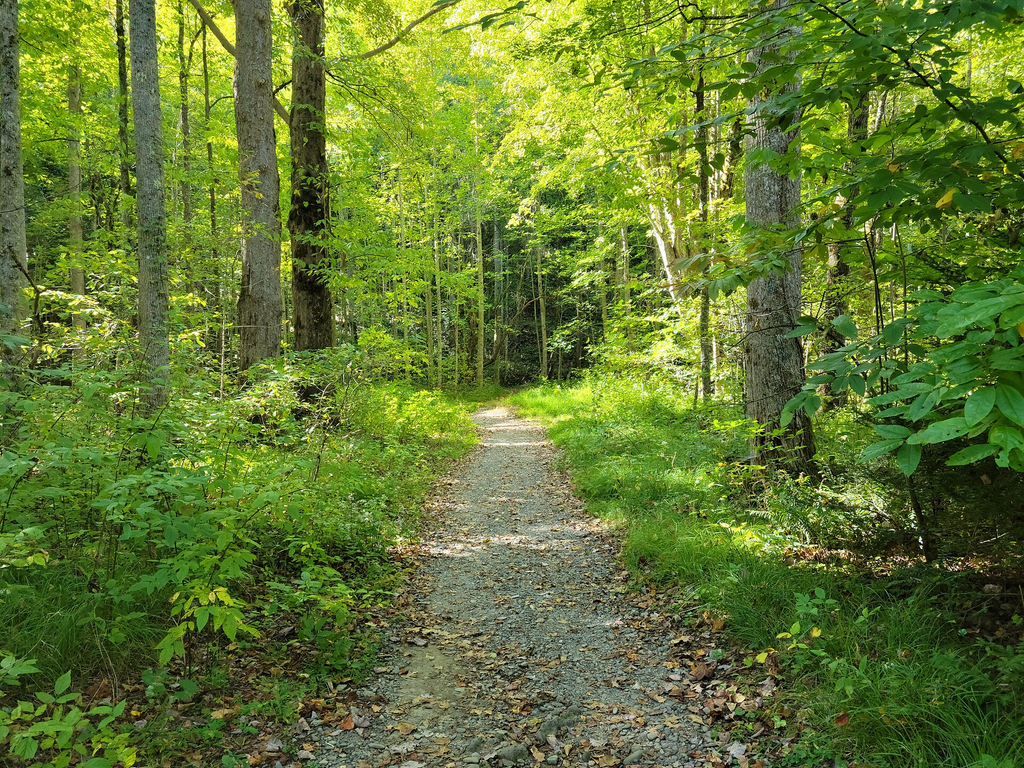
Great Smoky Mountains National Park covers more than 522,000 acres, with mountain ridges, river valleys, waterfalls, historic settlements, forests, wildlife habitat, and gateways on both the Tennessee and North Carolina sides.
You cannot meaningfully “do” all of that in a day.
You probably should not try to do it in a weekend either.
The better approach is geographic.
Give one day to the Cades Cove and Townsend side. Let the valley, historic buildings, a picnic, Little River Road, or Tremont fill the hours without racing toward another corner of the park.
Make another day about the high country. Newfound Gap and Kuwohi naturally belong together, with the possibility of continuing toward Oconaluftee or Cherokee.
A quieter East Tennessee day can lean toward Cosby or Greenbrier.
A North Carolina day can connect Oconaluftee, Deep Creek, and Bryson City.
You do not need all four days.
That is not the point.
Here's what catches people off guard.
One deeply experienced corner of the Smokies can create a better memory than six famous places photographed through a windshield.
The insider trick is to draw an imaginary circle around one section of the map and stay inside it for most of the day.
Stop crossing the same mountain simply to check another name off a list.
The practical advantage is obvious. Less backtracking means less fuel, less traffic exposure, fewer parking battles, and more actual time outside the vehicle.
The emotional advantage is even better.
Your day starts having a shape.
Instead of remembering a blur of roads and parking lots, you remember a valley. A creek. A ridge. A historic cabin. The smell of damp leaves. The moment the mountains disappeared into cloud.
The trap is believing that leaving something unseen means you wasted the trip.
It means you have a reason to come back.
And that leads to the strangest fact about America's most visited national park: the crowds are real, but they are not evenly spread across either the map or the clock.
The Unexpected Fact About Visiting the Smokies
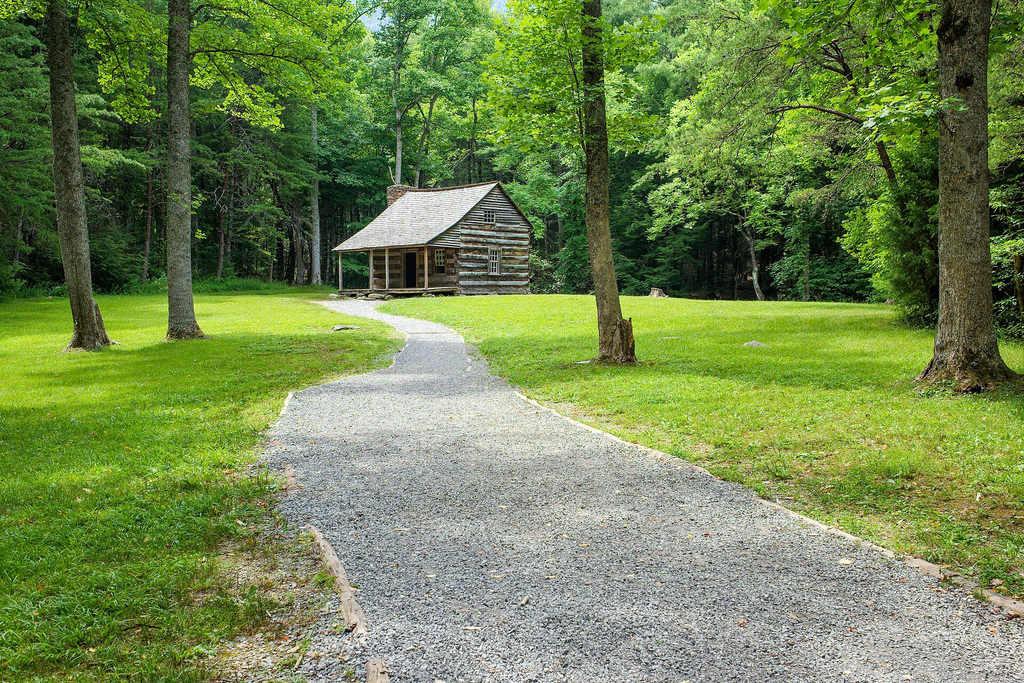
Great Smoky Mountains National Park welcomed 11,527,939 recreational visits in 2025 and covers more than 522,000 acres. Yet its busiest daily window is generally concentrated between 9 a.m. and 2 p.m., while parking pressure piles up around a relatively small collection of famous destinations.
That is the real secret.
You do not need a list of supposedly secret places. Sending everybody toward another “secret” waterfall simply creates tomorrow's crowded waterfall.
You need slower Smokies.
Go earlier once. Enter later another day. Spend an afternoon beside one creek. Choose one valley instead of three. Turn around when the parking lot is full. Leave a road unexplored.
Because the surest way to visit the Smokies wrong is trying to finish them.