A Tennessee traffic mistake can cost as much as $500, and some violations can carry consequences far more serious than a vacation budget can absorb. The tricky part is that many of the rules visitors miss are not obscure laws at all. They are everyday driving, drinking, wildlife, and recreation rules.
Tennessee also has state laws, local ordinances, and federal rules inside Great Smoky Mountains National Park. That means the rule can literally change as you drive. Here are 15 that are worth knowing before you cross the state line.
The Phone Rule That Is Much Broader Than a Texting Ban
Tennessee's Hands Free Law does not simply tell drivers to stop texting. It generally prohibits drivers from holding a cellphone or mobile device with any part of the body while operating a vehicle, along with reading or sending text-based communication, watching video, and recording or broadcasting video.
That matters on a Tennessee vacation because your phone becomes your map, camera, restaurant guide, parking finder, and music player.
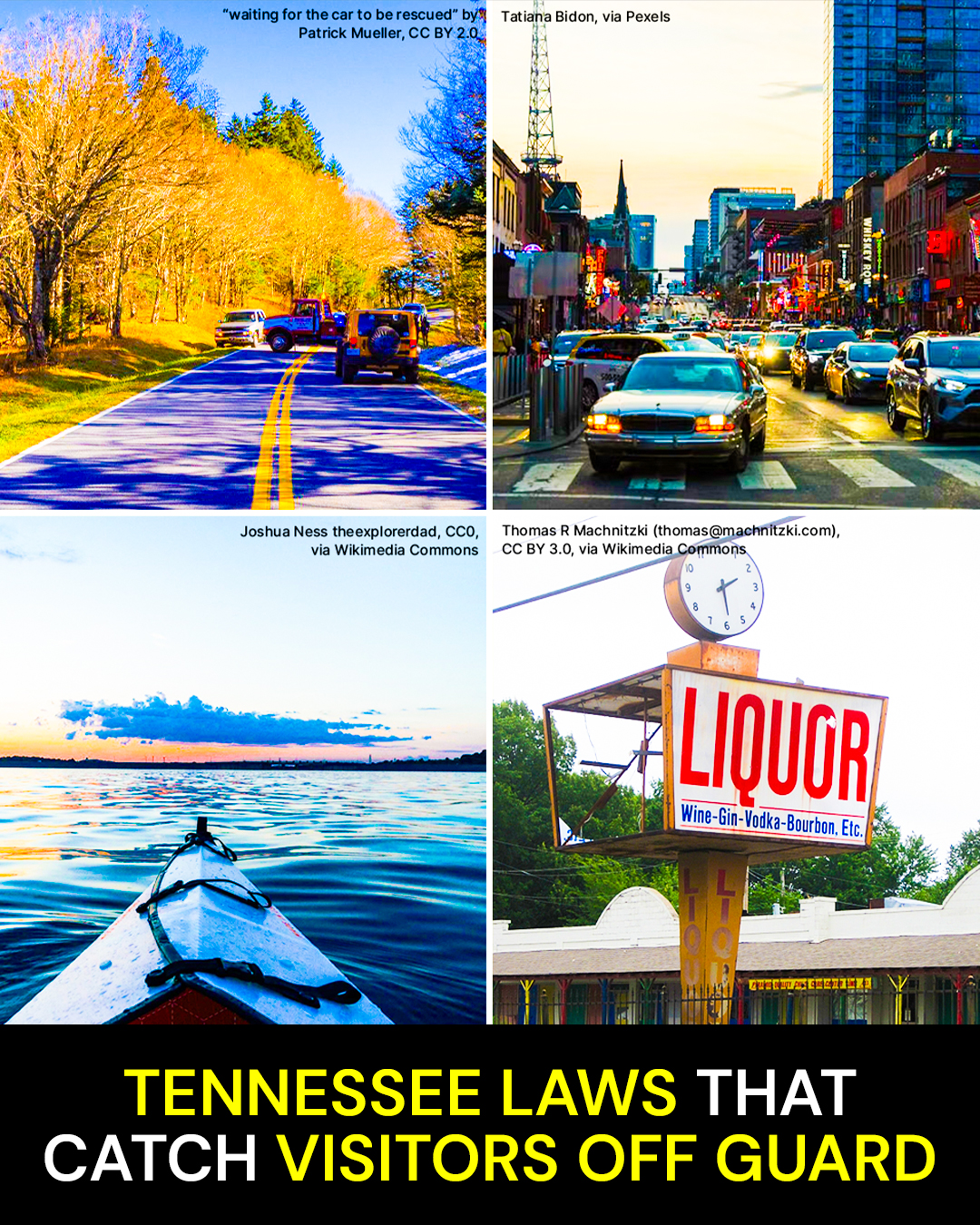
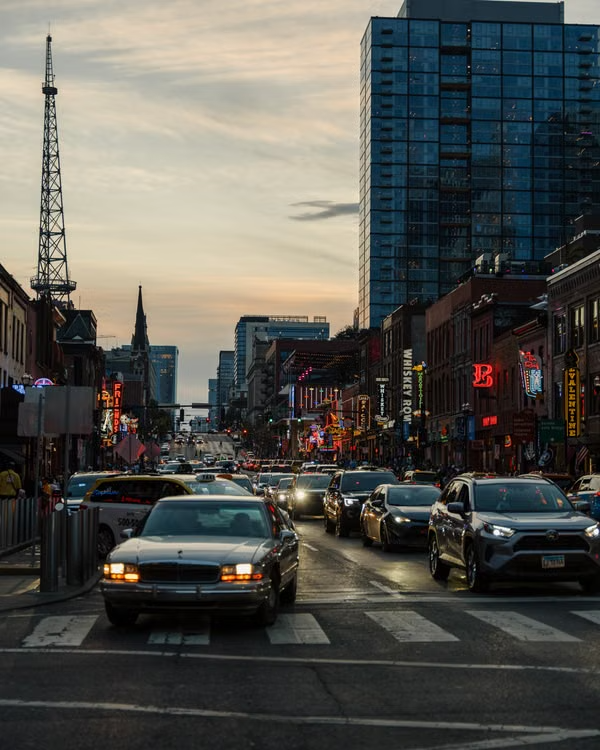
You are rolling into Nashville with the skyline ahead. Broadway is glowing through the windshield. Somebody wants a quick video. Your navigation is telling you to turn in 500 feet.
Reaching for the phone feels harmless.
Here's what catches people off guard.
That quick video from the driver's seat can create a problem even if you never type a single text.
The insider move is simple: mount the phone before pulling away and set your route while parked. If somebody else is riding with you, make that person the navigator and photographer.
The law also addresses reaching for a device in a way that takes the driver out of a normal seated and belted driving position. In other words, dropping your phone on the passenger-side floor is not an invitation to go fishing for it while rolling down I-40.
Hands-free use is the safer route.
This is particularly important around downtown Nashville, Knoxville, Chattanooga, and the mountain tourism corridors, where unfamiliar exits and last-second navigation changes tempt visitors to grab their phones.
The trap is thinking Tennessee merely has an ordinary “don't text and drive” rule.
It doesn't.
And the next rule is even easier to break because Tennessee weather can change before you reach the next exit.
The One-Second Rainstorm Rule Road-Trippers Forget
Tennessee requires headlights when precipitation such as rain, mist, or snow requires the continuous use of windshield wipers. The Tennessee Highway Patrol reiterated the rule in 2026 with an easy way to remember it: wipers on means headlights on.
This matters everywhere, but East Tennessee is where visitors should really pay attention.
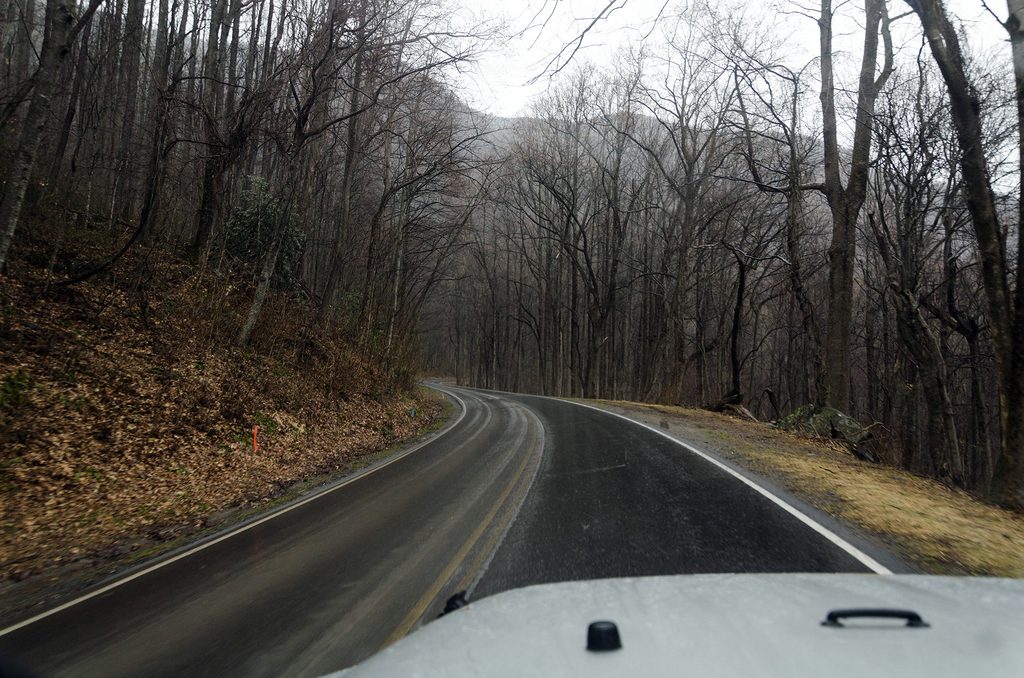
You can leave Gatlinburg under a bright sky, climb toward the mountains, and suddenly find yourself driving through gray mist and wet pavement. A shower rolls across the road. The wipers start squeaking back and forth.
Turn the lights on too.
Here's what catches people off guard.
If Tennessee weather requires continuous use of your windshield wipers, your headlights need to be on.
The easiest insider trick is to make the two actions automatic in your head. Wipers on, lights on. Don't wait until the rain becomes heavy enough that you think visibility is bad.
Drivers of rental cars should also take a few seconds before leaving the lot to learn where the headlight controls are. That sounds painfully obvious until you're on a dark mountain road in somebody else's SUV during a downpour.
The Smokies make this rule particularly useful because visibility can change quickly with elevation and weather.
Do not assume daytime running lights solve every visibility issue either. Know how to turn on the vehicle's proper headlights rather than depending on unfamiliar automatic settings.
The trap is waiting for darkness.
Rain is enough to make this rule relevant.
And while you're watching your lights, keep an eye on the shoulder. The flashing vehicle ahead may trigger another Tennessee rule that visitors underestimate.
The Roadside Vehicle That Can Make a $500 Mistake
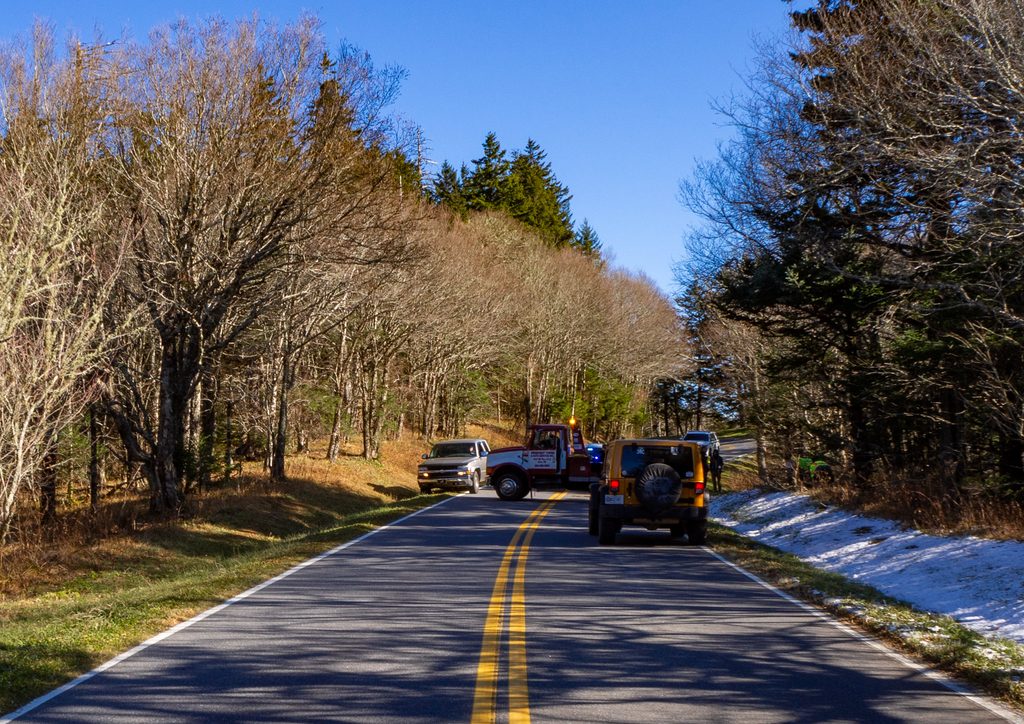
Tennessee's Move Over Law reaches beyond the police cruisers and ambulances most travelers expect. Qualifying tow and recovery vehicles, highway maintenance vehicles, utility service vehicles, solid-waste vehicles, and other responders displaying appropriate warning signals can also trigger the requirement.
When safely possible, drivers approaching a covered stopped vehicle must move into an adjacent lane. When moving over cannot safely be done, motorists must slow down.
Picture I-40 after dark.
A tow truck sits on the shoulder, its warning lights bouncing across wet pavement. Traffic is moving fast, tractor-trailers are rumbling beside you, and the instinct is to stay in your lane and pass.
That can be the wrong move.
Here's what catches people off guard.
A Tennessee Move Over violation can carry a fine of up to $500 and potentially up to 30 days in jail.
The insider habit is to start looking for a safe opening as soon as you see warning lights ahead. Waiting until you are directly beside the stopped vehicle makes the maneuver harder for everybody.
If traffic prevents a safe lane change, slow down as required rather than forcing your way into another lane.
This matters on Nashville's I-24 and I-65 corridors, I-40 across the state, and the winding roads of East Tennessee, where a disabled vehicle or maintenance crew may appear around a bend.
The trap is assuming the law only protects police.
It doesn't.
Tennessee has deliberately extended protection to other people whose jobs put them inches from moving traffic.
The next rule catches a different kind of road-tripper, especially riders arriving from states where adults can legally skip a helmet.
The Motorcycle Rule That Does Not Stay Behind at the State Line
Tennessee requires motorcycle operators and passengers to wear qualifying helmets. That includes adult riders who may legally ride without one back home.
The state's motorcycle guidance confirms that riders are required to wear crash helmets meeting applicable standards.
That becomes important the moment a scenic Tennessee road starts calling your name.
The Foothills Parkway opens into broad mountain views. East Tennessee roads twist past ridges and rivers. A motorcycle ride here can feel made for a postcard.
Your home state's helmet exemption does not travel with you.
Here's what catches people off guard.
Tennessee's helmet requirement applies to motorcycle passengers as well as operators.
If you're renting or borrowing a motorcycle, settle the helmet question before the ride starts. Do not rely on somebody saying they heard Tennessee recently changed the law.
There have been proposals over the years to loosen Tennessee's helmet requirements. A proposed change and an enacted law are two entirely different things.
Visitors should follow the current Tennessee requirement.
The practical mistake is assuming that because you crossed the state line on a motorcycle legally equipped for your home state, every riding rule stays the same.
It doesn't.
This is one of those vacation laws that is remarkably easy to follow once you know about it.
Alcohol rules are considerably messier. Tennessee's open-container statute has an unusual detail that can create exactly the wrong kind of confidence.

The Open-Container Rule That Sounds More Permissive Than It Really Is
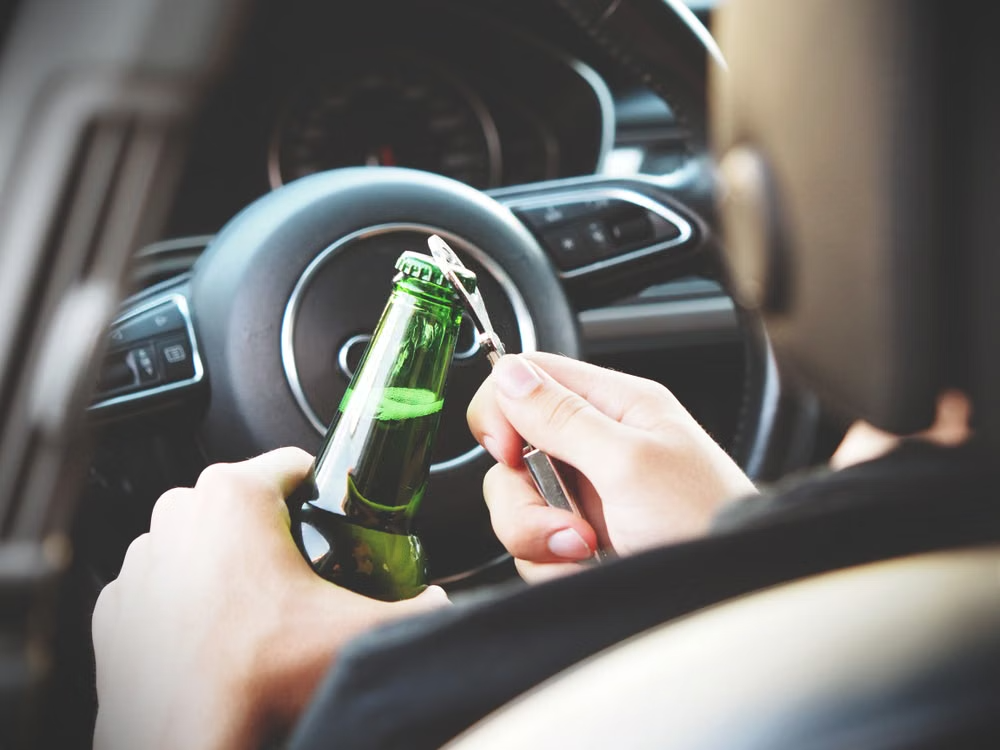
Tennessee's statewide vehicle open-container law is unusual because its central prohibition is directed at the driver. State safety guidance says drivers shall not consume or possess an open container of alcoholic beverage or beer while operating a motor vehicle.
That wording has helped create one of Tennessee travel's most dangerous oversimplifications.
People hear it and translate it into, “Passengers can drink in Tennessee.”
Slow down.
Local ordinances, where the container is located, who actually possesses it, the type of vehicle, and other circumstances can all matter.
Here's what catches people off guard.
Tennessee's statewide open-container law is not written exactly like the laws in many other states, but that does not turn every car into a legal mobile bar.
The safest travel strategy is to keep opened alcohol away from the driver and follow the rules of the city and jurisdiction you're actually in.
That local piece matters.
Tennessee alcohol regulation is not perfectly uniform from one community to another. Nashville's rules should not automatically be treated as the rules for every small town, lake community, or tourist destination in the state.
The same caution applies downtown. Broadway's neon, rooftop bars, party vehicles, and crowds can make the entire district feel like one enormous entertainment venue.
Legally, it isn't.
Public areas, licensed premises, special events, vehicles, and local alcohol rules can be treated differently.
The trap is learning one catchy sentence about Tennessee alcohol law and assuming it answers every situation.
It doesn't.
And once the road turns into a boat ramp, the consequences of mixing alcohol and operating a vehicle remain serious.
The Lake-Vacation Mistake That Can Mean Jail
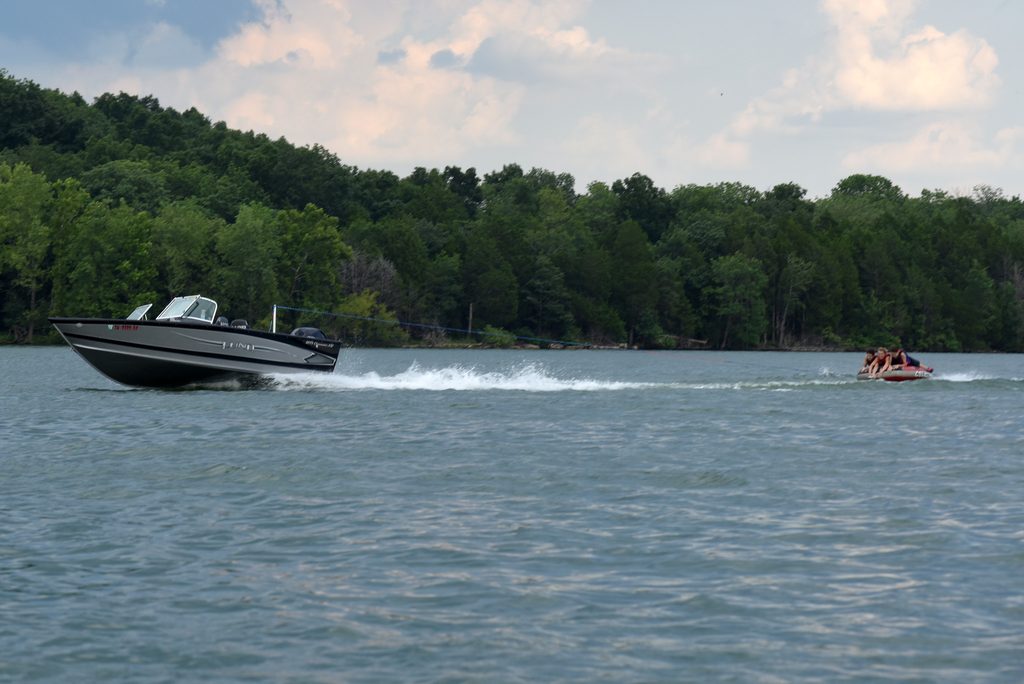
Tennessee prohibits operating a motor-powered or sail-powered vessel under the influence of alcohol or drugs. State boating guidance uses a BAC of 0.08 percent or more for the applicable intoxication presumption, and a first BUI conviction carries at least 48 consecutive hours in jail.
That changes the mood of a lake weekend pretty quickly.
Percy Priest, Center Hill, Norris, Chickamauga, Douglas, Pickwick, and the Tennessee River draw boaters looking for warm water, long afternoons, and coolers packed for the day.
The engine hums. Sun flashes off the water. Somebody turns up the music.
It still counts as operating a vessel.
Here's what catches people off guard.
A first Tennessee BUI conviction carries a minimum of 48 consecutive hours in jail.
TWRA has summarized the message in three words: “BUI = DUI.”
The insider strategy is the same one smart groups use on land. Decide who is operating the boat before the drinking begins, not halfway through the afternoon.
Do not assume being away from a highway means impaired-operation laws disappear.
Operating privileges can also be affected, and repeat offenses carry tougher consequences.
The practical trap is the relaxed atmosphere. People who would never drink and drive home from a Nashville restaurant can make very different decisions when they're barefoot on a pontoon in the middle of a lake.
Tennessee does not treat the water as a legal vacation from sobriety requirements.
Neither does the state make an exception because something was legally purchased somewhere else.
That brings us to one of the biggest border-crossing surprises in Tennessee.
The Legal Purchase That Can Become a Tennessee Problem
Recreational marijuana remains illegal in Tennessee. That matters enormously for travelers arriving from states where buying and possessing marijuana may be legal under state law.
The border changes the legal picture.
A product sitting legally in your luggage before the trip does not automatically remain legal when you bring it into Tennessee.
There is no dramatic sign at the state line explaining that distinction.
You simply cross the border, the scenery keeps moving, and Tennessee law applies.
Here's what catches people off guard.
Legal where you bought marijuana does not mean legal where you brought it.
The insider rule is the easiest one in this entire article: do not bring recreational marijuana into Tennessee based on the assumption that another state's legalization protects you here.
It doesn't.
This is particularly relevant for road-trippers who have grown accustomed to legal cannabis markets elsewhere and no longer think of possession as unusual.
The trap is also assuming that every cannabis-related package on a store shelf falls into the same legal category.
Tennessee distinguishes marijuana from certain hemp-derived products, and that distinction became even more important in 2026.
Labels such as “hemp,” “THCA,” or familiar cannabinoid terminology should not be treated as a universal permission slip.
Tennessee has its own framework.
And in 2026, that framework changed enough that older travel advice can now be badly outdated.
The Hemp Rules That Changed Under Visitors' Feet in 2026
Tennessee significantly changed regulation of hemp-derived cannabinoid products in 2026. Beginning January 1, primary regulation shifted to the Tennessee Alcoholic Beverage Commission, and by July the transition away from the previous Department of Agriculture retail-license system was complete.
More than 1,300 businesses obtained licenses under the new TABC system.
The important part for travelers is not memorizing bureaucracy.
It's understanding that something sold as “hemp” elsewhere is not automatically legal under Tennessee's current rules.
Tennessee's framework distinguishes products partly by total THC. The state calculates total THC using THCA as part of the equation: THCA multiplied by 0.877, plus delta-9 THC.
Here's what catches people off guard.
Tennessee's 2026 framework counts THCA when determining total THC.
Under TABC's framework, qualifying products containing 0.3 percent or less total THC may be legal but regulated, while products exceeding the legal total-THC threshold are illegal. The framework also prohibits THCp and synthetic cannabinoids in regulated products.
The insider advice is not to play chemist in a hotel room.
Buy only from lawful sources and do not assume an out-of-state product complies with Tennessee law because the package says “hemp.”
Transportation rules can introduce additional complications, particularly for products brought into or through Tennessee.
That does not mean every tourist carrying an out-of-state CBD product is automatically breaking the law. The rules are more technical than that.
The trap is relying on an article written before the 2026 changes.
Tennessee's cannabis and hemp landscape has moved quickly.
Now for a rule involving something far less controversial: a bottle of bourbon and a Sunday afternoon.

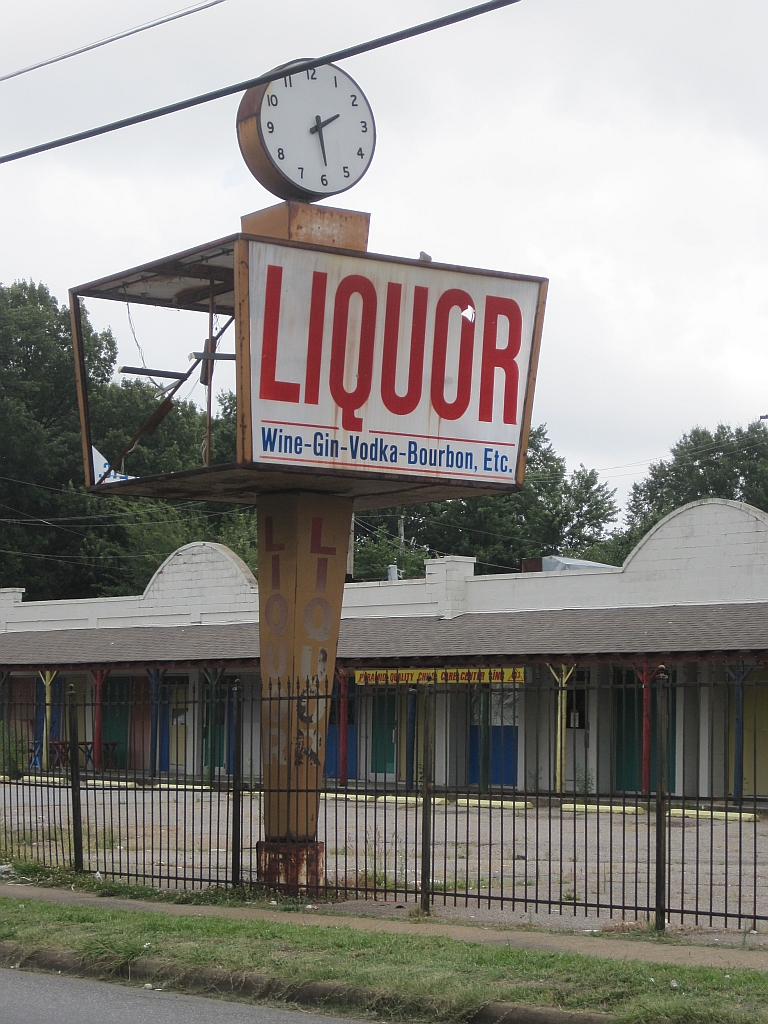
The Liquor Store Rule That Changed, but Still Has Holiday Traps
Tennessee retail package stores may operate from 8 a.m. to 11 p.m. Monday through Saturday and from 10 a.m. to 11 p.m. Sunday under state rules. They must close on Christmas, Thanksgiving, and Easter.
That Sunday detail still surprises longtime visitors.
Older Tennessee alcohol laws left a strong impression, and outdated travel advice has a way of hanging around long after statutes change.
So you arrive at your cabin, unpack the groceries, and realize somebody forgot the bottle for dinner.
On an ordinary Sunday, the old “liquor stores are closed” assumption may send you searching for alternatives unnecessarily.
On certain holidays, the opposite assumption can leave you staring at a locked door.
Here's what catches people off guard.
Sunday package-store sales are permitted, but Tennessee still requires retail package stores to close on Christmas, Thanksgiving, and Easter.
The insider move is to buy holiday supplies before the holiday itself.
Also remember that alcohol regulation in Tennessee depends heavily on local approval and licensing. A Nashville visitor should not assume every Tennessee community has the same retail environment.
Beer regulation can involve local beer boards, while stronger alcoholic beverages fall under state Alcoholic Beverage Commission jurisdiction.
The trap is thinking “Tennessee alcohol law” means one simple statewide set of shopping expectations.
It doesn't always work that way.
And even inside a licensed bar, the clock can change what kind of promotion the business is allowed to offer.
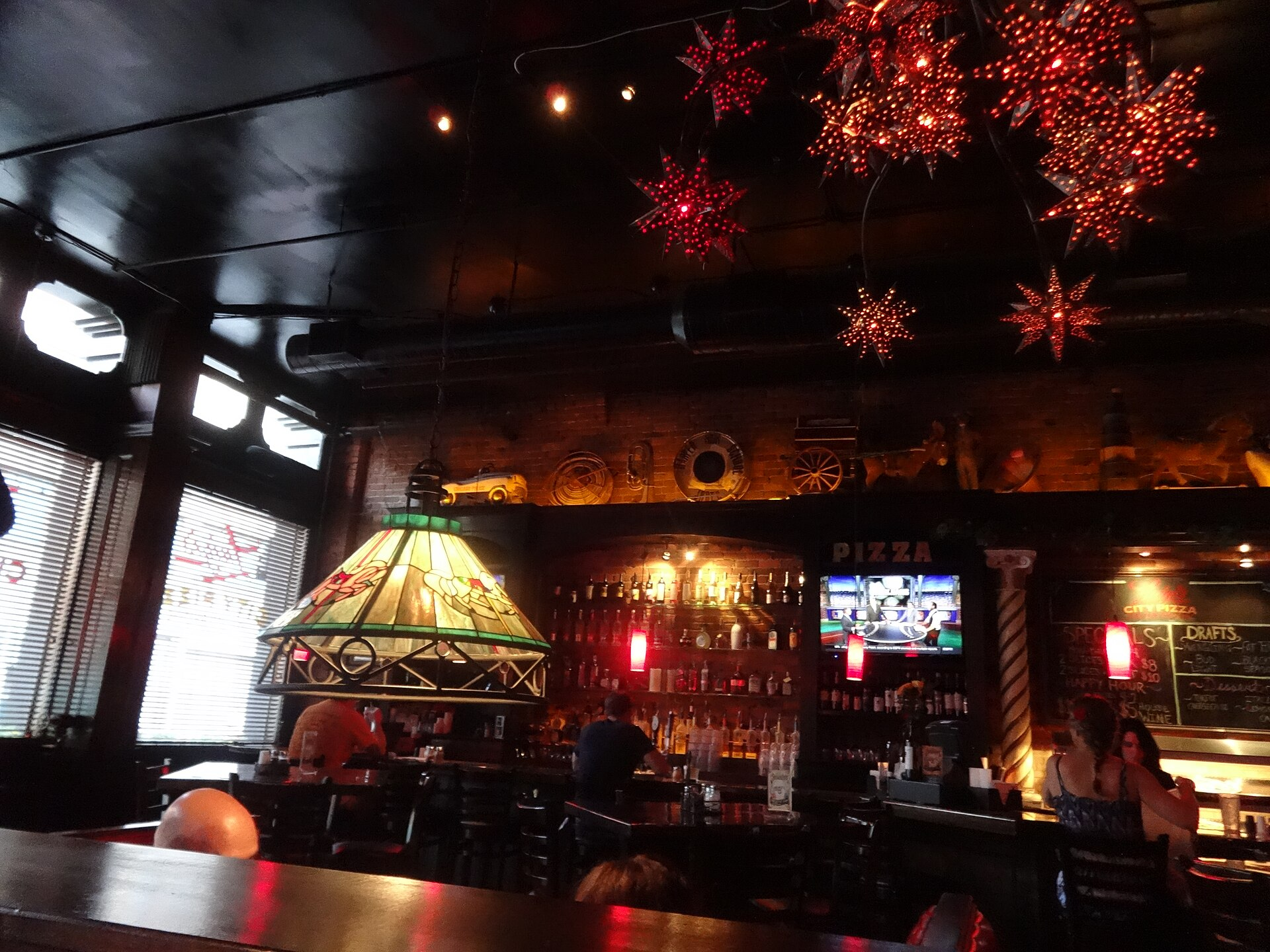
The Happy-Hour Clock That Changes at 10 P.M.
Tennessee permits happy-hour specials, but state alcohol rules place restrictions on certain promotions after 10 p.m. local time.
After that point, licensed establishments cannot use certain promotions involving serving two or more drinks or containers to one consumer at one time as a special. They also cannot increase the amount of alcohol in a drink without proportionately increasing its price.
Ordinary dollar discounts can still be permitted.
That distinction explains why the late-night promotion you expected may not work quite the way it did earlier.
On Broadway, 10 p.m. barely feels late.
Music is pouring through open doors. Boots are hitting hardwood floors. Rooftops are glowing and the sidewalks are packed.
The legal promotion clock does not care.
Here's what catches people off guard.
Tennessee's alcohol-promotion rules change after 10 p.m. local time, even though ordinary dollar discounts can still be allowed.
The insider move is to read the actual promotion rather than assuming “happy hour” means unlimited combinations of cheap drinks until closing.
Tennessee also prohibits licensed establishments from simply giving away alcoholic beverages or selling alcohol below cost.
So a promotion that sounds perfectly ordinary elsewhere may need to be structured differently here.
The practical trap is assuming Nashville's party reputation means Tennessee has loose alcohol regulations.
Quite the opposite. The state has detailed rules governing licensed businesses.
And the farther east you drive, another entire rulebook eventually takes over.
Once you enter Great Smoky Mountains National Park, some of the most important rules in this article are federal.
The Bear Photo That Requires 150 Feet of Breathing Room
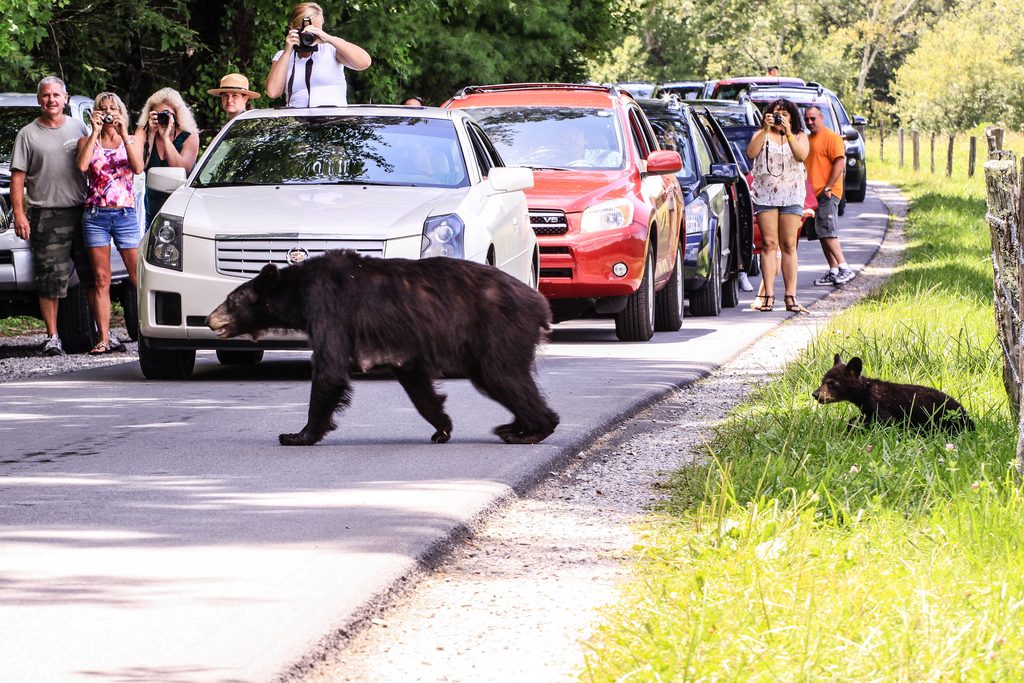
Great Smoky Mountains National Park requires visitors to remain at least 50 yards, or 150 feet, from bears. Visitors also cannot approach wildlife in a way that disturbs it.
This is federal National Park Service territory, not simply another Tennessee wildlife rule.
And it matters because seeing a black bear can turn otherwise sensible adults into amateur wildlife photographers in about three seconds.
Traffic slows.
People point through windows. Doors open. Phones appear. Someone edges closer because the bear is “just sitting there.”
That's precisely when good judgment matters.
Here's what catches people off guard.
You should remain at least 50 yards, or 150 feet, from a bear in Great Smoky Mountains National Park.
The insider move is to use distance and zoom, not your feet, to improve the photograph.
If your presence changes the animal's behavior, you are too involved in the scene.
Bear traffic jams are part of the Smokies experience, particularly when wildlife appears near roads, but another driver's bad behavior is not permission to copy it.
Stay in control of your vehicle and do not create another hazard by stopping where you should not.
The trap is treating a roadside bear like an attraction at a drive-through wildlife park.
It isn't.
You are standing in its habitat.
And if getting too close is serious, handing that bear a snack can turn the encounter into something much worse.
The Snack That Can Turn Into a Federal Case
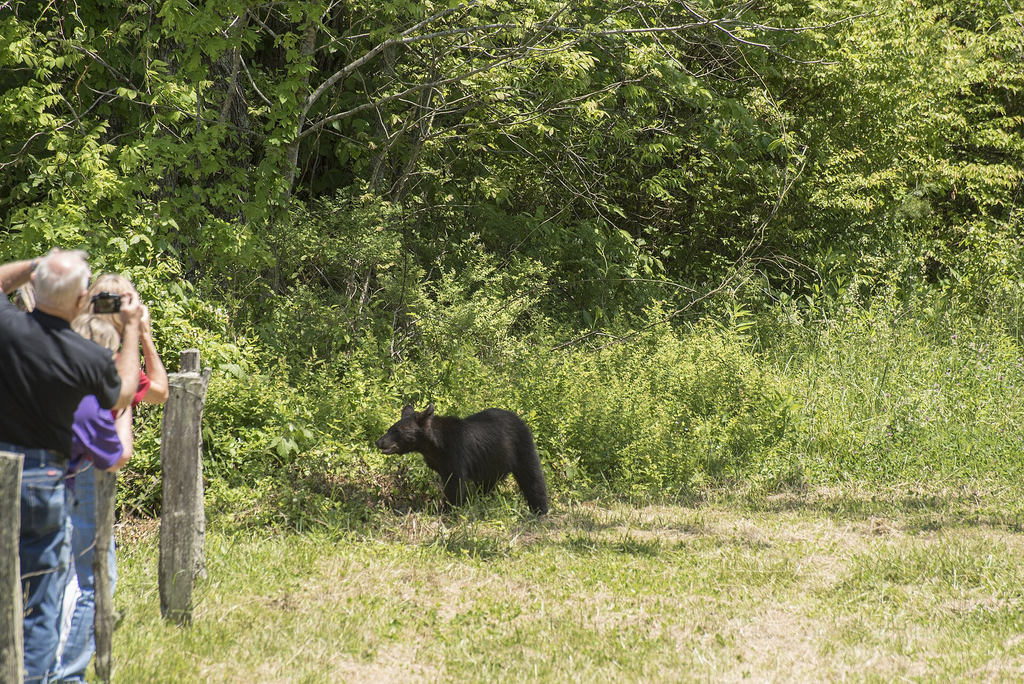
Feeding wildlife in Great Smoky Mountains National Park is illegal. The National Park Service has warned that violations involving intentional bear feeding can carry penalties reaching $5,000 and six months of imprisonment.
Those numbers should end the temptation.
A bear wanders near a picnic area and looks calm. It sniffs the air. Somebody has crackers, fruit, or half a sandwich.
Giving it food may feel like a tiny interaction.
It isn't.
Food-conditioned bears can learn to associate people with meals, creating dangerous encounters long after the visitor who fed them has driven home.
Here's what catches people off guard.
Feeding wildlife in the Smokies can carry penalties reaching $5,000 and six months in jail.
The insider rule is to treat food storage as part of wildlife safety, not merely campground housekeeping.
At frontcountry campsites, food, coolers, cooking equipment, and scented items generally must be secured in a hard-sided vehicle or camper when they are not actively being used.
That includes more than steaks and marshmallows.
Soap, candles, and other scented items can matter too.
Backcountry campsites have their own food-storage requirements, including use of bear cables where provided and required.
The trap is leaving a cooler sitting beside the tent because you'll be back in a few minutes.
A bear doesn't know that.
This is one of those rules with a history-rich reason behind it. Protecting bears from human food protects visitors too, and sometimes protects the bear from consequences created by human behavior.
After that serious reminder, here's a much lighter surprise for anybody planning to bring the family dog hiking.
The National Park With Hundreds of Miles of Trails but Only Two for Dogs
Great Smoky Mountains National Park generally allows dogs on only two hiking trails: the Gatlinburg Trail and the Oconaluftee River Trail. Service animals are treated separately under applicable rules.
That surprises visitors because Gatlinburg itself can feel extremely dog-friendly.
You see leashes on sidewalks, dogs outside businesses, and families arriving at cabins with pets.
Then you reach the national park.
Different rulebook.
The forest smells of damp leaves and pine. A trail disappears beside a rushing creek. Your dog is staring at it like this is the reason you drove to Tennessee.
On most park hiking trails, the answer is still no.
Here's what catches people off guard.
Dogs are allowed on only two Great Smoky Mountains National Park hiking trails: Gatlinburg Trail and Oconaluftee River Trail.
The insider move is to build the day's itinerary around those two trails if hiking with a pet is important.
Do not wait until you reach a trailhead to discover the restriction.
Pet restrictions protect wildlife, other visitors, and the pets themselves. A quiet-looking forest contains bears and other animals that do not behave like neighborhood wildlife.
The trap is assuming that because your dog is leashed, the trail is automatically legal.
A leash does not turn a prohibited trail into a permitted one.
Check the park's current rules before setting out, especially when planning an entire vacation around hiking.
And if your travel companion has propellers instead of paws, the restriction is even simpler.
The Smokies Camera You Have to Leave Grounded
Unmanned aircraft may not be operated within Great Smoky Mountains National Park under National Park Service rules.
For photographers, that can sting.
Few places look more tempting from above than ridges rolling toward the horizon under layers of blue haze.
You pull into an overlook. Evening light slides across the mountains. The little drone case in the trunk suddenly looks like the perfect answer.
Leave it there.
Here's what catches people off guard.
Flying a drone inside Great Smoky Mountains National Park is prohibited.
The insider move is to separate “Smokies vacation” from “drone photography” when planning your shots. The national park boundary matters.
Outside the park, drone operators still have to comply with FAA requirements and applicable Tennessee restrictions. Tennessee rules also address specific conduct such as using drones to interfere with hunting or fishing.
The practical trap is seeing spectacular drone footage online and assuming it was legally captured from the spot where you're standing.
You do not know when, where, or under what authority somebody else's footage was made.
The park also prohibits removing protected natural and historic objects. Flowers, plants, and other natural items should stay where you find them.
Think photographs, not souvenirs.
That principle sounds simple in the mountains.
On Tennessee's lakes and streams, however, the regulations become surprisingly specific.
Shadowmeld Photography, CC BY-SA 4.0, via Wikimedia Commons
The Kayak Trip With More Rules Than Most Renters Expect
Tennessee requires an approved wearable life jacket for each person aboard a canoe, kayak, or stand-up paddleboard. Paddle craft must also be capable of displaying a white light or lantern after sunset or during restricted visibility.
Children under 13 must wear the required life jacket while underway.
That means the peaceful sunset paddle has a little more planning behind it than pushing the kayak off the bank.
The water turns dark. Shoreline details disappear. Boat traffic becomes harder to judge.
That white light suddenly makes a lot of sense.
Here's what catches people off guard.
Even a kayak needs an approved wearable life jacket aboard, and paddle craft need the required lighting capability after sunset or in restricted visibility.
The insider move is to inspect rental equipment before leaving shore. Make sure the required wearable PFD is actually there and readily accessible, and plan ahead if there's any chance you'll still be on the water near sunset.
Fishing adds another layer.
Tennessee guidance says people age 13 or older who are assisting or attempting to take fish can require a fishing license. Licensing rules vary by residency, species, and location, and trout fishing can involve additional privileges and restrictions.
Specific trout waters may have rules covering artificial lures, hooks, bait possession, minimum lengths, daily limits, seasonal catch-and-release periods, and fishing hours.
Then there is live bait.
Tennessee prohibits intentionally releasing live fish, crayfish, or salamanders into waters away from where they were harvested, and some bait species cannot legally be transported alive away from designated waters.
The trap is assuming yesterday's legal fishing method remains legal on today's creek.
Check the regulations for the actual water you're fishing.
Because Tennessee's outdoors may look wonderfully uncomplicated, but the rulebook beneath the surface can be anything but.

The Unexpected Fact About Tennessee's Rulebook
The most surprising thing about Tennessee travel law is not one strange statute.
It's how quickly the authority making the rules can change.
Drive through Nashville and local alcohol ordinances can matter. Head onto a Tennessee lake and TWRA boating regulations enter the picture. Cross into Great Smoky Mountains National Park and federal rules govern things such as bear encounters, pets, drones, food storage, alcohol, and removing natural objects.
That is why old internet lists of “crazy Tennessee laws” are often more entertaining than useful. The rules most likely to affect an actual visitor are much more ordinary: the phone in your hand, the headlights you forgot in the rain, the dog you brought to the trailhead, the life jacket missing from the kayak, or the bear that looked close enough for one better picture.
Tennessee is easy to enjoy once you know which rulebook you're standing in.
The smartest souvenir from a Tennessee trip is a good story, not a citation.