You can walk into a Nashville honky-tonk without paying a cover charge and still spend more than you planned before the first song ends. After researching Nashville's bar culture, official alcohol rules, tourism guidance, and academic research involving local bartenders and musicians, one thing becomes clear: the smartest visitors know a few rules before they reach the counter.
Some of the biggest surprises have nothing to do with what is in your glass. And the one mistake that can make an otherwise wonderful Broadway night go sideways is easier to avoid than you might think.
The Broadway Ordering Trick That Can Save Everyone Time
Robert's Western World, Tootsie's Orchid Lounge, and the big entertainment bars along Lower Broadway all offer their own take on Nashville nightlife, but they share one important reality: when the crowd builds, bartenders have to work quickly. Academic research published in Social Problems in 2025 examined the working conditions and tipping systems of bartenders and musicians at three downtown Nashville bars, documenting how the organization of a venue shapes the work behind the counter.
Step onto Broadway on a busy evening and the sound hits you before you have even settled in. Country guitars compete with conversations, glasses clink against the bar, and people lean forward to make themselves heard over the music.
At a packed counter, the bartender may be handling several orders while keeping track of payments, checking identification, and watching for customers who need assistance. That is a different working environment from a quiet neighborhood bar where a bartender has time to talk through an entire cocktail menu.
Here's what makes a difference: know what you want before you reach the front.
If you want a beer, decide which kind. If you want a mixed drink, know the basic combination. If you are unsure, ask one clear question rather than beginning a long discussion about every possible option.
At a crowded honky-tonk, a clear order is one of the simplest ways to make service smoother for you and everyone waiting behind you.
The insider tip is to check the menu before stepping up, especially if your group has several people ordering. Let everyone decide while you are waiting, not while the bartender is ready to take the order.
When it is your turn, make eye contact naturally, speak clearly, and have your payment method ready. Avoid snapping your fingers, waving money, or repeatedly calling out while the bartender is serving somebody else.
There is no universal Nashville rule about how each bar organizes its queue or payment system, so pay attention to the venue. Some counters move quickly, while others have their own ordering procedures.
The practical mistake is treating a high-volume bar like a private tasting appointment. A detailed conversation about flavor notes might be welcome somewhere else, but a line of thirsty customers is not the time to build a complicated drink from scratch.
And if you think every Nashville bar operates at that same speed, the next distinction will change how you plan your evening.
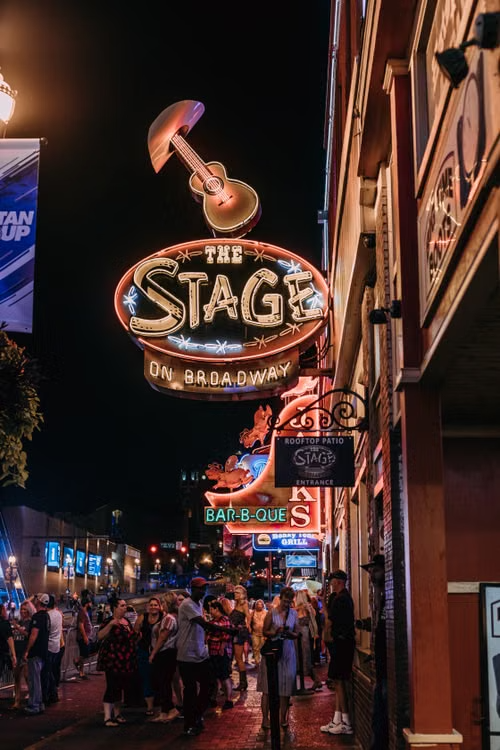
The Same Drink Can Be a Different Experience Across Town
Nashville's bar scene is not one giant version of Lower Broadway. Robert's Western World is associated with traditional honky-tonk culture, while The Patterson House represents a different experience centered on cocktails and a more deliberate drinking pace.
That distinction matters before you even look at the menu.
On Broadway, live music, crowds, and the steady movement of customers are part of the experience. You might be standing shoulder to shoulder with visitors celebrating birthdays, anniversaries, or a long-awaited Nashville weekend, with a band playing just a few feet away.
At a cocktail-focused lounge, the experience can revolve more around the drink itself. The menu may feature unfamiliar ingredients, carefully balanced flavors, and preparations that take longer than pouring a beer or mixing a familiar combination.
Neither setting is inherently better. They simply have different purposes.
Here's what catches people off guard: ordering habits that make sense in one venue may not translate neatly to another.
Match your order to the kind of bar you entered, rather than expecting every bartender to offer the same service and menu.
The insider tip is to decide what kind of evening you want before choosing your next stop. If the priority is live country music and a lively crowd, a traditional honky-tonk makes sense. If you want to sit back and explore cocktails, research a cocktail lounge instead.
Nashville Guru's venue guides distinguish traditional honky-tonks from newer entertainment venues and cocktail-focused establishments, which is useful when comparing the experiences available around town.
Before ordering, look at the actual menu. Do not assume a large entertainment venue has the same selection as a specialist cocktail bar, and do not assume a small lounge can make every drink you have seen online.
Current menus, prices, reservations, and entry policies can vary by establishment. Check the venue's own information before building your plans around a particular drink or experience.
The trap is choosing a bar based entirely on its photographs, then getting frustrated because the service, menu, or atmosphere does not match your expectations.
Now, once you understand the room, the next question is what to put in your glass.
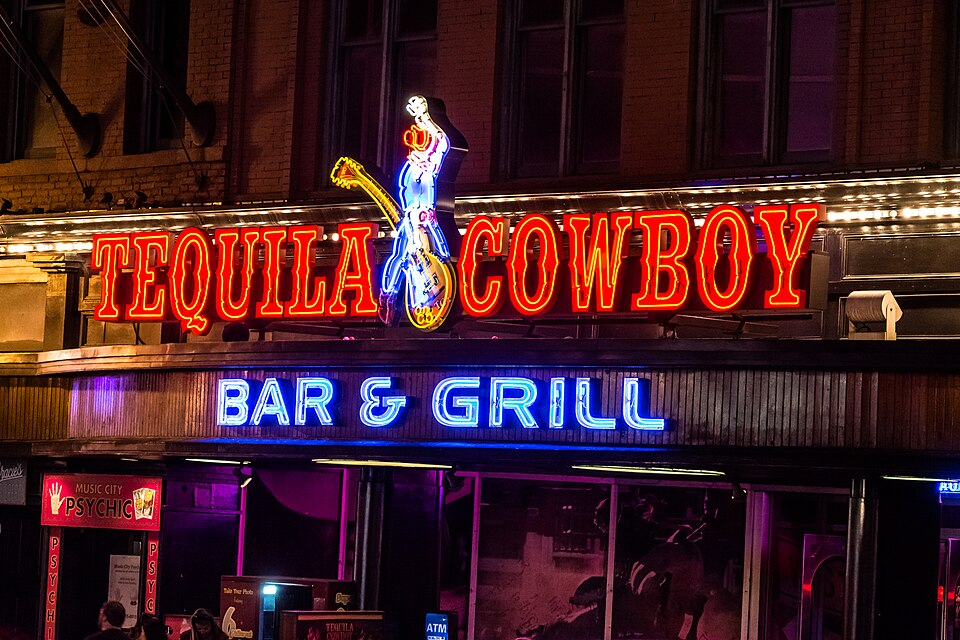
The Cocktail Request That Can Bring a Busy Bar to a Standstill
At a high-volume Lower Broadway bar, a simple mixed drink and an elaborate cocktail can require very different amounts of work. Nashville's bar scene includes everything from traditional beer-and-whiskey stops to specialist lounges where cocktail preparation is central to the experience.
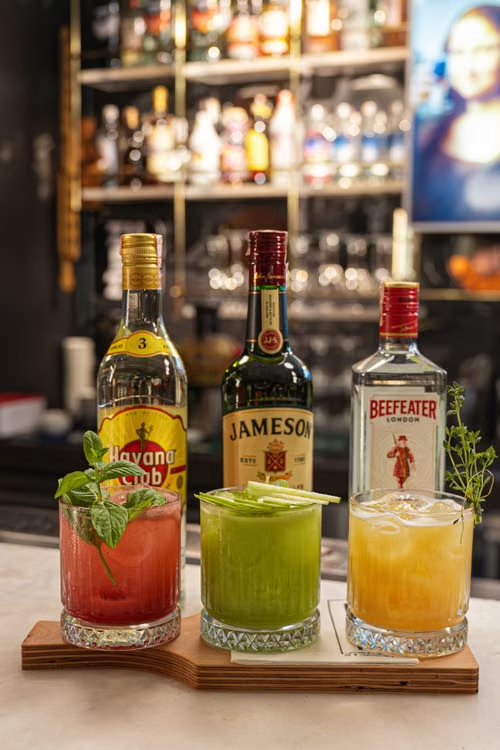
Picture the difference between asking for a familiar spirit mixed with cola and requesting a drink that requires several ingredients, fresh herbs, muddling, and multiple adjustments. One can be prepared quickly. The other may take considerably longer, depending on the recipe and equipment available.
Neither drink is wrong to order.
The problem is expecting every bar to prepare every cocktail, particularly when the venue's menu is built around speed and a steady stream of customers.
Here's the rule worth remembering: a bartender can be skilled without being able to make every drink you have ever seen on social media.
Check the menu before ordering a specialty cocktail, and do not assume an off-menu request will be available.
The insider tip is to ask, “What cocktails do you make here?” if you are unsure. At a cocktail-focused lounge, you can also explain whether you prefer something sweet, bitter, spirit-forward, or refreshing and ask for a recommendation from the available menu.
At a busy honky-tonk, choose a listed drink and keep modifications simple. If the bartender says a particular ingredient or preparation is unavailable, accept the alternative rather than negotiating a new recipe at the counter.
There is another practical consideration: a photograph does not tell you how strong a drink is, how large the serving will be, or how long it takes to prepare. A colorful cocktail designed for photographs is not automatically the best choice for a night of moving between venues.
Prices and ingredients differ from one establishment to another. Read the menu and ask about unfamiliar ingredients, especially if you have an allergy or dietary restriction.
The trap is confusing a bar's willingness to serve you with an obligation to customize everything you request. Good service includes helping you choose something the establishment can actually prepare.
And if you would rather avoid a complicated order altogether, there is a Nashville skill worth learning before your first beer.
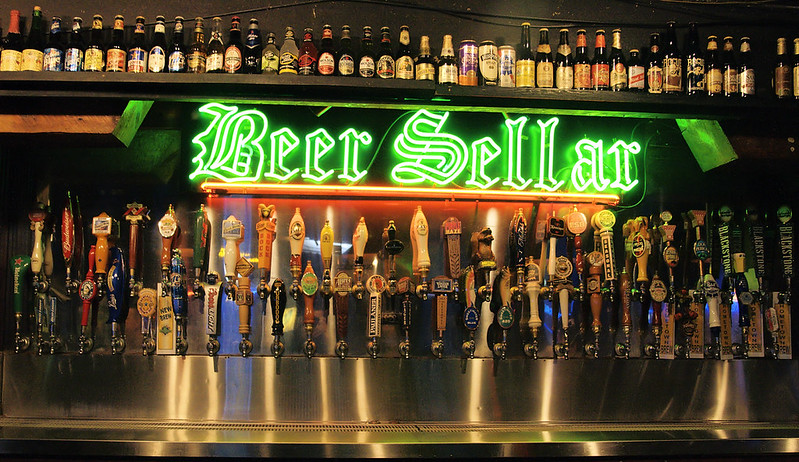
The Beer Question That Makes Ordering Much Easier
Nashville has no shortage of places to enjoy a beer, from traditional honky-tonks to neighborhood bars and establishments with broader selections. The simplest way to order confidently is to know whether you want a familiar brand, a particular style, or something local.
At a busy bar, the distinction between draft and bottled beer can matter. Draft beer comes from the taps, while bottled beer is served from a bottle or can, depending on what the establishment stocks.
If you have a favorite brand, say its name clearly. If you want to try something different, start with the style you usually enjoy rather than asking for an open-ended tour of the entire beer selection.
Like the rest of Nashville's bar culture, the setting shapes the experience.
You do not need to know every beer on the menu. You just need a clear starting point.
The insider tip is to use familiar descriptions. Ask for a light lager, an IPA, a wheat beer, or a dark beer if that matches your taste. If you want something local, ask which Tennessee or Nashville-area beers the venue currently carries.
That question gives the bartender a manageable place to start without requiring a lengthy conversation over the music.
Do not assume that every venue stocks the same local breweries or beer styles. A large entertainment bar may keep a selection designed for quick service, while another establishment may offer a wider range of specialty options.
Serving sizes, draft availability, and prices vary. Check the menu before ordering, particularly if you are comparing drinks across multiple stops.
If you are unfamiliar with a beer, ask about its general style and flavor before committing. It is easier to choose between two clear options than to order something solely because its name sounds interesting.
One mistake is ordering for the photograph rather than your own taste. A beer that looks impressive in a souvenir-style glass is not necessarily the beer you will enjoy drinking.
And remember that a beer is still alcohol, even when it tastes light or refreshing. Pace yourself, particularly if you plan to spend several hours listening to live music.
Next comes the part of ordering that catches people who thought they had already settled their bill.
The Card-Tab Mistake That Can Confuse Your Whole Group
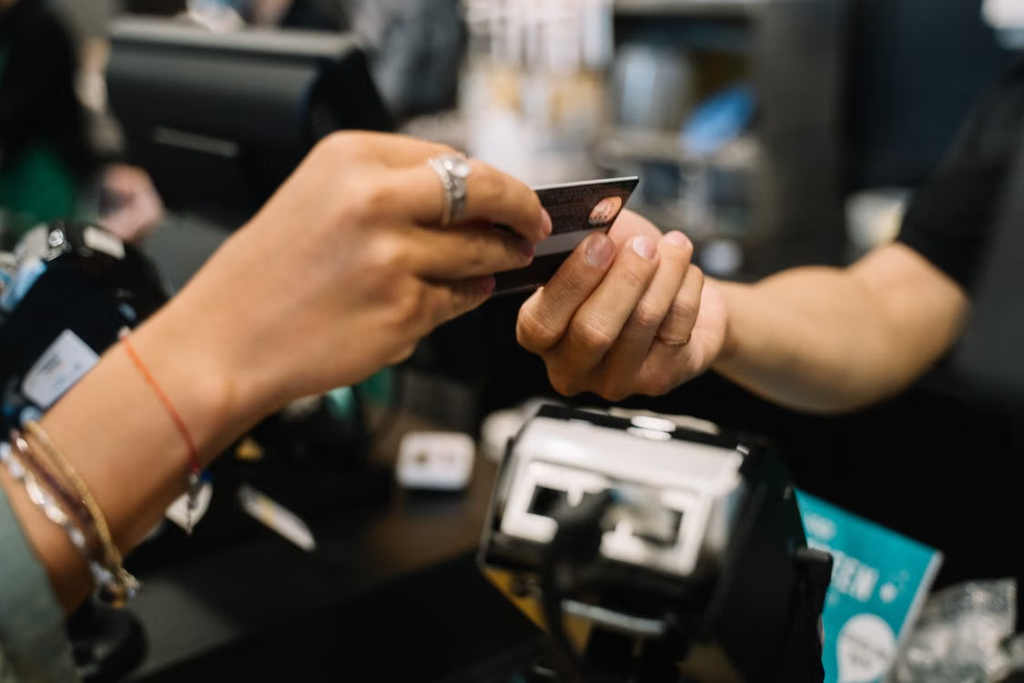
Payment procedures vary across Nashville's bars, and there is no single system that every establishment follows. Some use open tabs, some process transactions differently, and some have particular procedures for groups or busy service periods.
The important thing is to understand the arrangement before you start ordering.
At a crowded counter, you might be ready to pay for one drink while your friends want to keep a tab open for the evening. If nobody explains the plan, the group can end up with confusion about which card belongs to which order and who is responsible for closing out.
That is particularly inconvenient when everyone is eager to get back to the music.
Here's the trick: settle the payment plan before the first round, not after several drinks.
Ask whether you are opening a tab or paying as you go, and confirm the venue's procedure before handing over your card.
The insider tip is to designate one person to manage the group's payment when that arrangement makes sense. If everyone prefers to pay separately, ask whether the venue can accommodate separate transactions before placing a large group order.
Do not assume that a bartender can divide a complicated bill in whatever way your group decides at the end. The available options depend on the establishment's payment system and policies.
Keep track of your card, check the amount on the terminal when practical, and review the receipt before leaving. If something looks incorrect, raise the issue politely and promptly.
The practical trap is confusing a temporary card authorization with the final amount charged. Depending on the payment system, a pending authorization and the settled transaction may appear differently while processing. If you are uncertain, ask the establishment or your card provider rather than assuming a discrepancy is a duplicate charge.
You should also check the menu for prices before ordering, particularly when a drink is not listed or you are choosing from a premium selection.
A tab is a convenience, not a reason to stop paying attention to your spending.
And speaking of the final bill, the next part of Nashville nightlife deserves its own place in your budget.
The Two Tips That Support Two Different Jobs
Nashville's live music culture is one of the reasons people return to Lower Broadway, but visitors sometimes forget that the bartender and the band are providing different services. Buying a drink does not automatically mean the musicians receive a share of that transaction.
Visit Music City, Nashville's official tourism organization, explains that many local venues offer live music without a regular cover charge and specifically encourages visitors to tip performers.
That distinction matters.
You can walk into a honky-tonk, hear a band playing country standards, and stay for a while without purchasing a concert ticket. The musicians are still doing the work that makes the experience worth stopping for.
Meanwhile, the bartender is taking orders, preparing drinks, processing payments, and managing the counter.
Here's the part visitors should remember: these are separate contributions to your night out.
Budget separately for the bartender's service and the musicians whose performance you enjoy.
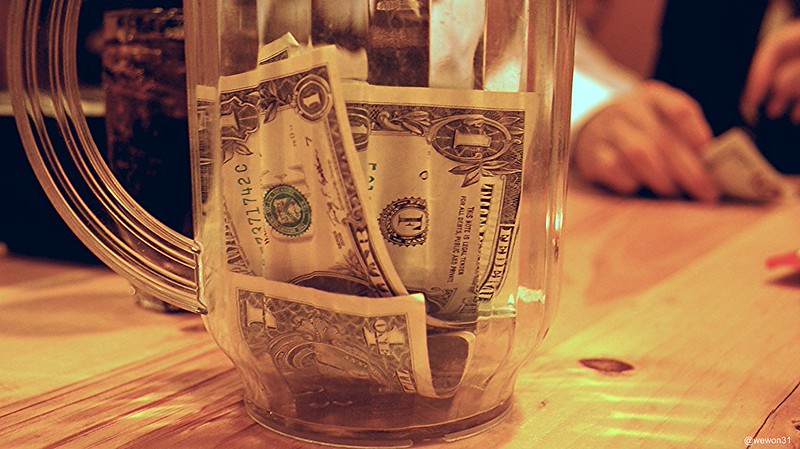
The insider tip is to bring some small bills if you want the flexibility to tip a band in cash. Some performers also provide digital tipping options, so look for the method they actually offer rather than assuming every band uses the same arrangement.
When tipping the bartender, follow the venue's normal process and check whether a gratuity or service charge has already been included. If you are opening a tab, review the receipt when closing it.
There is no single verified dollar amount that applies to every Nashville band, every performance, and every visitor. How much you leave is a personal decision shaped by your budget and the performance you have enjoyed. Do not treat a particular figure as a compulsory citywide rule.
Academic research by Adam Schoenbachler, published in Social Problems, examined tipping arrangements and working conditions involving 16 bartenders and 33 musicians across three downtown bars. The study found that the systems for organizing tips and distributing rewards differed between establishments.
In other words, the economics behind the music are more complicated than they may appear from the customer side of the counter.
The practical trap is assuming that all tips go into one shared pool or that every musician is paid in exactly the same way. Neither assumption is justified for every venue.
If you enjoy the music, showing appreciation is a straightforward way to support the people making it. And before you get anywhere near that bandstand, make sure you have something else ready.
The Identification Rule That Can Surprise Visitors of Any Age
Nashville's Beer Board says identification used for beer purchases must be a valid, unexpired, government-issued document containing a photograph and date of birth. Its guidance allows qualifying documents from state, local, national, or foreign governments, subject to the applicable requirements.
That means your identification deserves a place in your evening plans alongside your hotel key and phone.
You might be visiting for a milestone birthday, a girls' weekend, or a long-awaited trip with friends. You may have been legally drinking for decades, but your appearance does not replace the identification rules that apply to the transaction.
At the bar, a bartender may need to check your document before serving you. If your party is entering a venue with age restrictions, its entry procedures may also affect your plans.
Here's the sensible approach: have your identification ready before you reach the counter.
Carry valid, unexpired physical government-issued identification, and do not assume a photograph of your ID will be accepted.
The insider tip is to check your document before leaving home or your hotel. International visitors should bring a valid passport or another qualifying document and verify that the establishment will accept it if they have an unusual or temporary form of identification.
There is one distinction worth knowing: Tennessee's REAL ID guidance does not make REAL ID a general requirement for purchasing alcohol. Ordinary identification requirements and the rules for federal identification purposes are different questions.
Do not confuse those two issues.
Individual venues may have additional entry procedures, and acceptance of unusual documents can depend on the applicable rules and the establishment's policies. If you have any uncertainty, check directly before going out.
The practical trap is leaving your identification in your hotel room because you assume you will not need it. A second common mistake is relying entirely on a digital image without confirming that the venue accepts it.
Also, do not assume every honky-tonk has identical age restrictions at every time of day. Visit Music City's venue guidance notes that age policies can vary, with some establishments welcoming younger visitors during the day and restricting entry later.
Check the individual venue's rules before taking the whole group across town.
Once you have your ID sorted, there is another situation in which being prepared can save a surprising amount of frustration.
The Group-Ordering Habit That Keeps Friends Together
A Nashville weekend can involve a group of four friends, a dozen people celebrating a birthday, or a bachelorette party whose members are arriving at the bar in waves. The larger the group, the easier it is for a simple drink order to become confusing.
Imagine several people reaching the counter at once, calling out different drinks, asking for substitutions, and trying to pay separately. The bartender has to work out which order belongs to which person while other customers are waiting.
The solution is not complicated.
Choose one person to coordinate the order when the venue's setup allows it. That person can collect everyone's choices, confirm the payment plan, and communicate clearly at the counter.
Here's the beauty of it: a little organization before ordering means more time enjoying the night together.
One clear group order is often easier to handle than a dozen people speaking over one another.
The insider tip is to make the decision while you are waiting. Ask the group what everyone wants, check whether people are paying together or separately, and make sure the person ordering can repeat the choices accurately.
Do not make one friend responsible for guessing everyone's preferences. If somebody is undecided, let that person choose before the group reaches the front whenever possible.
The practical details depend on the bar. Some establishments may accommodate separate payments, while others may have procedures that make multiple transactions less convenient during peak service. Ask before ordering rather than expecting the bartender to untangle everything later.
Keep the order simple, especially at a high-volume music venue. A group that wants several different drinks can still be organized without insisting that every beverage be customized.
And remember that a large group does not automatically receive priority because it is celebrating something special. Staff must serve customers according to the venue's procedures and the realities of the queue.
The trap is treating the bartender like the group's event coordinator. Your friends' excitement is part of the fun, but managing everyone's decisions is not the bartender's responsibility.
There is a related mistake that can cause trouble even when you are ordering only one drink.
The Small Gesture That Does Not Make Service Faster
When a bar is crowded, it can be tempting to wave a card, raise a handful of cash, tap an empty glass, or call repeatedly for attention. Those gestures might feel urgent to the person making them, but they do not necessarily help a bartender identify the next customer.
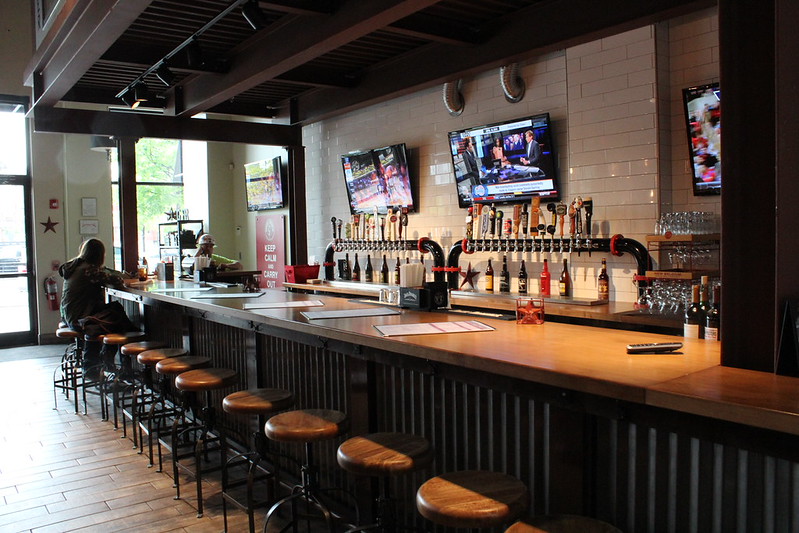
In a busy Lower Broadway venue, the counter can be a wall of hands, glasses, and people leaning forward to be heard. Bartenders must track multiple orders while maintaining awareness of the customers already being served.
The person who appears most impatient is not necessarily the next person in line.
Here's the trick: be visible without becoming disruptive.
Make natural eye contact, wait your turn, and have your order and payment method ready when the bartender acknowledges you.
The insider tip is to pay attention to how the particular bar organizes service. If customers are lining up along one side of the counter, follow that pattern. If staff are taking orders from a different arrangement, observe before stepping in.
Avoid reaching over another customer or interrupting while the bartender is processing a transaction. If you are overlooked, a polite, brief attempt to get attention is more appropriate than snapping your fingers or repeatedly shouting.
The practical trap is assuming that a large tip, a wad of cash, or an urgent expression entitles you to jump ahead. A tip is an expression of appreciation, not a license to demand special treatment.
Likewise, do not keep changing your order after the bartender has begun preparing it unless there is a genuine mistake or an important ingredient concern. If you have an allergy, speak up clearly before the drink is made.
A little patience goes a long way in a room where the music is loud and everyone wants to get back to the fun.
And before you order that next round, take a moment to look at the price. Nashville's reputation for entertainment does not mean every drink comes at a bargain.
The Price Check That Can Prevent an Unpleasant Surprise
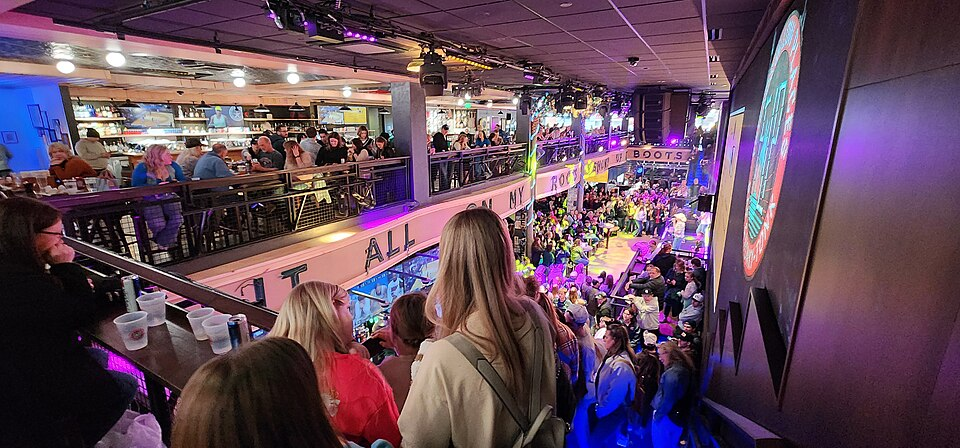
Many Lower Broadway honky-tonks do not charge a regular cover, but free entry does not guarantee inexpensive drinks. Visit Music City's official tourism guidance makes that distinction clear: many venues offer free live music, while individual establishments and special events may have different admission arrangements.
That is a useful distinction when planning your budget.
A night out can include drinks, food, tips, transportation, and possibly a ticketed event or reserved experience. Even when admission costs nothing, the other expenses can add up.
Here's what catches visitors: they sometimes focus so much on getting inside that they forget to find out what they will pay once they are there.
Free live music is not the same thing as a free night out.
The insider tip is to check the menu before ordering and ask about the price of an unfamiliar drink. If you are visiting a rooftop, a large entertainment venue, or a cocktail-focused establishment, take particular care with premium selections and specialty drinks.
If the price is not displayed and you are unsure, ask. There is nothing embarrassing about making an informed choice.
Do not rely on old photographs, outdated travel articles, or another visitor's bill as proof of current prices. Menus and policies can change, and prices may differ between venues.
The same goes for cover charges. Many traditional honky-tonks have no regular cover, but special performances, private areas, and other experiences may involve separate costs. Confirm the terms for the particular venue and event.
The practical trap is treating every bar along Broadway as though it has the same menu, admission policy, or payment system. They are separate businesses, and their arrangements can differ.
Set a budget before the evening begins, including a little room for transportation and food. You do not need to count every penny while trying to enjoy the music, but you should know what you are agreeing to pay.
And if the Broadway prices or crowds are not what you had in mind, Nashville has another side worth exploring.
The Nashville Bar Experience Most Broadway Visitors Miss
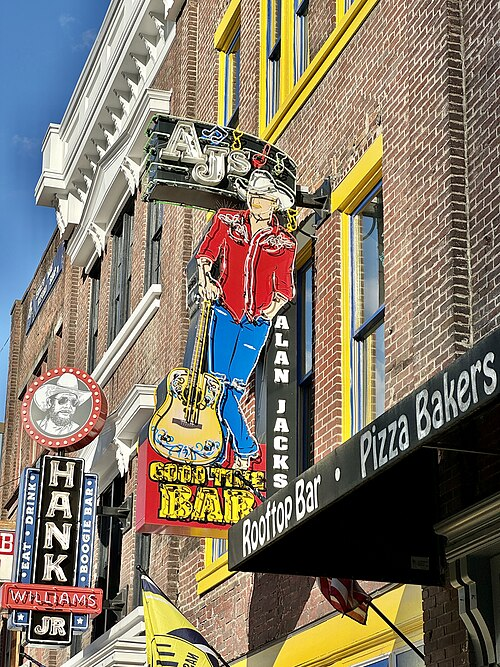
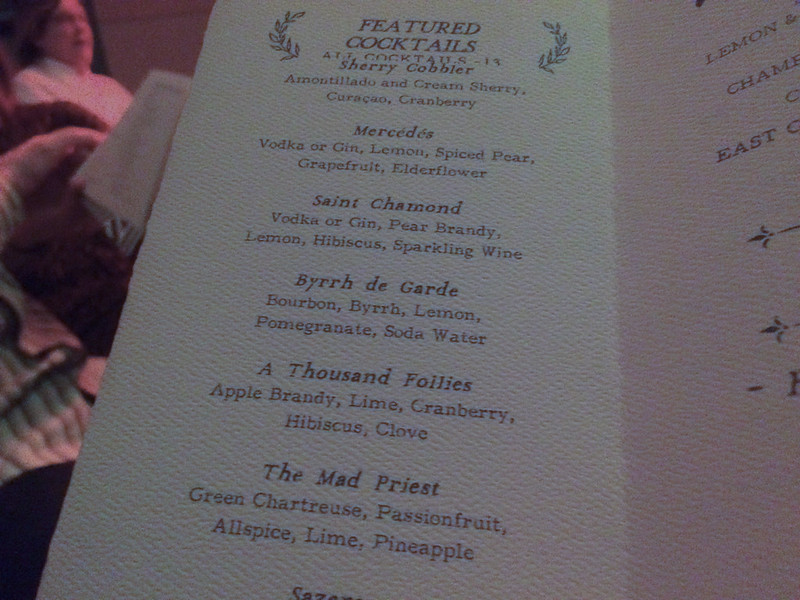
Lower Broadway gets much of the attention, but it is not the whole story of Nashville's drinking culture. The city has neighborhood bars, specialist cocktail lounges, and live music venues offering different atmospheres, menus, and ways to spend an evening.
The official tourism guide highlights music throughout Nashville, from country and Americana to blues, rock, and other styles. You do not have to stay within the busiest downtown blocks to hear live music or find a place to enjoy a drink.
That opens up some interesting options.
A traditional honky-tonk such as Robert's Western World is associated with classic country music and the familiar atmosphere of a Nashville music bar. A cocktail-focused establishment such as The Patterson House offers a different approach, with the drink itself playing a more central role.
Meanwhile, East Nashville has its own bar scene, including places such as Urban Cowboy, known for its distinctive design and hospitality setting.
Here's the point: you can enjoy Nashville without spending every evening in the same few blocks.
Choose your next stop according to the atmosphere, music, and drinks you want, not simply how close it is to Broadway.
The insider tip is to decide what you want from the evening before searching for a place. If you want to hear traditional country music, look for a venue known for that sound. If conversation matters more than standing near a stage, research a quieter bar or cocktail lounge.
Check current opening hours, menus, age restrictions, and entry requirements directly with the establishment. Do not assume that a venue's reputation guarantees a particular performance or experience on the night you visit.
You should also plan your transportation before leaving downtown. Moving between neighborhoods takes additional time, and the easiest option depends on where you are staying and which venues you choose.
The practical trap is assuming that every bar outside Lower Broadway is cheaper, quieter, or less crowded. Neighborhood establishments have their own customers, popular nights, and price points.
The real advantage is having choices. Broadway can be the centerpiece of your trip without becoming the entire itinerary.
But wherever you go, there is one important boundary that matters more than your drink preference, your budget, or how much you want to hear the next song.
The Moment a Bartender Says No, the Rules Have Changed
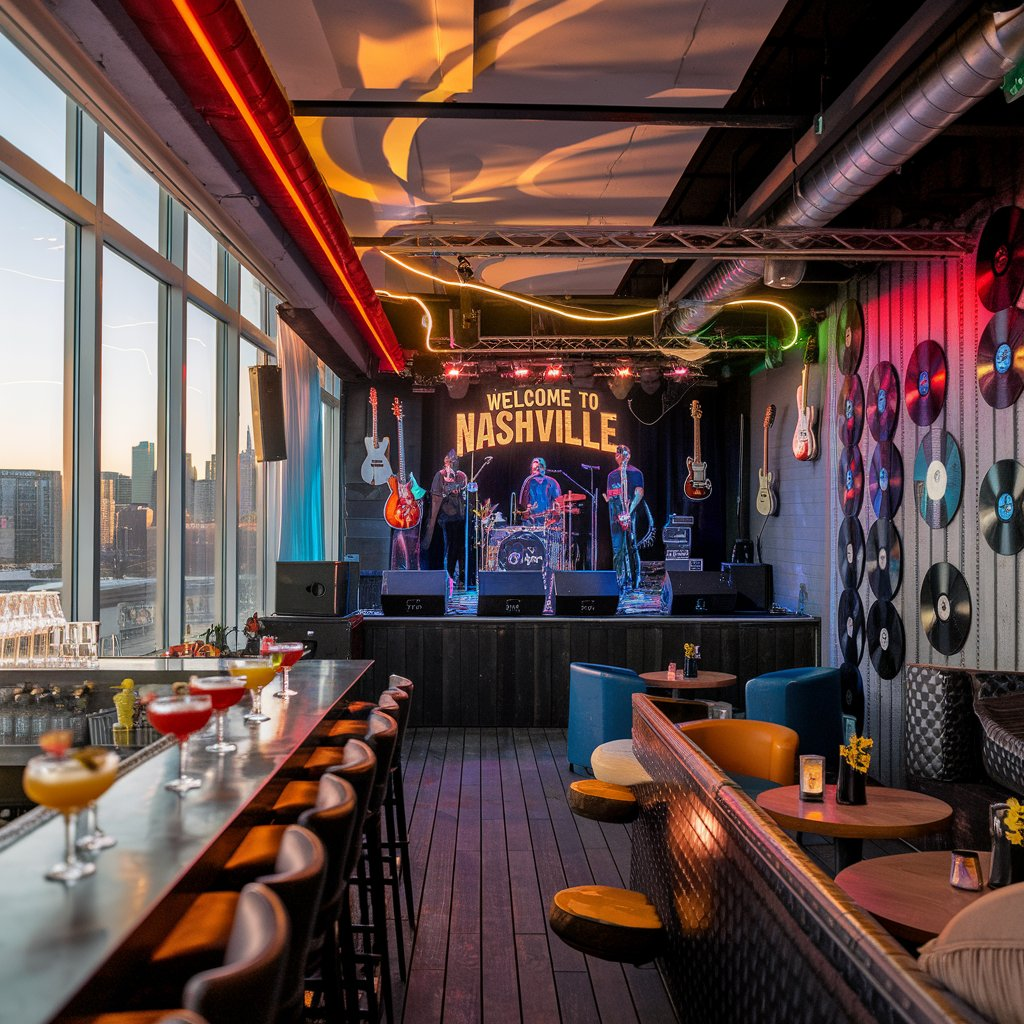
A bartender refusing another drink can feel unexpected, particularly when a group is celebrating and everyone else appears to be having a good time. But alcohol service is not simply a matter of whether a customer has enough money to pay.
Tennessee law restricts furnishing alcohol to people who are visibly intoxicated under applicable statutory provisions. Nashville's local beer regulations also address sales to intoxicated customers.
That makes the bartender's role more complicated than taking orders and collecting payments.
In a crowded bar, staff must pay attention to the people they are serving as well as the transactions happening around them. A decision to stop serving someone can involve legal requirements and the establishment's own policies.
Here's the important part: a refusal is not an invitation to negotiate.
If a bartender refuses to serve you another alcoholic drink, accept the decision rather than asking someone else to buy it for you.
The insider tip is to switch your attention to water, food, and a break from alcohol. If you are with friends, make sure nobody is left trying to manage the rest of the evening alone when they need help.
There is no single drink count that automatically determines whether every person is legally intoxicated. The applicable rules do not work as a universal formula based only on the number of beverages consumed.
People respond differently to alcohol, and drink sizes and alcohol concentrations vary. Feeling fine does not guarantee that you are safe to drive or continue drinking.
The practical trap is trying another bartender, sending a friend to order on your behalf, or arguing that you are entitled to service because you can pay. None of those actions removes the underlying concern.
If someone in your group needs assistance, ask venue staff for help. Arrange safe transportation and do not let the pressure to keep the party going override somebody's wellbeing.
Nashville is a city for enjoying music, food, and good company. An evening does not have to continue with alcoholic drinks to remain a good one.
And that leads to a practical question that can make the difference between a memorable night and an expensive mistake: how do you look after yourself when the crowd gets bigger and the music gets louder?
The Safety Habit Worth Keeping All Night
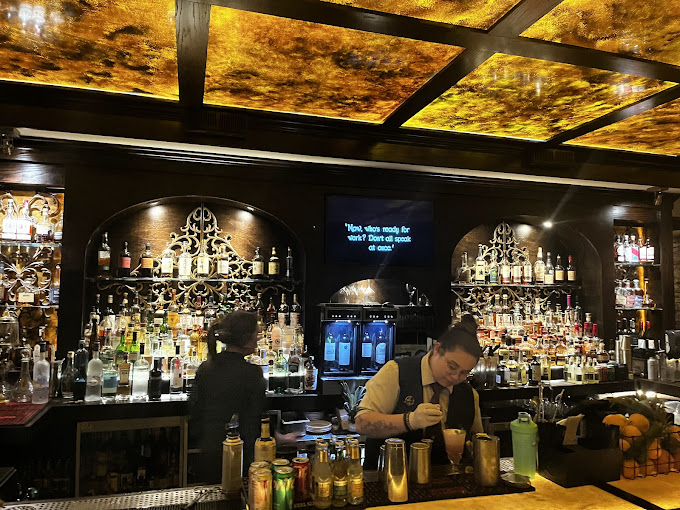
Lower Broadway is designed for people to move between venues, hear live music, and enjoy an evening downtown. The official tourism guide describes Honky Tonk Highway as a walkable stretch of entertainment venues, with music running from around 10 a.m. into the early morning.
With that many people moving between bars, it makes sense to pay attention to your surroundings.
Keep your phone and payment cards secure. Stay aware of where your friends are, especially when moving between crowded establishments, and agree on how you will reconnect if somebody gets separated.
The same common sense applies to drinks.
Here's the rule: do not leave your drink unattended and then assume it is safe when you return.
Keep your drink in sight, accept drinks directly from the bartender, and get a fresh one if you have a reason to question its safety.
The insider tip is to make a simple plan before going out. Know how you will get back to your accommodation, keep your phone charged, and make sure everyone in your group has the information they need to reach the others.
If somebody offers to buy you a drink, you can accept or decline as you choose. If you accept, ask the bartender to prepare it and hand it to you directly. Never feel obligated to drink something simply because another person paid for it.
Be mindful of your belongings in crowded spaces, too. A phone tucked securely away is less likely to be lost than one sitting loosely in a back pocket.
The practical trap is assuming that a familiar entertainment district means you can stop paying attention. Crowds, alcohol, loud music, and unfamiliar surroundings make it especially important to look after yourself and the people traveling with you.
If you feel uncomfortable, approach venue staff or security for assistance. If a friend becomes unwell or appears to be in immediate danger, seek appropriate help rather than leaving them to manage alone.
Plan your return journey before you need it. Do not drive after drinking, and do not rely on a friend who has also been drinking to get everyone back safely.
There is nothing un-fun about having a plan. It lets you enjoy the evening without having to improvise when you are tired.
And one of the best ways to make that plan work is to know when a second or third round is not the right choice.
The Drinking Pace That Lets You Enjoy More of Nashville
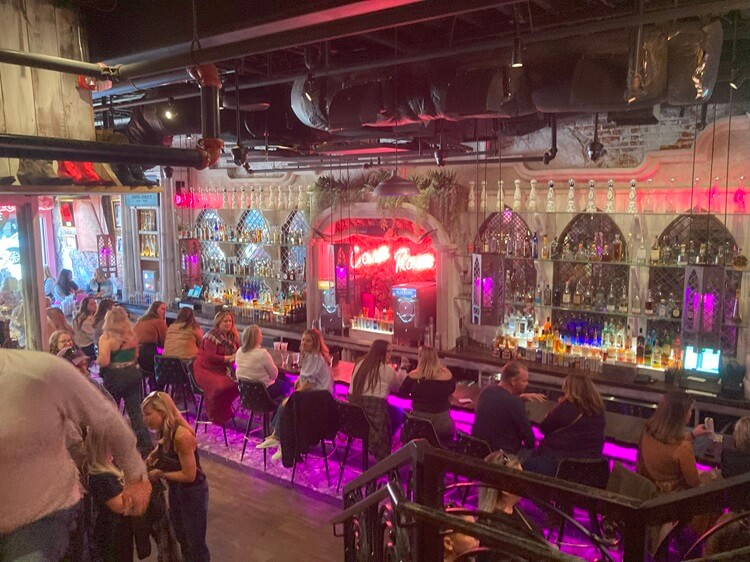
A Nashville night can stretch across several venues, multiple bands, and hours of standing, walking, and talking over music. The temptation is to treat each new bar as a fresh start, even if you have already been drinking for hours.
That is where a little planning matters.
A sweet cocktail, a cold beer, and a familiar mixed drink may look very different, but all can contribute to your alcohol intake. Sweetness and refreshing flavors are not reliable indicators of how much alcohol a drink contains.
The same applies to novelty drinks and oversized-looking cocktails. A colorful presentation does not tell you the strength of the beverage.
Here's the part worth remembering: you do not need to order something at every stop to enjoy the experience.
Pace your drinking, drink water, eat food, and give yourself permission to switch to a nonalcoholic option whenever you want.
The insider tip is to build breaks into your evening. Enjoy a band without automatically ordering another round, step outside when appropriate, and take time to eat rather than treating food as an afterthought.
If you are choosing an unfamiliar cocktail, ask about its ingredients and alcohol content where that information is available. Do not assume that two drinks served in similar glasses contain similar amounts of alcohol.
The practical trap is thinking that a drink's sweetness, small serving size, or attractive appearance makes it less potent. Without knowing its ingredients and proportions, you cannot reliably judge its strength from the way it looks or tastes.
You should also remember that coffee, a shower, or a short walk does not quickly remove alcohol from your system. Time is necessary for your body to process alcohol, and feeling more awake does not mean you are safe to drive.
If a bartender declines to serve you another alcoholic drink, respect that decision. If you or a friend feels unwell, stop drinking and seek help when needed.
Most importantly, do not make drinking the measure of whether you are having a good night. Nashville's music is the attraction, and you can spend an entire evening discovering bands, enjoying the atmosphere, and talking with friends without trying to keep up with anyone else's pace.
Now for the detail that brings all these little rules together: the live music itself has a story that many visitors never consider.
The Free Music Tradition That Makes Broadway Different
Nashville's reputation as Music City rests on more than famous recording studios, concert halls, and major performers. The everyday live music found in its bars is also a significant part of the city's identity.
Visit Music City reports that many Nashville venues offer free live music throughout the year, and that most Broadway bars with live music do not charge a regular cover. On Honky Tonk Highway, performances begin around 10 a.m. and continue late into the night, with schedules varying by venue.
That is an unusual proposition for visitors accustomed to buying tickets before they can hear live performers.
You can walk along Lower Broadway, hear a band through an open doorway, and step inside to enjoy a performance without necessarily paying an admission fee. Move a little farther down the street and another band may be playing an entirely different set.
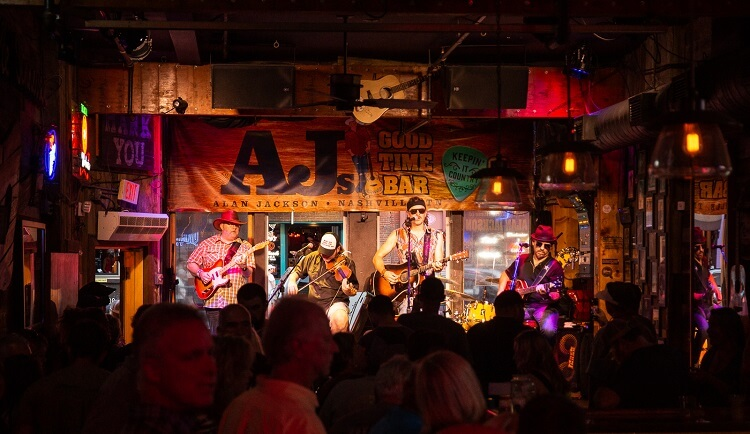
The experience is immediate. Guitars ring out from the stages, familiar choruses rise above the crowd, and the music spills into the street as people move from one venue to another.
Here's the detail that matters: free admission does not mean the music has no cost to the people performing it.
Nashville's free live-music culture and its tipping traditions are connected, but tipping arrangements differ between venues and performers.
The insider tip is to make room in your budget for supporting the music as well as paying for drinks. Keep small bills handy if you want to tip a band, and look for digital tipping options when performers provide them.
You can also show appreciation by listening, staying for a set, and treating the performance as more than background noise while you look at your phone.
The practical trap is assuming that buying a drink compensates every person responsible for the experience. A bartender's tip and a musician's tip serve different purposes, and there is no guarantee that money given to one will reach the other.
The academic research by Adam Schoenbachler provides a particularly useful window into this distinction. Based on 22 months of fieldwork, more than 650 hours of observation, and interviews with 49 service workers, the study examined the different ways three downtown bars organized tipping and managed their employees' work.
It did not claim that every Nashville bar operates the same way. Instead, it showed that workplace organization shapes the experiences of both bartenders and musicians.
That is the part of Broadway visitors rarely see. Behind the neon lights and familiar songs is a working environment involving staff, performers, management, and customers, all contributing to the night in different ways.
And there is one final fact about that environment that helps explain why a simple bar order can mean more than you might expect.
The Unexpected Fact About Nashville's Bar Culture
In 2025, sociologist Adam Schoenbachler published research in Social Problems examining how tipping systems shape working conditions in Nashville's Honky-Tonk Row. The study was based on observations at three downtown bars and interviews with 16 bartenders and 33 musicians.
The researchers identified different ways that establishments organized tipping and workplace relationships, including competitive, collaborative, and more formalized systems. In other words, there is no single tipping culture that perfectly describes every bar on Broadway.
That finding matters because the customer sees only a small part of what happens behind the counter. The speed of service, the way tips are handled, and the interaction between musicians and staff can all be shaped by the organization running the venue.
The next time you visit Nashville, remember that the best nights are not necessarily the ones with the most drinks or the longest bar crawl. They are the ones where you hear good music, discover a place that suits you, and treat the people working there with the same respect you would want in return.
The music may be free to hear, but the people who make Nashville sound like Nashville are worth appreciating.