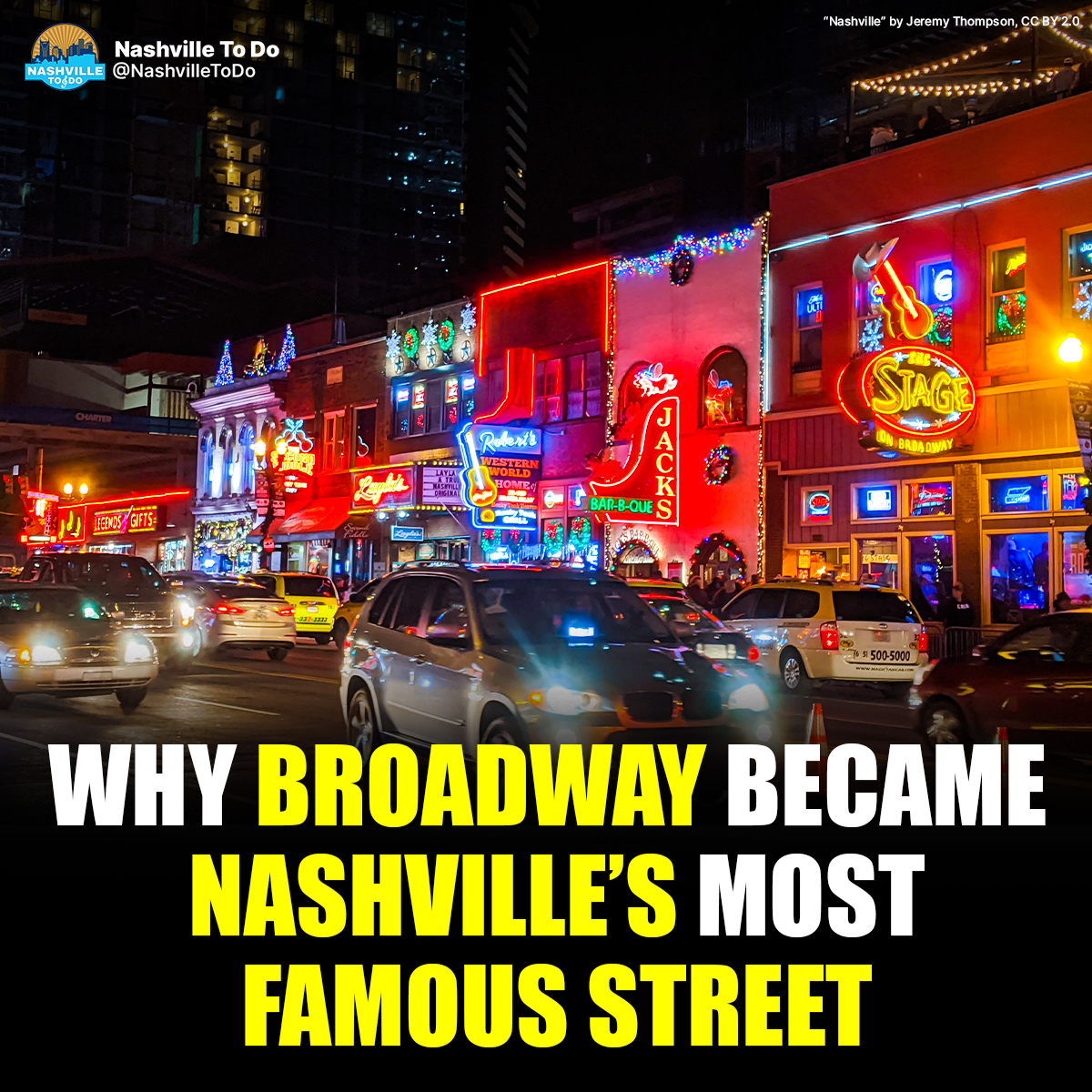
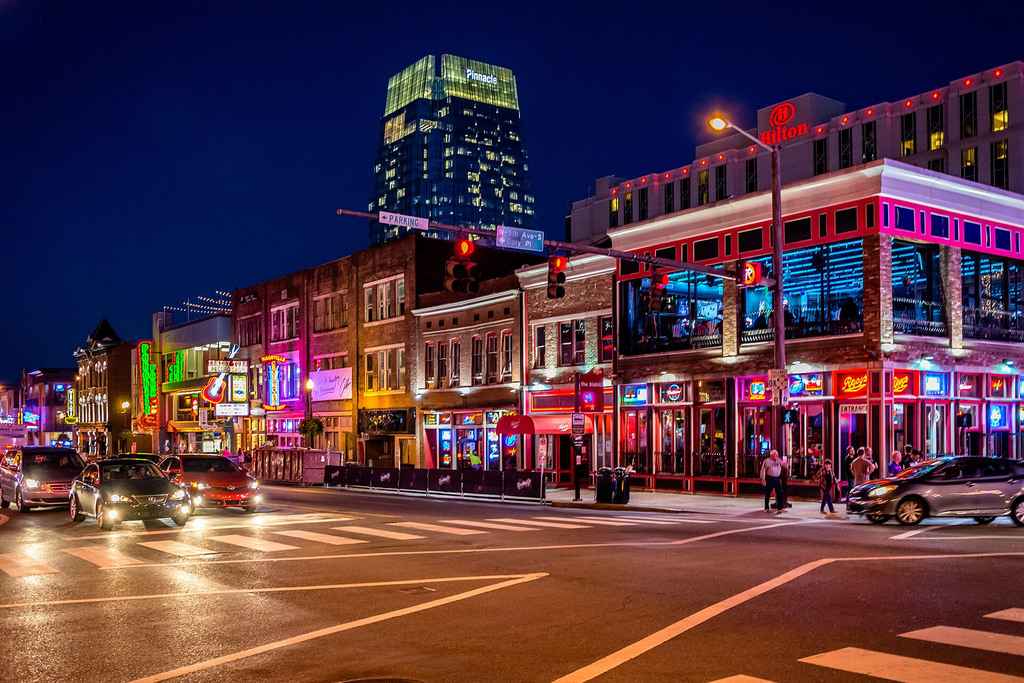
Walk down Lower Broadway today and Nashville can feel like it has been turned up to full volume.
Music pours out of open doors. Neon signs glow above the sidewalks. Bands play from morning until late at night. Rooftop bars look over a street packed with visitors, musicians, hockey fans, country music fans, and people who simply came downtown to see what all the fuss is about.
It is hard to imagine Nashville without Broadway.
But this famous stretch of downtown did not become an entertainment district overnight. Long before the honky-tonks, Broadway was a working commercial street tied to the Cumberland River. Later, the Grand Ole Opry helped turn the neighborhood into a country music center. Then the area declined, survived a rough period, and came roaring back.
Broadway became Nashville’s most famous street because several chapters of the city’s history happened in almost the exact same place.
Broadway Was Important Before the Music Arrived
Nashville grew from the Cumberland River, and Broadway was one of the routes connecting the riverfront with the growing city.
Metro Nashville’s historic preservation documents describe the Broadway district as one of downtown’s strongest surviving links to the city’s old commercial past. Furniture sellers were operating there by the 1870s, and hardware, feed, grain, hotels, offices, and other businesses filled the blocks. Some Broadway buildings date to before the Civil War.
That explains something visitors can still see today.
Even with giant signs, rooftop decks, and modern bars inside them, many Lower Broadway buildings still have the narrow shape and brick fronts of an older American downtown. The entertainment district grew inside a historic commercial district instead of replacing it completely.
The Broadway Historic District between Second and Fifth avenues was added to the National Register of Historic Places in 1980. The National Park Service lists commerce, architecture, and performing arts among the district’s areas of significance.
Then came the building that would change Broadway’s future.
The Ryman Put Country Music Right Next Door
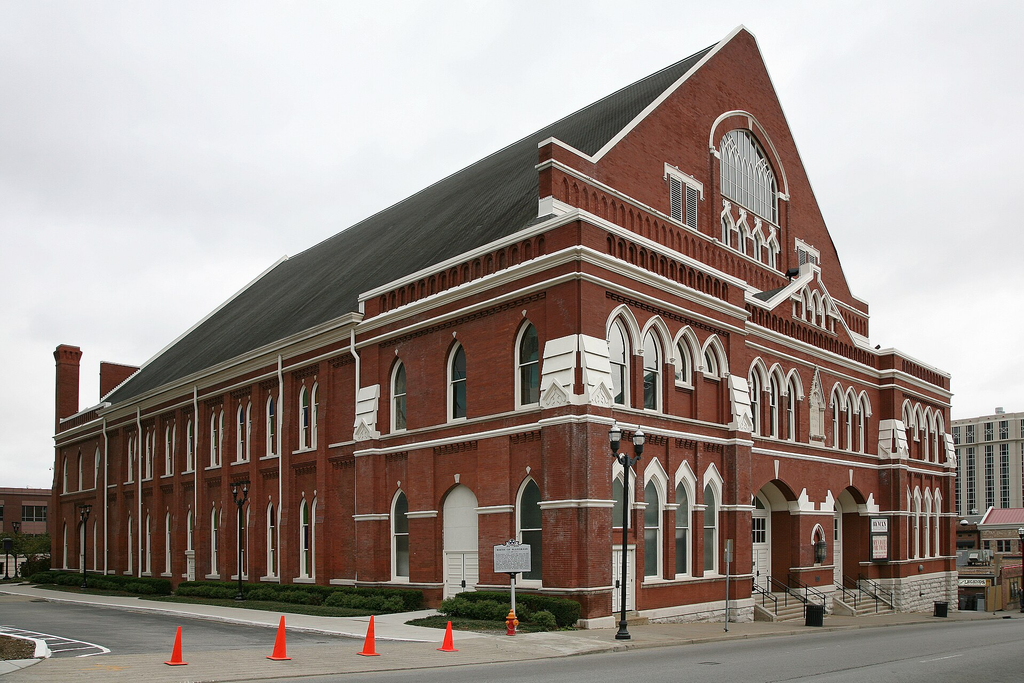
Ryman Auditorium opened in 1892 as the Union Gospel Tabernacle. Over the years, it became one of Nashville’s major gathering places for concerts, speeches, religious events, and other performances.
Its biggest effect on Lower Broadway came when the Grand Ole Opry moved there in 1943.
For roughly three decades, thousands of country music fans came downtown to see the Opry. Performers came too. And when that many musicians and fans gather in one neighborhood, other businesses tend to follow.
Record shops, bars, music stores, and other businesses connected to country music became part of the Broadway area. Ernest Tubb opened his record business in 1947 and later moved it to 417 Broadway. His Midnight Jamboree became closely tied to the neighborhood and Nashville’s country music culture.
Tootsie’s Orchid Lounge also became part of the story. Located just behind the Ryman, the honky-tonk was perfectly placed for musicians moving between the Opry and Lower Broadway.
Broadway was no longer simply a downtown shopping street.
It was becoming part of the country music experience.
Then Broadway Nearly Lost Its Momentum
The story could have ended there.
In 1974, the Grand Ole Opry left the Ryman and moved to the new Grand Ole Opry House outside downtown. The Ryman then sat largely unused for years.
Lower Broadway struggled as well.
Research on the district describes the late 1970s, 1980s, and early 1990s as a period of decline. By the mid-1990s, many storefronts were vacant. The mix of businesses included pawnshops, bars, adult businesses, and other remnants of a downtown that had lost much of its earlier commercial traffic.
For people who only know modern Broadway, that version of the street can be difficult to picture.
Today, finding an empty stretch of sidewalk on a busy weekend can feel like an accomplishment. A few decades ago, the bigger problem was getting people to come downtown at all.
The Comeback Changed Downtown Nashville
Broadway’s comeback gained strength during the 1990s.
The Ryman reopened as a concert venue in 1994 after restoration work. Two years later, the downtown arena now known as Bridgestone Arena opened at Fifth Avenue and Broadway. Those developments helped bring concerts, sporting events, and crowds back into the area.
At the same time, honky-tonks and live music businesses were giving visitors a reason to stay on Lower Broadway instead of simply passing through.
That combination mattered.
Broadway had history people could see, country music they could hear, bars they could walk between, major attractions nearby, and eventually a growing downtown tourism industry surrounding it.
The street had become an experience instead of simply a location.
The Honky-Tonk Formula Was Almost Made for Visitors
Part of Broadway’s modern success comes from how easy it is to understand.
Walk down the street. Hear a band. Go inside.
Then walk 50 feet and do it again.
The Nashville Convention & Visitors Corp now markets Lower Broadway between First and Fifth avenues as the “Honky Tonk Highway.” Live music can run from daytime until roughly 3 a.m., and many venues do not charge a regular cover, although policies can vary.
That makes Broadway unusual.
You do not need to study a concert calendar weeks ahead of time to hear music. On many days, you can simply show up and choose whichever band sounds best from the sidewalk.
That constant supply of live entertainment helped turn the street itself into an attraction.
Broadway Became a Symbol of Nashville
Modern Broadway is much bigger and flashier than the honky-tonk district of past decades.
Large entertainment venues now fill historic buildings. Rooftops rise above the old storefronts. Country stars and other celebrities have put their names on Broadway businesses, adding another layer to the street’s tourism appeal.
But the reason Broadway became famous goes deeper than big signs and crowded bars.
It sits at the meeting point of several Nashville stories.
There is the river-town history. There is the old downtown business district. There is the Ryman. There is the Grand Ole Opry. There are the musicians who played nearby clubs after performing on bigger stages. There is the decline of downtown in the late 20th century. And there is the enormous revival that followed.
That history also explains why Broadway can mean different things to different Nashvillians.
For visitors, it may be the place they picture when someone says “Nashville.”
For musicians, it is still a place to play for a crowd.
For longtime residents, it can also be a reminder of just how dramatically downtown has changed.
And that may be Broadway’s greatest trick.
It keeps changing, but the street’s old purpose remains surprisingly familiar.
More than a century ago, people came downtown to Broadway to work, shop, meet people, and be entertained.
They still do.
There is just a lot more neon now.
Sources
- Metropolitan Historical Commission, Broadway Historic Preservation Zoning Overlay — history of the Broadway commercial district.
- National Park Service, Broadway Historic District, National Register of Historic Places. National Register listing
- Ryman Auditorium, History of Ryman Auditorium. Ryman history
- Nashville Historical Foundation/Nashville Sites, Broadway National Register District.
- Nashville Convention & Visitors Corp, Guide to Honky Tonk Highway. Visit Music City Broadway guide
- University of North Carolina at Greensboro, Nashville’s Lower Broadway: Preservation and Playscapes in the Urban Environment.
- Nashville Scene, reporting on Lower Broadway’s redevelopment and entertainment growth.