
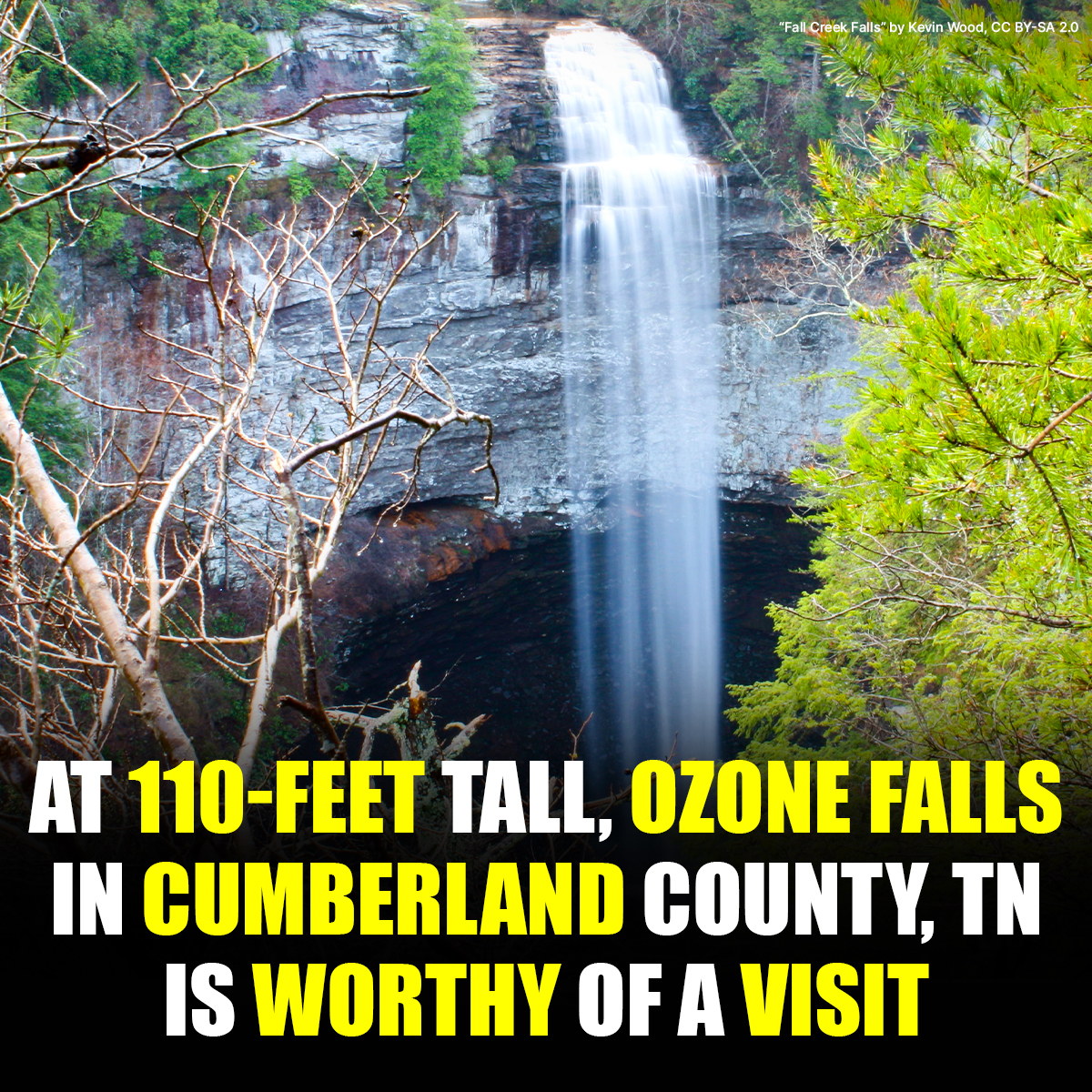
Ozone Falls is the kind of Tennessee stop that can make a quick drive off Interstate 40 turn into something much more memorable.
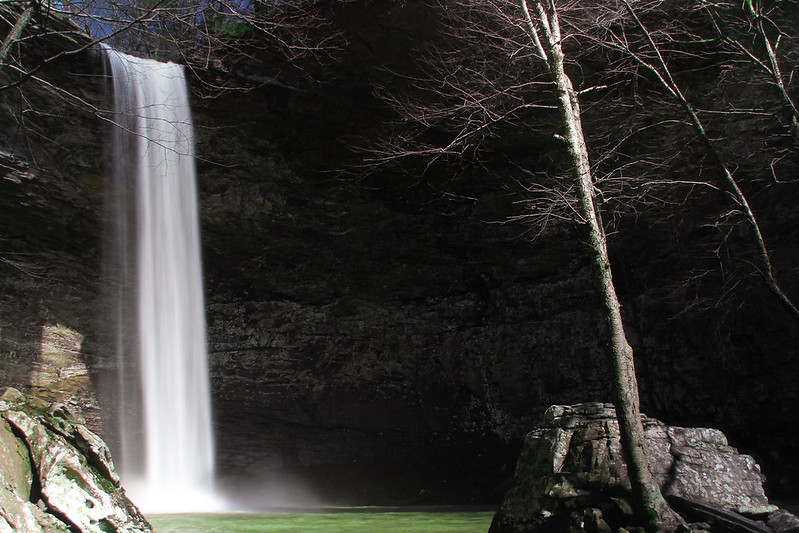
The 43-acre Ozone Falls State Natural Area in Cumberland County protects a 110-foot waterfall that drops over sandstone into a rocky pool below. But the height is only part of what makes this spot unusual. After Fall Creek hits the bottom, the water disappears underground before showing up again several yards downstream.
Then there is the setting.
A huge rock overhang curves around the base of the falls, creating a natural amphitheater that looks far removed from the interstate just a few miles away. The scenery was dramatic enough to catch Hollywood's attention: Ozone Falls was used as a filming location for Disney's 1994 live-action version of The Jungle Book.
For Tennesseans who have driven I-40 between Knoxville and Middle Tennessee more times than they can count, that combination makes Ozone Falls an unusually easy adventure to overlook.
A Waterfall Built Into the Cumberland Plateau
Ozone Falls sits on the eastern edge of the Crab Orchard Mountains, part of Tennessee's Cumberland Plateau.
The waterfall drops over a sandstone cap rock. Below it, erosion over a long stretch of geologic time has helped shape the large rock-house formation surrounding the gorge. The state says wind, flowing water and repeated freezing and thawing all played a role in carving the landscape.
The forest adds another layer.
Around the natural area are oaks, Virginia pine and small sandstone glades. Beneath the falls is a remnant older forest community that includes eastern hemlock, white pine, magnolia, yellow birch, sugar maple and other trees. Huge boulders line parts of the stream.
In other words, this is not simply a roadside waterfall with a photo spot. The state natural area protects a small but striking slice of Plateau geology and forest.
The Water Actually Vanishes
One of Ozone Falls' best features is easy to miss if all you do is look down from above.
Fall Creek plunges into the pool at the base and then disappears underground. The Tennessee Department of Environment and Conservation says the creek resurfaces several yards farther downstream.
That makes the waterfall feel almost like two attractions in one: the obvious 110-foot drop and the much stranger disappearing act below it.
It is also a good example of why the Cumberland Plateau has so many memorable water features. Cliffs, gorges, caves, springs and disappearing streams are scattered across this part of Tennessee.
Yes, Disney Really Filmed Here
Ozone Falls' movie connection is not just a local legend.
The Tennessee Department of Tourist Development identifies Ozone Falls and Fall Creek Falls State Park as Tennessee filming locations for Disney's 1994 The Jungle Book. IMDb's listed filming locations also include Ozone Falls State Natural Area near Crab Orchard.
That history fits the place.
From the bottom of the gorge, the tall rock walls, thick woods and falling water can make the setting feel much farther from Cumberland County than it really is.
It also gives Tennessee movie fans a fairly rare chance to visit a recognizable filming landscape without buying a studio tour ticket.
The Hike Is Short, but Don't Confuse Short With Easy
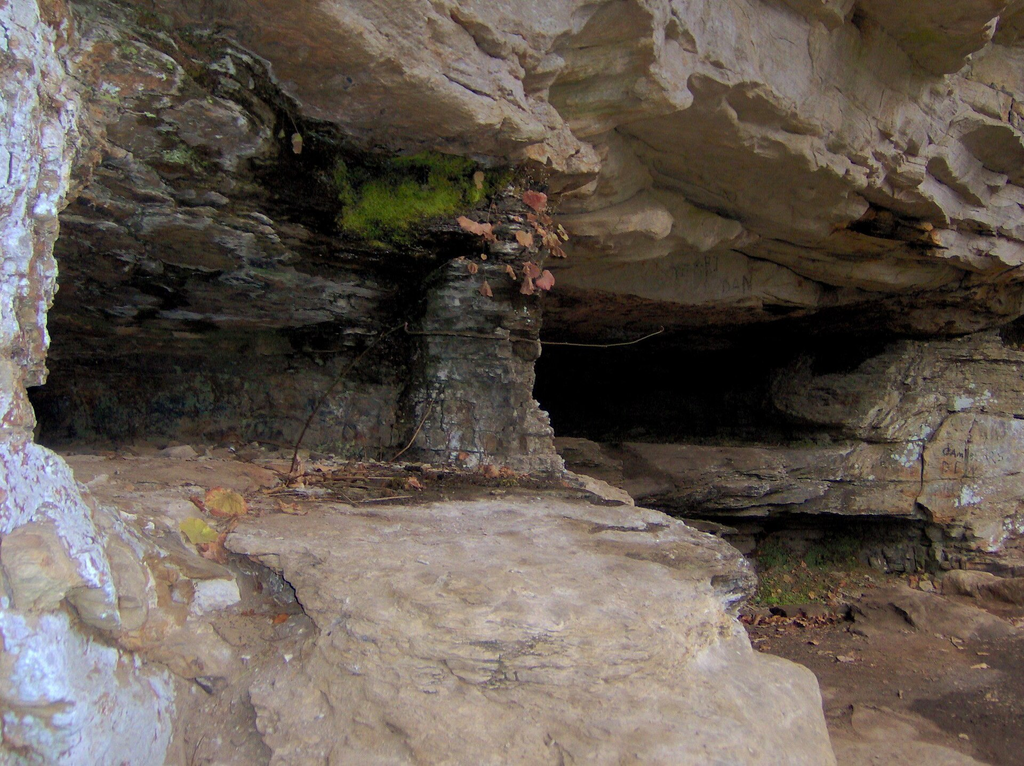
The state describes a rugged three-quarter-mile trail that begins near the bluff and descends into the gorge. Along the way, hikers pass a smaller rock shelter known as Gamblers Den before the route follows Fall Creek toward Renfro Creek. Visitors return the way they came.
The important word there is rugged.
Ozone Falls is not a developed amusement attraction. Visitors should expect natural rock, uneven ground and steep terrain around the gorge. The Tennessee Department of Environment and Conservation lists hiking and parking as available but prohibits rappelling. Dogs on leashes are permitted, although the state says pets are not recommended. Camping, hunting and fishing are not allowed.
The natural area is open from sunrise to sunset.
An Easy Detour From I-40
Part of Ozone Falls' popularity comes from location.
The state calls it one of Tennessee's most heavily visited state natural areas because it sits close to Interstate 40. From the Crab Orchard exit, visitors can take U.S. Highway 70 east toward the falls, which are about four miles from the interstate.
That puts it in an interesting category for Tennessee travelers.
It feels wild when you are standing in the gorge, yet reaching it does not require driving deep into a remote national forest or committing to an all-day hike. For people crossing the state on I-40, it can turn an ordinary highway trip into a genuine Cumberland Plateau stop.
Still, easy access should not be mistaken for a fully developed park experience. Ozone Falls is a protected natural area, and visitors should arrive prepared for an outdoor site rather than a large state park with extensive facilities.
The state's guidance is simple: practice Leave No Trace and carry out what you bring in.
More Than a Pretty Roadside Stop
Ozone Falls packs an unusual amount into 43 acres.
There is a 110-foot plunge, a giant natural rock shelter, a creek that disappears beneath the ground, a rugged gorge trail and a little piece of Disney history — all close enough to I-40 that thousands of travelers pass nearby without realizing what is there.
That may be the most Tennessee thing about Ozone Falls.
Some of the state's most dramatic scenery is not hidden hundreds of miles from civilization. Sometimes it is four miles from an interstate exit.
Sources
The factual background supplied for this article was reviewed against the GPT's editorial instructions and source material.
Tennessee Department of Environment and Conservation, Ozone Falls State Natural Area. Ozone Falls official page
Tennessee Department of Tourist Development, Tennessee filming locations for The Jungle Book. Made in Tennessee movie locations
IMDb, The Jungle Book filming locations. The Jungle Book filming locations