
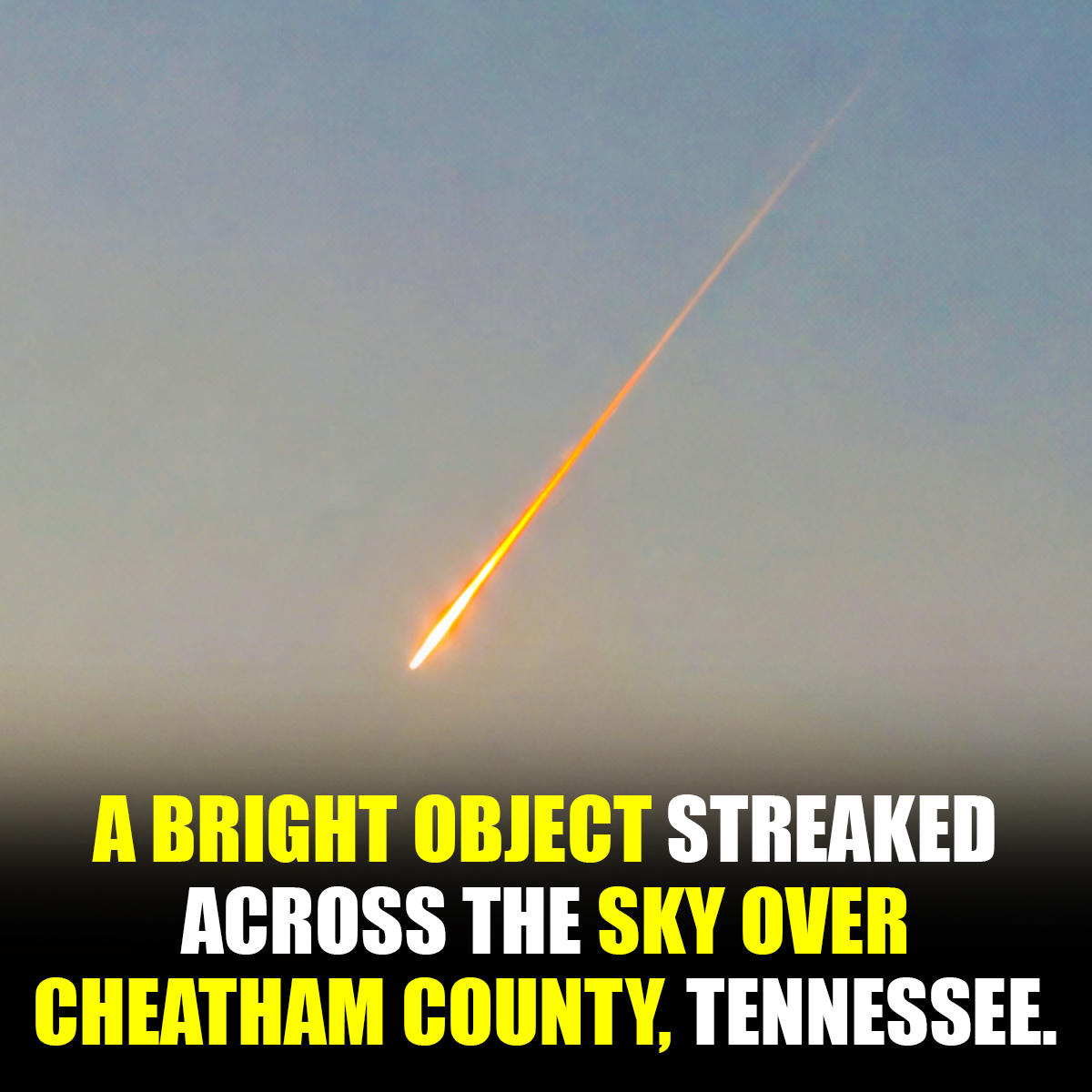
Middle Tennessee residents had something unusual to look for in the sky Wednesday evening.
Alicia Gwartney Cornstubble captured video from her backyard in Cheatham County, Tennessee, showing a bright object moving across the evening sky. The sight was dramatic enough to immediately raise the obvious questions: Was it a meteor? A comet? Something else entirely?
For now, there does not appear to be an official identification of the object.
But if it flashed across the sky quickly and disappeared within seconds, a bright meteor — sometimes called a fireball — would generally be a more likely explanation than a comet.
Why it probably wasn’t a comet
Comets can certainly become bright enough to see from Tennessee, but they do not normally shoot across the sky like a streak of light.
From our viewpoint on Earth, a comet typically appears in roughly the same part of the sky for hours and shifts gradually from night to night.
A meteor is very different.
It happens when a small piece of space debris enters Earth's atmosphere at high speed and heats up, producing the bright streak commonly called a “shooting star.”
When one becomes especially bright, astronomers call it a fireball.
The American Meteor Society defines a fireball as a meteor that becomes brighter than about magnitude -4 — roughly comparable to Venus at its brightest. Many fireballs remain visible for only a few seconds.
That description makes a meteor worth considering when a sudden bright object races through the sky.
Without examining the original video and having reports from several locations, however, it would be premature to say that is definitely what Cheatham County saw.

Did anyone else in Middle Tennessee see it?
That is the most useful question now.
When several people see the same fireball from different locations, their reports can help experts reconstruct its path through the atmosphere.
The American Meteor Society specifically encourages witnesses to report bright meteors and include details such as the time, direction, brightness, color and how long the object remained visible. Multiple reports can sometimes be grouped together to determine the object's trajectory.
As of Thursday, Sept. 17, searches of publicly available sources did not turn up a confirmed American Meteor Society or NASA identification for a Middle Tennessee fireball matching the Cheatham County sighting.
NASA's current Skyfall database, which incorporates American Meteor Society information for significant events, also did not list a Sept. 16 Tennessee event at the time of checking.
That does not prove the object was not a meteor. Reports can take time to appear, and many meteors never generate enough observations for a formal event listing.
The timing made for good sky watching
Middle Tennessee had relatively clear conditions Wednesday evening.
National Weather Service observations from Nashville showed partly cloudy skies during the evening of Sept. 16, with good visibility.
That would have given people around Cheatham County and the Nashville area a decent chance of noticing something unusually bright overhead.
The night sky also included several visible planets, including Venus shortly after sunset and Saturn later in the evening.
But planets do not suddenly streak across the sky, so they would not explain a fast-moving flash.
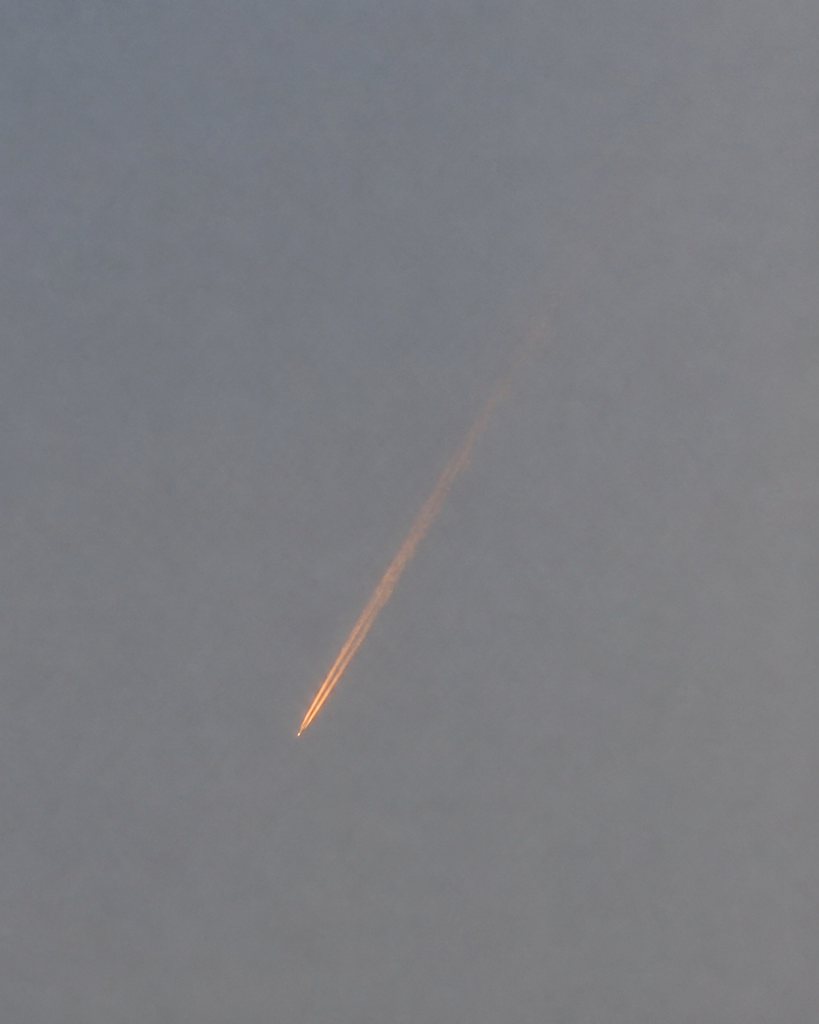
Fireballs are uncommon to witness, but not rare in the atmosphere
Seeing something this bright can feel like a once-in-a-lifetime event.
Globally, though, bright meteors happen much more often than most people realize.
The American Meteor Society estimates that several thousand fireball-level meteors enter Earth's atmosphere every day. Most are never noticed because they occur over oceans, remote areas or during daylight.
The truly bright ones are much harder to catch.
That is why a backyard security camera, doorbell camera or someone who happens to be holding a phone at exactly the right moment can suddenly become useful for astronomy.
One video gives you a mystery.
Videos from Nashville, Ashland City, Clarksville, Dickson or other parts of Middle Tennessee at the same time could help turn that mystery into an identifiable event.
There is also another possibility people often mistake for meteors
Not every glowing object near sunset comes from space.
The American Meteor Society says it regularly receives reports of supposed fireballs that turn out to be aircraft contrails illuminated by the setting sun. Those can appear orange, red or extremely bright and sometimes look surprisingly strange from the ground.
The easiest clue is usually speed.
A true fireball commonly lasts only seconds.
A sunlit aircraft or contrail usually moves much more slowly and can remain visible for minutes.
Video can make that distinction much easier.
Middle Tennessee residents may have the missing evidence
For now, the Cheatham County footage leaves us with a great local sky mystery.
Meteor seems possible.
Comet is much less likely if the object moved rapidly.
But without enough information about its direction, speed, duration and appearance — or matching videos from other locations — there is no firm identification yet.
So check those backyard cameras.
If something bright crossed the Middle Tennessee sky Wednesday evening, there is a good chance somebody else's camera was pointed in exactly the right direction.
And if several videos surface, we may soon know exactly what Cheatham County saw.
Sources
Eyewitness description and video information provided by Alicia Gwartney Cornstubble from Cheatham County, Tennessee.
American Meteor Society, Fireball FAQs and fireball reporting information.
American Meteor Society, Fireball or Contrail?
NASA, Skyfall Database, checked Sept. 17, 2026.
National Weather Service Nashville observations for Sept. 16, 2026.